There are a number of nations in Africa where you can – with luck on your side and an excellent guide – get to see the Big Five: lion, leopard, elephant, buffalo and rhino. Uganda, though, has something quite unique to offer. Not just the Big Five but the Big Seven. And by this they mean the additional two primates that are our closest cousins, chimpanzees and gorillas.
Being such close relatives – chimps share 98.8% of our DNA, gorillas, 98.4% – they are surely some of the most fascinating of animals for us with their human-like traits, their sociability, their playfulness. It’s not surprising then that primates in general and gorillas in particular rank very high on many a wish list. It is not, though, all that easy to see them in the wild where they now number just over a thousand, scattered in the mountain forests of Rwanda, Congo and Uganda, and still very much an endangered species, albeit that numbers are slowly improving.
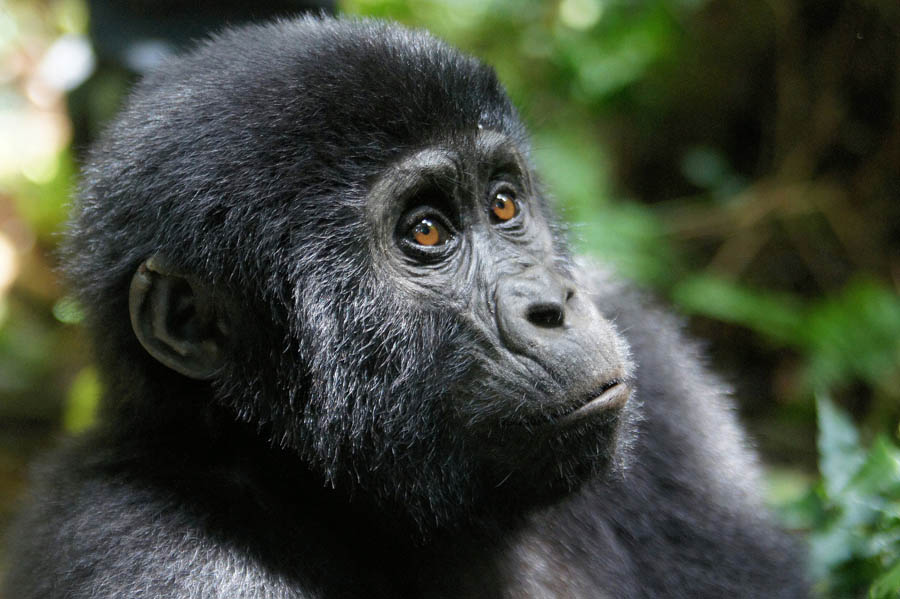
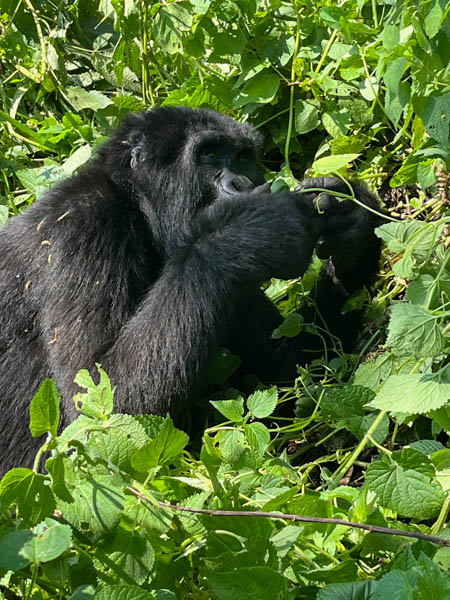
It is a long and bumpy road that takes you to Uganda’s Bwindi Impenetrable Forest, a national park with a very appropriate name. There are 321 sq km of dense forest at an elevation of around 2000m (this can leave you breathless) and, on my first day of gorilla tracking, I found myself squelching down muddy banks and scrambling back up them with a guide ahead using a machete to deal with the vegetation. Fortunately, the park’s trackers know where the best places are to find the gorilla families who have been habituated over years to accept their human visitors. Even so, we are only allowed to stay for an hour – they need a bit of peace and privacy, too.
It is quite a moment when you come face to face with a gorilla in the wild. In my case it was the Rushegura family, the biggest in the region with 17 members including two silverbacks, numerous females, some with very young babies clinging to their backs and plenty of juveniles. They all spend most of their time feeding but will suddenly march off towards an enticing bit of greenery and, while we’ve been told not to get too close, no one has mentioned it to the gorillas so you find yourself frequently in touching distance. The babies are particularly endearing and come close to look up at you with dark liquid eyes. The juveniles just want to show off and turn out to be experts at double somersaults as they canter down the hills.

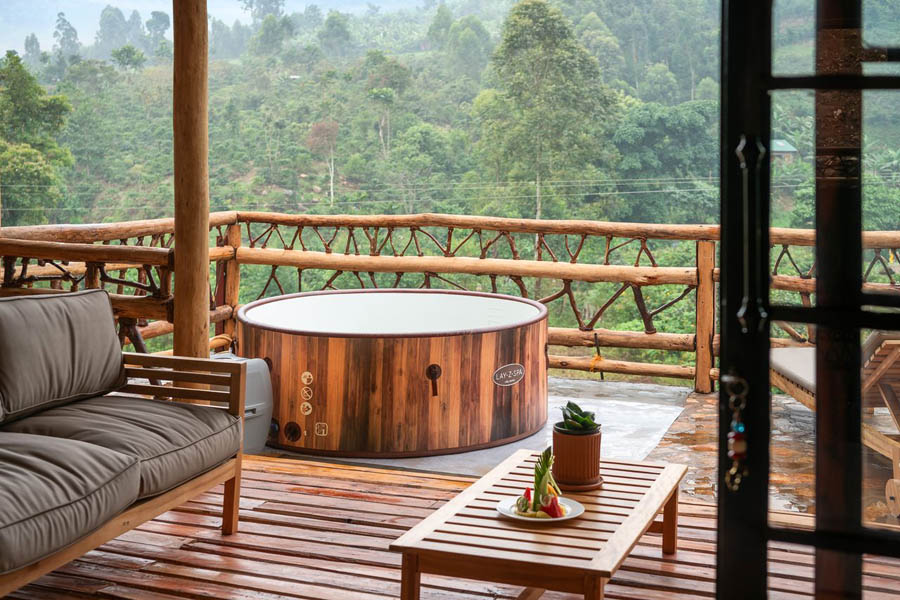
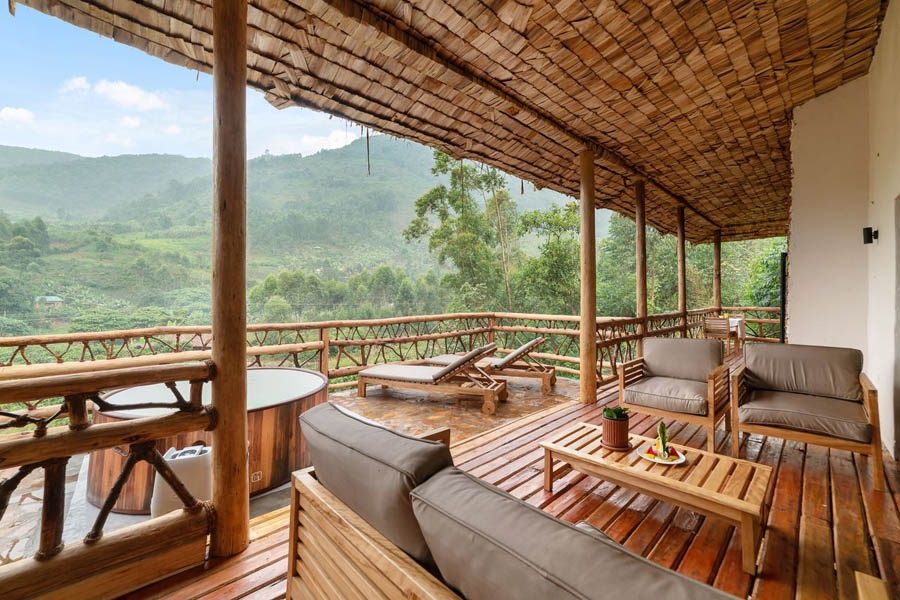

Gorilla tracking is not, though, for the faint hearted and I am delighted to peel off my dirty, sweaty clothing and sink into the bath provided in my room at the charmingly rustic Mahogany Springs Lodge. Other creature comforts include a laundry service, a wood fire, a hot water bottle at night and cleaning my boots ready for the exertions of the next day. There’s even the possibility of a massage – not, perhaps, what you might expect in one of Africa’s oldest and densest rainforests.
It’s a 12-hour drive from Bwindi to Murchison Falls (though there is also a flight on a light aircraft that will save you time). Murchison was once Africa’s most popular game park, visited by the likes of Churchill, Teddy Roosevelt and Ernest Hemingway whose plane crashed over the falls – while he was recovering from his injuries he read his own obituary in the American press. It was the location, too, of the film, The African Queen, and after its release in 1951, its fame became international. Renowned for the density of its animals, you were pretty much guaranteed to see the Big Five here.
It wasn’t just the animals, though. The park takes its name from the most powerful waterfall on the planet. This doesn’t mean, of course, these falls are as spectacular as, say, Niagara – they don’t have the drop, though their sheer power certainly creates plenty of rapids so my boat can’t get too close. The falls are best seen, in fact, from the top where you understand why this is the White Nile, the water whipping itself into a foaming thunderous fury as it’s forced through a gorge a mere 7m wide before it hurls itself down 43ft of bare granite into a chasm known as the Devil’s Cauldron. The mist from the spray is visible half a mile away.
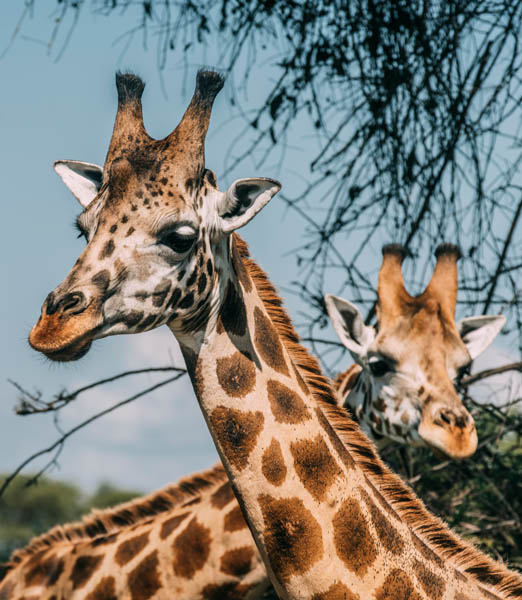
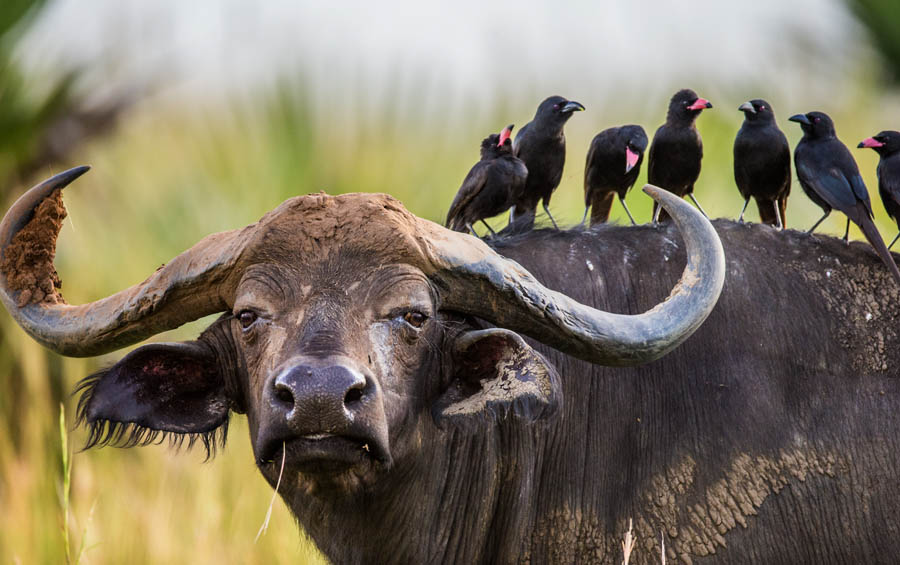
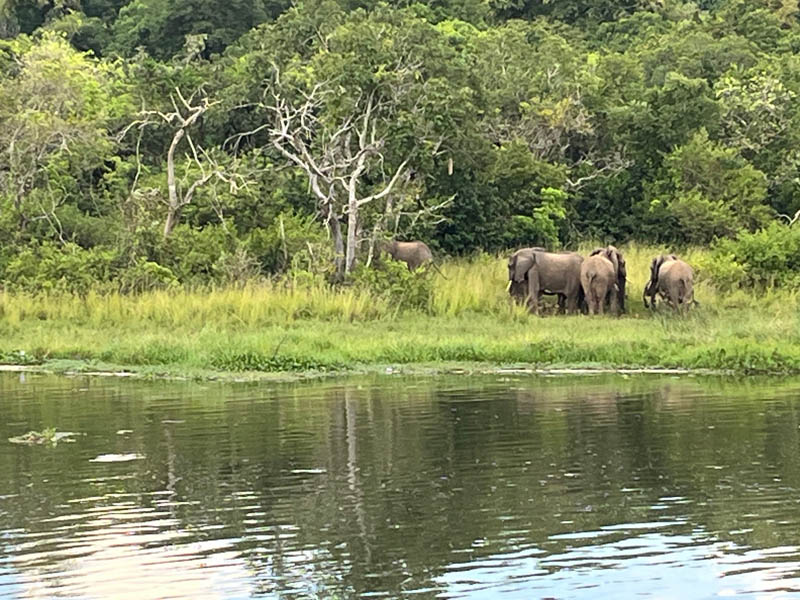
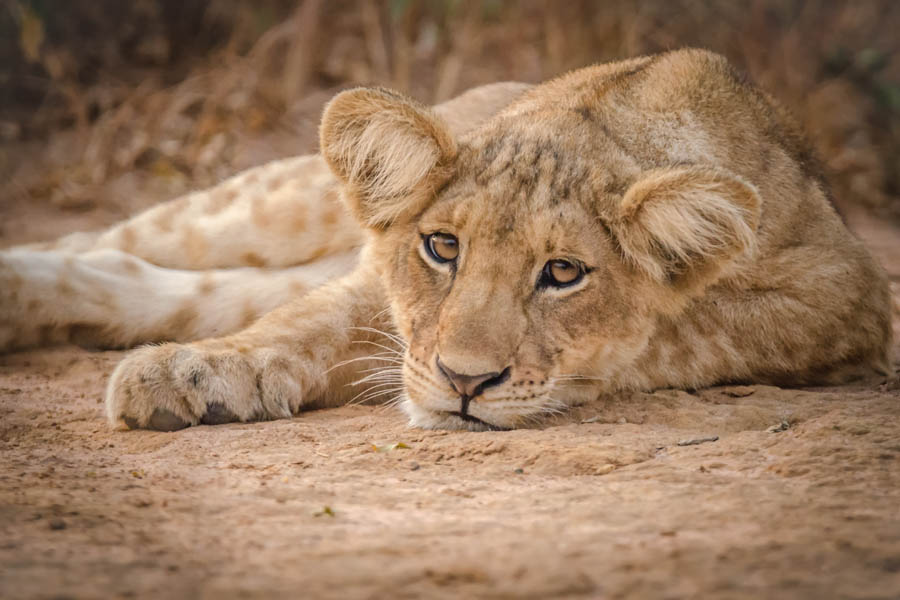
You can take a boat safari down the Nile to the base of the falls, too, past countless hippos and crocodiles in the river with herds of elephants and antelopes watching from the banks (this could be your Humphrey Bogart/Katherine Hepburn moment!). Within the national park, you go on more traditional safaris and my first morning was pretty impressive – lion, elephant, buffalo, giraffe and baboons. The only one of the Big Five missing in Murchison is the rhino. Uganda’s game has been recovering over the last 30 years after the turmoil of the latter half of the 20th century that saw civil war and the calamitous rule of Idi Amin. Left unprotected during these dark days, animals were killed for bushmeat or poached – elephant ivory and rhino horn both being particularly valuable. Murchison’s elephant population was reduced by 95% and the rhinos were wiped out altogether.
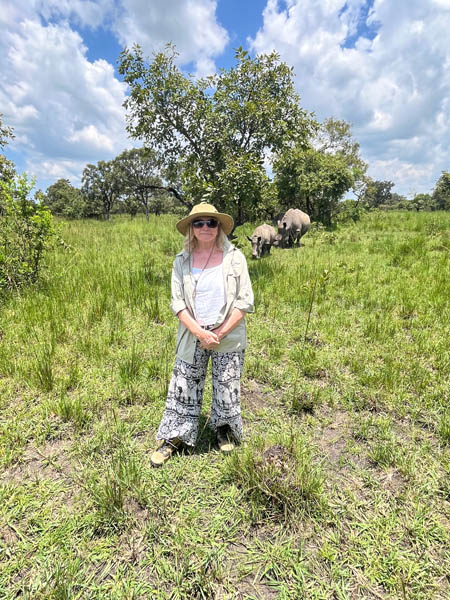
Now, animal numbers have increased and elephants, in particular, are thriving. The rhinos, though, are not in the park itself as poaching is still a very real threat. You can, though, see them at Ziwa, a rhino sanctuary nearby Murchison where the original six rhinos have been cared for (and protected by armed guards) in a very successful breeding programme – there are now, in fact, 48 rhinos here. Perhaps the most surprising thing is that you don’t go to see the rhinos in a conventional safari vehicle. You visit them on foot! It is quite a moment to find yourself barely 20m away from these massive creatures with their huge horns. The rhinos themselves seem, though, quite oblivious of you, just ambling ever closer as they much their way across the grass.
Next steps
An eight-night tailormade trip to Uganda with Audley Travel costs from £8,500 per person (based on two travelling) and includes three nights in Murchison Falls National Park and three nights at Bwindi Impenetrable Forest. The price includes flights, transfers, accommodation, excursions, safari activities, chimpanzee and gorilla treks and permits.
To plan your dream safari adventure, call Silver Travel Advisor on 0800 412 5678 for more information or a quote.