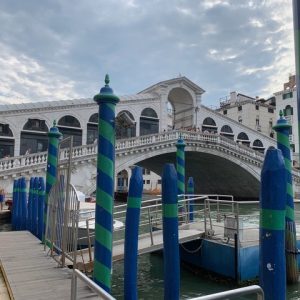
A rare voyage: sea to canal, island to inland.
An epic journey through Scotland’s past and present, hosted by Hebridean Island Cruises. Aboard the Lord of the Highlands, we glide from Oban into the Inner Hebrides of Mull and Iona. Then we slip between the Great Glen’s hills through the diagonal slash of the Caledonian Canal to Inverness.
First, the beginning. Some guests travel to Inverness for a three-hour coach transfer to Oban. A prologue of golden gorse fringing Loch Ness and snow-capped Ben Nevis in the distance. Others head straight to Oban where McCaig’s Folly, a skyline amphitheatre, watches as they step on board the all-inclusive 19-cabin vessel.
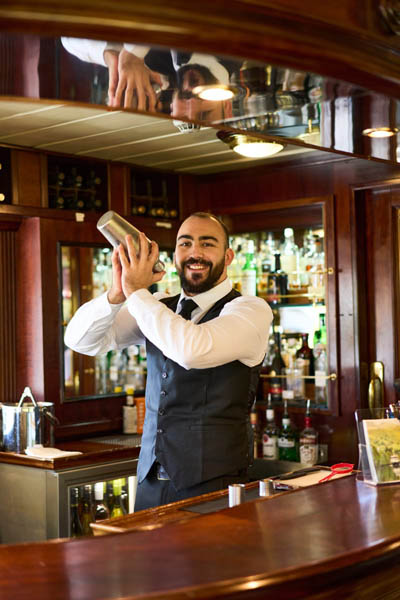
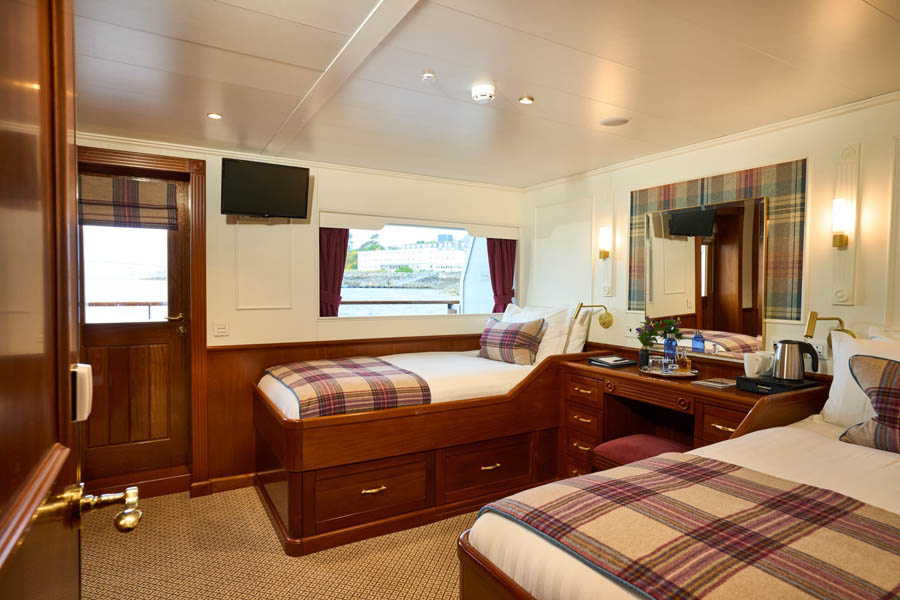
The welcome begins with a decanter of whisky waiting in the cabin. Dark wood gleams, tartan flickers, and the ship hums at the pleasures of a country-house gathering. The Lord of the Highlands has regal associations. Twice, the late Queen Elizabeth ll, hired the majestic sister ship, Hebridean Princess.
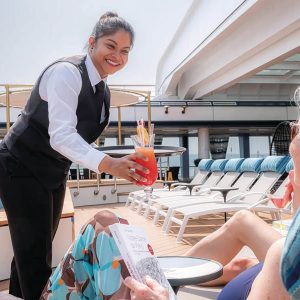
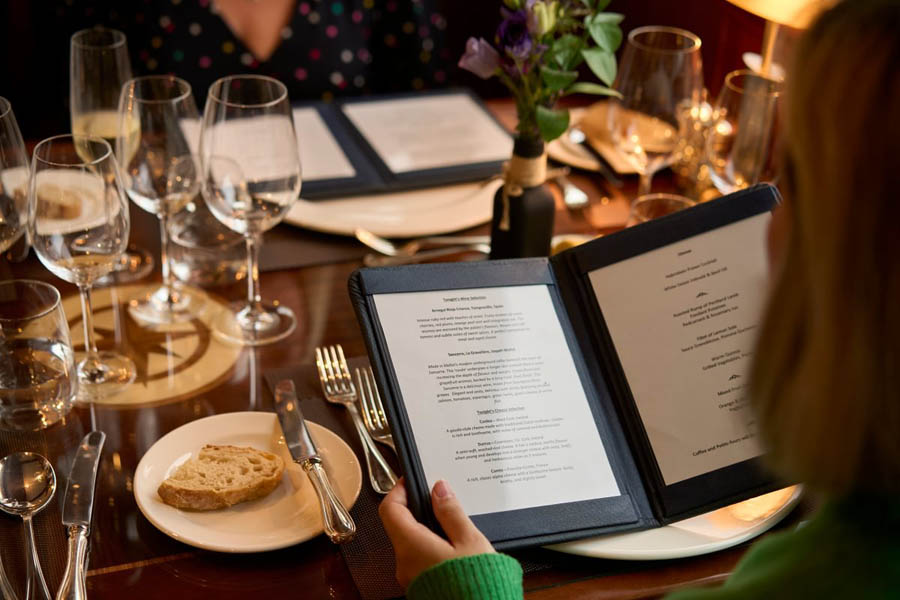
More than a cruise, this is a voyage for lovers of the finer things in life. The Lord of the Highlands is itself a destination. Waitresses, in their smart black dresses, take orders for breakfast, three course lunches and dinners: always a meat, fish and vegan main course: always red and white wines for lunch and dinner, plus dessert wine and port in the evening. For whisky aficionados, a nightcap from a choice of 26 single-malts, becomes part of the routine. Accompanied on one evening by a talented Gaelic music duo who tour the world and on another evening by a Gaelic dance performance.
Early on Day 2 we depart for Mull. Amidst a sweeping panoramic view of isles scattered through the seas, all eyes are drawn to snow-capped Ben More. At 3,169 feet it is Mull’s only Munro. Exploring Tobermory, locals claim that the houses were painted in contrasting colours so that whisky-doused men found the right bed. Galleries and shops, on Europe’s edge, reveal Mull’s pull for artists, crafters and writers.
Now, a new-series of children’s soap-opera Balamory is returning fame to the horse-shoe shaped harbour. Porpoises, hard to spot in the waves, are frequent visitors, whilst beyond there are occasional sightings of dolphins and whales.
On our drives through Mull’s craggy landscape of windswept trees and sparkling rivulets we have binoculars at the ready for white-tailed eagles that can swoop to carry off young lambs. Despite two annual culls, deer easily outnumber the population of 3,000 humans.
For around 800 years, a fortification at Duart has looked out across the sound: transformed after 1911 from a blood-soaked clansman’s defensive castle to a gentleman’s arts and crafts home. On a rare clear day, the strategically placed castle, with walls 13-feet thick, is said to give views of up to 100-miles.
A tasting visit to the Mull Cheese Farm tells the story of the Reade farming family’s 1978 move from Somerset, taking five cows with them. Now milk from 94 cows creates an award-winning cheddar exported throughout the world. And they distil spirits from the cheese waste too, such as Whey Ski, pun intended. It is an inspirational vision of a sustainable entrepreneurial vision featuring a Gin Bar by Hebrides design hero Banjo.
With strong winds cancelling the ferry to Iona, David Barnes, historian and author, told how Columba brought Christianity from Ireland to Iona. While the east of Britain fell into the Dark Ages, the west of Scotland illuminated early Christianity. Later on the cruise, David explains how the post 1745 repression of bagpipes, tartan and Gaelic, allied to the clearance of the Highlands, threatened Scottish identity. In the 19th century, some tartans forgotten, a new sense of Scotland began to be created.
From Mull we sail into the Linnihe sea-loch, taking in views of Ben Nevis and Glen Coe, before mooring in the Corpach Basin. An excursion to Glenfinnan allows us to view the Glenfinnan viaduct made famous by the Harry Potter movies. We climb the tower commemorating Bonnie Prince Charlie’s 1745 landing. Against all advice he planned an uprising to restore his Catholic Stuart father to the throne. Until Culloden.
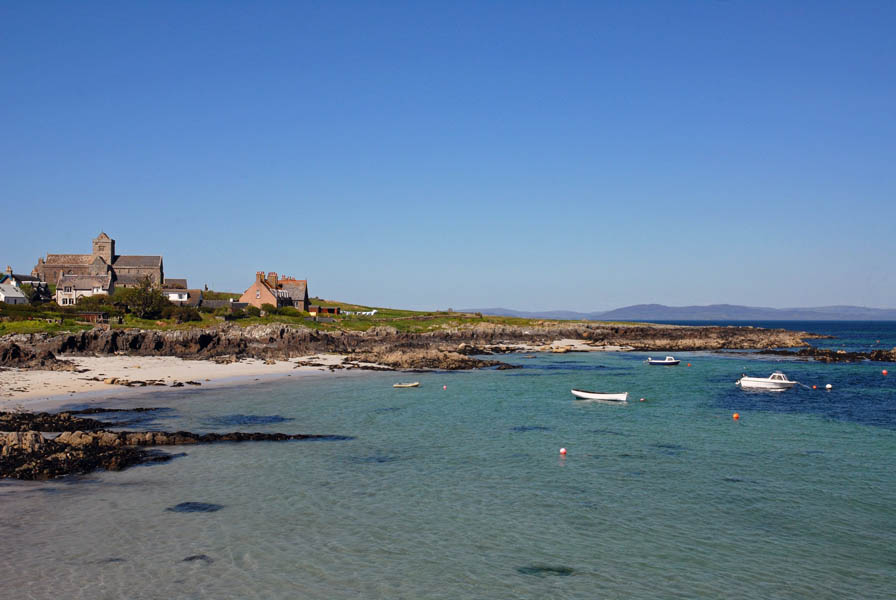
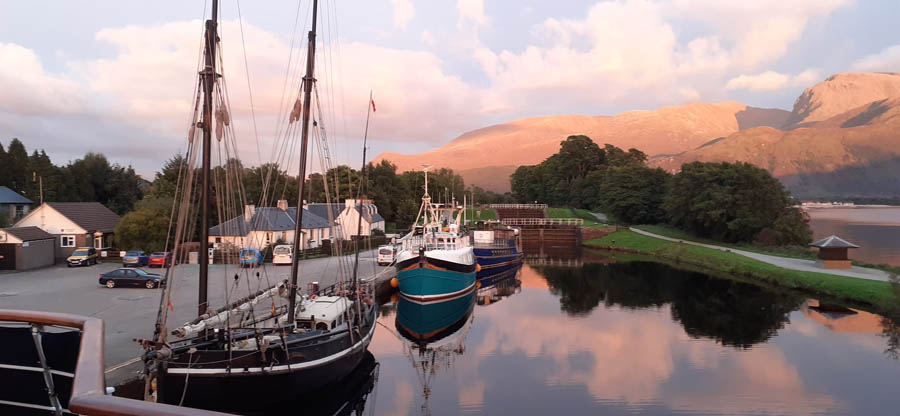
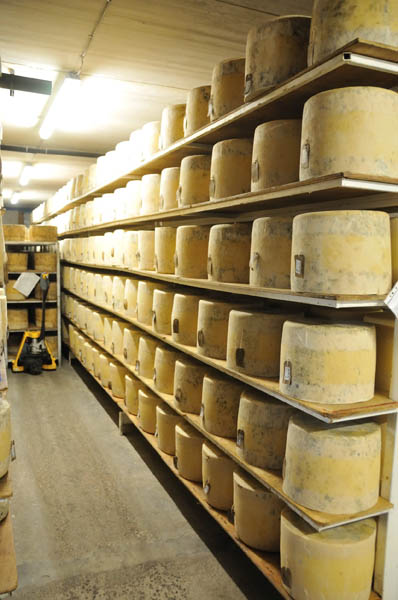
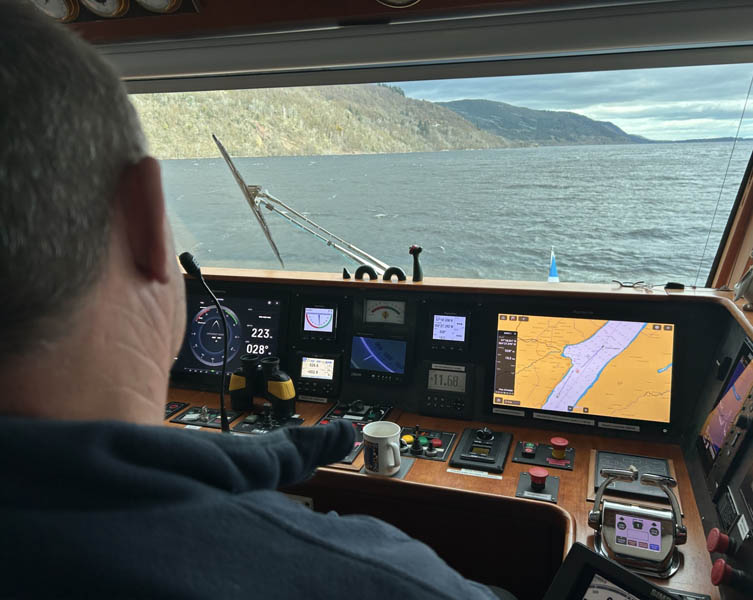
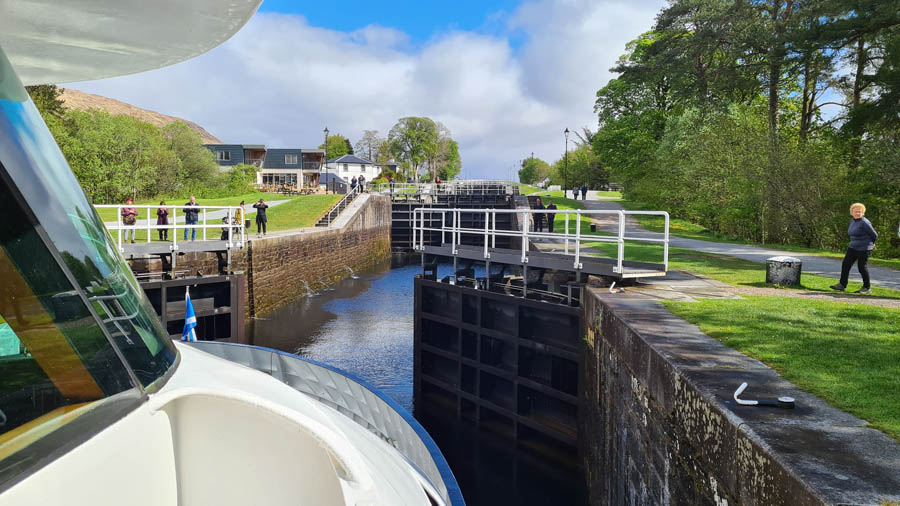
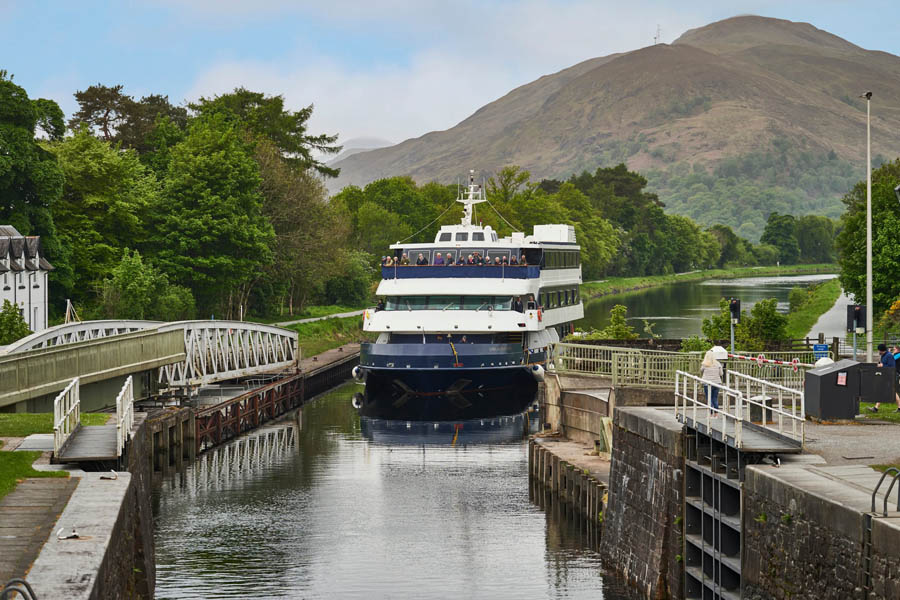
Ascending Neptune’s Stairway of eight locks, raising the ship a quarter of a mile, we are truly on the Caledonian Canal. Delayed for three decades by Government indecision, 12 years late, almost 300% over budget and all but obsolete by its completion, Captain Jim tells us the tale of the Caledonian canal. A grand project, designed to give the navy easy access between east and west coast, whilst also creating work for men cleared from farms, the canal is now primarily for leisure.
Sailing through Loch Ness, a deep inland sea more than 22 miles long, holding more water than all the lakes in England, it is easy to understand how on dark, misty and foreboding days, Dark Ages minds created the story of the Loch Ness monster.
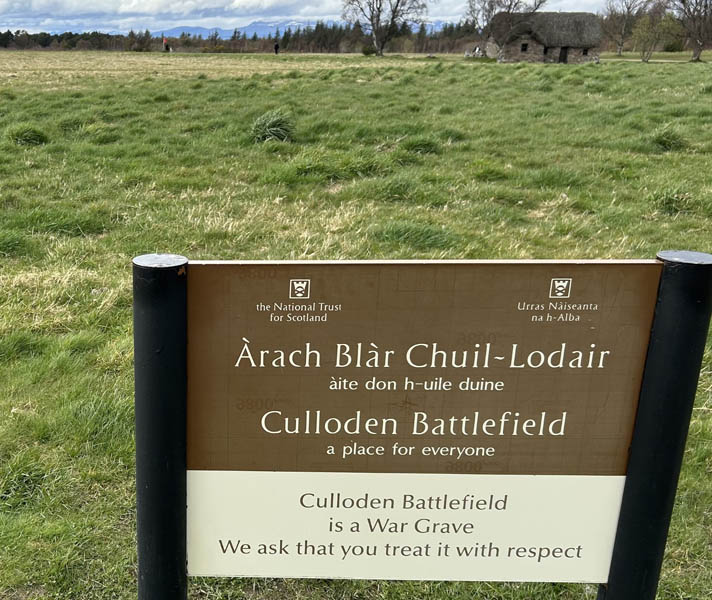
Then the Culloden visitor centre presents the massacre of a tired and ill-equipped Jacobite army outgunned by superior forces. The Jacobites lost 1,400 men in an hour. The English army lost around 100. A visceral film shows the brutality of the defeat.

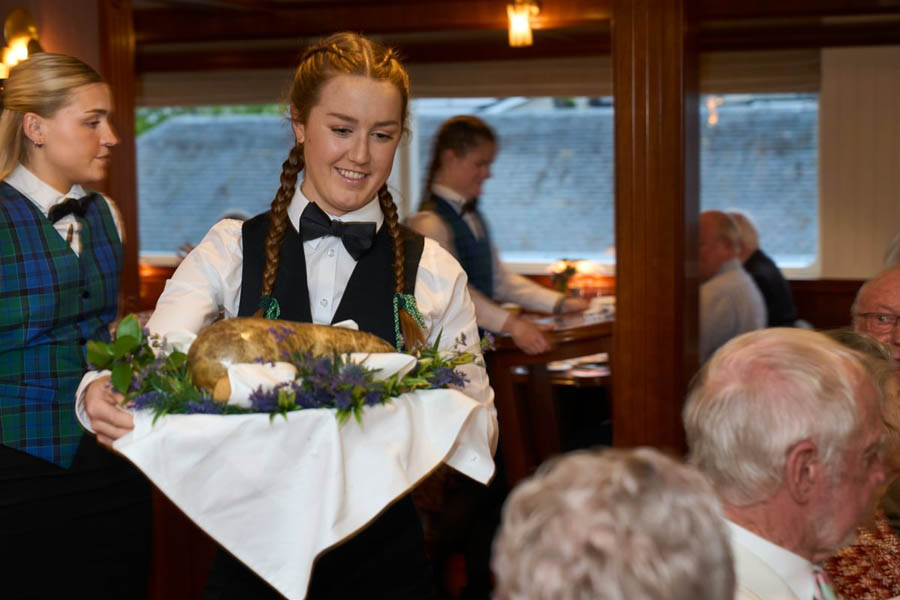
A last night gala dinner epitomises the eventual revival of Scottish pride. Kilted and tartan clad, a piper announces the entrance of the haggis. Obviously accompanied by whisky. It is a memorial conclusion to a cruise that captures the spirit of the Highlands and Islands.
Through summer and into autumn, the Lord of the Highlands and her sister ship the Hebridean Princess have cruises scheduled with themes of cycling, flavours of the Hebrides, golf, gardens and the natural world. Other itineraries include The Mysteries of St Kilda and the Outer Islands plus an Orcadian Adventure.
Find out more
To book your next cruise, or find out more from our Silver Travel Advisors, call 0800 412 5678.