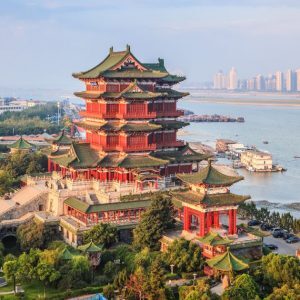
Singapore followed by Phuket creates the classic rhythm of a twin-centre holiday of contrasts. First you the breathe in the cosmopolitan culture of Singapore, as hot as chilli crab, as spicy as beef rendang, as historic as a Singapore Sling in Raffles Long Bar. Then you hop north-east across the Andaman Sea, with a flight of less than two hours, to Thailand’s tropical beach paradise of Phuket.
Sights and sounds of Singapore
Singapore and Phuket is an irresistible pairing. One a gleaming, high-energy city-state, so often at the crossroads of history. Whilst Phuket is a tropical balm of beaches, islands, verdant nature and slow-paced pleasures. Together, they create an epic journey that both enriches and restores.
Begin in Singapore, a vertical city of sky-high aspirations. From the moment you arrive, there’s a sense of precision and possibility: immaculate streets, futuristic architecture, a cosmopolitan melting pot of cuisine, language, race and religion.


Early in the 19th century, ships unloaded their cargoes on the banks of the Singapore River. Ultimately, that trading post became Clarke Quay, named after a former governor. The Paradox Hotel, overlooking the pastel shutters of former warehouses, has the best of locations. Clarke Quay, once gritty and tough, has reinvented itself as one of Singapore’s most atmospheric neighbourhoods, home to bars, cafes and restaurants.
A mere 30-minutes taxi ride from Changi airport, Clarke Quay is perfectly placed for exploring. Commentary on a 40-minutes bum boat cruise along the Singapore River, sets the scene, telling Singapore’s story since 1819 when Sir Stamford Raffles, of the East India Company, saw the sleepy fishing village’s potential as trading port on the route from China to India.
Just steps from Singapore’s metro system, the Paradox Hotel links to the Clarke Quay MRT station: one stop to China Town, one stop to Little India and only three to Marina Bay. A high-speed lift to the Marina Bay Sands SkyPark Observation Deck is a must. After all it was where Race Across the World Series 1 concluded.


If this all sounds too hectic, the Paradox Hotel is an urban resort with pool and sun-loungers for relaxation. And if the walk across the bridges, after a day’s exploration is also too taxing, Paradox’s Ellenborough Market Cafe always offers a mix of authentic local cuisine and Western favourites.
Revived and restored, a riverwalk towards Raffles’ statue and the Asian Civilisations Museum is another option. Following Singapore’s independence in 1965, the former Empress Building reopened as a vast museum in 1992. Drop in as part of the Civic District Heritage Trail.


Though Singapore’s history isn’t just catalogued in museums, it is alive in the hawker centres, in grand Tropical Palladian buildings given new life post-empire. There is a boho buzz to a stroll through Kampong Glam’s colourful and pedestrianised walkways. Around the golden-domed Sultan Mosque there are boutiques, cafes, textiles shops and blossoming street art.
Cramming your purchases from malls and markets into your case it is time to head for Singapore’s high-tech and serene airport. Singapore airlines and Scoot, their budget arm, usually offer several flights a day to Phuket.
From city to beach


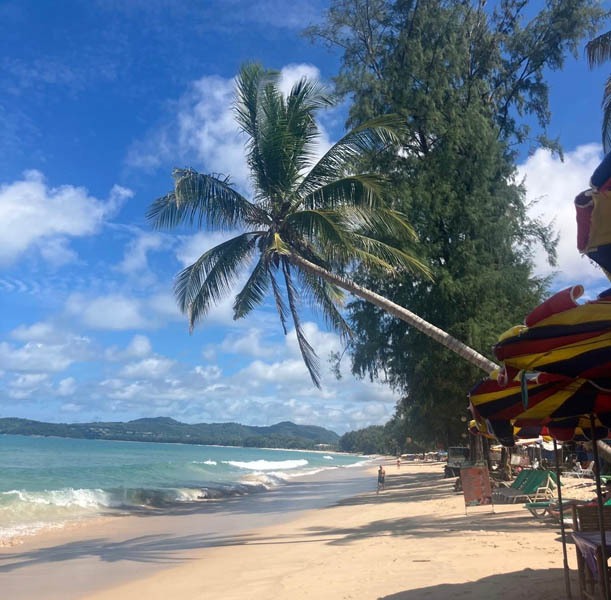

Arriving at Phuket airport, the Amora Beach Resort had a driver waiting at Phuket arrivals, ready to guide us through 30 minutes of frenetic traffic to Bang Tao Beach, on Phuket’s famed west coast.
With palms pressed together in the traditional wai greeting, the Amora Beach Resort gracefully welcomes with a chilled coconut water and cool flannel. Press pause on your travels after frenetic Singapore. From a sun lounger, breathe in air that is warmer, scented with salt and frangipani. Stroll along the soft sand of Phuket’s second longest beach and imagine a maritime excursion can take you.
The Andaman Sea is made for island hopping, and from Bang Tao it’s easy to explore limestone karsts, hidden lagoons and snorkelling spots where fish flash beneath the surface. Devote a day on the water to skimming between islands, swimming in clear blue seas, picnicking on white-sand beaches, perhaps visiting the Phi Phi Islands or James Bond Island.


That sea also feeds Phuket. At Amora’s Isla restaurant, a seafood platter of squid, prawns, salmon and locally caught fish is a banquet for two. Thai food – whether fish, meat or vegan – is a vibrant celebration of flavour, creativity, and visual artistry. A culinary tour of flavour profiles: sweet, sour, salty, spicy, and umami, all presented with precision and flair.
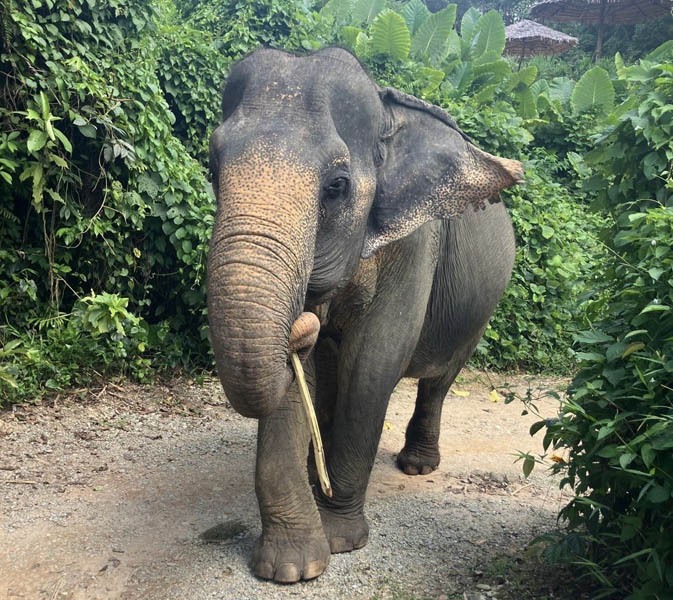
Elephants are less discerning when it comes to food quality as a visit to the Elephant Jungle Sanctuary shows. They prioritise quantity, needing to take on board more than 200kg of food a day. Although that is time-consuming, they still squeeze in a shower and brush-up with visitors to the sanctuary.
Relaxation is in Phuket’s DNA. Booking a massage, facial or treatment to ease jet-lag or sunburn is all part of the quintessential Thai experience. The Thais take their spa industry so seriously that quality is rigorously overseen by a government ministry.
If you’re reluctant to head home after an exhilarating two centre holiday, and keen to break a lengthy flight home, there are options. Take in another island, such as Koh Samui. Or if you are ready for the hustle and bustle of another city head for Bangkok.
Next steps
Trust Silver Travel Advisor to create your perfect twin-centre holiday, from start to finish! Call 0800 412 5678.