
Discovering new places and cultures is one of the main reasons I love overseas travel, but it is all too easy to overlook the gems on your doorstep. Especially when you don’t know they are there.
This year’s hot cultural ticket will undoubtedly be the Bayeux Tapestry at London’s British Museum, on loan from the French Government whilst a new display hall is built in Normandy. I loved seeing the 11th century stitching in its home town, but until recently had no idea that we have the only full-size replica here in Britain.
Not only that, but visitors can enjoy this extraordinary embroidery free of charge, in a town that also boasts a ruined Medieval abbey; the start point of an international pilgrims’ trail; and tranquil walks beside not one, but two picturesque rivers.
So I headed to Berkshire for a first visit to Reading. Founded over 1000 years ago at the confluence of the rivers Thames and Kennet, 21st century Reading boasts a buzzing retail and restaurant scene, as you might expect from a town renowned for its vibrant IT industry and respected university. But delve deeper and you find that Berkshire’s county town has a surprisingly rich history.
The Vikings arrived here 1,000 years ago, followed by the Normans, and in 1121, William the Conqueror’s youngest son, Henry I founded Reading Abbey of which more later. But the extraordinary embroidery I had come to see is rather more recent, dating back 140 years to the summer of 1886.
Reading’s replica embroidery
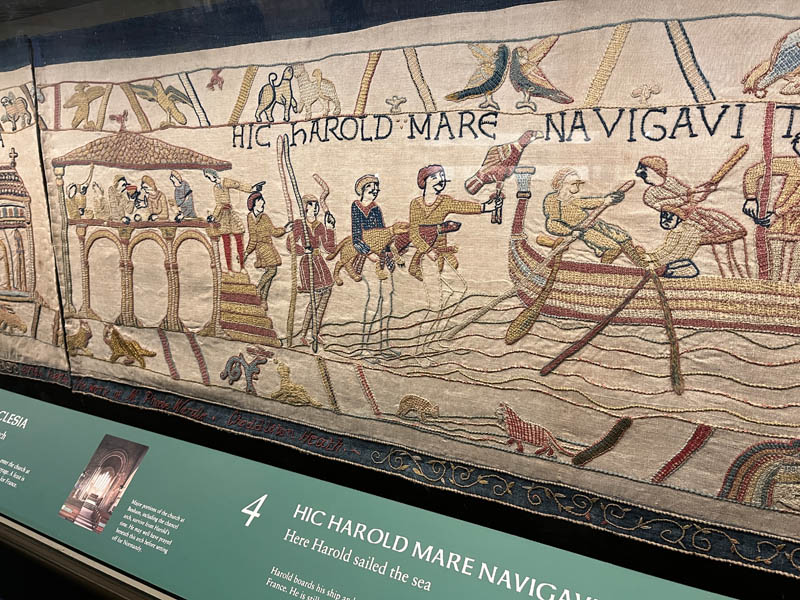
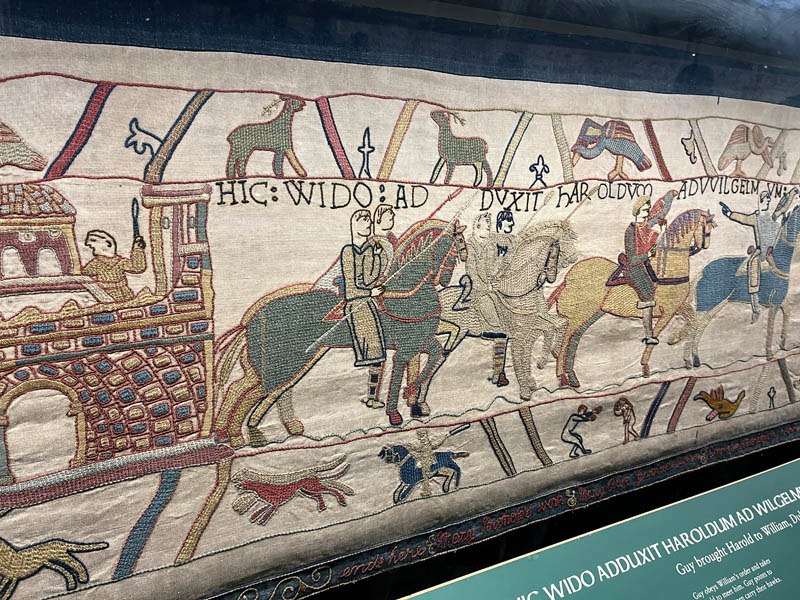
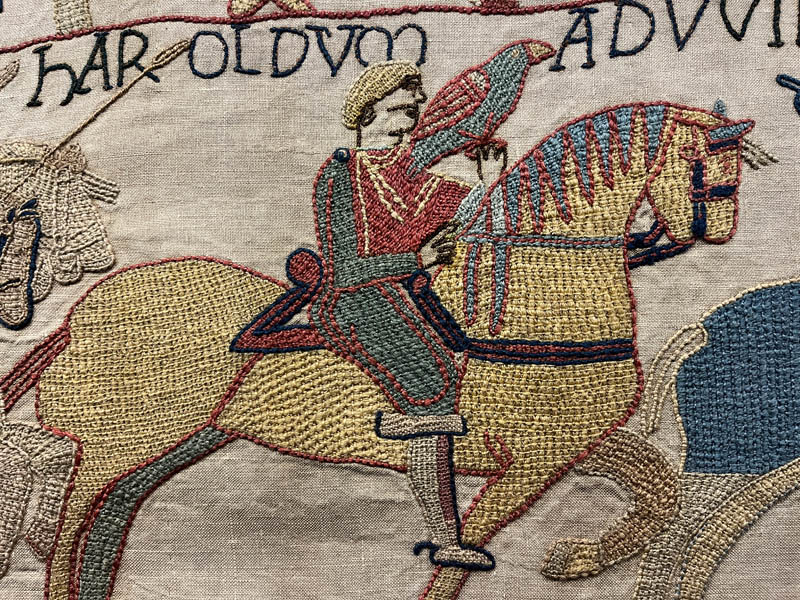
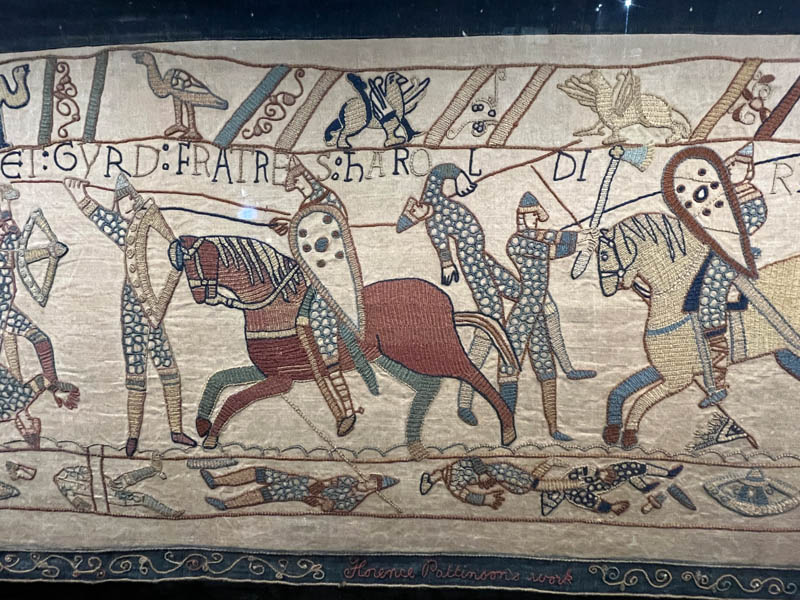
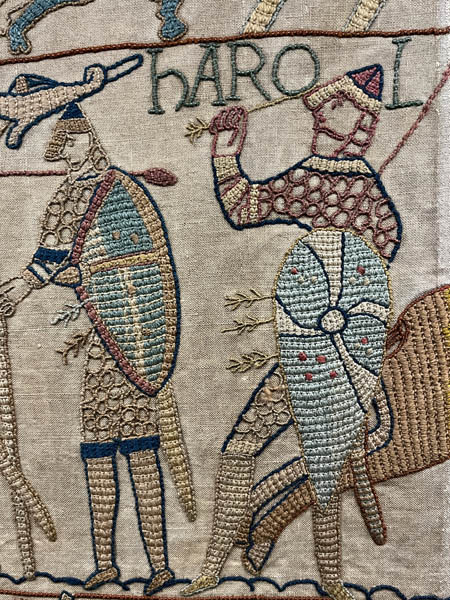
In 1885, Elizabeth and Thomas Wardle from Leek in Staffordshire saw the original stitching in Normandy and decided to create a full-size replica so that England would have its own copy. An embroidery on linen rather than a woven tapestry, the original 70-metre strip cartoon was commissioned in the 1170s by Odo, Bishop of Bayeux and half-brother to William, Duke of Normandy and was probably stitched in England, although we will never know who by.
But the 35 Victorian needlewomen from Leek Embroidery Society incorporated their names on a blue strip of fabric that runs along the entire length of the textile so we know exactly who worked on each section. They copied the original by following designs traced onto linen from photographs. Woollen yarns were dyed to match the originals as closely as possible, and the project was completed in little over a year.
Soon this English replica was the hot ticket for the Victorian heritage lovers. At the time, the Bayeux Tapestry was little known outside its home town, despite illustrating the seismic events leading up to the invasion of England by William, Duke of Normandy in 1066. But the Reading replica changed all that, setting off in 1886 to tour the UK, US and Germany.
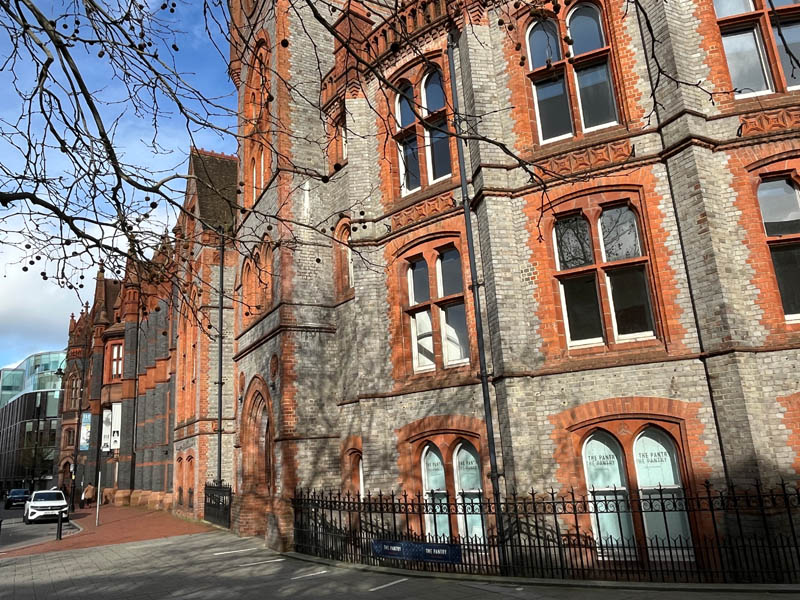
Interest was high but profits low and by the time it reached Reading in 1895, the embroidery was up for sale, catching the attention of a former mayor who bought it for the town. Today the British Bayeux Tapestry is on display Tuesday to Saturday, free of charge, in a purpose-built gallery at Reading Museum where you can spend as long as you like lingering over the detail at close quarters.
Expect action-packed scenes of noblemen hunting with hawks, an armada of ships crossing the Channel, and soldiers slugging it out on the battlefield near Hastings. But there are many small details too including an array of mythical beasts and morality references, although the Victorian embroiderers omitted the male body parts they deemed too rude!
Explore the town
Britain’s Bayeux Tapestry will delight history buffs and craft enthusiasts of all ages, but I found much more to explore in Reading, which makes the town worthy of an overnight stay. Final stop on the Elizabeth Line, Reading is part of the London Transport network, as well as being served by Great Western Railway. The town also lies on the M4 motorway west of London, making a great base for exploring the Thames Valley and Berkshire Downs by car. Windsor, Ascot Racecourse and Legoland are all within easy reach.
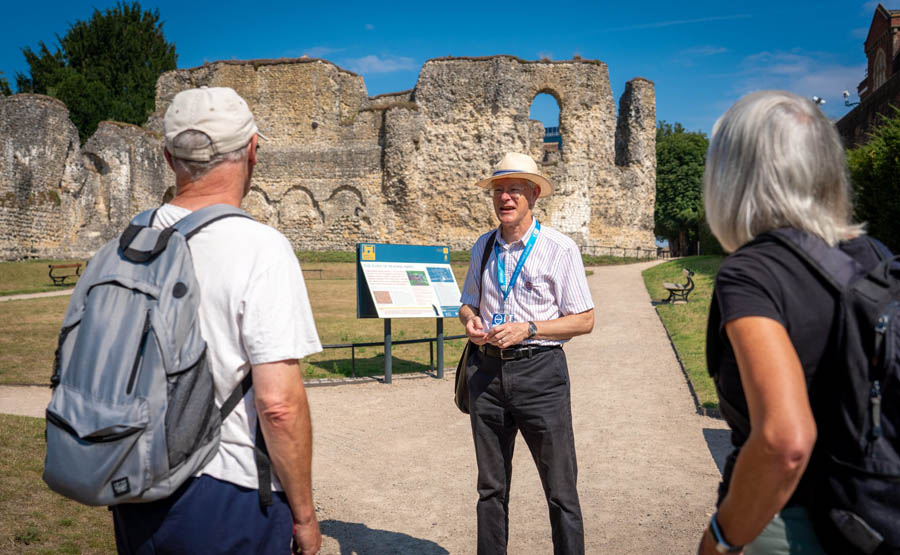
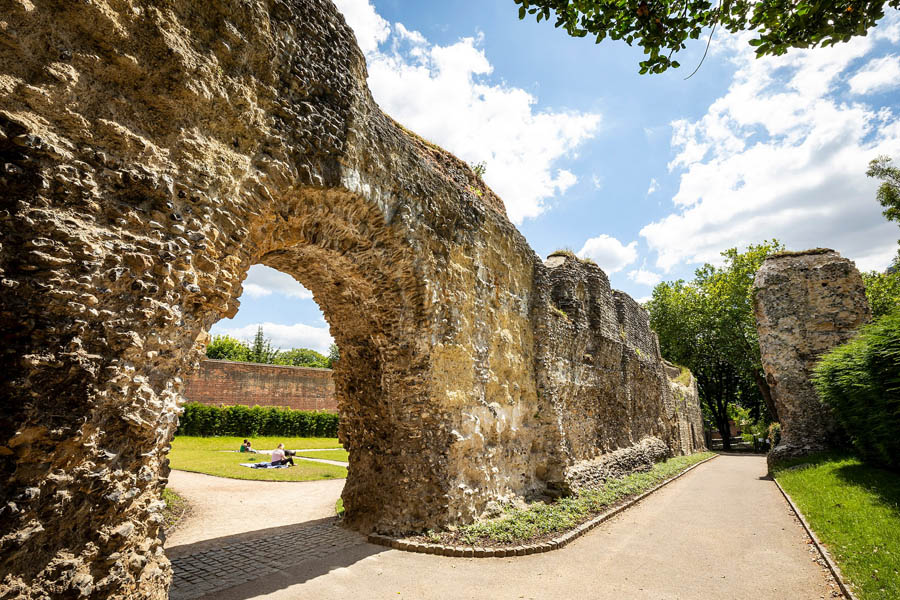
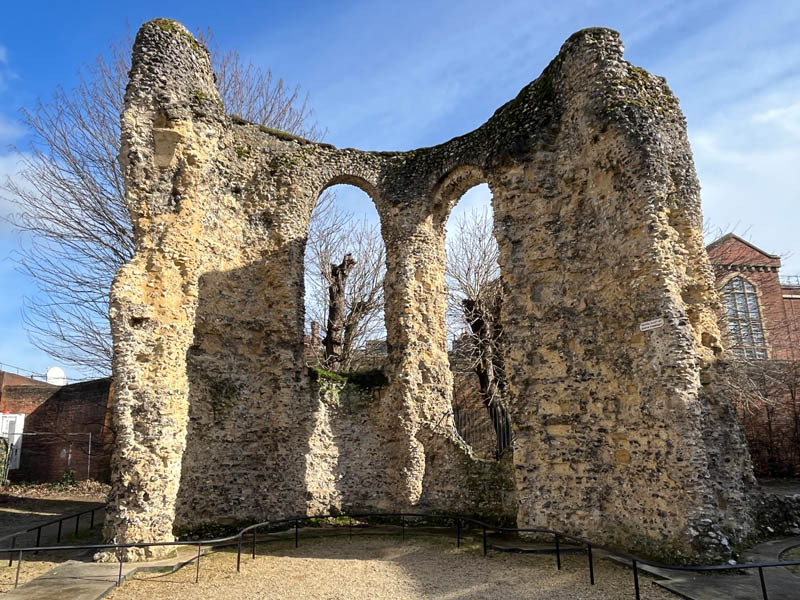
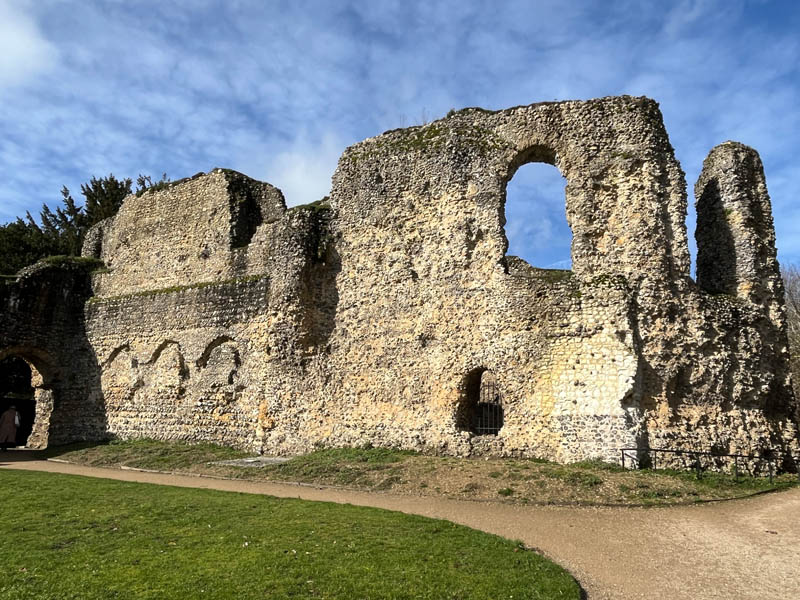
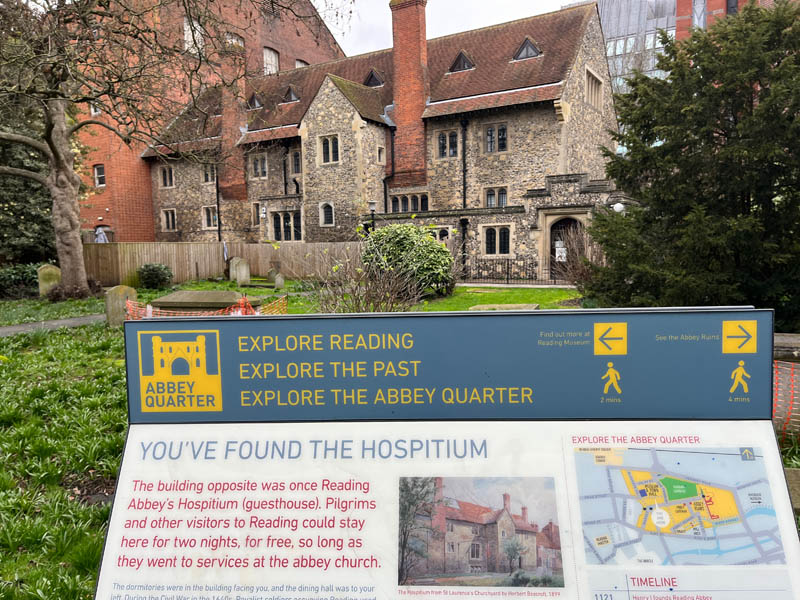
Close to Reading Museum and the retail temptations of Broad Street and The Oracle shopping centre, stand the ruins of Henry I’s royal abbey. Information panels dot the Abbey Quarter and nearby Forbury Gardens, or you can book a guided walking tour to discover the full story of a town where Jane Austen went to school and Oscar Wilde went to prison.
In medieval times, Reading was home to one of the largest and richest monasteries in Europe, thanks to relics which attracted pilgrims from far and wide. One mystery however remains. Henry I is buried somewhere in a spot near the high altar but where? Could a second English king lie beneath a car park?
Walk through the remains of various monastic rooms to Abbey Wharf beside the river Kennett, start point for the English section of the 670-mile pilgrims’ trail to Santiago de Compostela. If the 68-mile route to Southampton seems too ambitious, do as I did and stroll along a section of the nearby Thames Path to watch the comings and goings of boating folk and maybe drop in for a waterside coffee or meal at the Thames Lido.
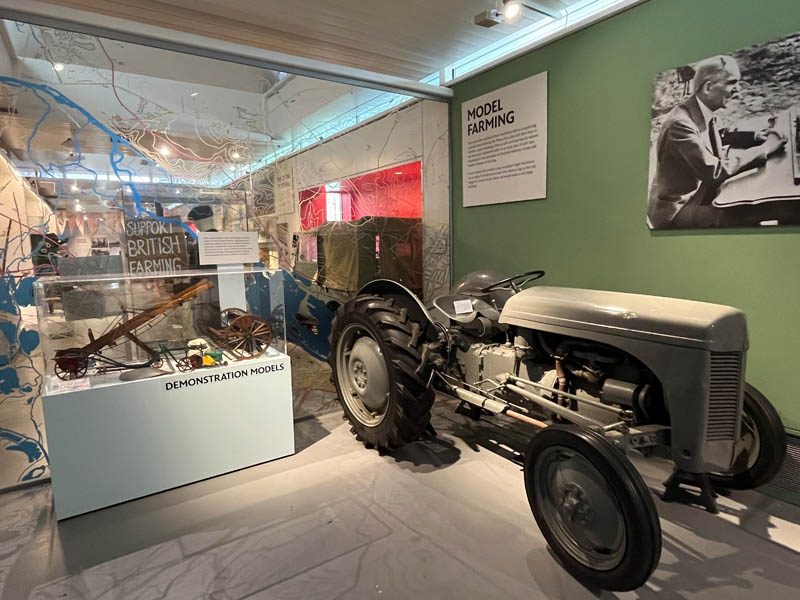
I also recommend heading past the University campus to visit MERL, the Museum of English Rural Life to discover how farming and country practices have changed across the centuries. Another absorbing attraction in a historic town that is full of pleasant surprises.