Sightseeing in Sibiu
In 2007, Sibiu was the first Romanian city to be designated a European Capital of Culture. During our three-night stay, we found it to be imminently walkable, and a hotel-provided map made sightseeing easy.
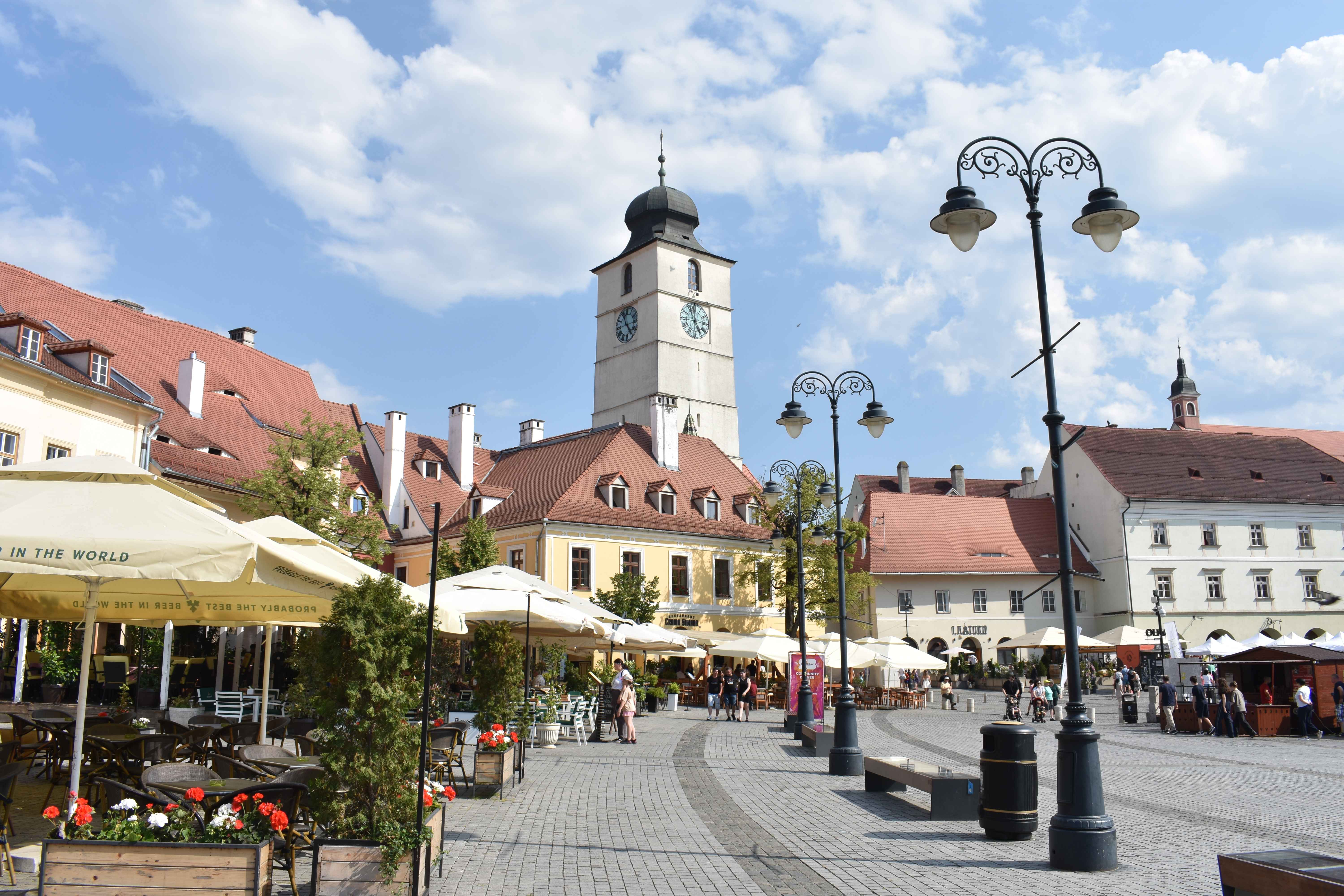
There are three linked squares.
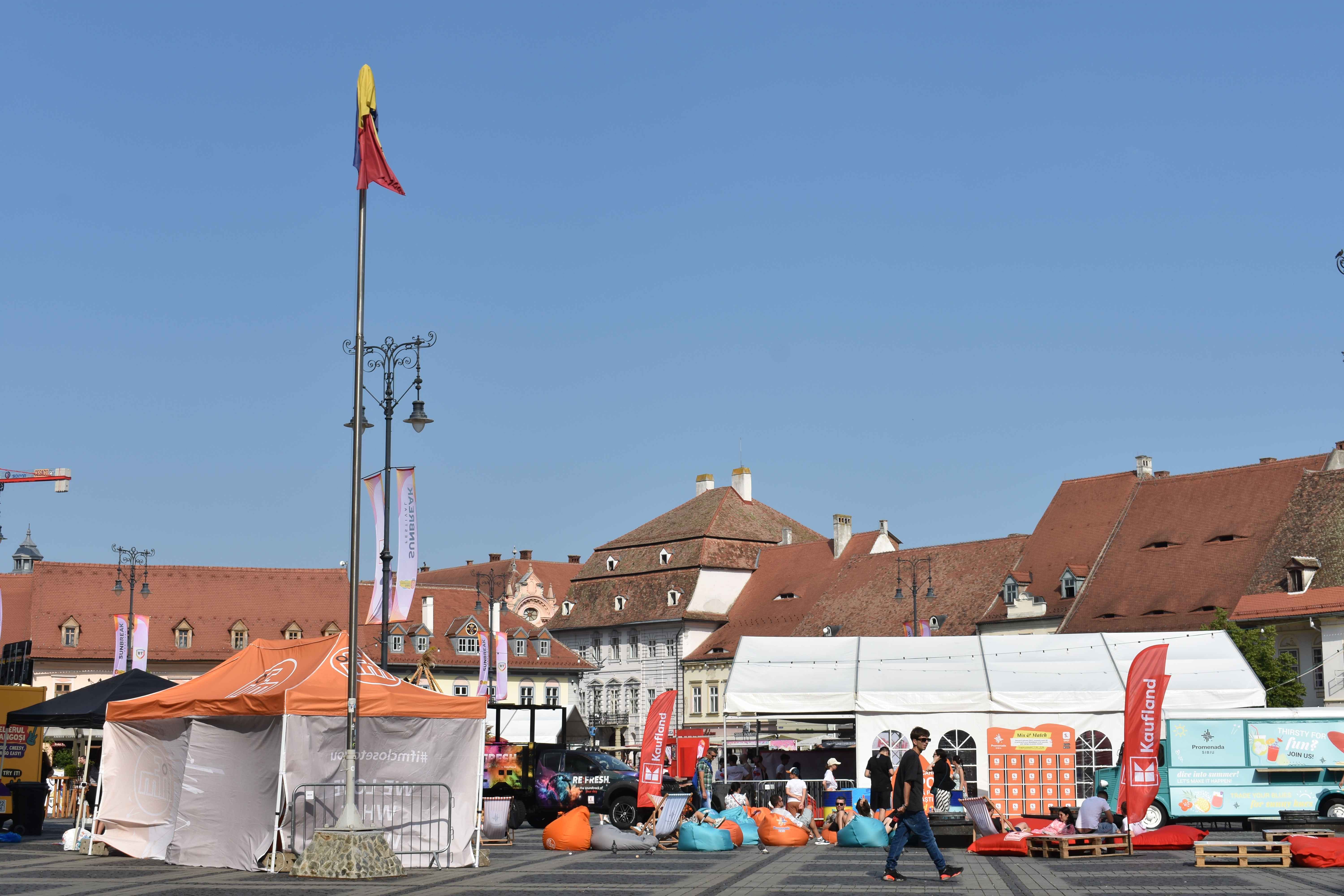
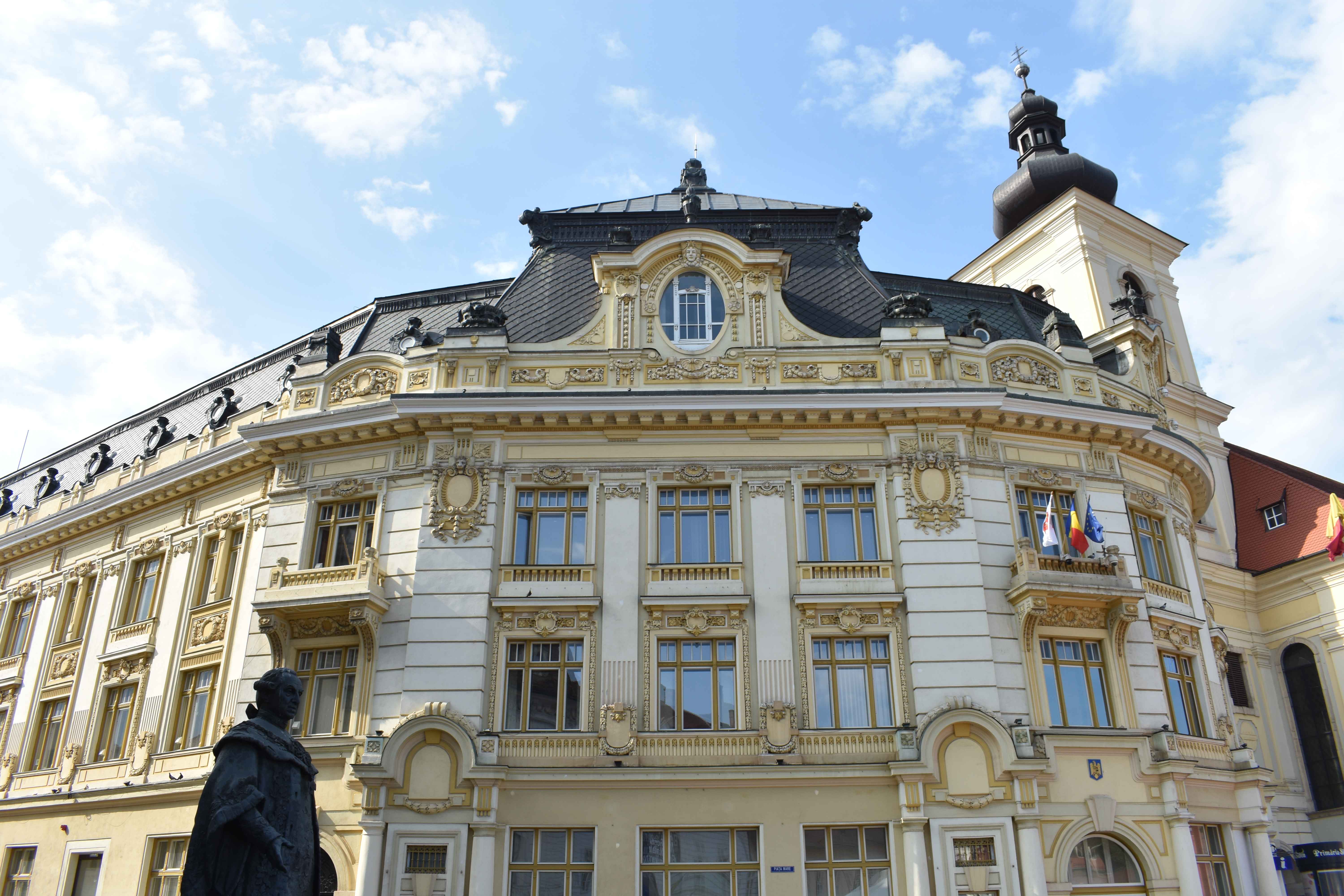
Piaţa Mare, or Grand Square, is, as its name suggests, the largest of the three. Unfortunately, during our visit, it was hosting the Sunbreak Festival, an event marking the beginning of summer. On Saturday evening it was throbbing, and the noise from Paraziții, a well-known Romanian band, was deafening. On our final day, the staging was being dismantled. This meant it was impossible to appreciate the surrounding grand historical buildings, including the Brukenthal Palace and Holy Trinity Roman Catholic Church. I suspect that the restaurants with outdoor terraces overlooking the square were also impacted.
On our first visit to Piaţa Mica, or Small Square, the filming of MasterChef Romania was attracting a significant crowd. As well as permanent souvenir stalls, it was hosting Lavanda Fest, a lavender-themed festival, with stalls selling essential oils, lavender flavoured ice cream and drinks, and basically anything vaguely lavender related. Off here was the Bridge of Lies, a legendary cast-iron bridge from 1859, said to creak or even collapse if someone tells a lie while crossing it.
Piaţa Huet was a little tucked away with a more intimate and tranquil setting. It was the only one surrounded entirely by Gothic buildings including the Evangelical Lutheran Cathedral of Saint Mary, whose tower at 73.34m is the tallest in Transylvania. Off here were the medieval Stairs Passage, Pasajul Scărilor, connecting the Upper and Lower Towns.
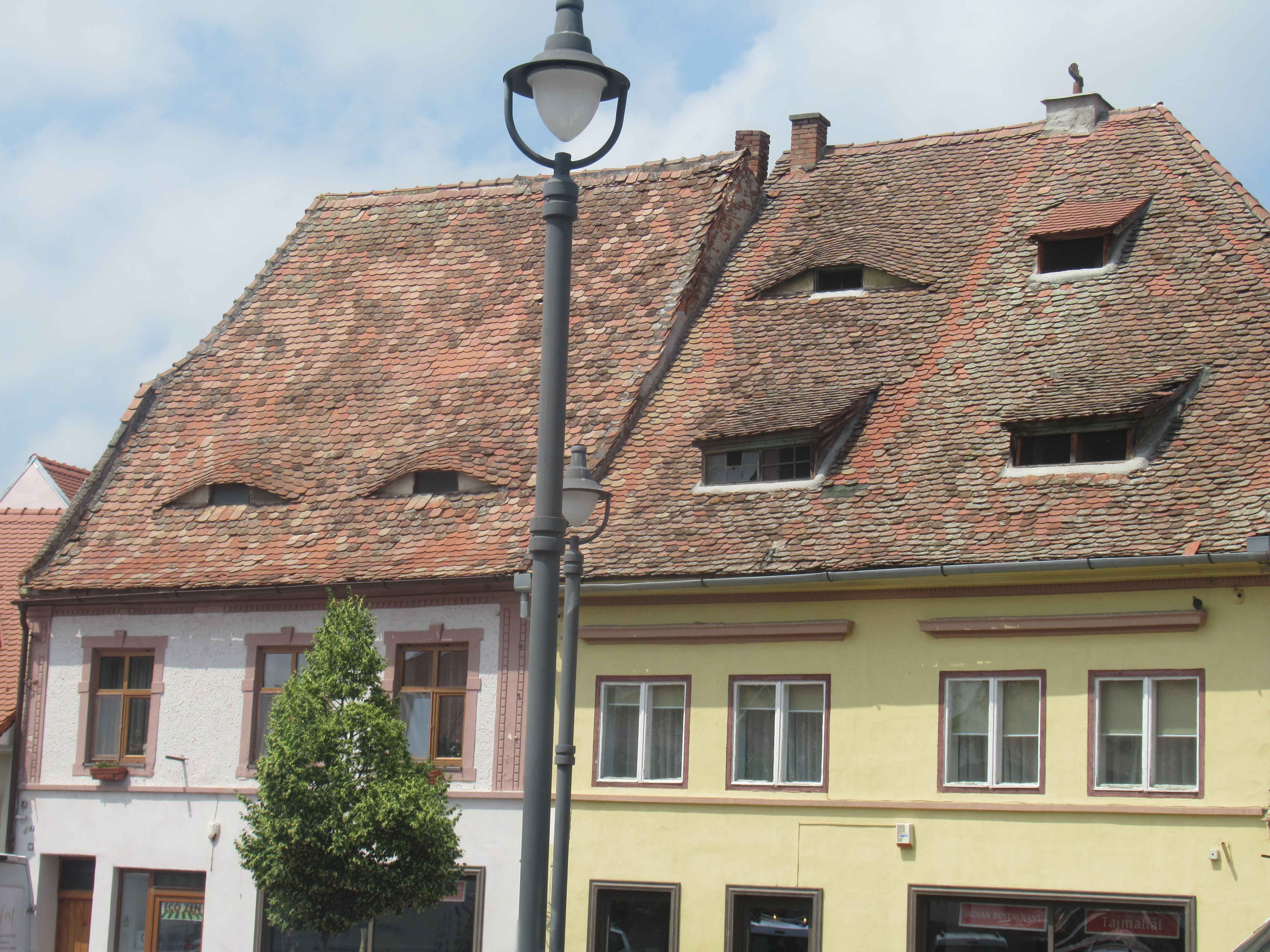
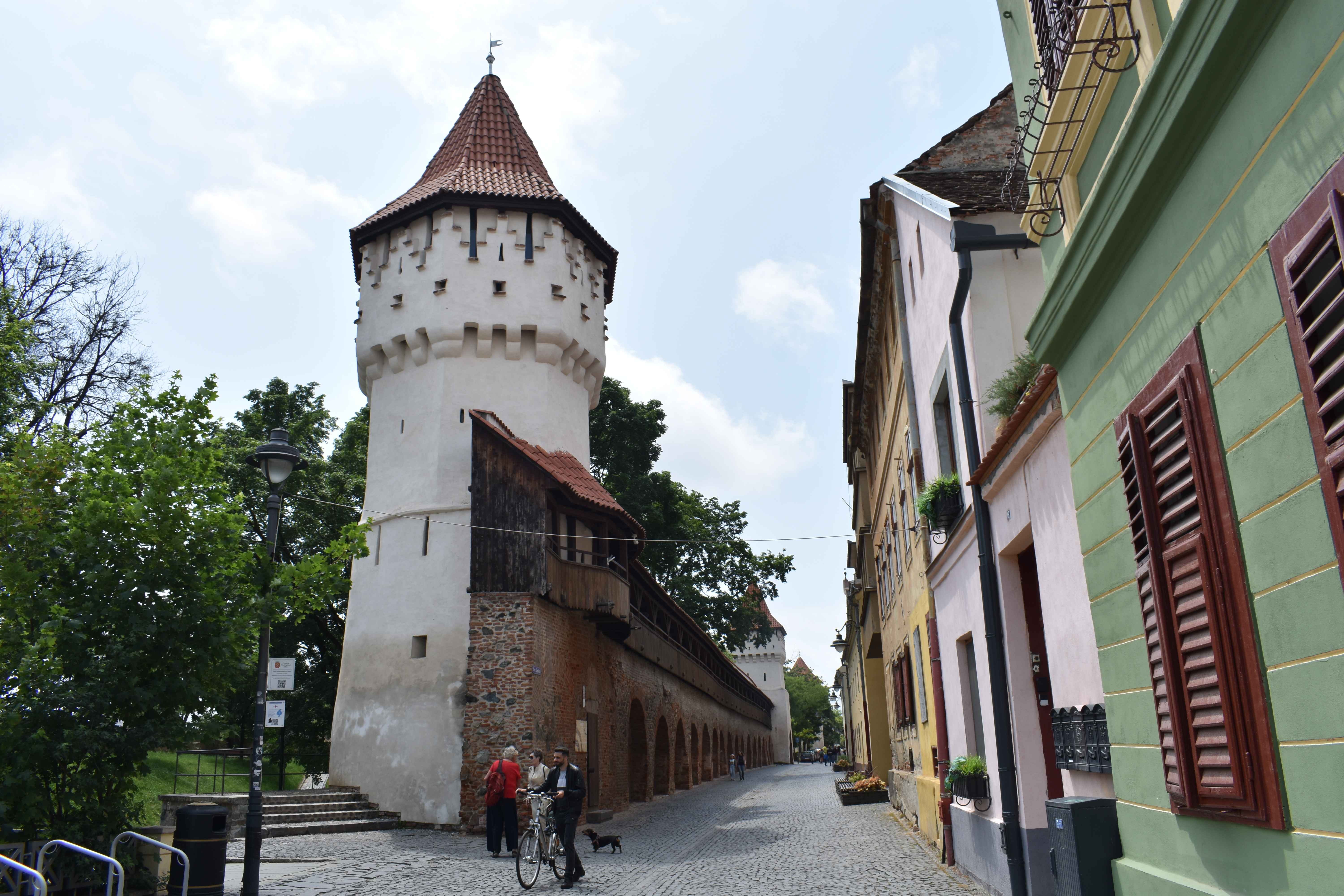
In the lower town we found the eye-catching ‘Eyes of Sibiu’ – Iconic eyebrow-shaped dormer windows that give the rooftops a distinctive and slightly surreal watchful presence. We also found four preserved defensive towers: Arquebusiers (infantrymen), Potters, Carpenters and Thick, which was stocky, squat, reinforced and made to resist cannonballs. Nearby, we found a long line of brass plaques in the pavement leading from the Filarmonica de Stat Sibiu to the Teatrul National Radu Stanca. Each was engraved with the name of an actor or actress, a year ranging from 2013 to 2024 and ‘FITS’ which we later discovered was the acronym for the Festivalul Internațional de Teatru or Sibiu International Theatre Festival. Most of the names were Romanian, but we spotted that of Charlotte Rampling and John Malkovitch.
Whilst there are several museums, including one on the History of Pharmacy, we chose to visit Romania’s oldest, the Brukenthal Museum. It was opened in 1817, in the former palace of Baron Samuel von Brukenthal. There was a logical flow on the two floors, which included a mix of art from 14th century to more modern times, furniture and household artifacts, and carpets. A temporary exhibition celebrated the life of Queen Marie of Romania, a granddaughter of Queen Victoria. This included her paintings, personal possessions and furniture designs she had created for Pelişor Castle which we had already visited.
Whilst the hosting of festivals did impact a little on our sightseeing, our guide explained that Sibui hosts many events including concerts, Christmas markets, film screenings, and dance shows and that it is rare for nothing to be happening.
Eating in Sibiu
We stayed at the Continental Forum Hotel (see separate review) which was in a fabulous location and only a five-minute walk to the pedestrianised street, Strada Bâlcescu, which led to the main square. This was lined with shops and restaurants which all had pavement seating. In addition, there were a large array of ice cream vendors who provided a ‘dessert on the hoof’.
Casa Frieda became our go to place for food and drinks. It was large and usually busy but, with relatively swift turnover, we generally found a vacant table. The wine was reasonably priced (around 75 Lei or £12.50) and there was an extensive menu. One night we shared a Bulgarian salad (cucumber, tomato, eggs, olives and cheese) and a chicken schnitzel, whilst on another, we opted for a heartier Platou Freida, a mixed platter consisted of fried cheese, pork steak, grilled chicken, two mici or ground meat sausages, French fries, and cabbage.