

Whilst touring Moldova, we visited the village of Pocrovca, one of the country’s oldest surviving Old Believer or Lipovan settlements. It was founded in the late 17th century by Russian Orthodox Christians who fled religious persecution following the reforms introduced by Patriarch Nikon in the 1650s.
Nikon wanted to align practices with those of the Greek Orthodox Church, but many believers refused to abandon the ancient rituals. Branded as schismatics, the Old Believers faced severe persecution. Under the Tsars they endured heavy taxation, restrictions on worship, exclusion from public office and other discriminatory measures, prompting many to seek refuge beyond the borders of Russia. On earlier visits to Romania and the Baltics, we had also visited Old Believer villages.
Today, Pocrovca’s population has grown to over 1,000 as unlike many rural Moldovan villages, very few inhabitants leave to work abroad, allowing it to retain a remarkably strong sense of community and tradition.
We met our guide, Tatiana, for a short visit to the village museum. Whilst chatting outside, we noticed an elderly lady trip and fall over. Several neighbours immediately rushed to help, and a local doctor appeared within minutes. It was a small but glimpse of the close-knit nature of village life.
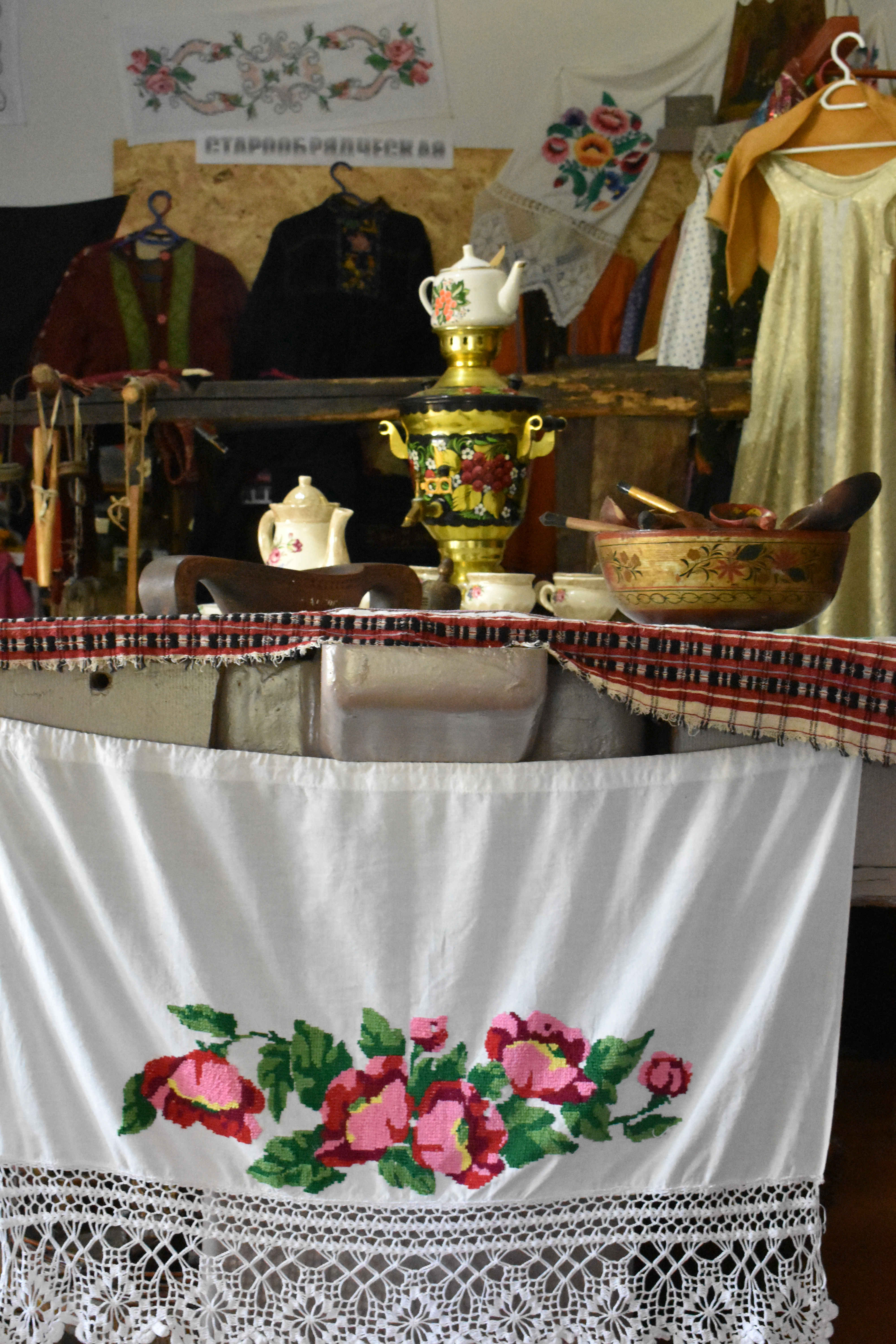
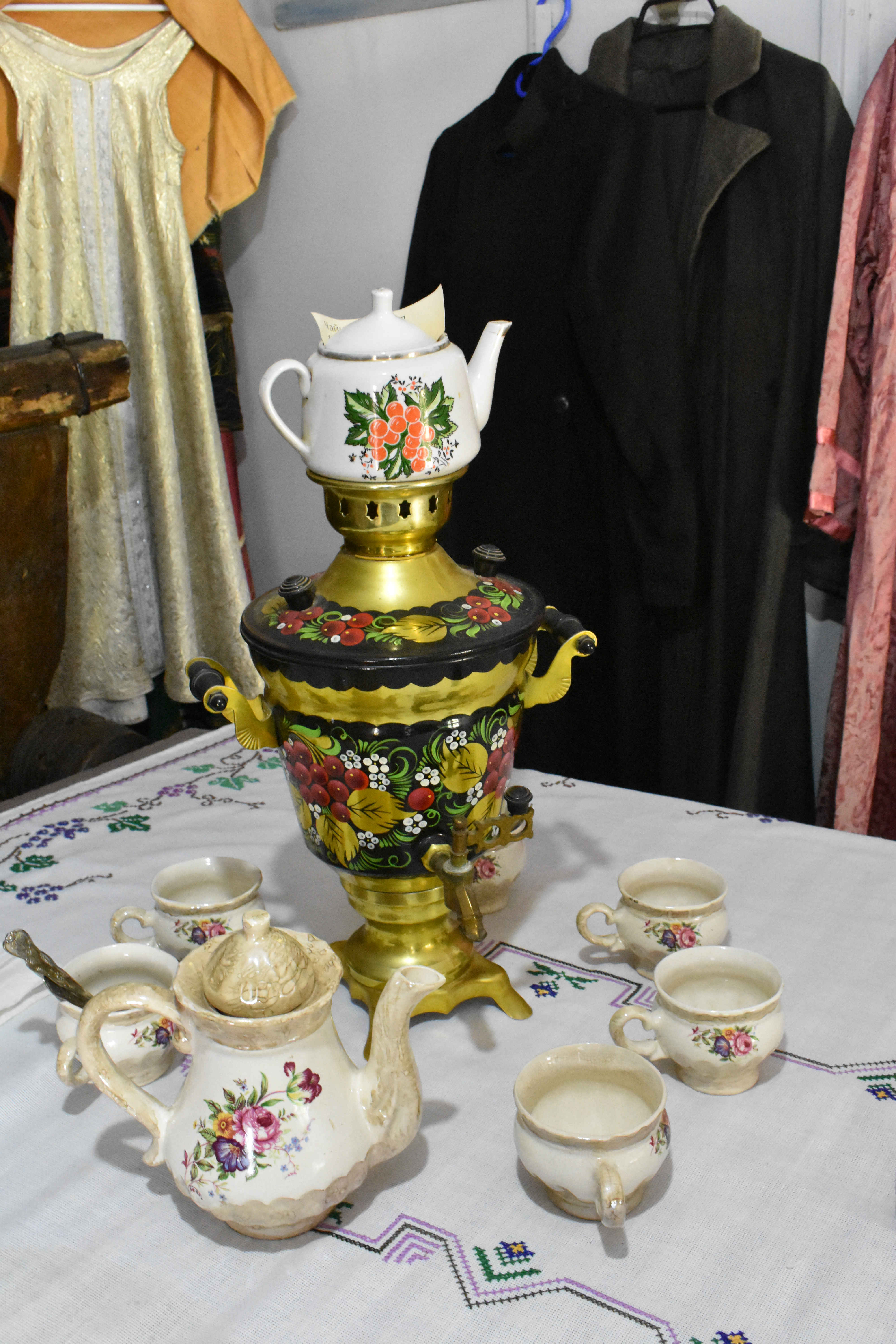
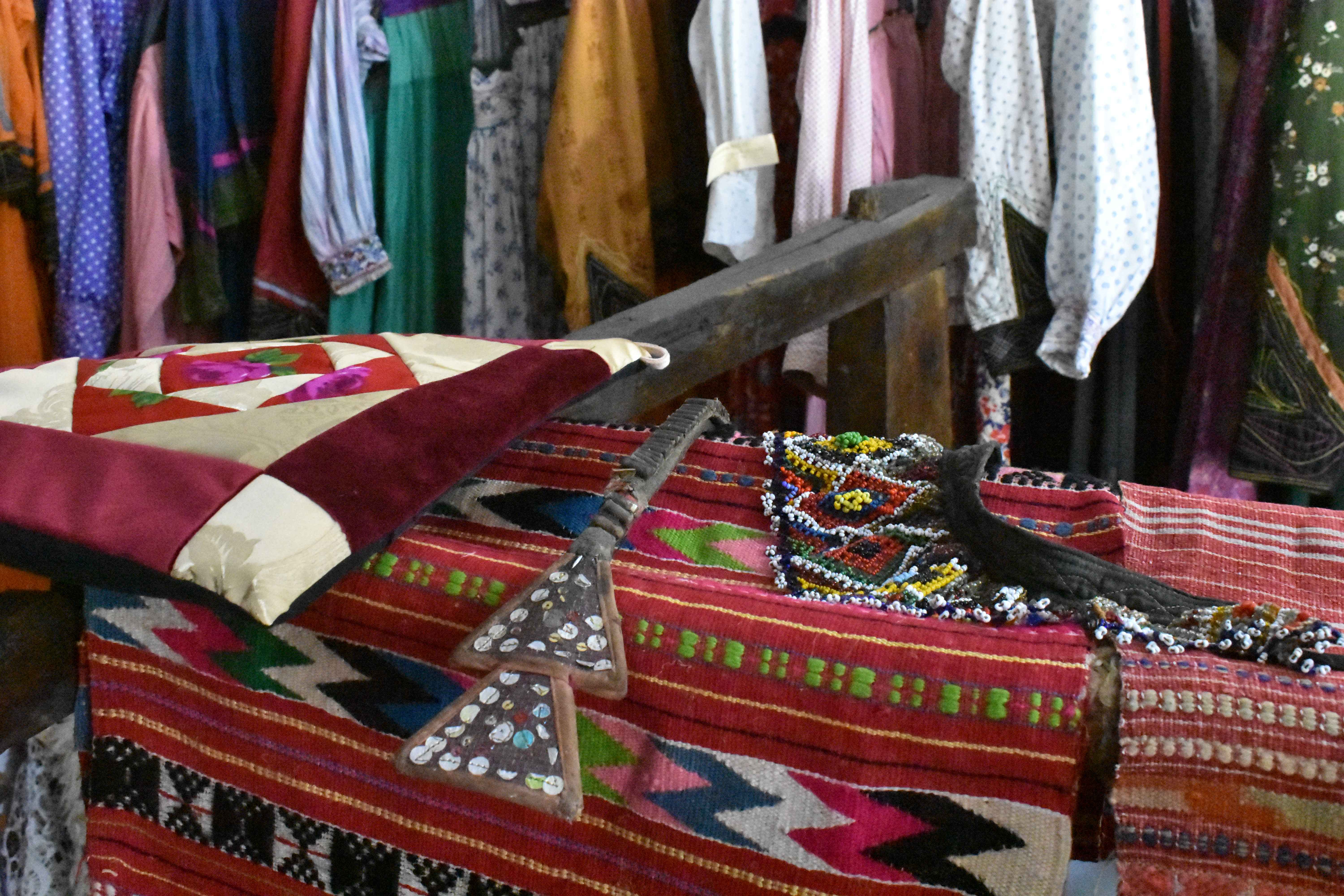
The museum was modest in terms of size and exhibits but gave us an intimate insight into Old Believer customs. Traditional embroidered dresses were displayed alongside the distinctive black clothing worn for church services. Women here continue to wear dresses rather than trousers, while married women traditionally wear beautifully decorated sequined caps. There were also prayer beads, embroidered household textiles and a small prayer cushion used to avoid kneeling directly on the floor during long services. A collection of gleaming samovars and tea sets reflected the importance of hospitality in village life.
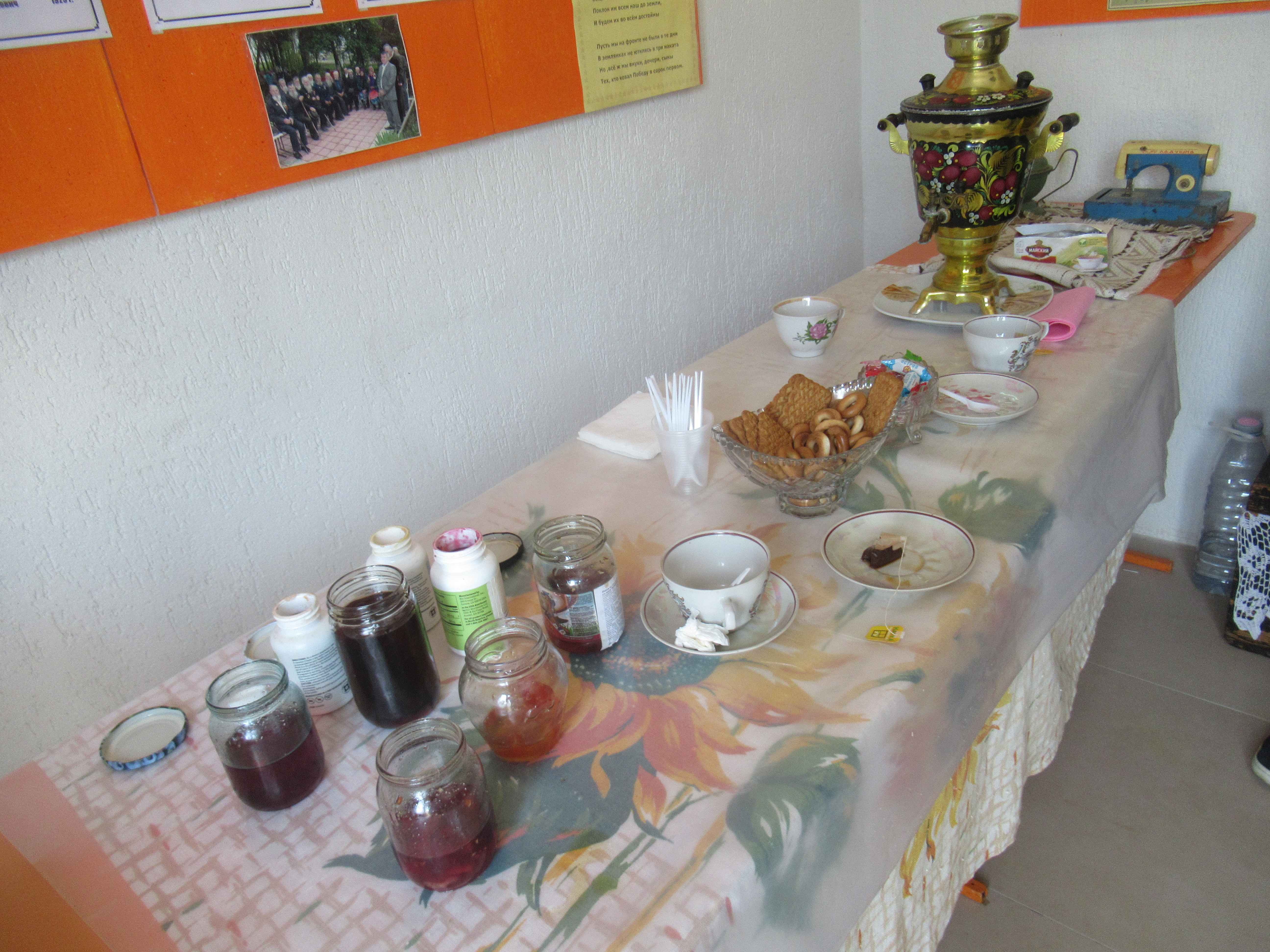
In the entrance room, a samovar gently steamed as Tatiana invited us to enjoy tea accompanied by homemade jams and biscuits. As we chatted, she explained the community’s religious traditions, their lengthy church services and the challenges of observing feast days according to the old calendar. Although the villagers speak Russian, it is with a distinctive Lipovan dialect that has been preserved over generations.
Tatiana told us that they receive relatively few visitors and, before we left, asked to have her photograph taken with us.
Our final stop lay just beyond the village. Walking through an orchard of apple trees, we reached a curious stone triangulation pillar standing alone. Once part of the geodetic surveying network used to map the region, it provided an unexpected reminder that even in this peaceful rural landscape, history has left its mark in surprising ways.
Pocrovca may not feature on many tourist itineraries, but its combination of living history, warm hospitality and enduring traditions made it one of the most memorable cultural experiences of our time in Moldova.