In 2017 I did a review on a visit to Sant’Erasmo which is a large island in the Venetian Lagoon, second only to Venice in size. Most tourists in Venice do not visit it. It’s a mainly agricultural island where a lot of the vegetables and some fruit sold in the Rialto market are grown. In that review I regretted that we hadn’t had time to walk round more of the island so on our latest visit in November we again took the ferry to Sant’Erasmo, to see more of the island.
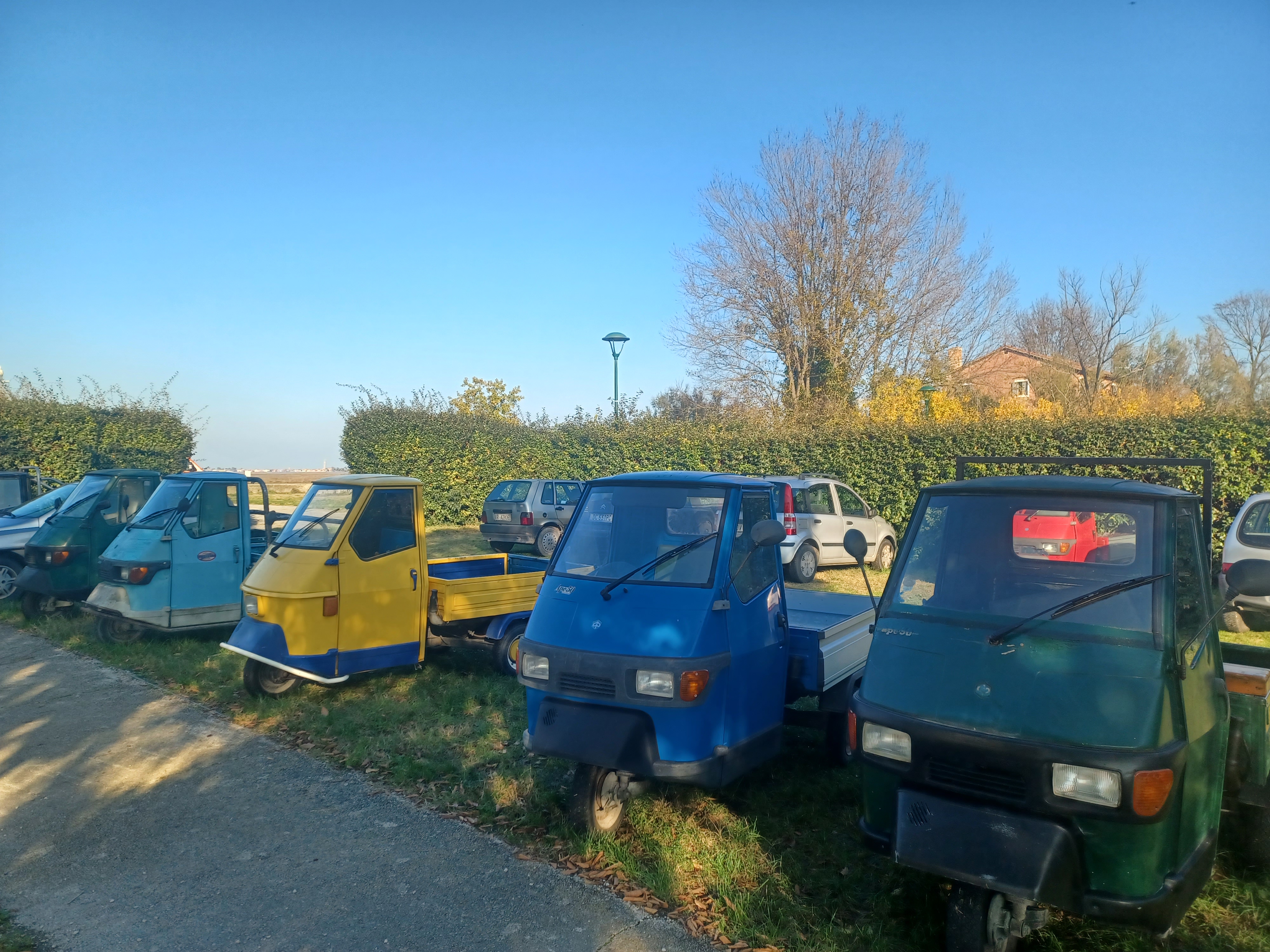
Getting off the vaporetto at Capannone (there are 2 other stops) we walked past a large number of 3- wheeled trucks parked under and around the trees. These Piaggio Apes, which are no longer made, seem to be the transport of choice on Sant’Erasmo; they’re obviously ideal for carrying boxes of produce, presumably to load onto boats to be taken to Rialto Market in Venice. There were also a few small cars there: it’s one of the few islands in the Venetian Lagoon that has road traffic. In the summer bikes can be hired from the one hotel we saw as we walked from the vaporetto stop and it would be a good, easy, flat ride around the island.
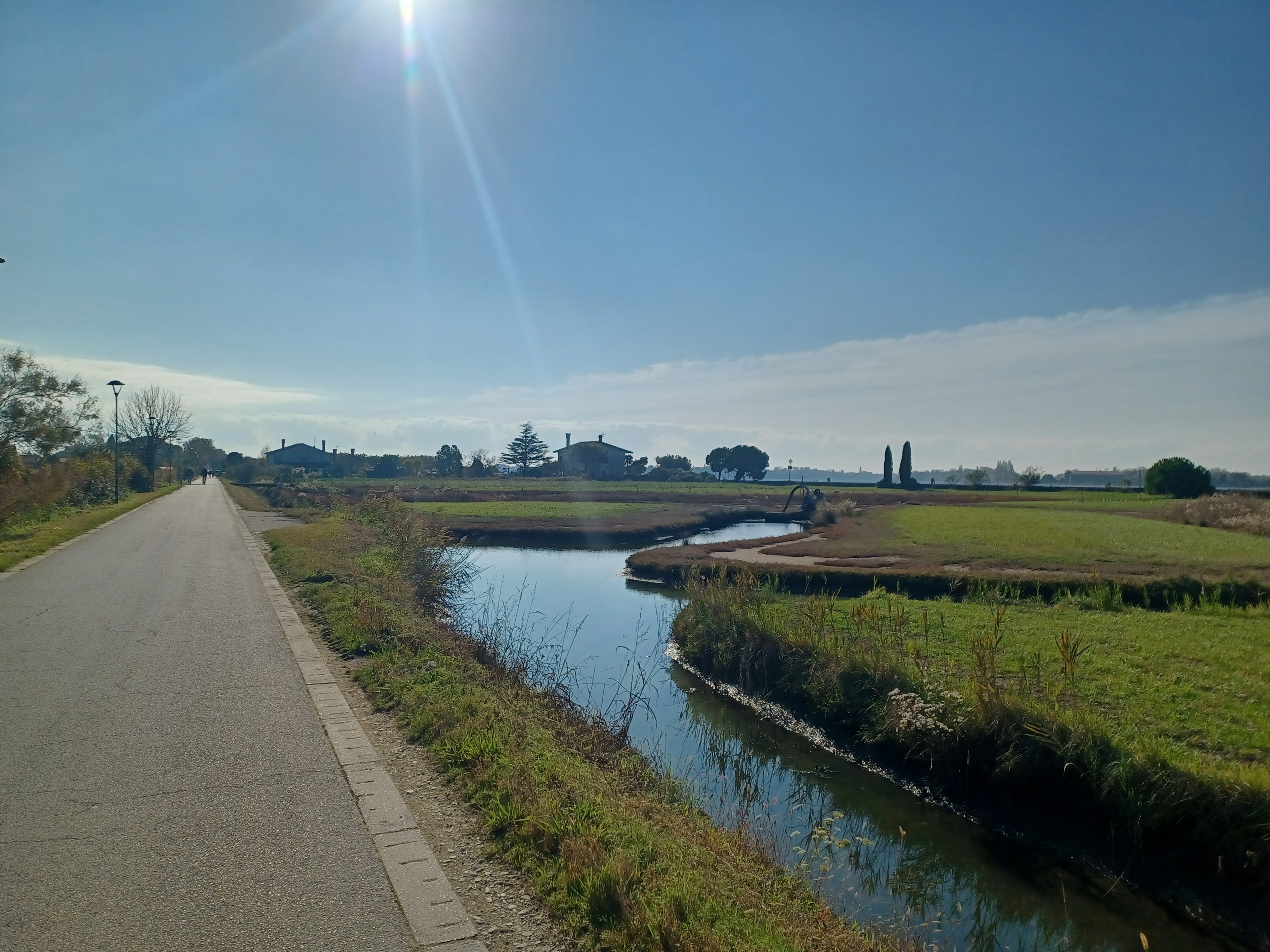
We headed along the quiet country road that we’d walked down on the previous visit. This time we were on our own, without my older sister, so we were able to set a good pace. On this occasion we saw more wild birds, one species being a small flock of Sacred Ibis, which are apparently pests. They originally came from Africa and have settled in the Lagoon, causing problems by raiding the nests of native birds.
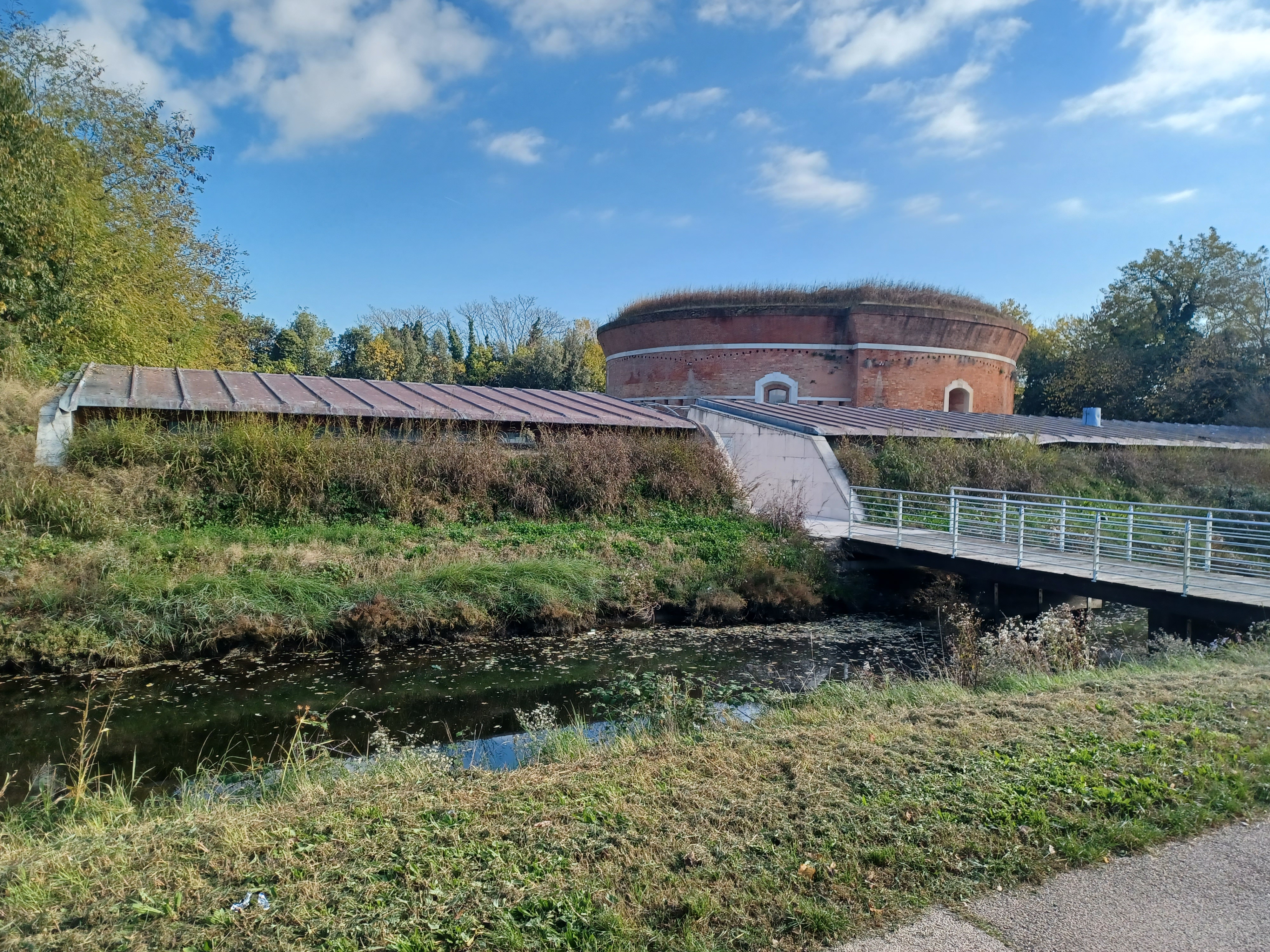
We passed large farms and small-holdings, single storey homes with large gardens around them. We passed the Maximilian Tower, a moated fort built around 1843 during the Austrian occupation to help defend the lagoon. It was used as an anti-aircraft battery and occupied by German troops in WW2: they seriously damaged it before leaving but it has been repaired and has had many uses over the years; when we first saw the tower it was being used for hosting art and cultural events but in November 2025 it appeared to be closed – but that might just have been because it was out of season.
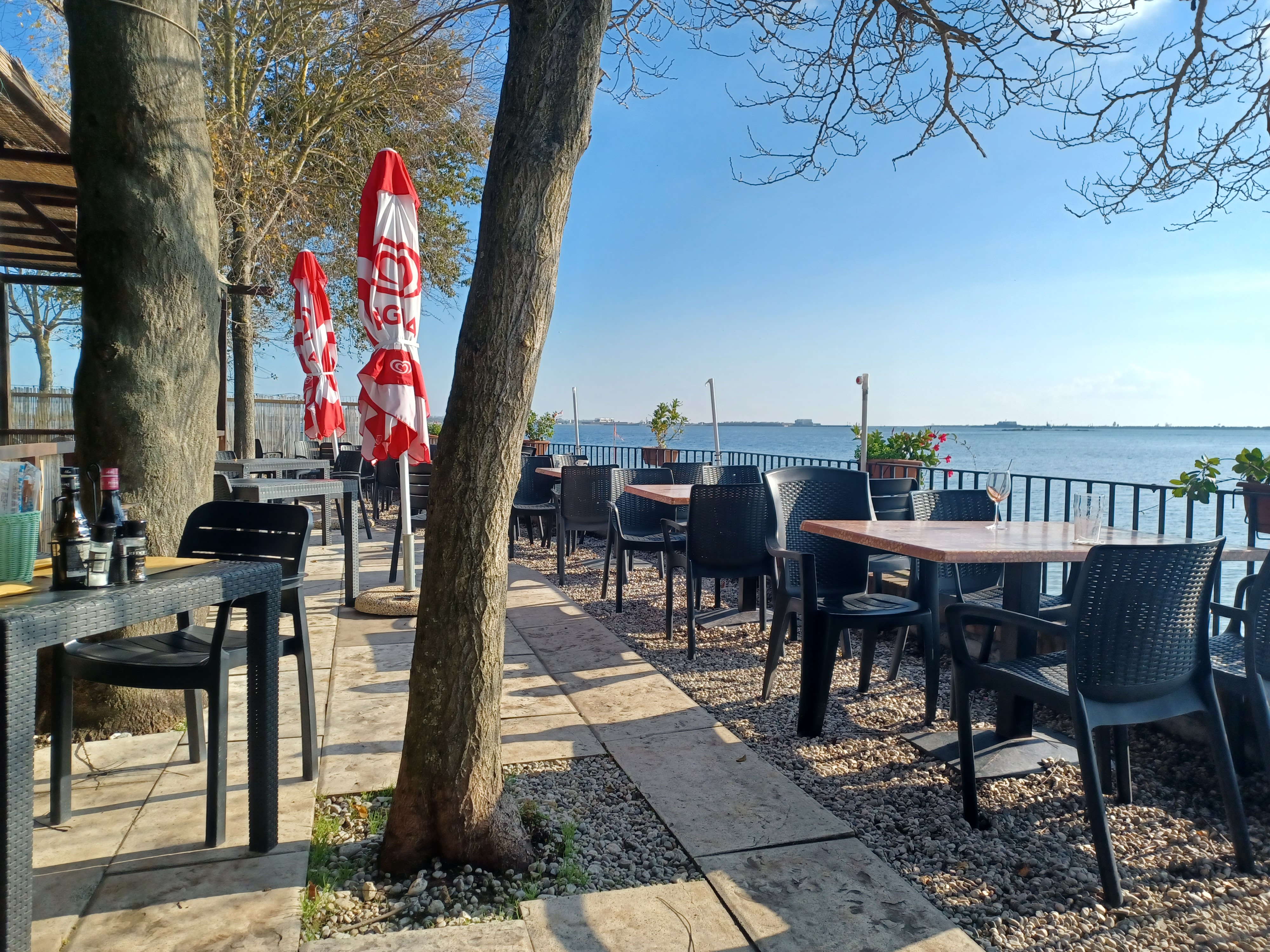
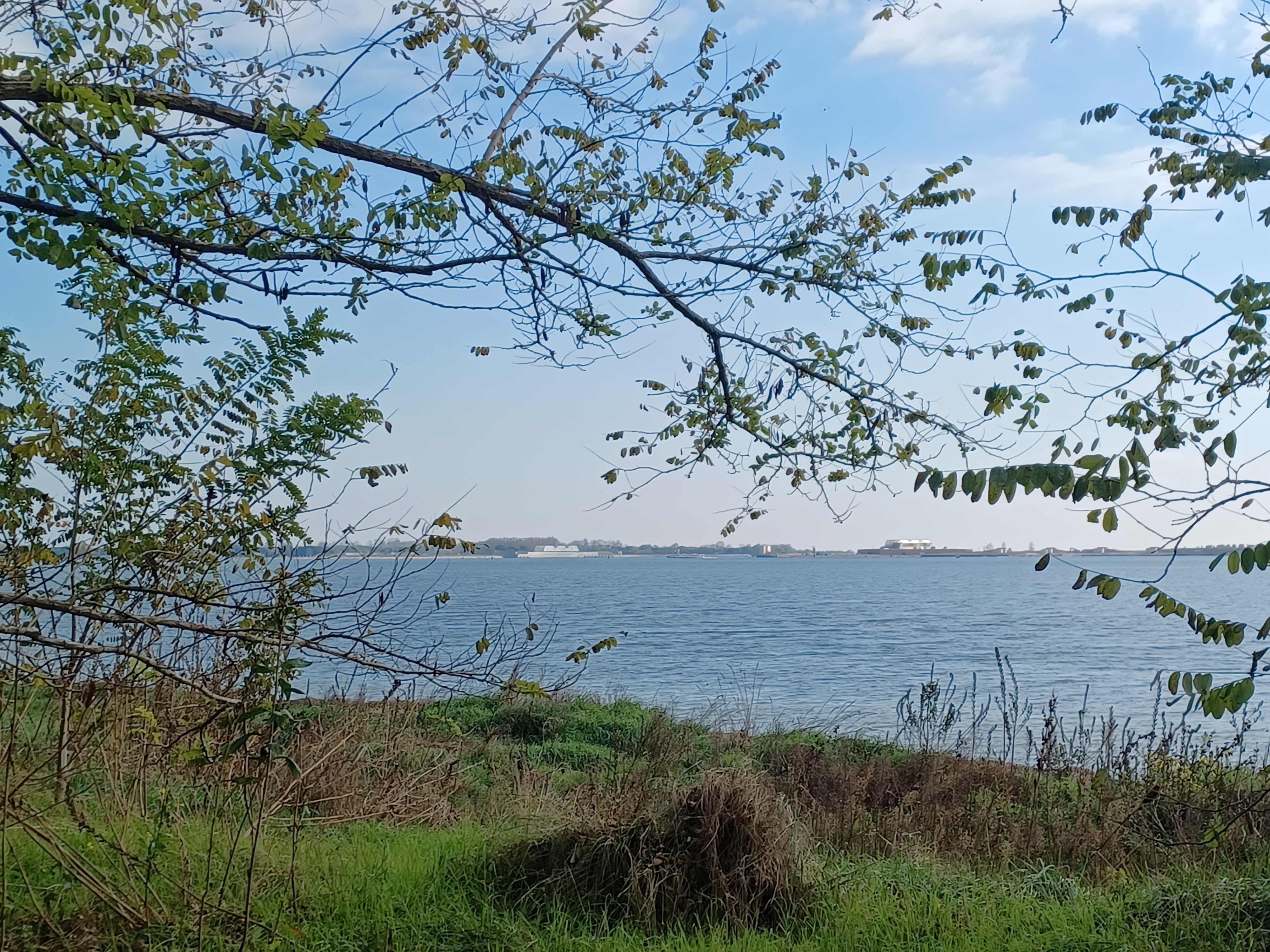
Our first destination was the restaurant by the beach that we’d stopped at before – Al Bacan. It was a pleasant, sunny day so we sat overlooking the water with our glasses of Aperol spritz with beautiful views towards Lido in one direction and Murano in the other. There were butterflies and birds flying over the water and it was very idyllic. We had a light lunch there – fritto misto and white polenta. Al Bacan is probably very busy in the summer but there were only 5 elderly local men there when we arrived, sitting in the sun resting their backs against the wall of the building; it’s obviously their ‘local’, an ideal spot for them to meet regularly for a chat.
We left the restaurant and headed along the path at the top of the beach for a while and didn’t see a soul. Then on the path ahead we saw two cats enjoying the sun so we didn’t like to disturb them and made our way on another path until we reached the road that led us down the opposite side of the island. We encountered more single storey homes with large gardens and polytunnels and spent some time looking at birds through our binoculars and trying to identify them. It’s not particularly beautiful countryside here but flat farmland interspersed with streams and ditches. Our only map of the island was on Google and so when we reached a track that headed back towards the vaporetto stop we thought we’d better follow it as to go any further might have made us late back at our hotel in Venice. This track went past many fields that still had a few crops left in them – vegetables and rows of what looked like radicchio. Sant’Erasmo is most famous for its artichokes, particularly a violet coloured variety, but that is only available for 10-15 days each year. The island used to be covered in vineyards and although there are still some we didn’t see many. As we neared a more built-up area we saw more and more small-holdings, some with chickens and ducks. We reached a road and headed back in the direction of the vaporetto stop and were passed by several more 3-wheeled Apes in various colour combinations. But we saw no other obvious tourists. Then it was back on the vaporetto to Venice. The service to Sant’Erasmo is Line 13 which travels between Fondamenti Nove in Venice and Treporti on Lido, from very early in the morning until late at night.
We still haven’t seen all the island so if we do go again I think we’ll stay on the water bus until the next vaporetto stop which is Chiesa and explore that area for a change.