

We stayed for two nights in Tartu, Estonia’s second-largest city, which is regarded as the country’s intellectual and cultural capital, as it’s home to the University of Tartu, one of Northern Europe’s oldest universities.
It was therefore appropriate that our sightseeing began at Town Hall Square (Raekoja plats), known for the iconic ‘Kissing Students’ fountain. Erected in 1948, the sculpture depicts a young couple locked in a kiss under an umbrella, with water flowing around them. The buildings on the square had two clearly different historical types. Medieval-origin merchant houses with narrow, tall buildings and steep gabled roofs whilst early modern civic buildings, like the current Town Hall, were wider, and more symmetrical, with plastered façades. One building had a Soviet-era hammer and sickle above the door, which reflected an official institution during the Estonian SSR period. Whilst many Soviet symbols were removed after independence, this one was left in place deliberately. Off the square was the historic Barclay House, known as the local Tower of Pisa, and linked to one of the most famous figures in Estonian and Russian military history, Field Marshall Michael Andreas Barclay de Tolly. It now houses the Tartu Art Museum.
Away from the square, steps led to Pirogovi plats or park, named after Nikolai Pirogov, a 19th-century Russian surgeon and scientist who worked in Tartu. Here a sign stated that the drinking of alcohol was allowed: in Estonia, drinking alcohol in public places is prohibited. Historically the plats was associated with student culture and controversially alcohol use, but in the early 2000s, it was designated a summer ‘picnic area’ where low-alcohol drinks could legally be consumed.
In the nearby Toomemägi or Toome Hill, a statue was dedicated to Friedrich Georg Wilhelm Struve, one of the city’s most important scientists. It stood in front of the old observatory building which was decommissioned due to light pollution. The elegant Neoclassical Angel’s Bridge crossed a ravine, and we heard the local legend – if you hold your breath just before stepping on the bridge, run across it and make a wish, it will come true. Nearby was Devil’s Bridge, whose name is said to come from the bridge’s darker, heavy appearance especially when compared to the lighter-coloured Angel’s Bridge.
There was also a statue of Karl Ernst von Baer whose head is ‘washed with champagne’ on the evening of April 30 after students have marched in a festive procession through the city.
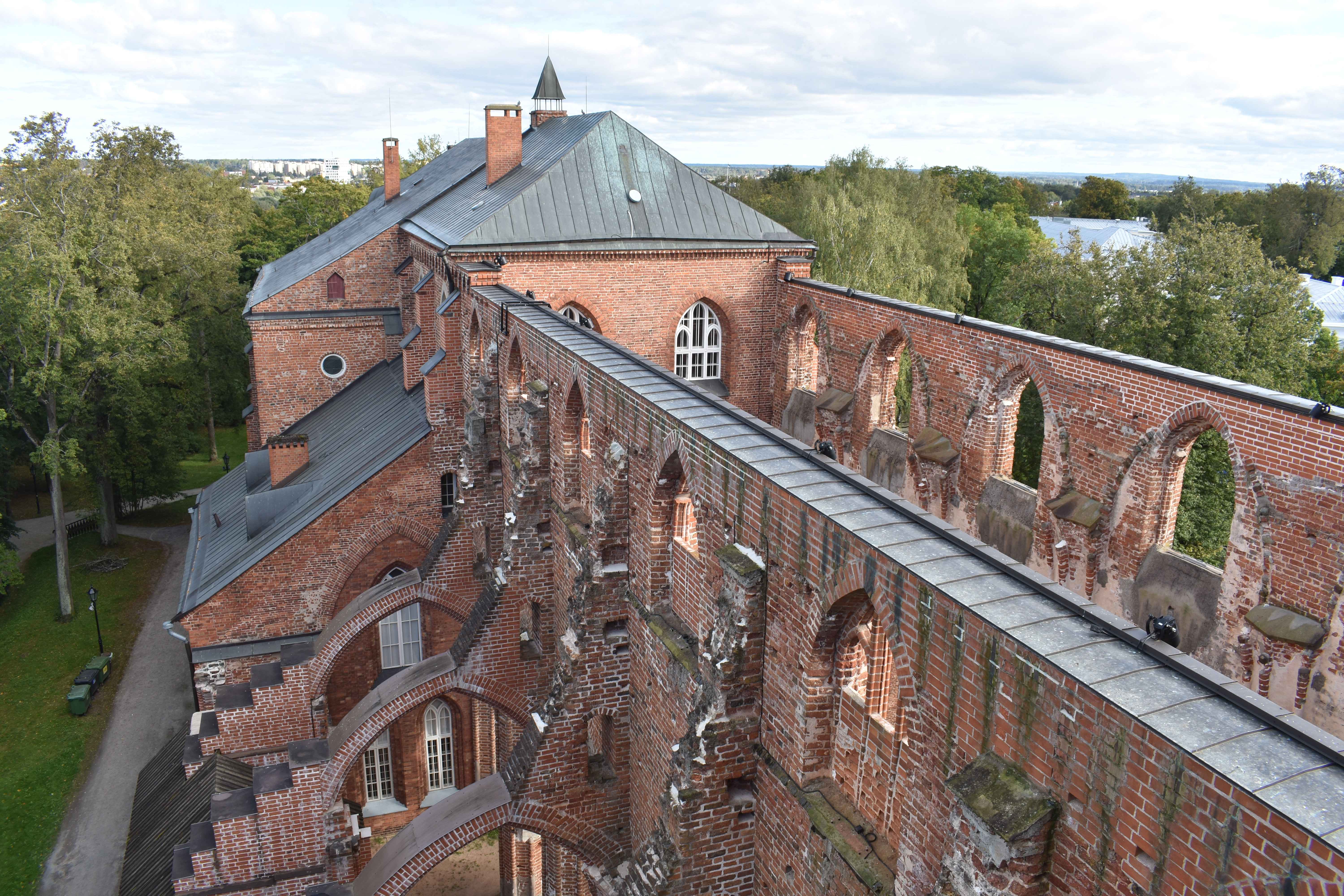
Over the bridge was a monument, in the form of a large stainless-steel replica of a letter seal, to Johan Skytte, a Swedish politician, the founder and first chancellor of the University of Tartu. Nearby was the Gothic Tartu Cathedral now in ruins. However, it is stabilised and we paid a senior rate of €3 to walk up the 100+ steps of the northern tower to reach a huge viewing area.
Back down in the town we passed Theatre House, with puppet etchings on the shutters and a puppet theatre in the basement and peeked into the nearby Toy Museum with a cute clown, doll and bear above the door.
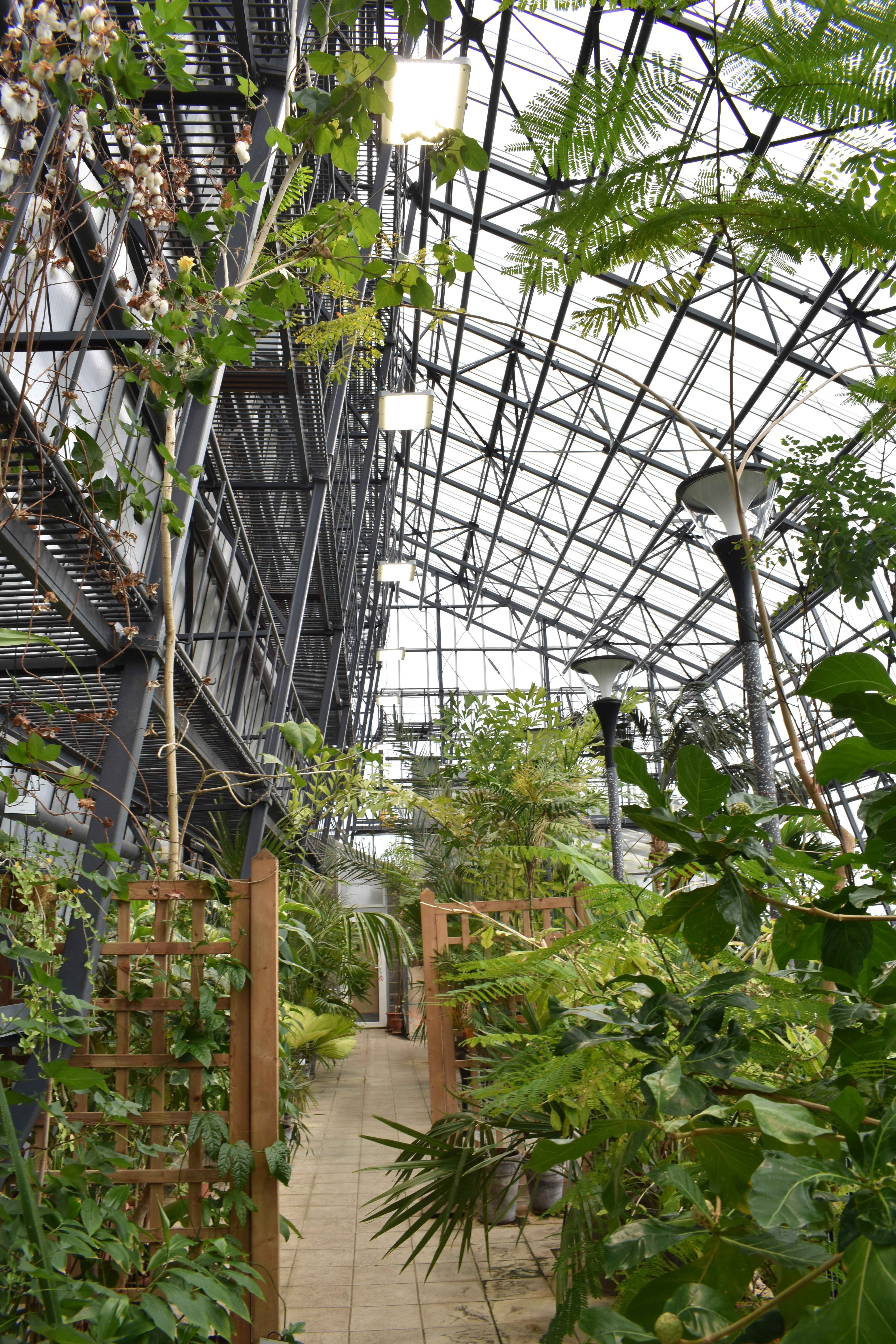
The free University Botanical Gardens had 8,000 plant species and varieties, although it was €3 to visit the two-storey greenhouse with its tropical, subtropical, and Mediterranean plants.
At the grand Neoclassical University of Tartu building, a permanent exhibition of old photographs in the foyer showed how the building and the university evolved over time. In the nearby Von Bock House, the building’s windows were used to display photographs of notable University professors and lecturers.
In Tartu Central Park, a controversial statue ‘Father and Son’ by sculptor Ülo Õun, depicted the artist as a man and his son when he was 18 months old. Both figures are naked and at the same height, holding hands emphasizing the equality and closeness between them.
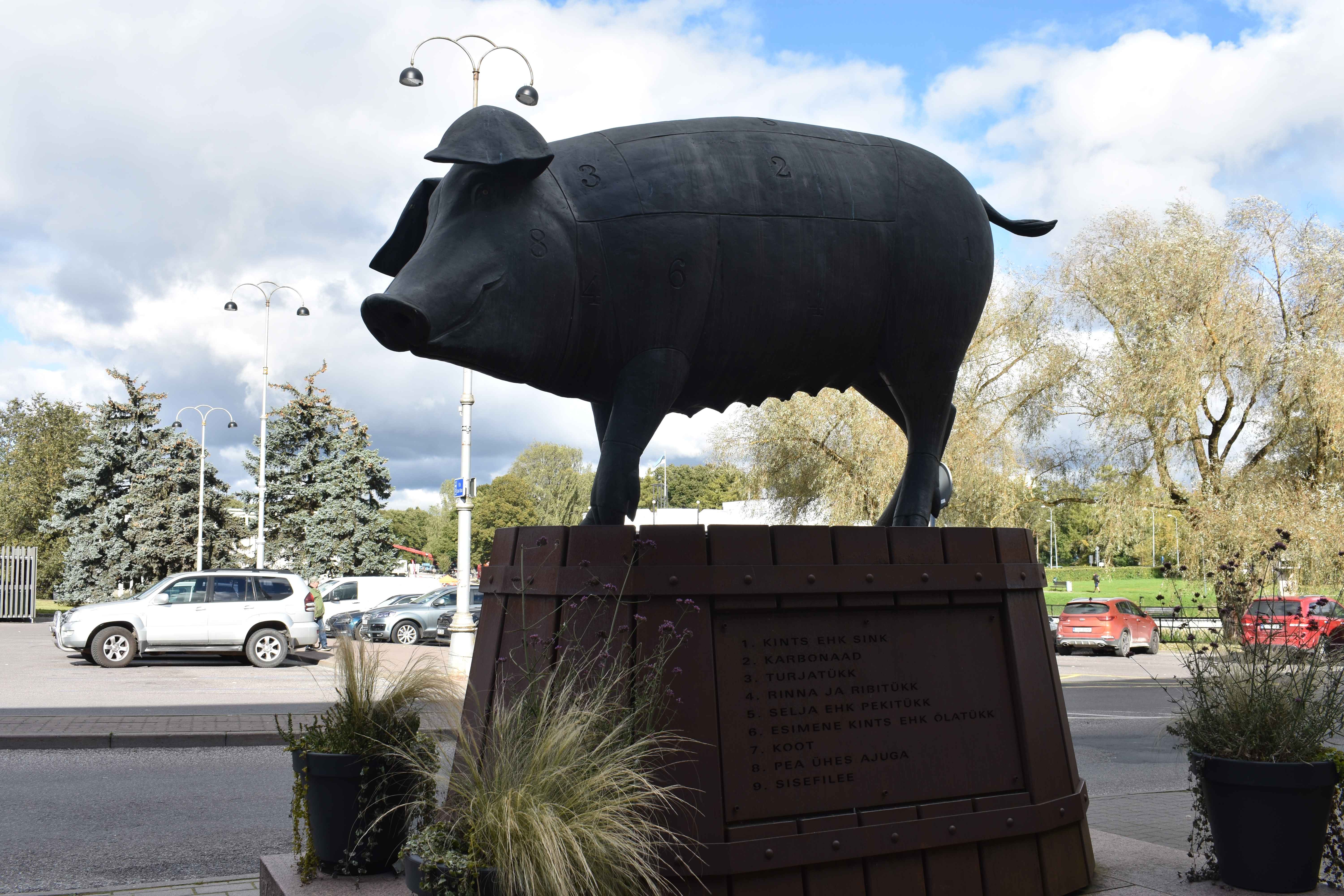
At the entrance to the Art Nouveau Tartu Market Hall main entrance stood a large and striking Bronze Pig which doubled as a kind-of visual butcher’s chart as the body is marked with numbered cuts of pork, showing how a pig might be butchered. Here stalls were laden with local products including brined, fermented and salted pickles, sauerkraut and chanterelle mushrooms.
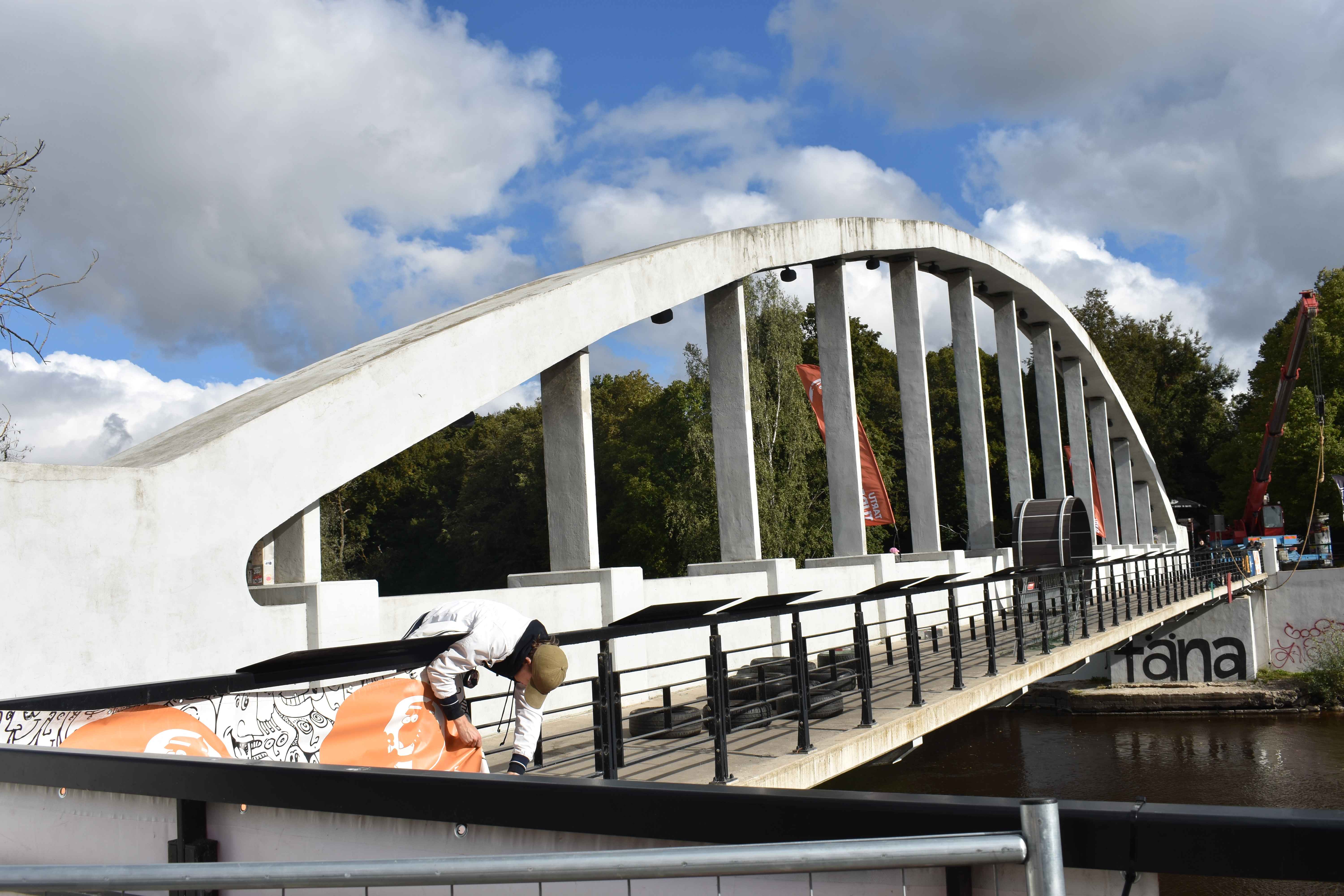
The city sits on the banks of the Emajõgi River and spanning it is Kaarsild, or the Arch Bridge. An informal student rite of passage is to climb or walk over the curved top arch rather than the regular footpath. Our stay in September, coincided with a major student festival when water-based activities were taking place on the riverfront.
We enjoyed our time in Tartu and found that it truly deserves its university city title, as wherever we went, we found connections with students or studying.

