Although I celebrated my 50th birthday with friends in Latvia’s capital Riga, my memories of it 16 years later, are a little sketchy. However, now more grown up or at least older, we returned for some serious sightseeing.
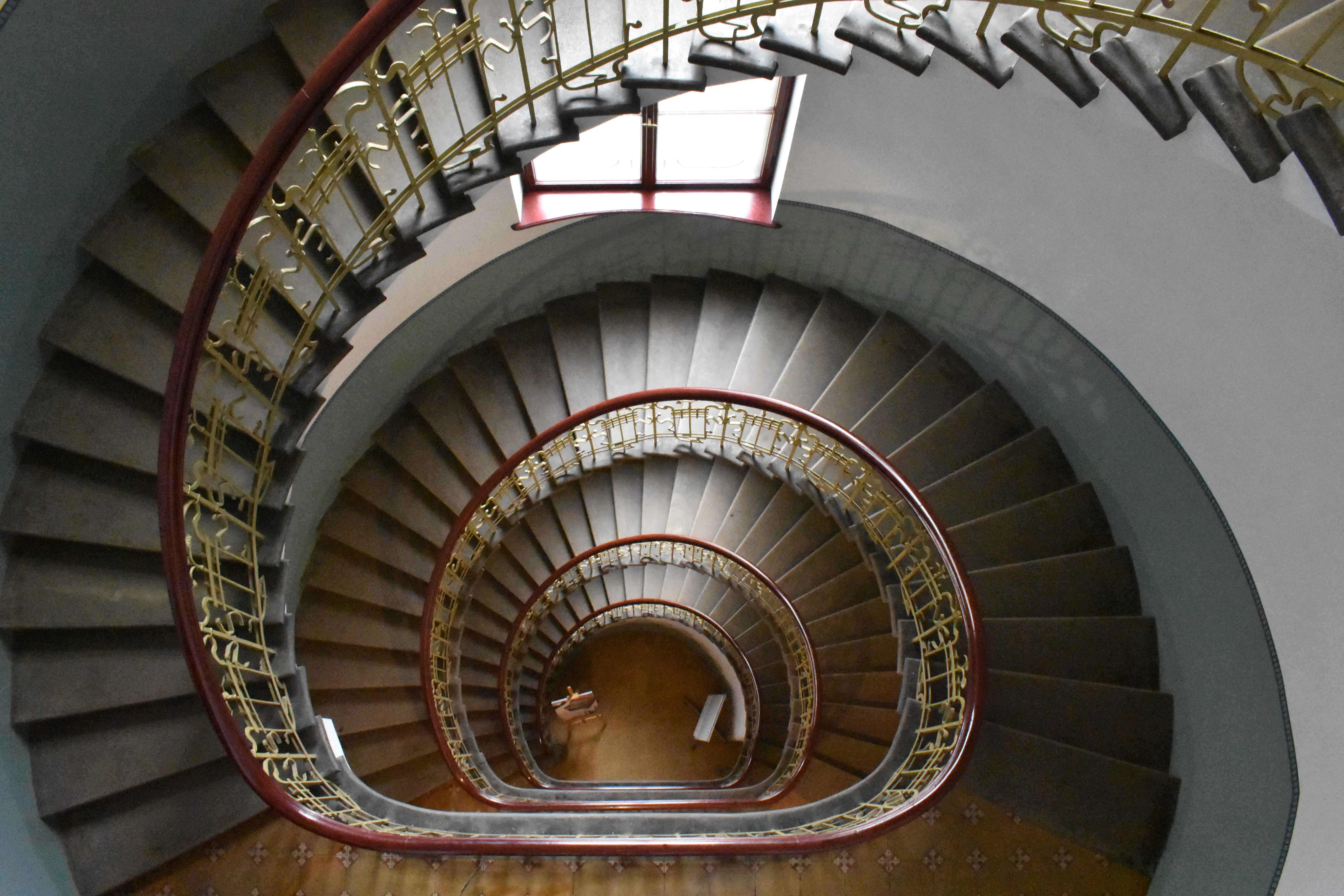
Riga is known for its Art Nouveau architecture, and a walk down Alberta iela, with one of the world’s highest concentrations of Art Nouveau buildings was a must. This led to the Riga Art Nouveau Centre with a grand circular staircase, and rooms depicting the look and feel of an upper-middle-class Riga apartment around the early 1900s.
The Russian embassy was housed in a wonderful Art Nouveau building. Latvia is a staunch ally of Ukraine, and the street to the left previously named Maskavas iela or Moscow Street was changed to Ukrainas Neatkarības iela or Ukrainian Independence Street, with the street sign being defiantly attached to the embassy’s wall. On the opposite wall, a large poster depicted Vladimir Putin’s face blended into a skull, whilst the main entrance looked out onto a dozen Ukrainian flags flying in front of the university.
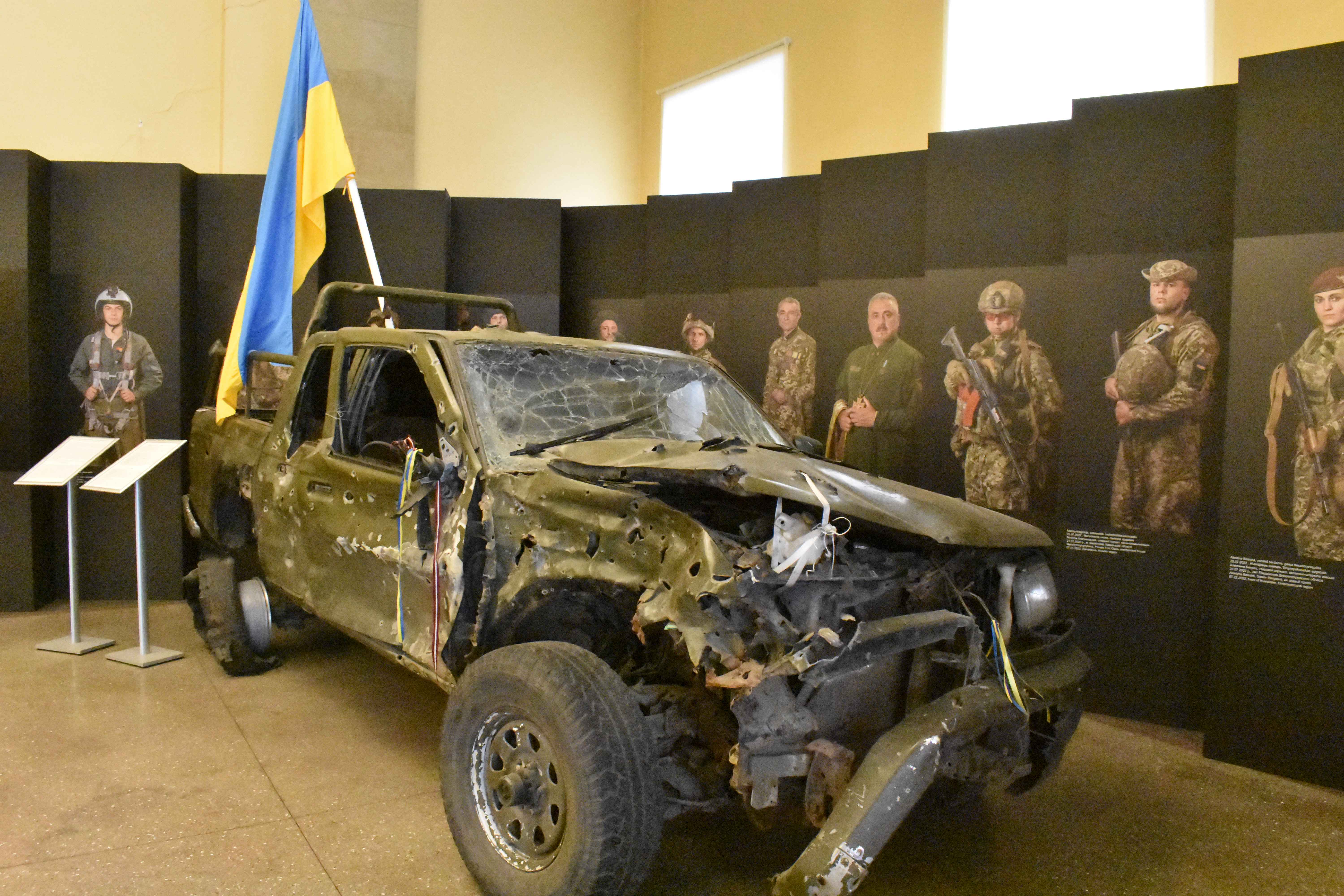
In the foyer of the War Museum, we found a bombed-out vehicle and heard how Latvia sends impounded and forfeited vehicles from drink driving offenders to Ukraine, where they are used in many ways.
The 42m tall Freedom Monument was erected in 1935 and is topped by a female nicknamed Milda with the three golden stars above her head representing Latvia’s three historical regions. Although the Soviet regime tried to suppress the statue because it symbolised independence, it survived as its meaning was reinterpreted as ‘Latvian Soviet friendship’.
The street leading to the monument, now called Brīvības bulvāris or Freedom Boulevard, has had its name changed several times to reflect the ruling power: Alexander Boulevard during the Russian Empire, Lenin Boulevard during Soviet occupation, and Adolf Hitler Street during German occupation.
Outside the Parliament building, our guide talked about how young democracy was in Latvia and how older people were still influenced by Russia, leading to the phrase, ‘Keep Latvia, lock up granny’s passport’, as under the Soviet regime, the passport had to be produced when voting.
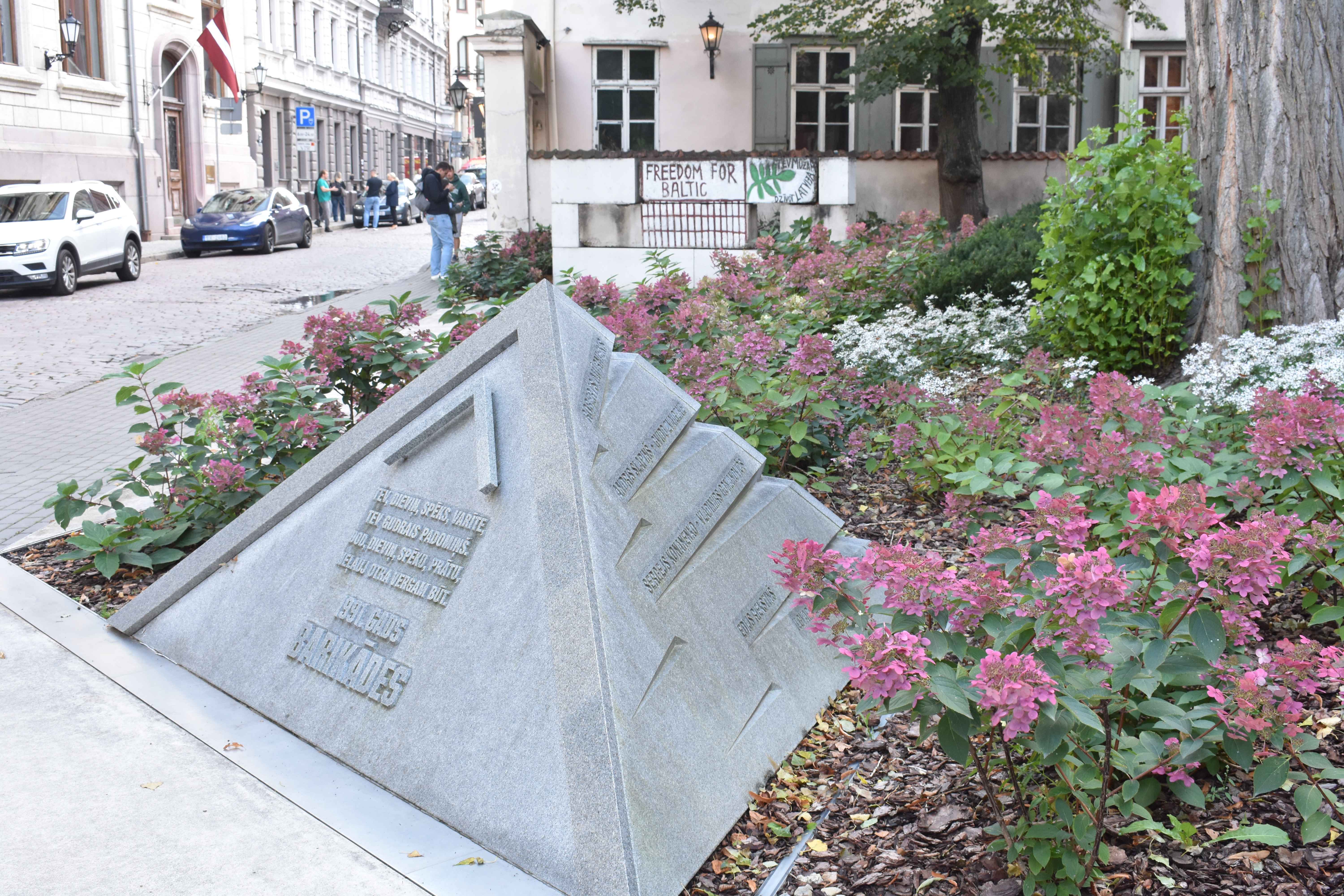
Barrikādes memorial, a ground-level triangular monument, paid tribute to those who built barricades and defended Latvia’s independence during January 1991, when Soviet forces tried to suppress the independence movement.
We visited Sena Klēts to admire their collection of traditional national costumes and bought wooden Christmas tree ornaments from the craft shop. Latvia is often called a nation of singers and here we watched a video of the Song and Dance Festival, held every five years which up to 40,000 people participate in. We also saw footprints in the pavement connected to Latvia’s Singing Revolution and the Baltic Way, when on 23 August 1989 over two million people joined hands from Tallin to Riga to Vilnius to mark the 50th anniversary of the Molotov-Ribbentrop Pact.
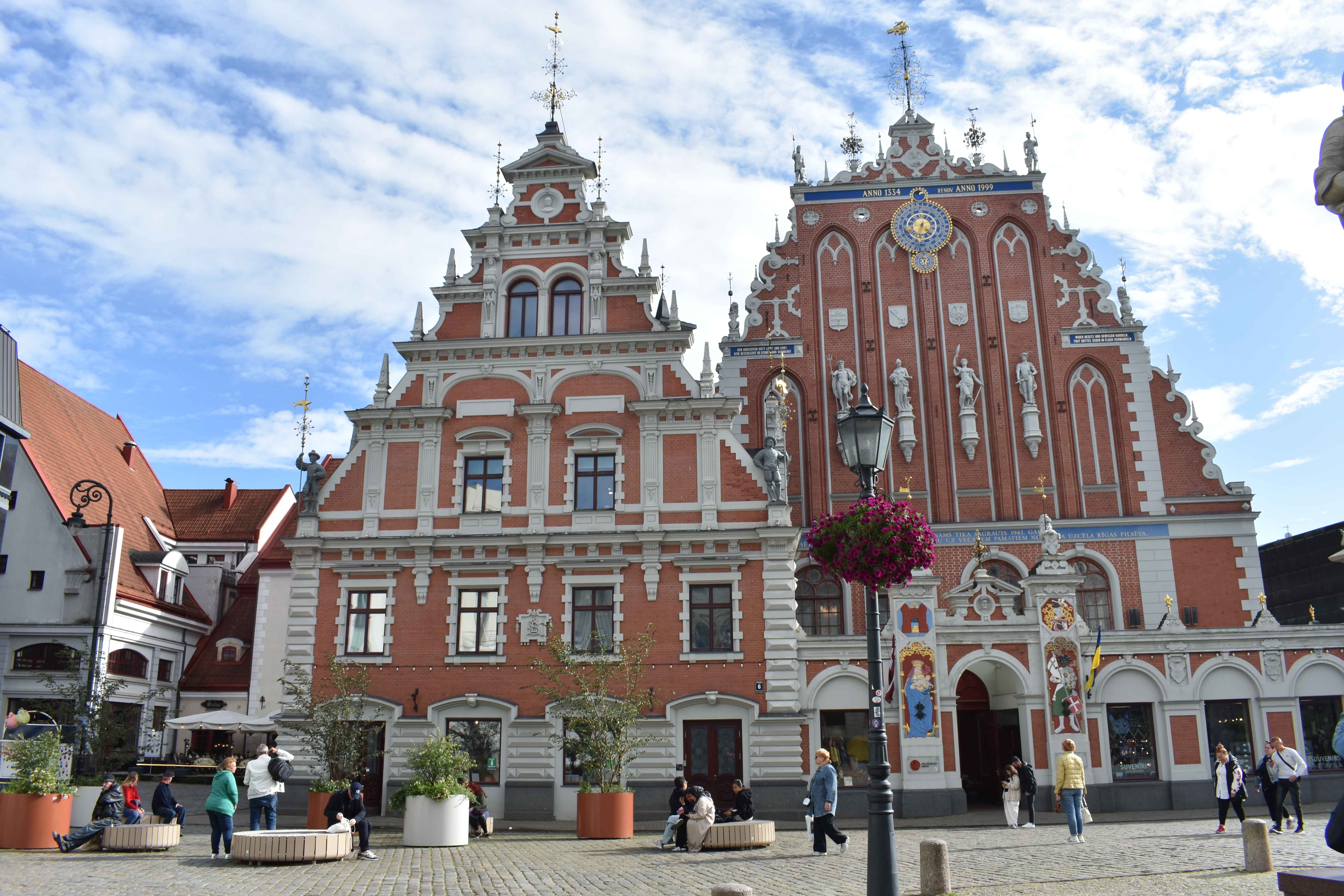
Town Hall Square, Rātslaukums, is one of the most iconic and historically rich places in the Old Town. It was surrounded by many fabulous buildings including the House of the Blackheads, whilst a medieval knight symbolizing freedom and justice, stood in the square. There was also a metal statue of a Christmas tree as Riga was the site of one of the earliest documented public trees, with a written record from 1510.
The Old Town also had many interesting buildings. Jauniela 22 was used as 221B Baker Street in the classic Soviet Sherlock Holmes films in the early 1980s and surrounding façades have doubled not only as Victorian London, but also as streets in Russia, Paris, and other European cities. What is known as the Three Brothers or Trīs brāļi, a white, yellow, and blue house side by side, each had a different style of architecture and are the oldest surviving residential houses in Riga. On the roof of what is known as Cat House, two black metal cats had arched backs and raised tails. The building was owned by a wealthy Latvian merchant who was refused entry to the powerful Great Guild, whose building stood opposite. He placed the cats’ bottoms facing the Guild until eventually after reconciliation, and his acceptance into the Guild, the cats were rotated to face the street instead.
Bastion Hill Park, or Bastejkalns was built on the site of the former city fortifications, and the Riga Central Canal running through it, which was part of the old defensive moat system, offered boat trips. At the entrance were large, unpolished granite boulders, marking places connected to the January 1991 Barricades and a memorial oak tree had been planted to demonstrate strength and endurance. Near the Latvian National Opera House was a bronze sculpture of George Armitstead, a British born entrepreneur and Mayor of Riga from 1901 to 1912, his wife and their dog. It had been unveiled on 18 October 2006 by HM Queen Elizabeth II during a state visit. On the edge of the park was Laima Clock, a famous clock tower strongly associated with chocolate, which is one of the city’s most popular meeting and dating spots.
Vērmanes Garden, one of Riga’s oldest public parks, now covers the historic Rīdzene River flowing beneath it. Although the water can no longer be seen, the river’s movement and bends have influenced its design with curving paths, rounded flowerbeds full of blue and white flowers, and benches placed along arcs.
Riga Central Market, said to be one of the largest in Europe, was slightly out of town and beside the Daugava River. It’s been operating since 1930 and is famous for its five enormous hangars, originally built as Zeppelin airship hangars in Germany during World War I and later moved to Riga and repurposed. Each was said to have a theme, meat, fish, dairy, fruit and vegetables and gastronomy, however, we were slightly underwhelmed as many stalls were closed, one hangar was being refurbished, you had to pay for the loos, and the central eating area didn’t appeal.
A more recent addition to Riga was several outdoor statues of animal characters from Flow, the 2024 Latvian wordless animated film. According to our guide, it scooped all the major awards, except the BAFTA which went to Wallace and Gromit!
This was our favourite of the three Baltic capitals and we found lots to see and do and would definitely like to return.