

It’s hard to believe that a secret Soviet bunker which could shelter 250 of Latvia’s Communist elite from a chemical or nuclear attack for up to three months, could remain classified until 2003.
The bunker is now open to the public, and although group tours began at 3pm, we had a long journey afterwards and paid €150 for a private tour at 11am.
Our guide Oscar began with high-level facts about the bunker, which was spread across approximately 2,000m². Although planning began in the 1960s, we were told how it had been secretly constructed. This included building it underneath the Līgatne Rehabilitation centre which provided a cover for the delivery of materials, and relying on compartmentalisation, where workers only knew their specific tasks, as very few saw the full architectural plan. It became operational in 1982.
The location of Skaļupes was chosen carefully: it was a remote, low-population area and the surrounding Gauja National Park provided camouflage; it was far enough away from key NATO targets, but close enough to maintain communication with them; and the Soviet Latvian leadership could realistically make it there within hours.
We were led down 43 steps and 9m underground into the bunker which was under 5m of concrete, reinforced steel, and lead shielding. A map of the bunker, with rooms arranged in a grid, had Lenin’s name at the bottom which was said to give importance to documents.
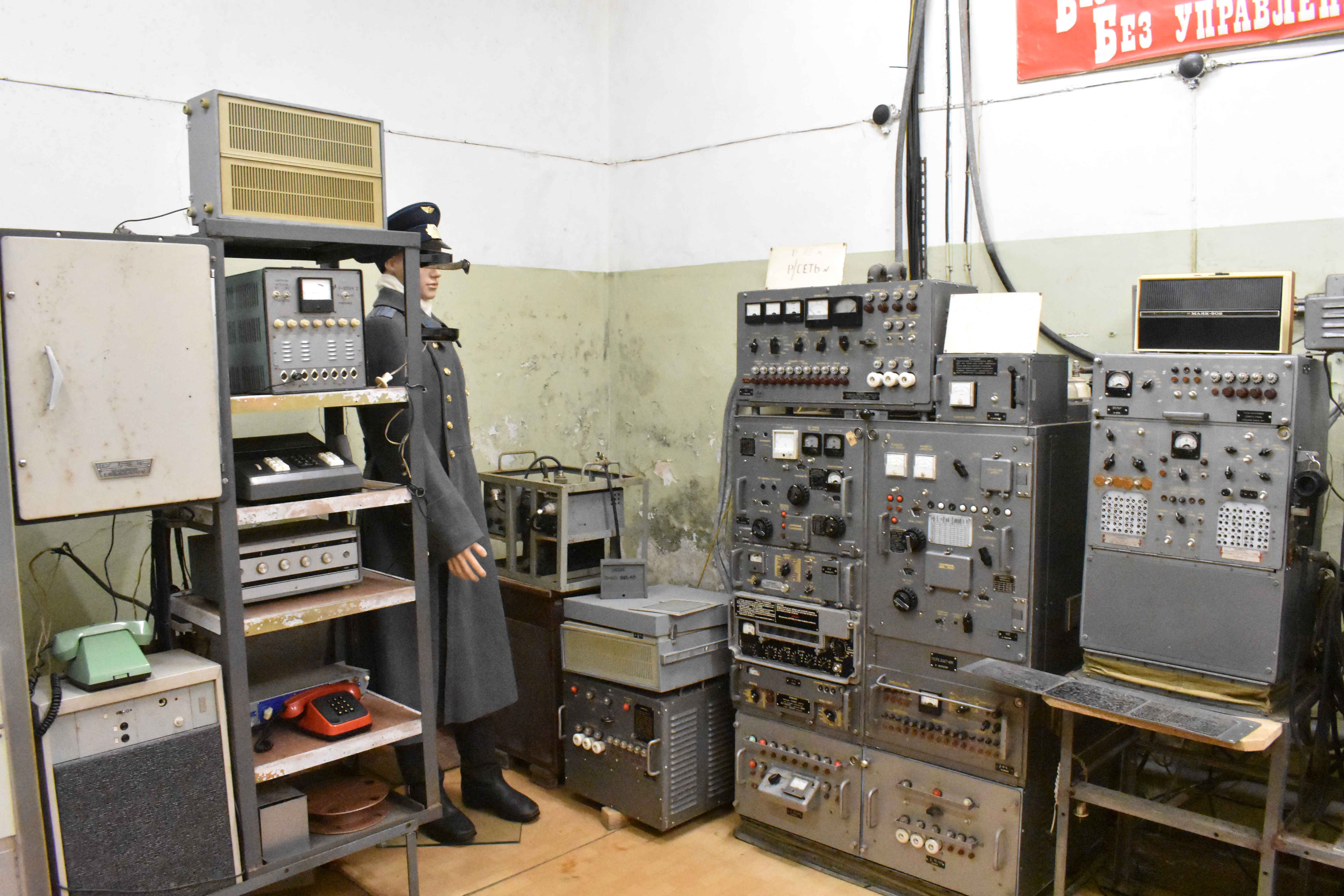
The communications room, with its connections to the Kremlin, had clunky looking equipment, which was simple to service in house, as they could not bring in external contractors.
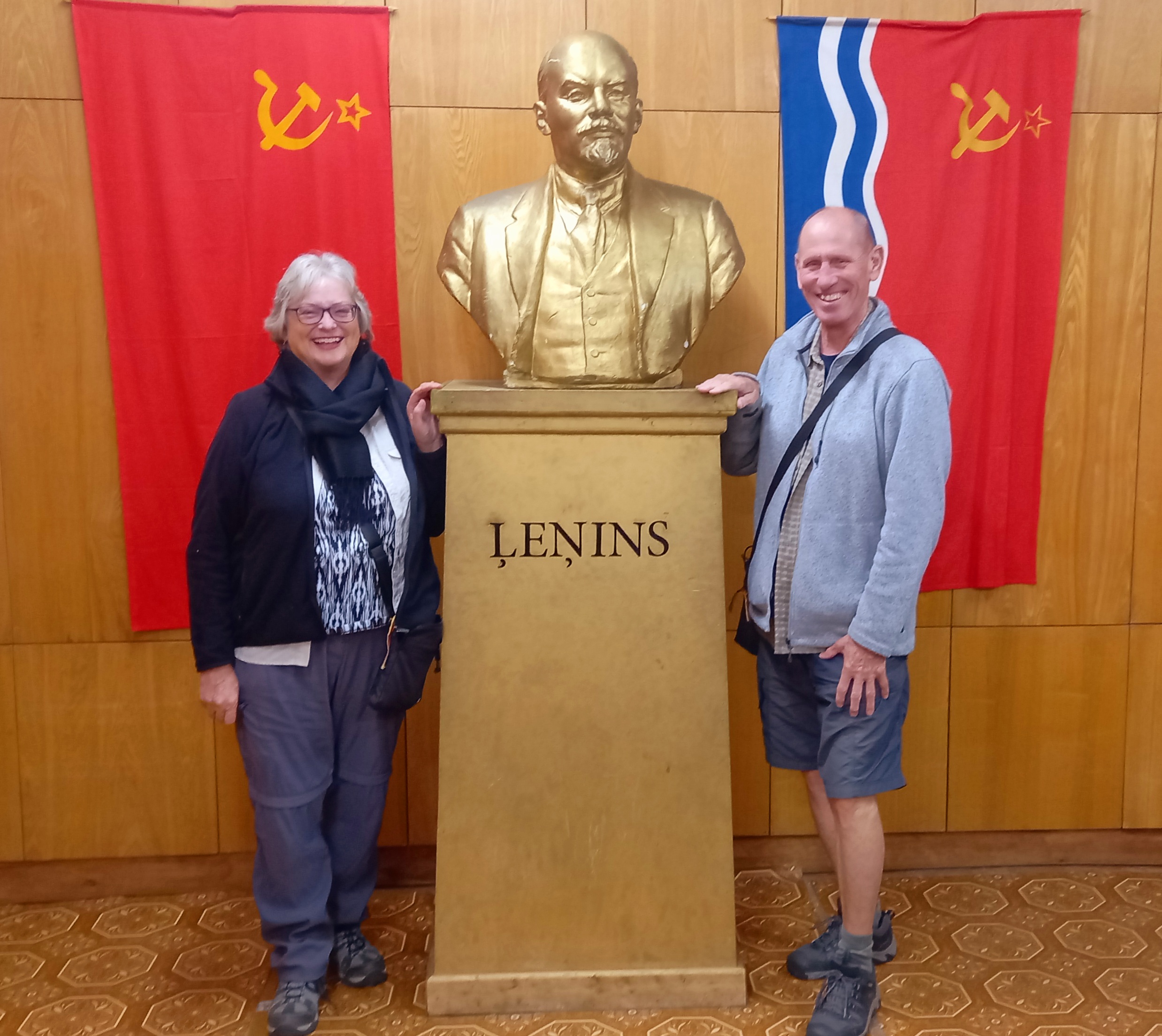
A meeting room with a bust of Lenin flanked by the red flag, provided lots of photo opportunities and the very theatrical Oscar, invited us to role play, with him acting as the KGB officer. A second room displayed a wall map in Latvian, as although Russian was the only language, it would have aroused the suspicion of the makers. All the small Soviet era collective farms or Kolkhozes were shown, and each had an ideological name like Lenin, Red Star and Happy Work.
The desk in the First Secretary’s room had several coloured telephones, and he had the luxury of a divan bed in an ante room: the general workers would have slept on mattresses in their office.
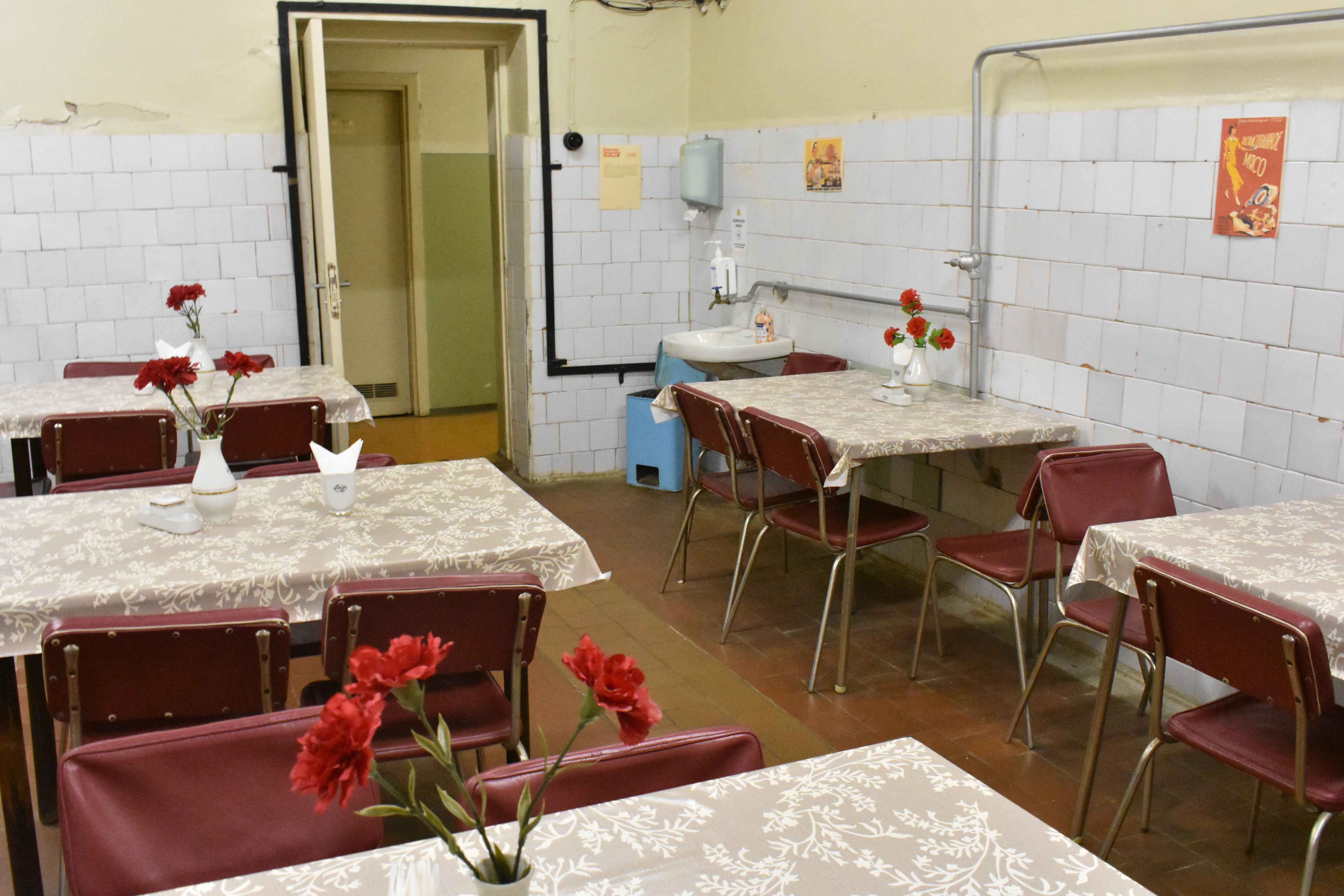
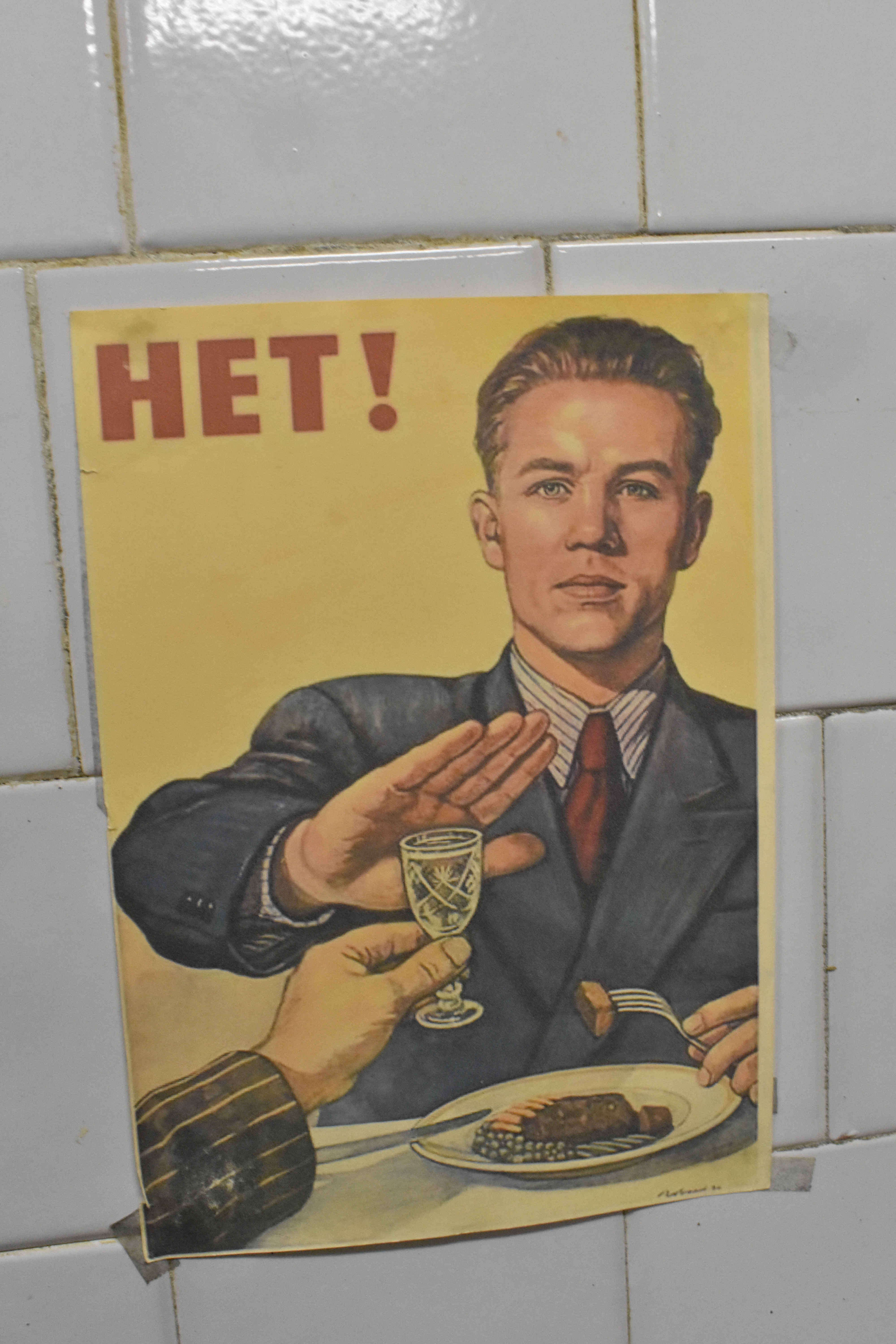
The canteen, with tables adorned with plastic table cloths and red roses, was relatively small, as the workers were on different 24-hour shifts and ate at different times. Oscar pointed out a poster of a communist refusing vodka from a man in a pinstripe suit: from a Soviet perspective, the suit symbolised a Western capitalist, banker, or spy, and therefore the ‘enemy of the people’. Above the serving hatch was a sign saying Берегите хлеб-это труд тысячи людей! which translates as Treasure the bread – it is the labour of thousands of people! This attempt to eliminate food waste was the only sign which still fitted modern life. We were also told that in Soviet times, food was largely subsidized and the price for bread, potatoes, milk, and other essentials was kept very low. However, spirits and in particularly vodka, were highly profitable for the state who had a financial incentive to encourage alcohol consumption. Alcohol was also used as a form of social pacification: keeping workers and citizens intoxicated reduced unrest and resistance.
The ventilation room housed a powerful air-filtration and circulation system designed to keep the underground complex habitable in the event of nuclear or chemical contamination. It could be switched between normal fresh-air intake and fully isolated, filtered air, allowing the bunker to operate independently for weeks.
The power room contained several diesel generators, fuel tanks, and backup batteries enabling the bunker to run completely off grid. It also ensured a supply of electricity for lighting, communication equipment, ventilation, water pumps, and command systems, even if external power sources were cut.
Oscar was a great entertainer, and this was a very participative, entertaining and interactive tour. Whilst having a private guide was expensive, we felt it was well worth the money