
One of the biggest surprises about Moldova’s capital Chișinău was how compact it was. Whilst we spent time exploring on our own, a half-day city tour was also well worth it. With wide boulevards, leafy parks and plenty of places to stop for a coffee or a cold drink, sightseeing felt relaxed rather than exhausting.
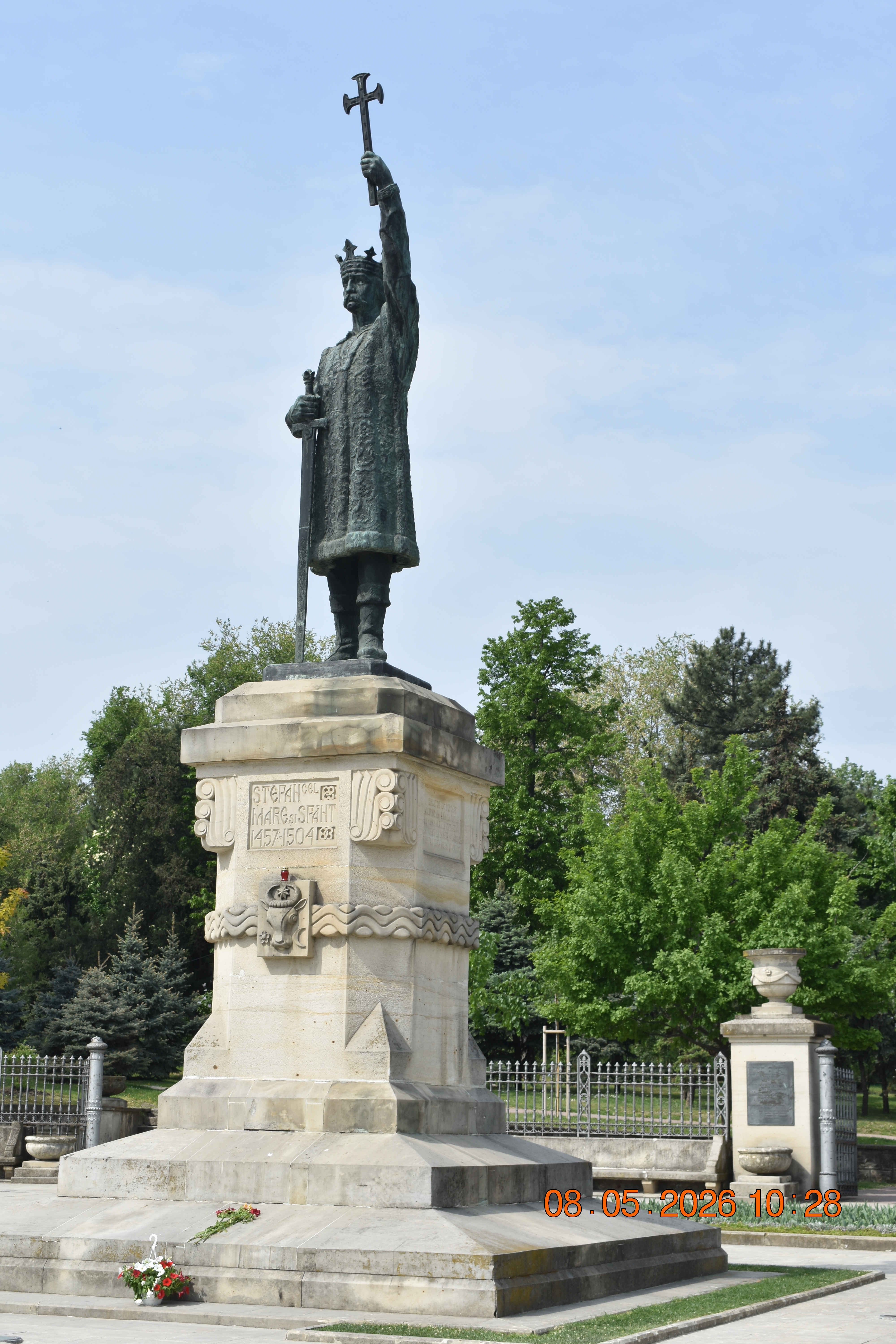
We stayed at two hotels, with the Bristol Central Park being close to Ștefan cel Mare Boulevard, the wide principal avenue where many of the city’s most important buildings and landmarks were concentrated. Stalinist-era buildings, designed to project grandeur with decorative columns, grapes and Soviet stars, contrasted with plain, functional buildings from the Khrushchev period. We admired the City Hall, Opera and Ballet Theatre, and elegant National Palace Organ Hall. The latter was originally constructed as a bank but became a concert venue in the 1970s because of its remarkable acoustics, while its imposing stone lions and financial sculptures were reminders of its original purpose. The boulevard was home to the symbolic Kilometre Zero marker outside the handsome Central Post Office: it is here from which road distances across Moldova are measured. A 30-minute walk to the United Nations Square at the southern end, took us to the derelict former National Hotel, a moving Monument to the Deportees and the striking blue Ciuflea Monastery.
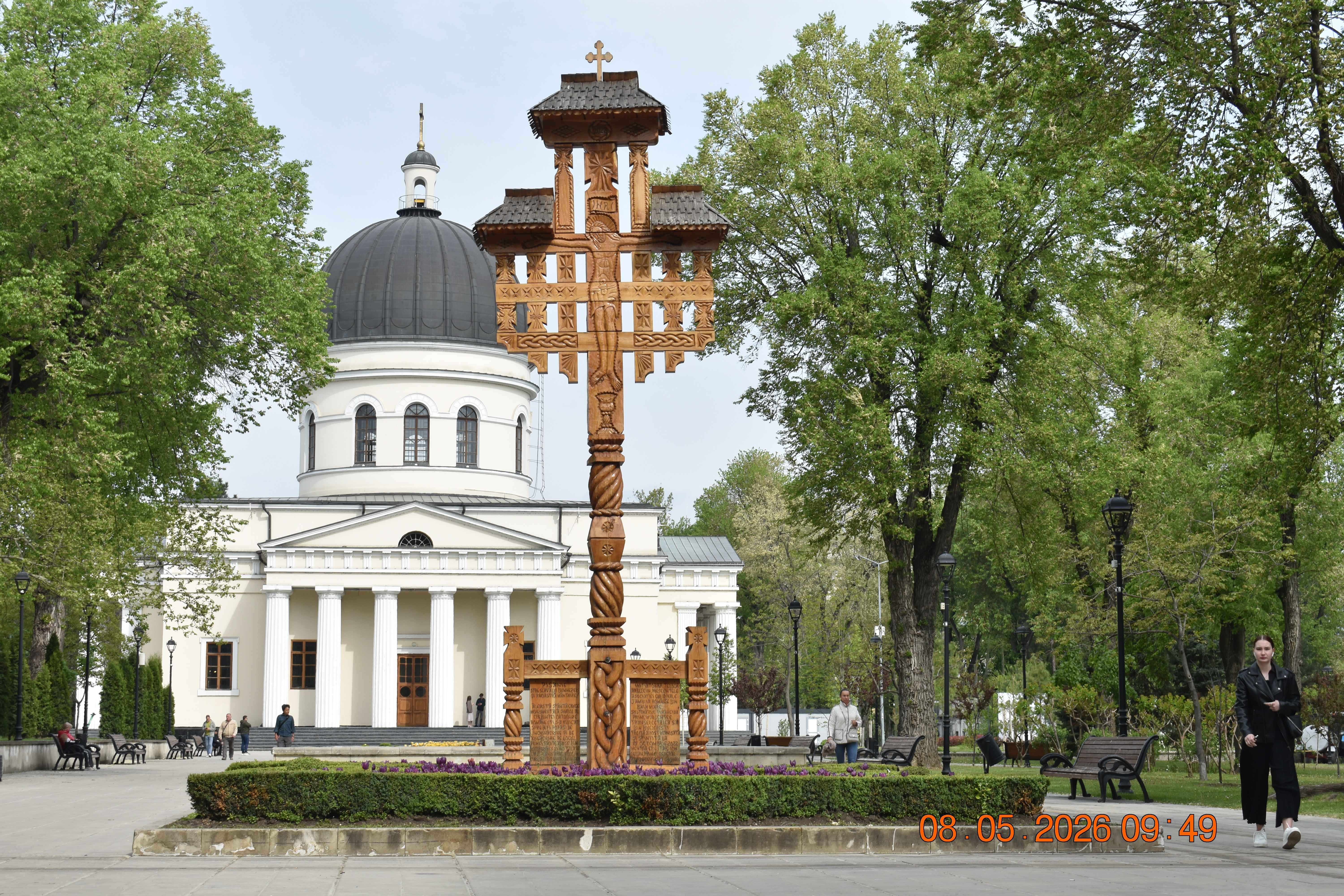
At the top of the boulevard was the square shaped Cathedral Park, home to the Cathedral of Christ’s Nativity, with colourful flower beds, mature trees and a 24-hour flower market, although peonies and lilacs were being sold on street corners everywhere. Just beyond stood the Triumphal Arch, built to house a giant six-ton bell that proved too large for the cathedral’s original bell tower.
The square shaped Ștefan cel Mare Central Park, which abuts Cathedral Park to form a distinctive shape, became one of our favourite places. Often called the city’s “Park of the Lovers”, it was criss-crossed with shady paths, fountains and plenty of benches. We wandered along the Alley of Classics, lined with busts of Moldova’s greatest writers and poets, admired quirky sculptures including mother and baby bears, and found a bench dedicated to AIDS awareness constructed from nuts and bolts.
Our second hotel, the City Park Hotel was on the pedestrianised Eugen Doga Street, which we called “Piano Street” thanks to its black-and-white paving resembling piano keys. Statues added an interesting feature and included a barefoot girl carrying her shoes and a young boy anxiously checking his watch.
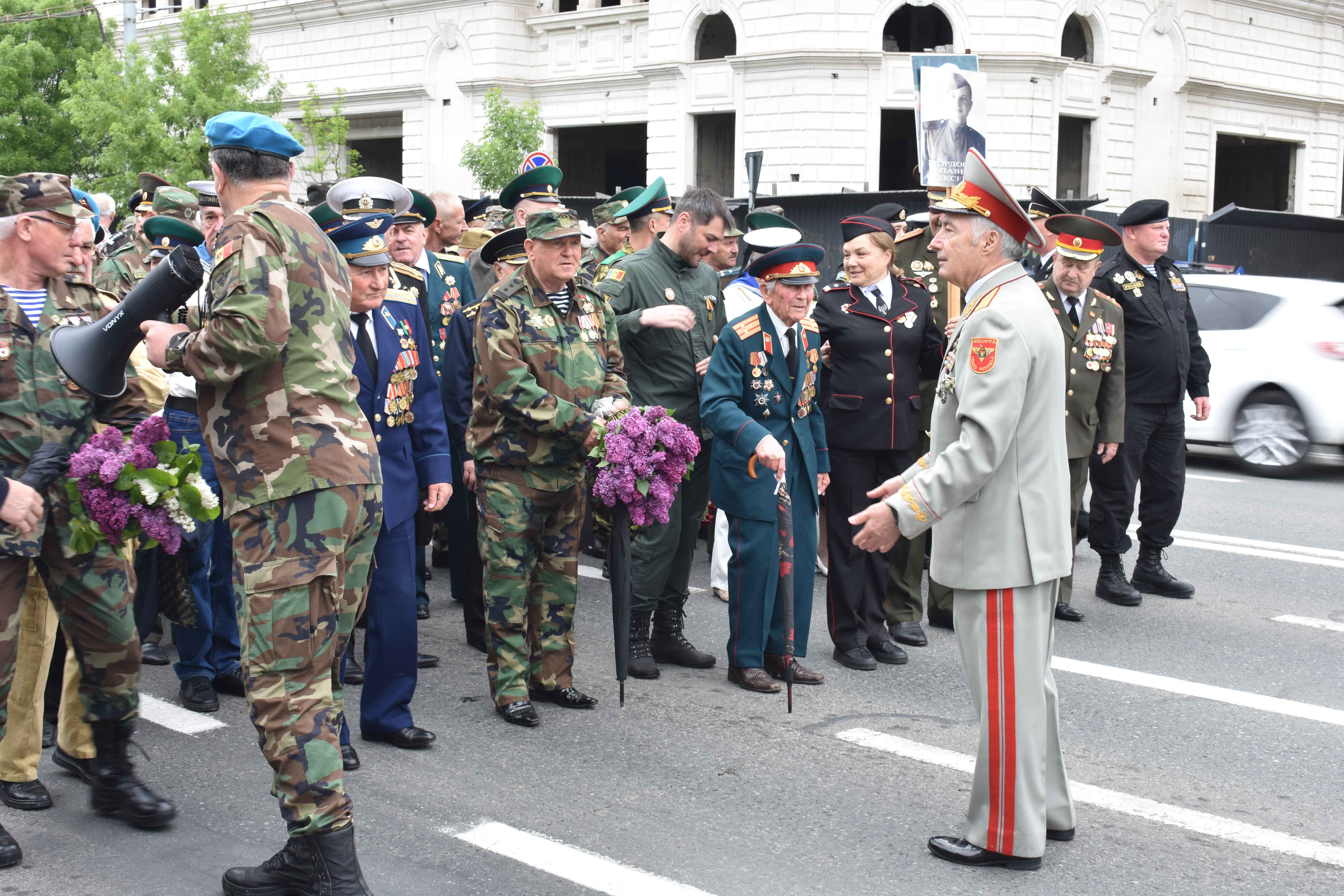
Before the visit, I’d researched several of the city’s museums, but on arrival, our visit coincided with the Victory Day parade, and all were closed. However, it did allow us to witness veterans with gleaming medals from several wars, gathering with flowers and family photographs before the commemorations. This included the only remaining veteran from WWII who was said to be 101. Young girls at the start of the parade wore white to represent peace, purity and mourning. Our return to the city midway through the trip, was on a Monday, a traditional museum closing day, so they remain unexplored.
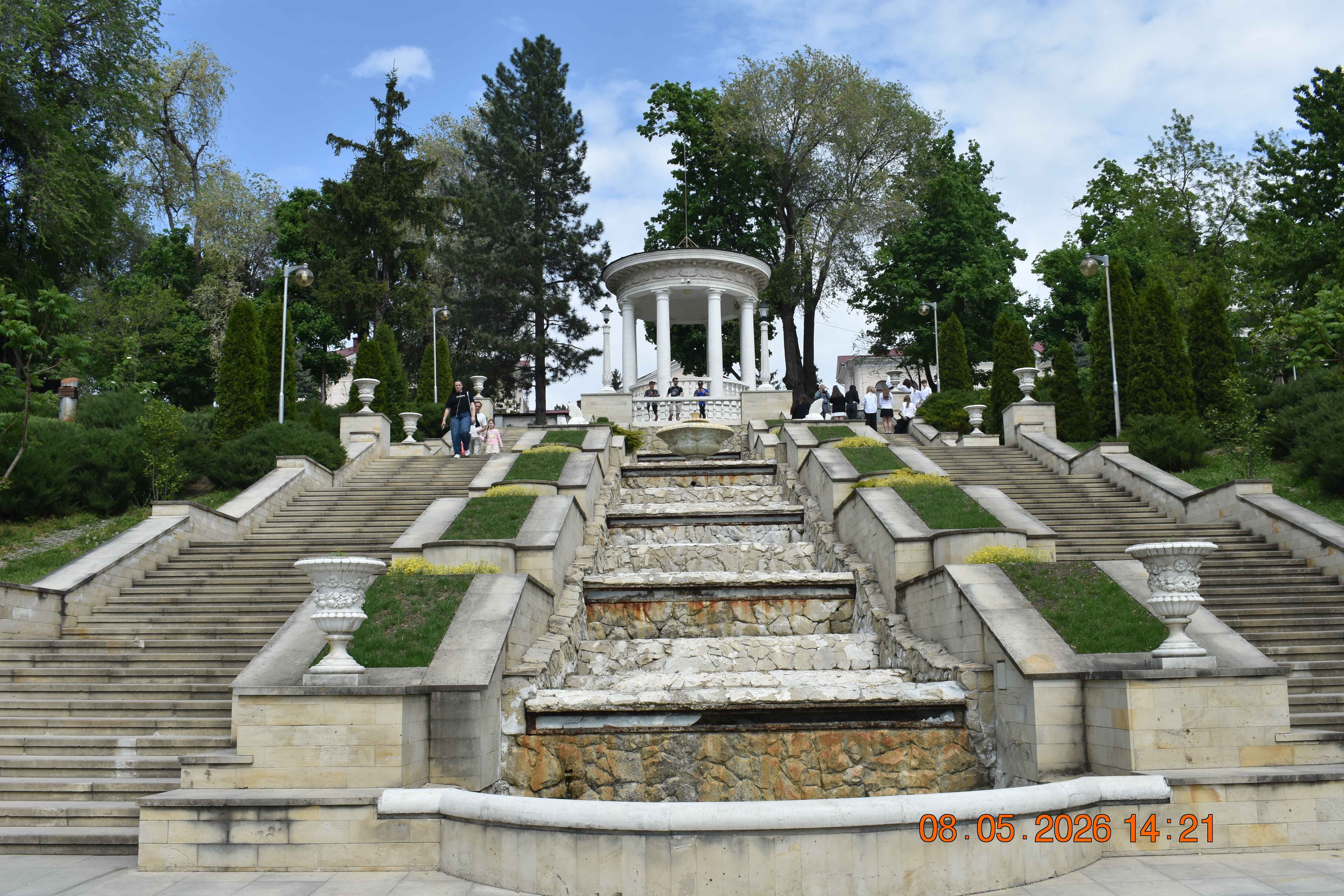
One of our longer walks took us to Valea Morilor Park centred on a lake famously dug by hand by thousands of Komsomol, or young communist, volunteers. A broad, level promenade circled the lake, making it ideal for an easy stroll. We passed modern sculptures, children’s playgrounds, the Cascades staircase, a small beach and several food outlets.
We also explored part of the old Jewish Quarter, where we found the city’s working synagogue, a historic yeshiva and eventually the bustling Central Market.
Chișinău may not boast the headline attractions of Europe’s better-known capitals, but that is part of its charm with its blend of Romanian and Russian influences. It was clean, green, and refreshingly uncrowded. We came away feeling that the best way to experience Moldova’s capital is simply to start walking and see where the next tree-lined avenue leads.