

Whilst driving between Riga and Pärnu, we stopped at Gauja National Park, in northeastern Latvia, the country’s largest and oldest national park, established in 1973. It’s famous for the scenic Gauja River valley, often called ‘Latvia’s Switzerland,’ with sandstone cliffs, caves, and dense forests.
Having reached Sigulda, with its eye-catching ‘S!’ logo, we passed its Bobsleigh, Luge and Skeleton Track. We heard how Martins Dukurs, a Latvian skeleton racer, joined the British Skeleton team as Performance Coach after his retirement.
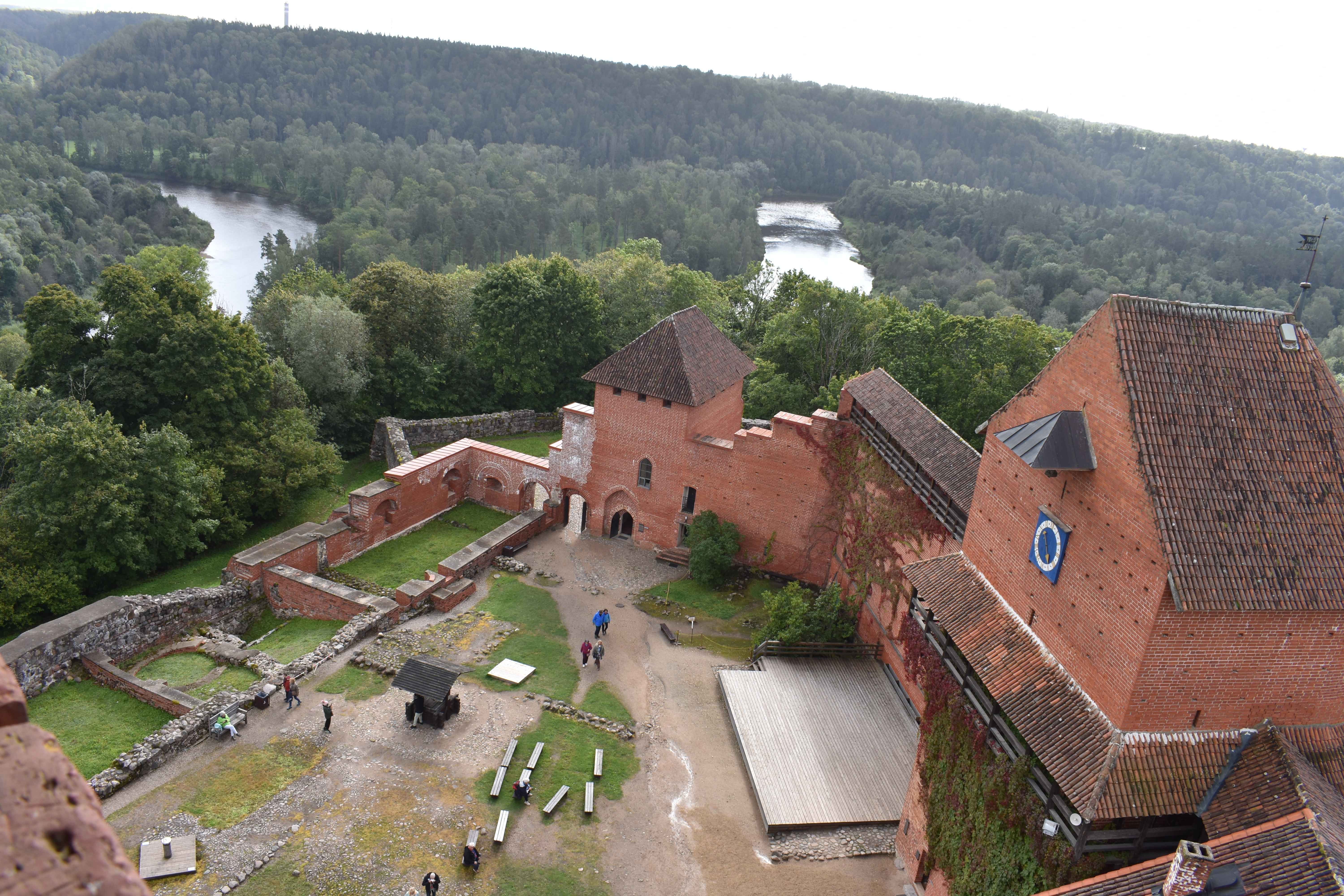
Sigulda Old Castle was built 1207 by the Livonian Brothers of the Sword, a military order of German crusaders. Apart from an open air stage, used for concerts, festivals, and cultural events, there was little to see. However, we climbed 75 steps up the castle tower for panoramic views of the Gauja River Valley, including Turaida Castle. Before leaving, we visited a row of craft studios focussing on Baltic jewellery, textiles and weaving, leather and ceramics and walking sticks: Sigulda has a 200 year history of walking stick making.
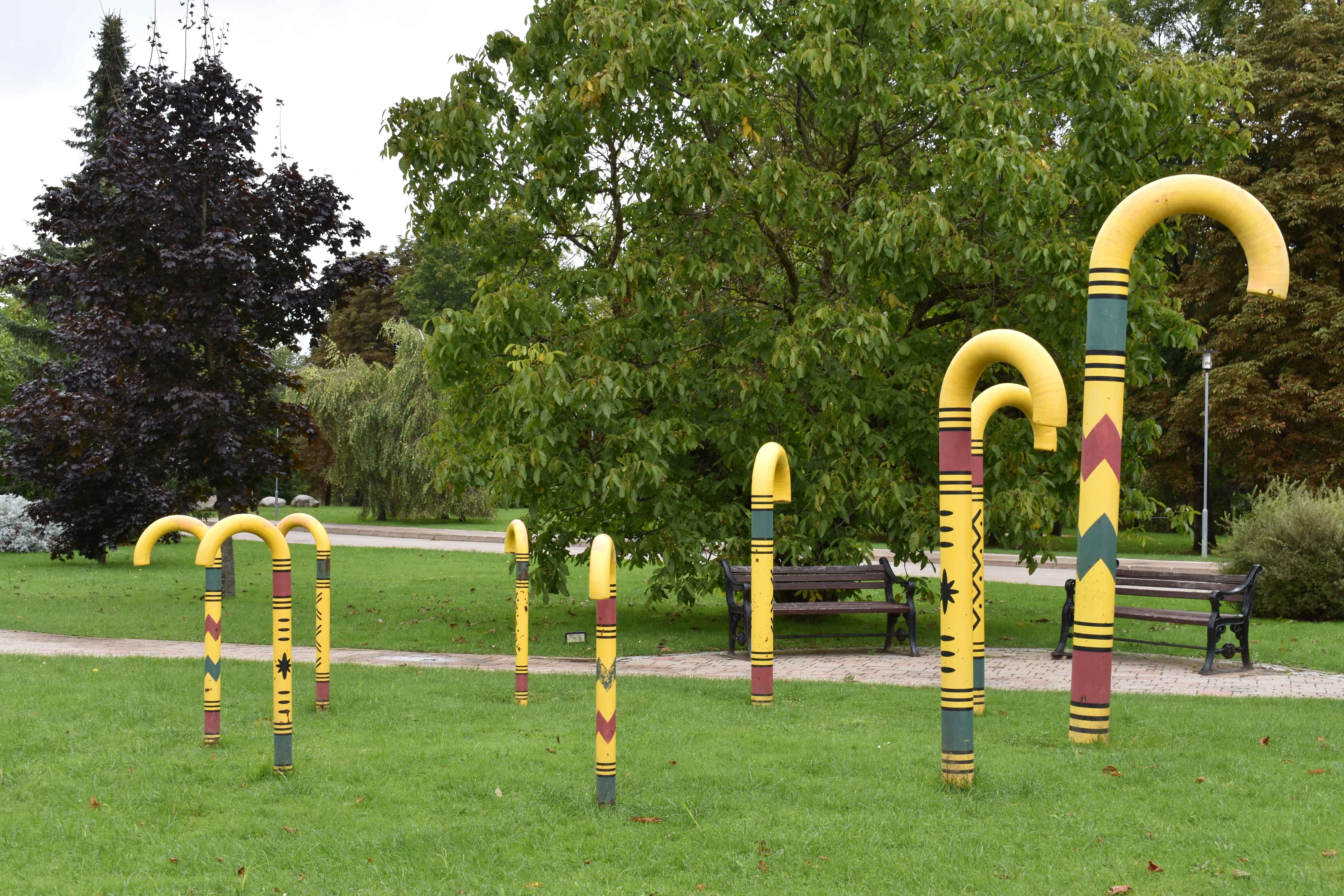
We later passed Walking Stick Park, a public park established in 2007 as a tribute to the town’s walking sticks. We stopped briefly at the top of Sigulda’s City Ski Slope area, a year-round activity park. Here groups of children were lining up for the Mini bobsleigh which ran on a metal track down the slope. A small chairlift operated in winter for ski-ing, and sightseeing in summer. At the bottom of the slope a family activity zone had trampolines, inflatables and play areas depending on the season.
On route to our next castle, we drove over the Sigulda Bungee Jumping Bridge, spanning the Gauja River valley, and 43 metres above the river, and it became clear why Sigulda is known as Latvia’s adventure capital.
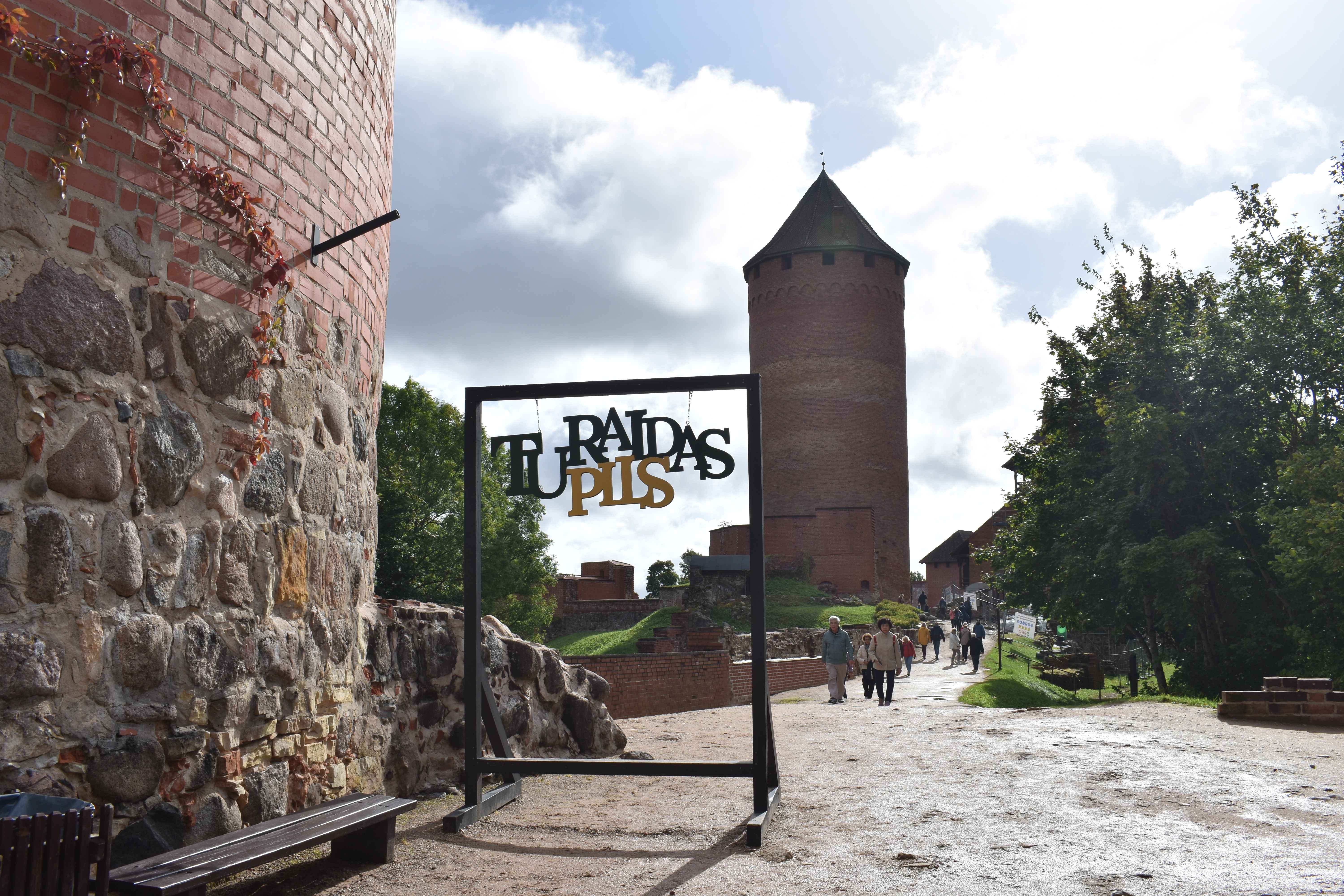
We’d already seen Turaida Castle, one of Latvia’s most important and atmospheric medieval sites, from Sigulda Castle. In 1776, a fire caused by negligence destroyed much of the castle and it lay in ruins for nearly 200 years until restoration began in the 1950s based on archaeological research rather than romantic reconstruction. This was a much larger complex with more to see and at the entrance we climbed up several flights of narrowing stairs to reach the top of the 38m tower. But at least we could stop on the various landings where exhibitions told us about the history. Other buildings included defensive walls and towers, residential buildings, and an inner courtyard.
It should be noted that the term Little Switzerland is slightly misleading for those familiar with real mountains: Latvia is a relatively flat country, and Līgatnes pilskalns, is the highest named hill in the park, at only 113 m above sea level.