


The Arta Rustică Craft Complex in the Moldovan village of Clișova Nouă was established in 2004 to preserve and promote rural customs, skills and artistic traditions.
Before we explored the exhibits, our enthusiastic host, whose commentary was interpreted by our guide, explained how the village had been rebuilt after a devastating landslide. Black-and-white photographs vividly illustrated the scale of the destruction and the determination of the community to start again.
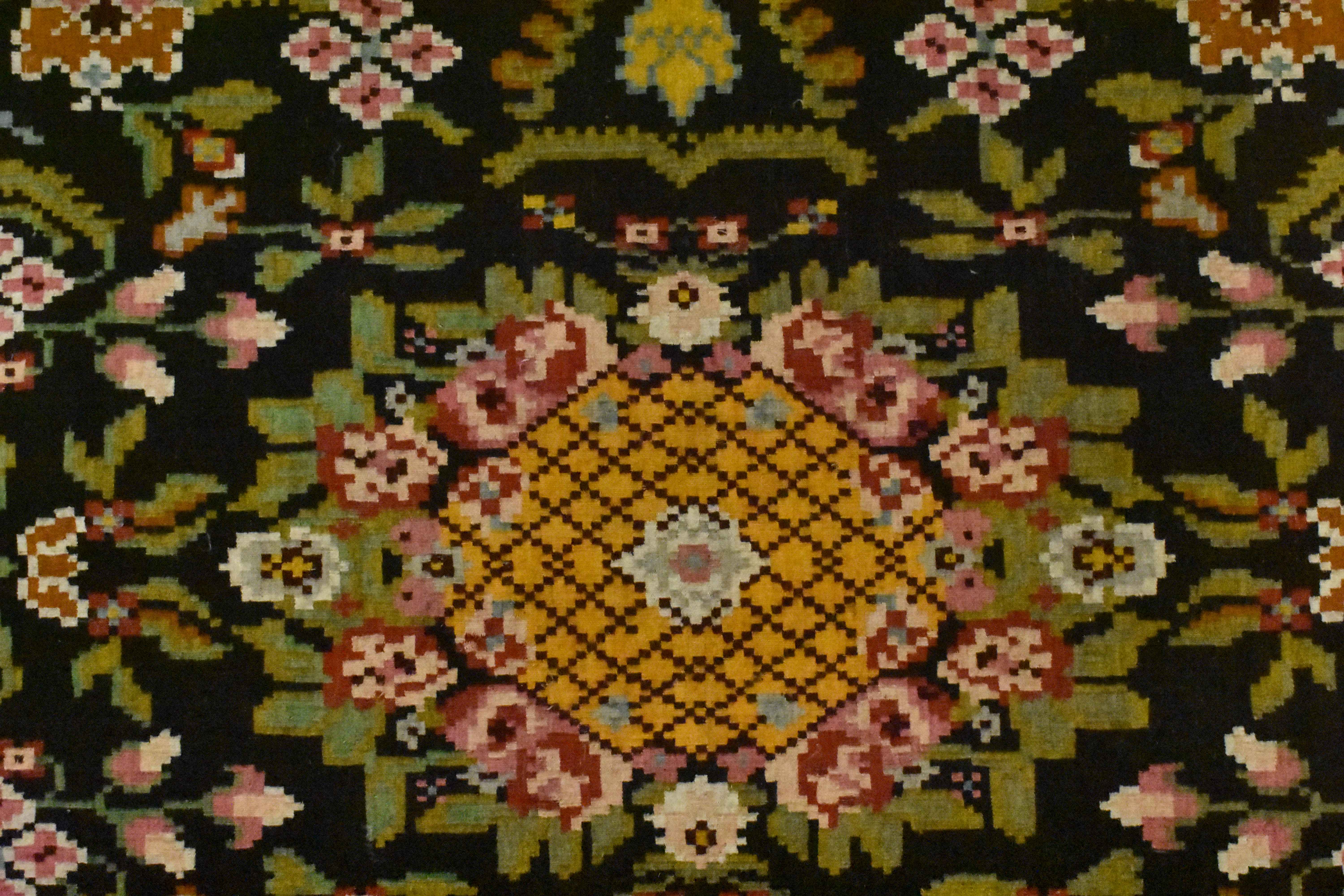
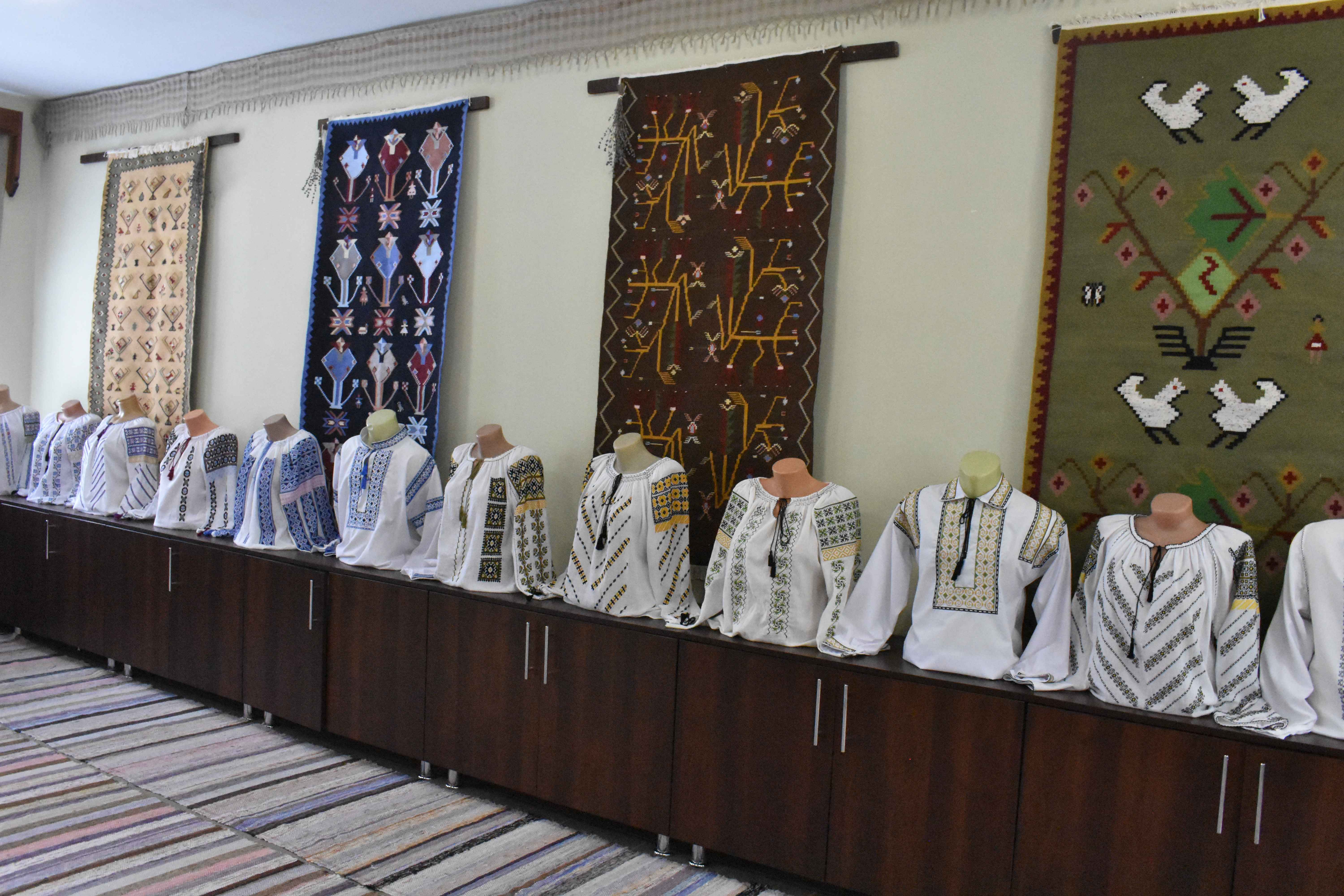
The highlight of the visit was undoubtedly the extraordinary collection of traditional carpets. Hung on modern display rails, they revealed the richness of Moldovan weaving, with many featuring different interpretations of the symbolic Tree of Life, representing growth, continuity and the connection between generations. We were told about the meanings behind the intricate patterns and colours, and how the Bessarabian wall carpet tradition has gained international recognition as part of the region’s rich cultural heritage.
The displays also included beautifully carved wooden furniture and colourful national costumes. I was particularly taken by the finely embroidered traditional blouses, whose delicate shoulder embroidery has been recognised by UNESCO.
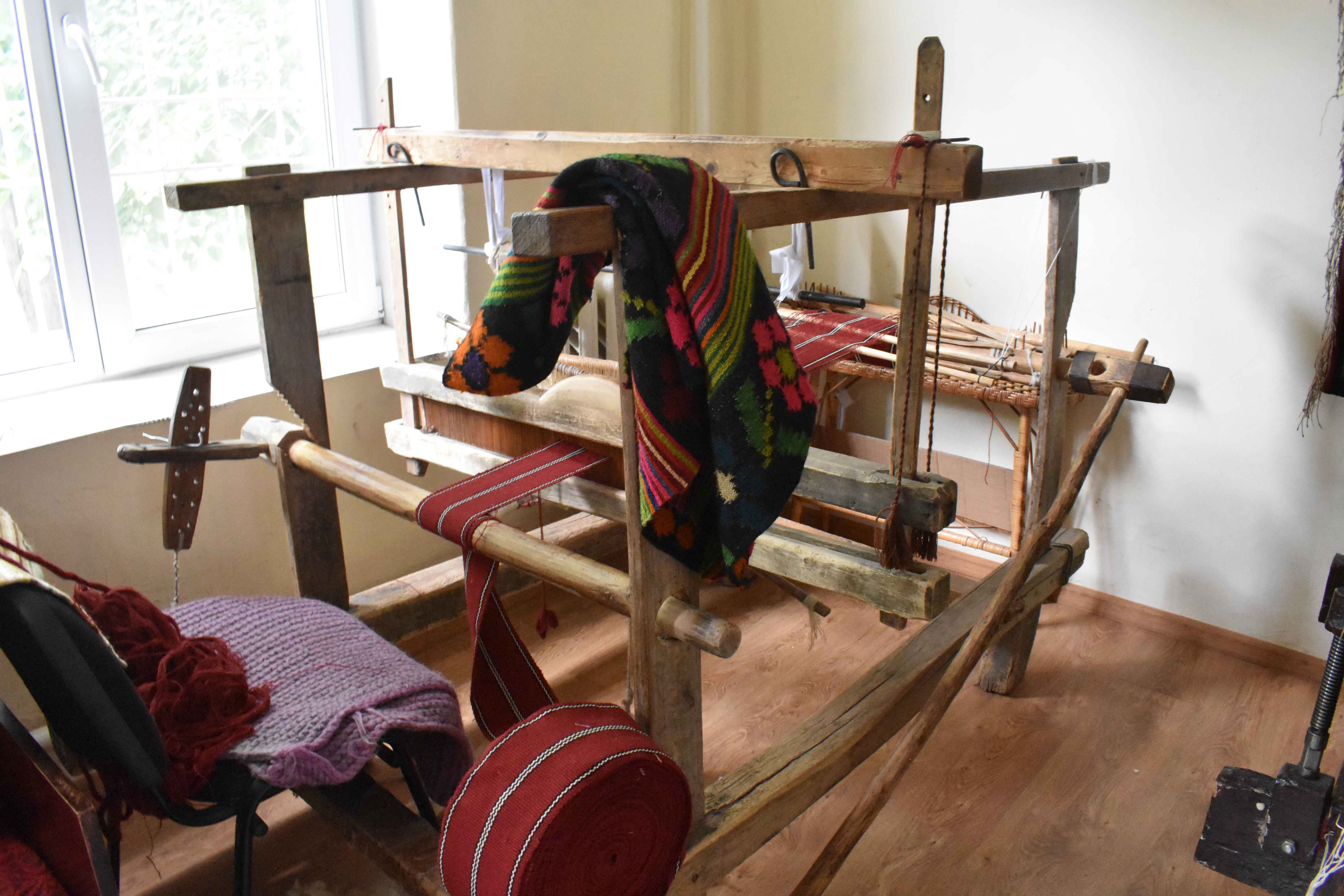
As well as displays, local craftspeople practise and teach traditional techniques and our visit ended with demonstrations of weaving on an upright loom and machine embroidery, allowing us to see the remarkable skill and patience required. We also heard how the centre is actively involving the younger generations to ensure Moldova’s artistic traditions remain alive rather than becoming museum pieces.