At just 25 miles by 6 miles, Tobago is tiny and as we stayed in three locations, the drives between them, enabled us to see most of the island.
Both the northern leeward coast facing the Caribbean Sea, and the southern windward coast overlooking the Atlantic Ocean, are dotted with small villages and bays.
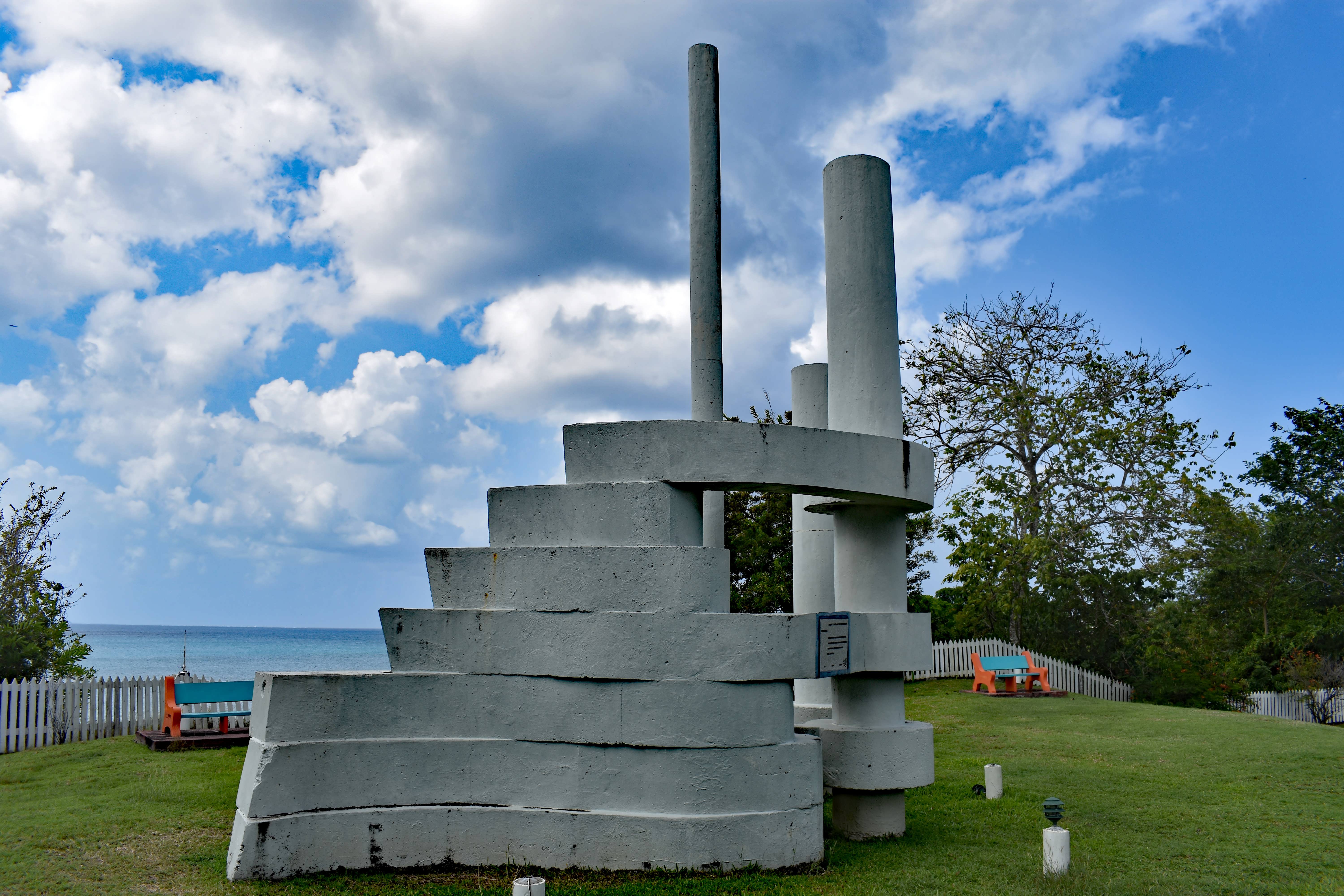
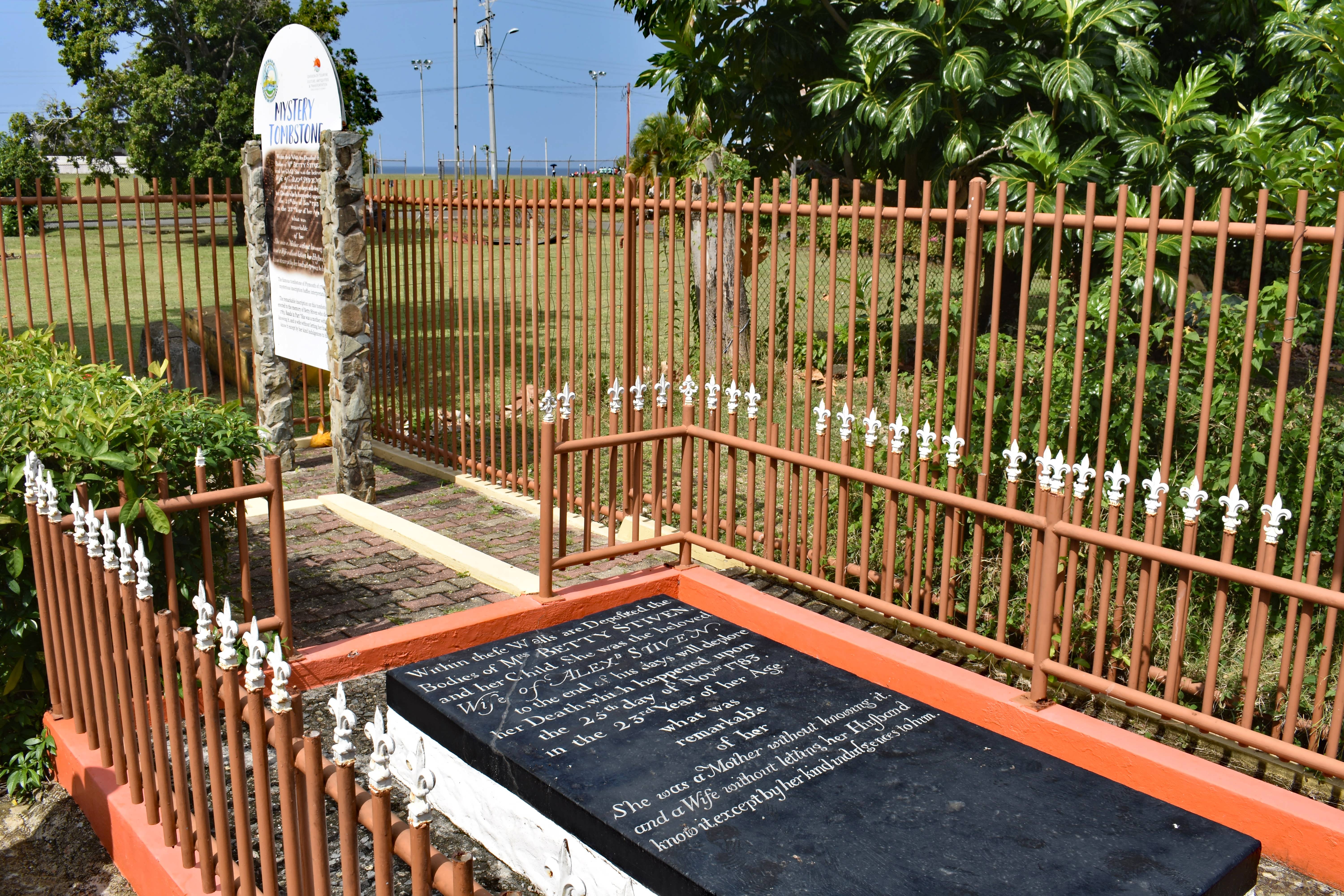
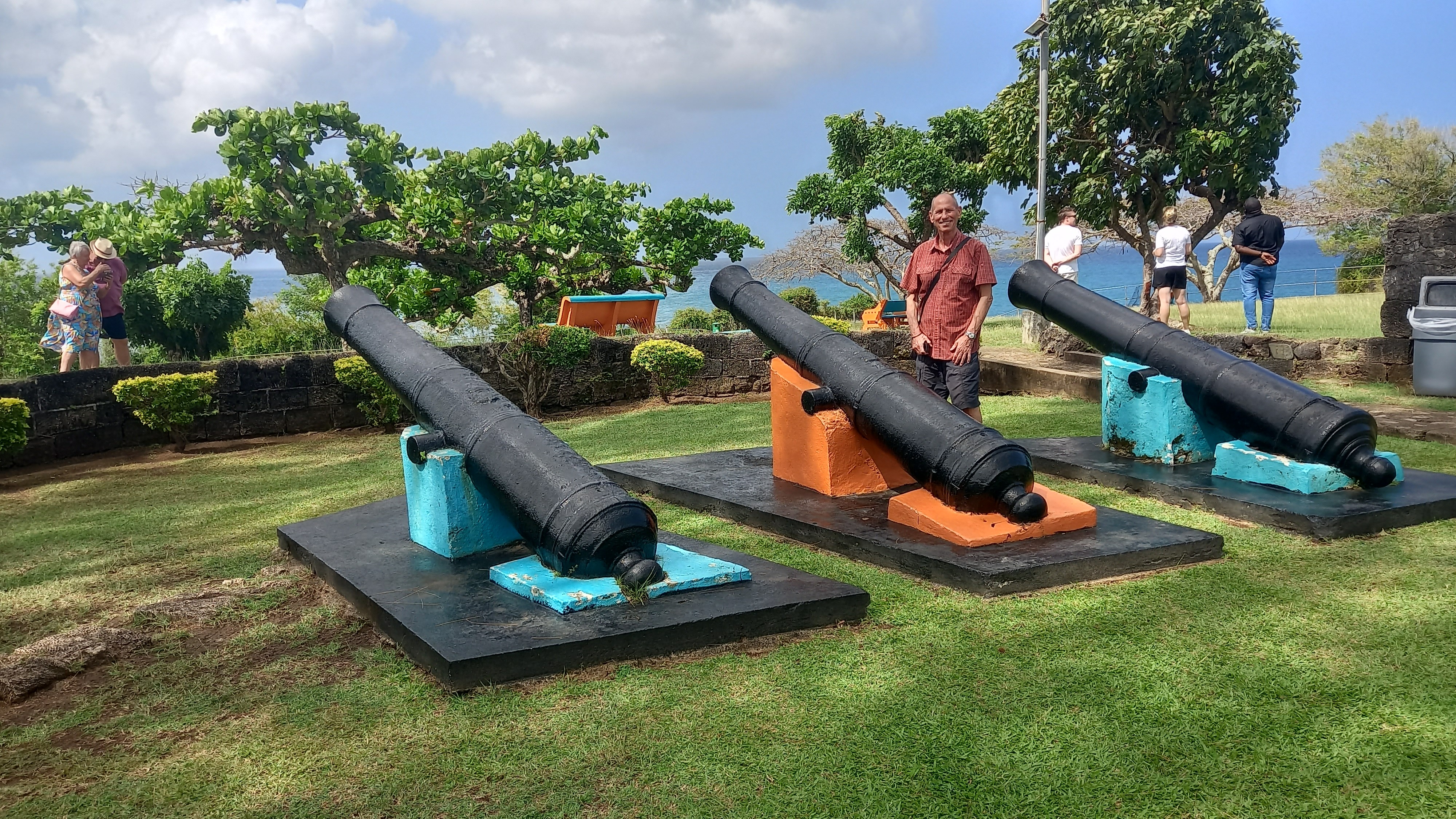
Tobago was invaded over 30 times by the usual suspects including France, Britain and Spain. However, in the mid-1650s, it was also colonised by the Duchy of Courland and Semigallia, now Latvia. Having learned this fact from a Latvian friend, I wanted to visit Great Courland Bay, near the town of Plymouth. As the Marella Voyager had docked at Scarborough, we juggled our sightseeing route to avoid the hordes. Our first stop overlooked the bay with its derelict, but picturesque wooden jetty. Nearby were three places of interest. The first being the Great Courland Bay Monument erected in 1976. It was inscribed to ‘the bold, enterprising and industrious’ Latvians, but we struggled to understand what the concrete tubular design represented. At what is known as the ‘mystery tombstone’, we read the inscription ‘What was remarkable of her; She was a mother without knowing it, and a wife without letting her husband know it, except by her kind indulgences to him’. The grave was that of a 23-year-old African slave and her child and there are two hypotheses. Either she gave birth to her lover’s son, and he raised it without acknowledging the mother, therefore giving her freedom to remain his lover, or the illicit affair was carried out in secret, and when she died giving birth, the lover was overcome with grief and left the cryptic message. The final site was Fort James, dating back to 1650, named after the Duke of Courland. The solid coral stone structure and four cannons are all that remain of the British legacy.
The name of the bays all had meaning, and King Peter’s Bay had a convoluted associated story about a troublesome chief sarcastically called King Peter.
On route to the next bay we passed Parkinson’s House, the home of Norman Parkinson, the Queen’s favourite photographer, where he lived with his wife from 1963. It is said that Mick Jagger and Jerry Hall were regular guests, as was Princess Margaret on her honeymoon.
Mount Dillon Lookout at 1300 feet provided great views of Castara Bay and in the distance, Grenada. A second viewpoint gave us a closer view, before we arrived at Castara village, with its population of around 600 people, dependent primarily on fishing and agriculture. Here we spent time watching the royal tern, brown booby, magnificent frigatebird, and two brown pelicans on a surfboard.
Little Englishmen’s Bay, led to Big Englishmen’s Bay, ironically said to be one of Bill Gates’ favourite places to moor his mega yacht.
At Parlatuvier Bay whose name is said to be derived from an old French expression ‘pas le trouver’, meaning not easy to find or reach, the river meets the sea. Here we had views of the ‘five sister rocks’, named because their distinctive appearance resembles five sisters standing together. An arch advertised the forthcoming Tobago Blue Food Festival celebrating unique culinary traditions, and local ingredients, particularly dasheen or taro which turns various shades of blue when cooked.
According to legend the water in Bloody Bay turned red with blood following a fierce battle between rival factions. However, there are several views on the details: was it between English soldiers and African slaves in 1771, or the English and French in the late 18th century?
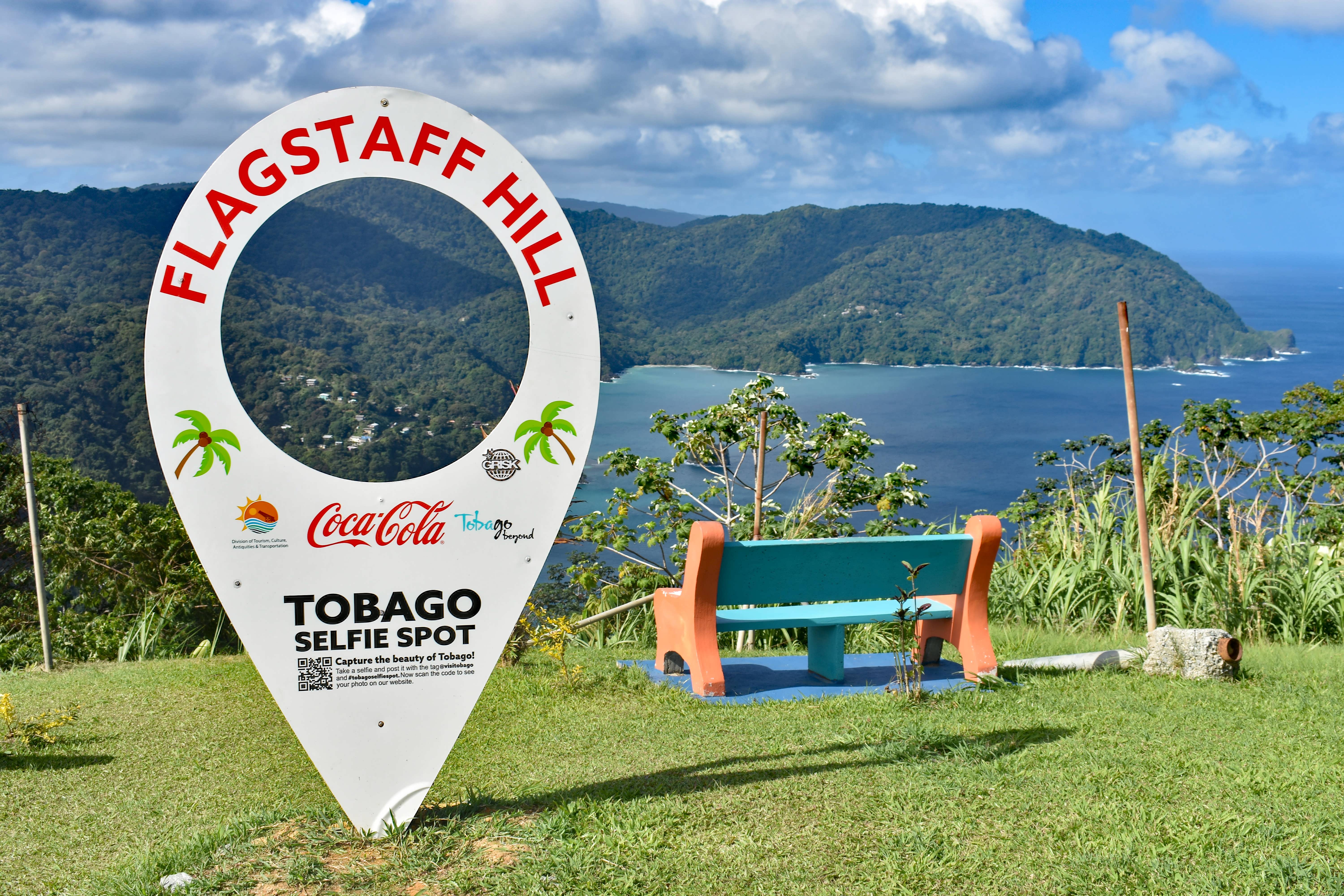
Charlotteville overlooked Man-o-War Bay and our guide told us that originally the place was named Charlotte’s Ville, by a woman called Charlotte. However, as she was fond of a drink, she was tricked into signing the deeds over by the Turpin family, apparently a relation to Dick, who renamed it Charlotteville, without the apostrophe. This may or may not be true. Flagstaff Hill provided excellent views, not just of Charlotteville but the point where the Caribbean Sea meets the Atlantic Ocean. Like Mount Dillon, the area was beautifully maintained with manicured grass, plants, benches and a selfie spot. Fort Campbleton provided closer views of Charlotteville and here there were a couple of canon and a bandstand-like structure. As Charlotteville was one of the larger of Tobago’s villages, it was deemed worthy of a 45-minute walk around the few small shops and Methodist and Anglican churches.
If you visit Tobago, you’ll repeatedly hear that the Main Ridge Forest Reserve, dating back to 1776, is the oldest protected rainforest in the western hemisphere. The drive along the paved road running through the ridge takes at least 30 minutes, depending on how many times your guide stops to point out ‘must see’ birds: the island ranks fifth in the world for bird diversity per square kilometre with over 260 species, many of which can be found in the reserve.
There are several hiking trails of varying lengths with the most popular being the Gilpin Trace, but on our first visit, it was raining heavily, despite it being the dry season. So, we simply had a brief look at the visitors centre, currently being renovated, and a statue of three humans cooperating to hold up a piece of the island. I later discovered they were positioned facing north, south and east, leaving a missed photo opportunity to include me facing west.
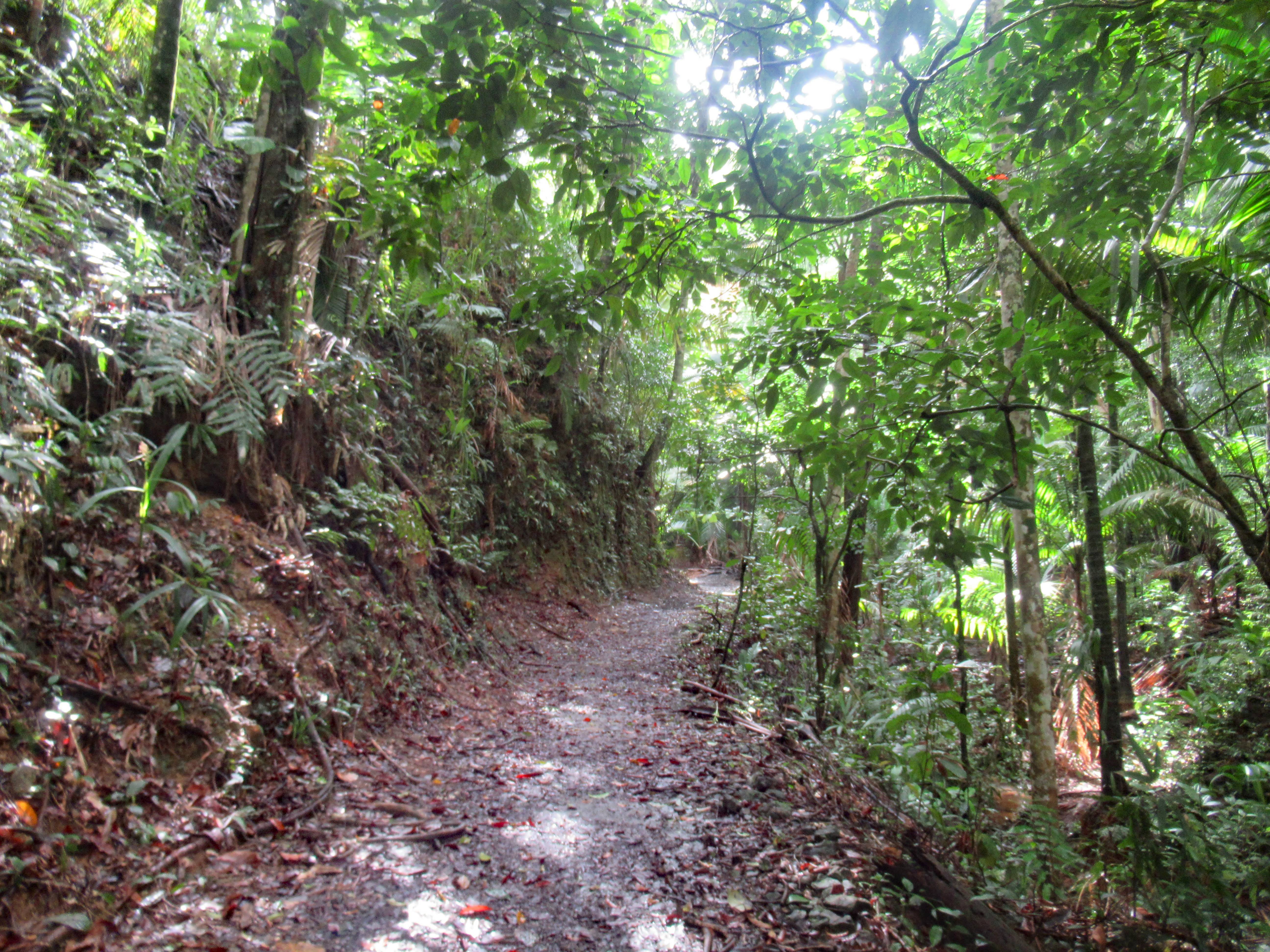
When the forecast was better, we attempted the trail again. Hiring wellington boots from the back of a truck for 50 TT$ (or £5) was a good move as we could simply squish through the mud on the narrow path, rather than trying to skirt round it when there were rocks and tree roots to contend with. Our guide told us about the glorious ferns and types of tree, including the cecropia peltate whose leaves could be used for a variety of medicinal purposes. We encountered four herpers: an unfamiliar term but which I discovered means someone who searches for and observes reptiles and amphibians. They had just found two vine snakes and as I was able to hold one, it was clear to see where the name came from. I was also fascinated by the burrow of a trapdoor spider, which when the door was lifted looked exactly like a toilet with the lid up. At a stream, we spotted killifish, or jumping guabine, which can literally ‘jump’ out of water onto land and survive for a considerable time. We were told they were used in fish spas to nibble dead skin from feet. By now rain was threatening, and we reluctantly retraced our steps, but our guide could not resist stopping several times for bird sightings. My favourite was a golden-olive woodpecker, said to have a tongue 10 times the length of its beak, which it uses to cushion its head when it taps into the tree. As we arrived back at our vehicle, the heavens opened and we opted not to do our planned hike to Argyle Waterfall, which we never got to see.
Also visited in the rain, and just on the forest’s edge, was Shurland’s Hummingbird Nature Park. Here we sat under cover with miniature sugar water feeders which quickly attracted hummingbirds of varying colours who buzzed all around us. A feeder with coconut and bread was a magnet for both cheeky squirrels and a variety of other birds, including the white-lined tanager, one of the few species where the female is more attractive than the male. As we left, we were shown a tree boa curled up in the leaves of the shed roof and directly above where we’d been sat.
My abiding memories of Tobago are winding narrow roads, fabulous lookout points, huge bays, forests, birds and unfortunately, rain.
Also see individual reviews of Little Tobago and Scarborough.