Sighișoara, one of the best-preserved inhabited citadels in Europe and a UNESCO World Heritage Site, is in the central Romanian region of Transylvania.
People still live within the citadel and whilst there are also hotels within the walls, we were staying outside at the Hotel Korona (see separate review), which meant an uphill climb. We discovered various routes, involving slopes and steps with some feeling less steep than others.
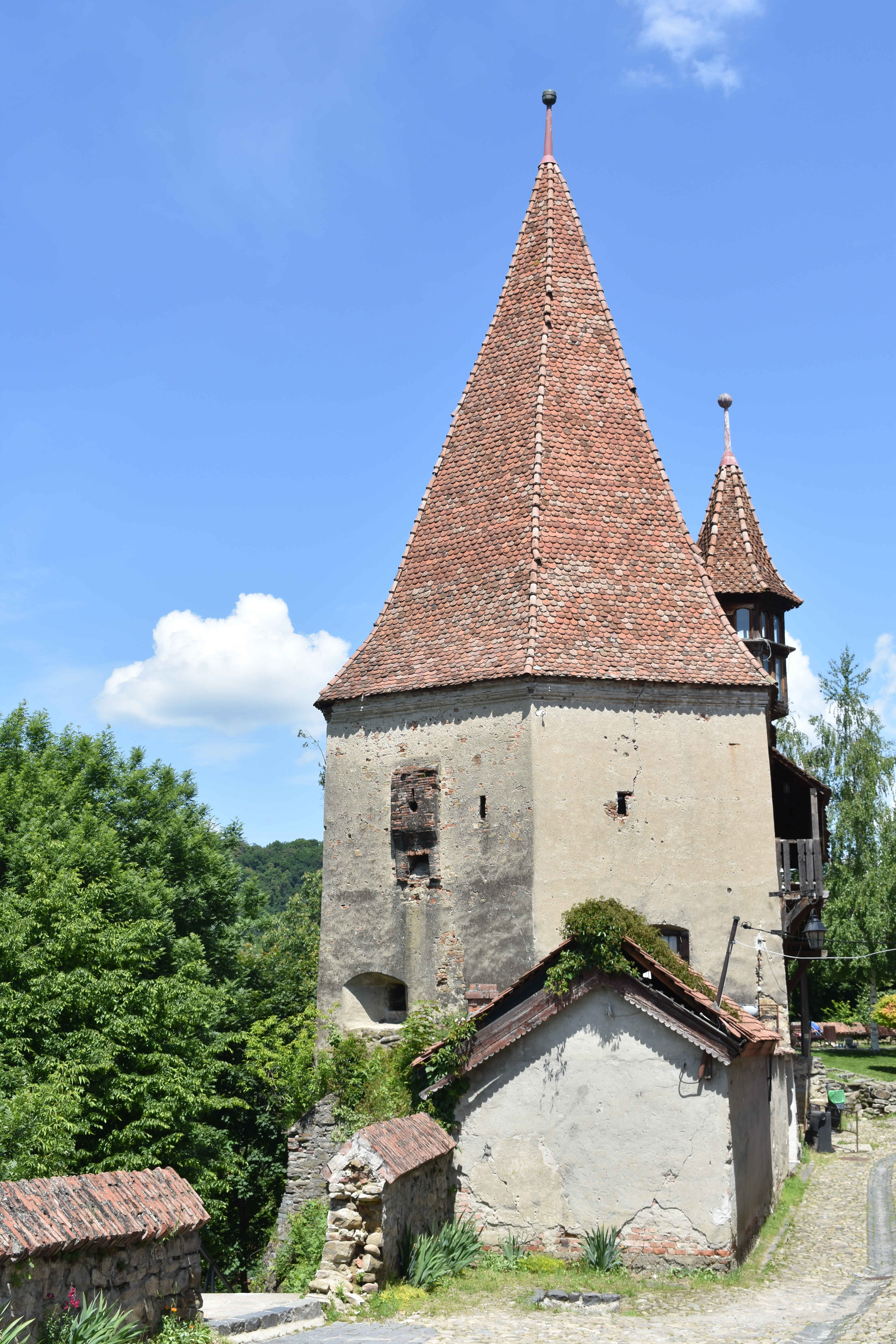
When the Transylvanian Saxons fortified the town between the 14th and 16th centuries, each important craft guild was responsible for a section of the wall and a defensive tower. The walls which originally stretched about 930m, were up to 4m high, and had 14 towers plus several bastions. We entered via the Tailors’ Tower or Turnul Croitorilor, before walking along a stretch of relatively well-preserved wall to the Bootmakers’ Tower.
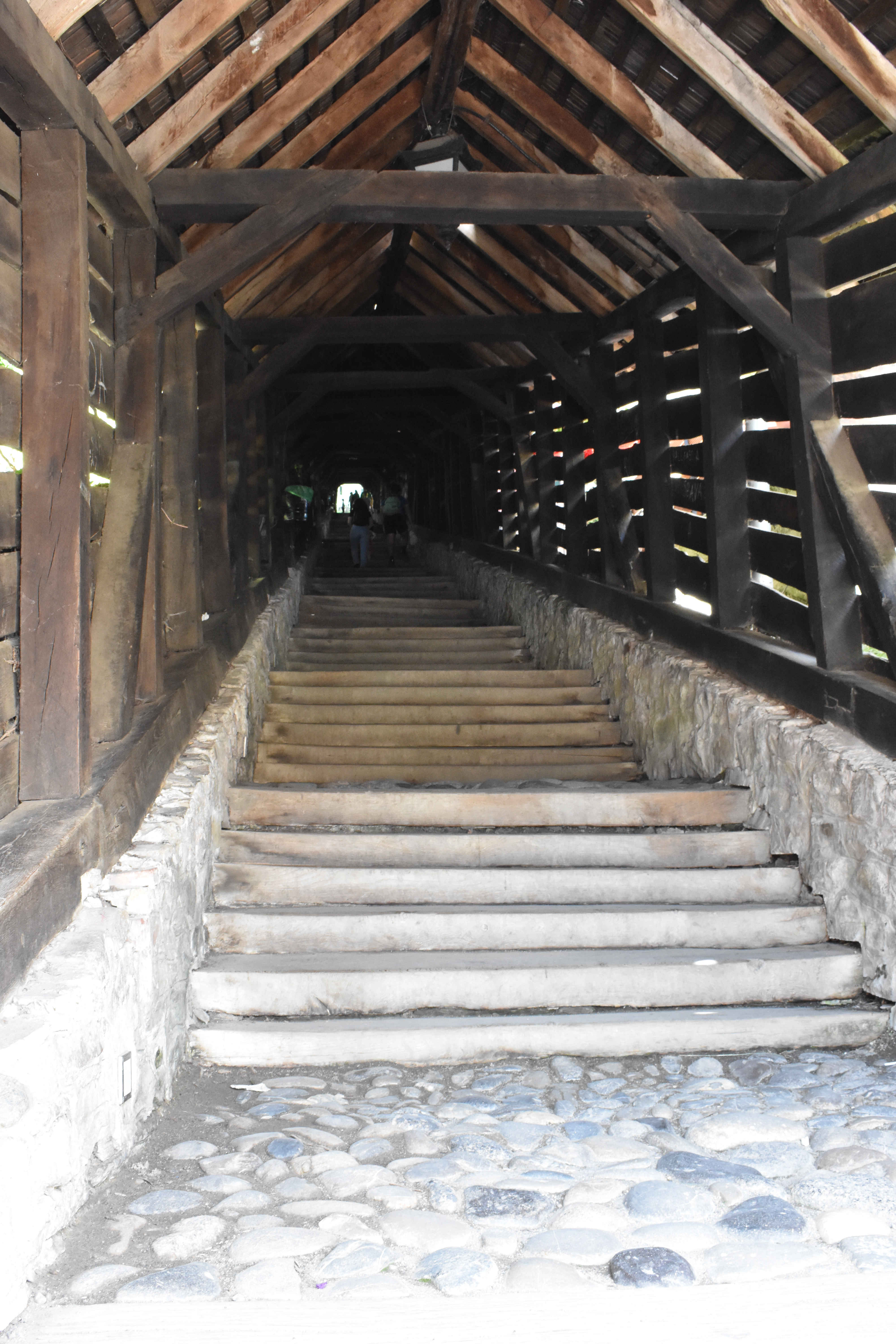
We tramped up the 17th-century Covered Scholars’ Stairway, with 176 steps, which led to ‘The School on the Hill’, and ‘The Church on the Hill’. The latter may be the most valuable historical monument of the town, but as we discovered it is closed on Mondays. Having looked in ‘The Cemetery on the Hill’, we walked back down via a cobbled road.
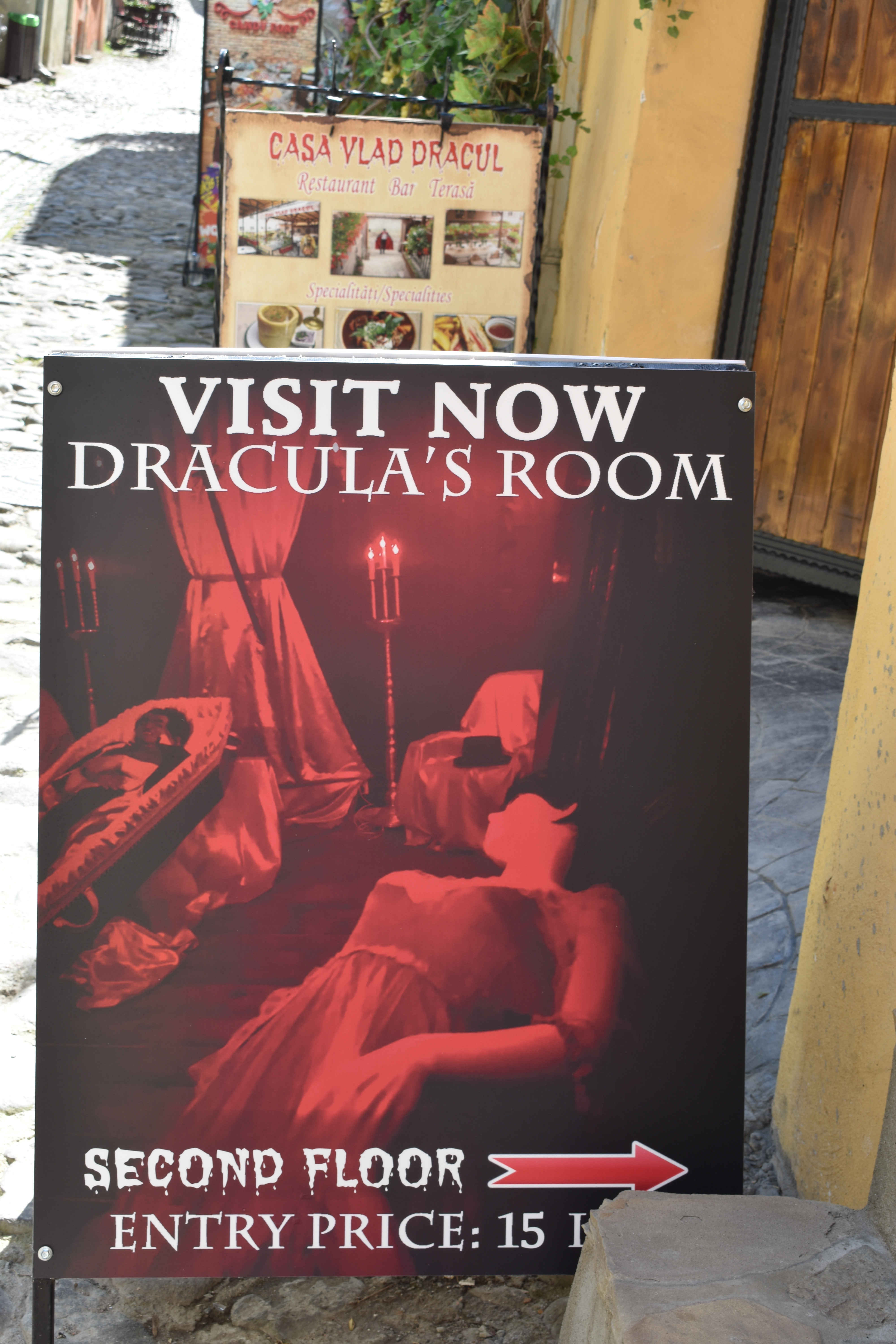
Sighișoara is the birthplace of Vlad the Impaler (Vlad Țepeș), the 15th-century prince who inspired Bram Stoker’s Dracula. His supposed birth house is now a museum where for 15 Lei you could visit ‘Dracula’s Room’. The Rough Guide suggested there was nothing to see ‘save for a coffin from where Dracula springs forth’ and although it said it was worth visiting for the comedy value, we resisted.
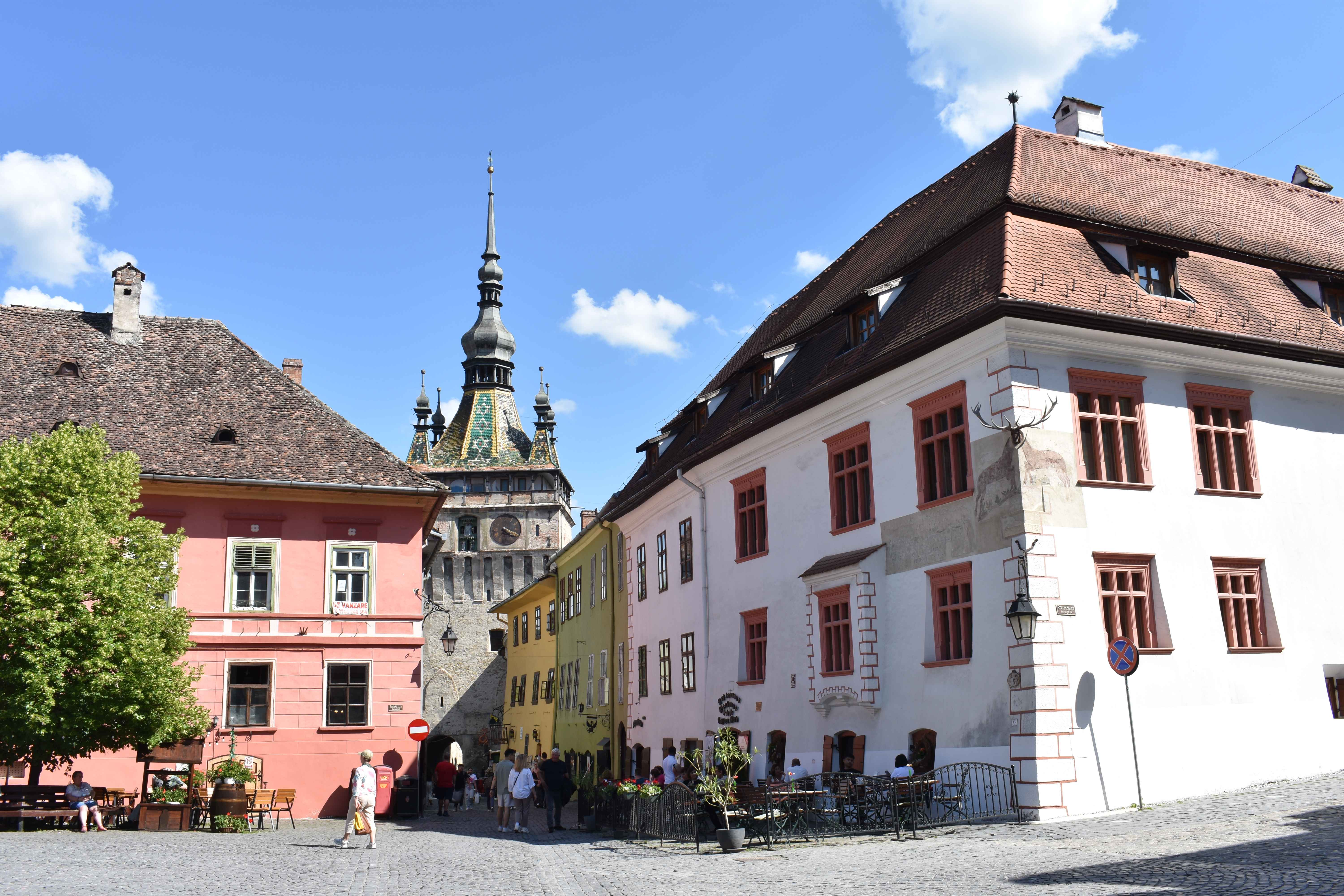
The Clock Tower is the most iconic landmark, with a clock mechanism dating back to the 1600s. We could see wooden figurines, and as it was nearing the half hour, we waited in the hope there would be some activity, but to no avail. We later read the figurines mark the days of the week, and at midnight, the mechanism turns so that the figure for the new day faces forward.
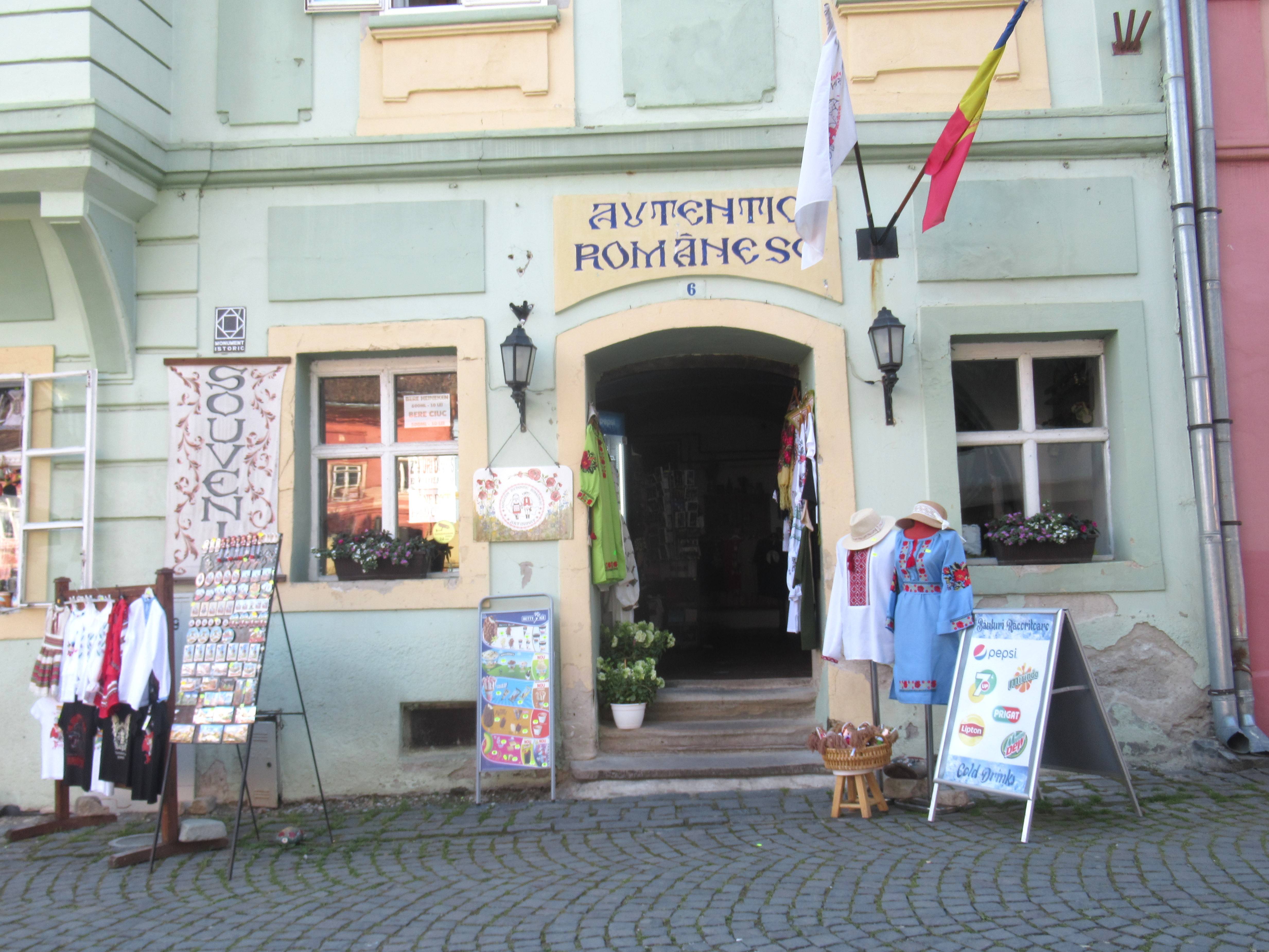
Naturally there are lots of souvenir shops and we were keen to visit Spoonman, who specializes in carved handmade wooden spoons with intricate designs. Unfortunately, he was closed on both our visits.
As so many sights were off limits, we simply enjoyed wandering and enjoying the pastel-coloured medieval buildings, some of which are over 500 years old.
The attractive Citadel Square provided both eating and people watching options. Having enjoyed mid-afternoon drinks at Casa Wagner we returned later for dinner. We chose a pork schnitzel with Transylvanian potato salad (which turned out to be cold sliced potatoes with slices of red onion), and beef goulash cooked in local beer with Spätzle, a German egg-noodle pasta. The latter had a huge volume of meat and although delicious and tender, would have served at least three people. With a bottle of Caloian Sauvignon Blanc and sparkling water, our bill was 218 Lei (£36.30).
My advice if visiting Sighișoara is be prepared for lots of uphill steps and wear good shoes to cope with the cobbles.