
Whilst tribal dancing had featured heavily on our itinerary in Côte d’Ivoire, much to my husband’s relief there had been no museums. However, having arrived too early to check into our hotel in Korhogo, our guide suggested a visit to the Musée Régional Péléforo Gbon Coulibaly and, somewhat reluctantly, he agreed.
The museum is housed in the former residence of Péléforo Soro Gbon Coulibaly. Although Chief of Korhogo province from 1894, he also became one of the most influential Sénoufo traditional leaders in the region with considerable influence during French colonial rule.
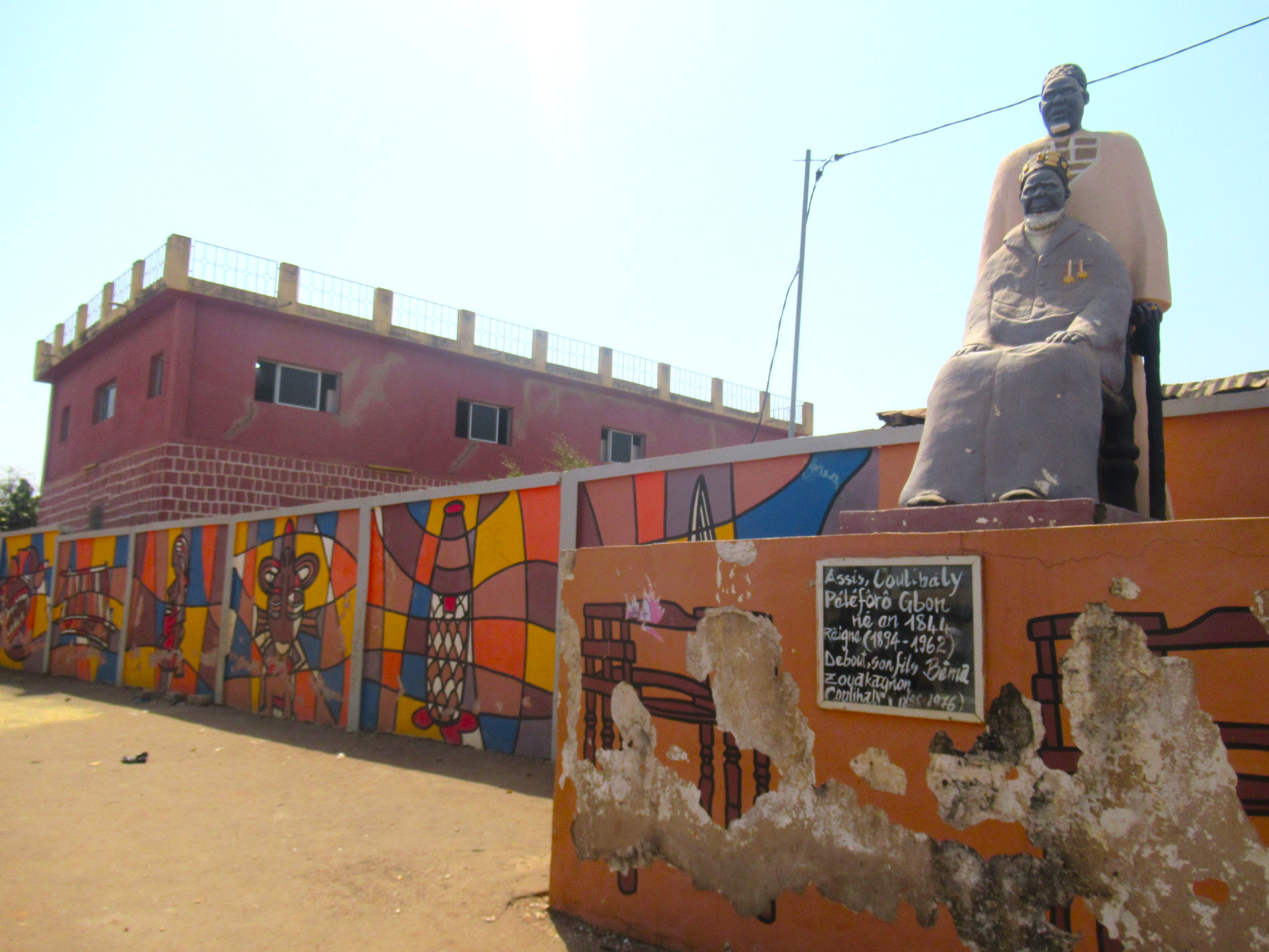
The substantial two-storey house, built in a distinctive local style, was completed in 1950. Péléforo lived here until his death in 1962, with the house being converted into a museum 30 years later. Outside, a statue depicted Péléforo seated, with his son Bêma standing behind him.
Initially, it looked as though we were in for a protracted translated guided tour. But somehow, we managed to avoid this and although a museum guide accompanied us, he chatted to our tour guide while we made our own way around the second-floor galleries.
The themed rooms were well laid out, with exhibits clearly described in both French and English. The first was devoted to the Chief’s life and contained numerous family trees. As this looked rather busy, we moved on to a room displaying traditional ritual and funerary masks, although photography was forbidden here.
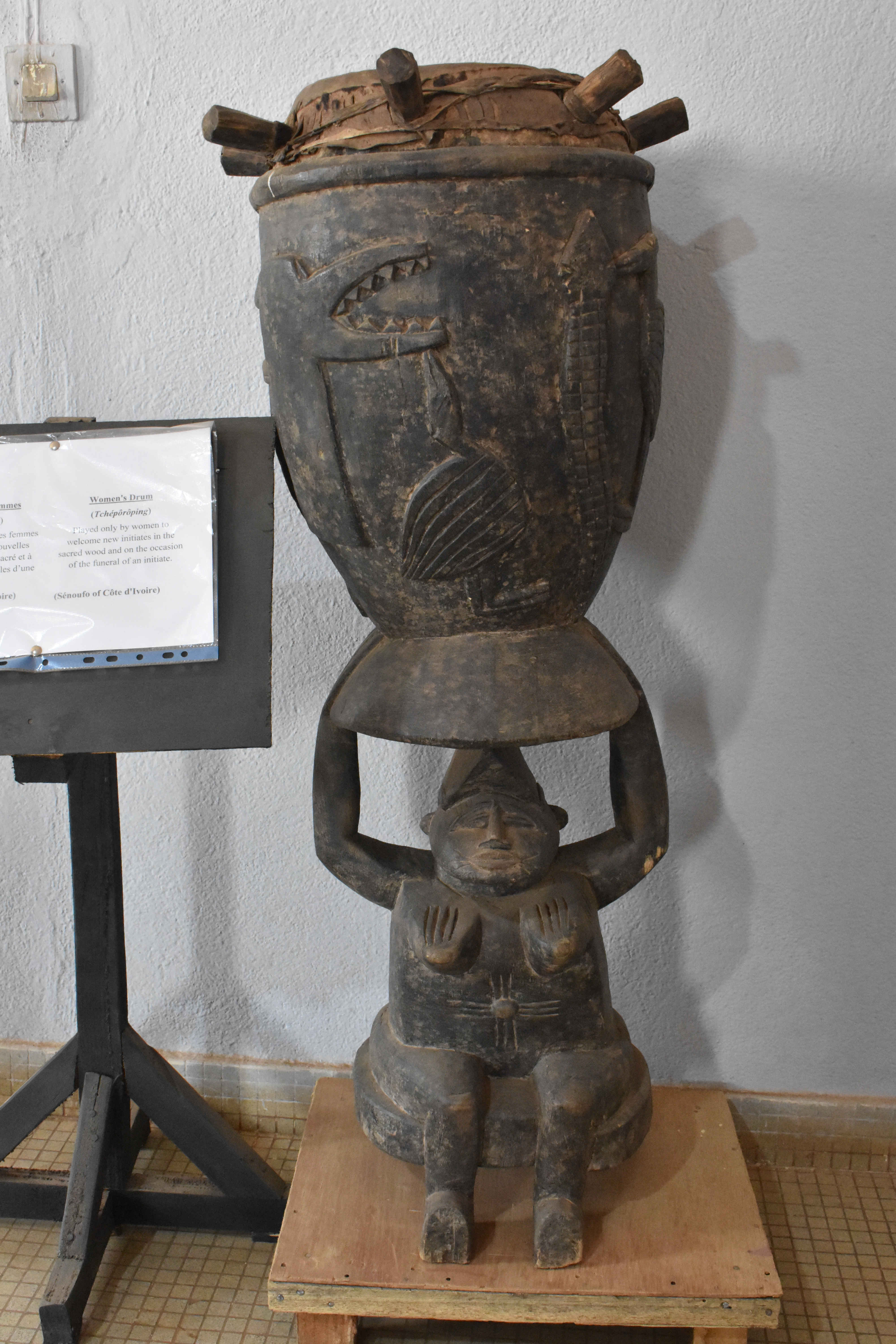
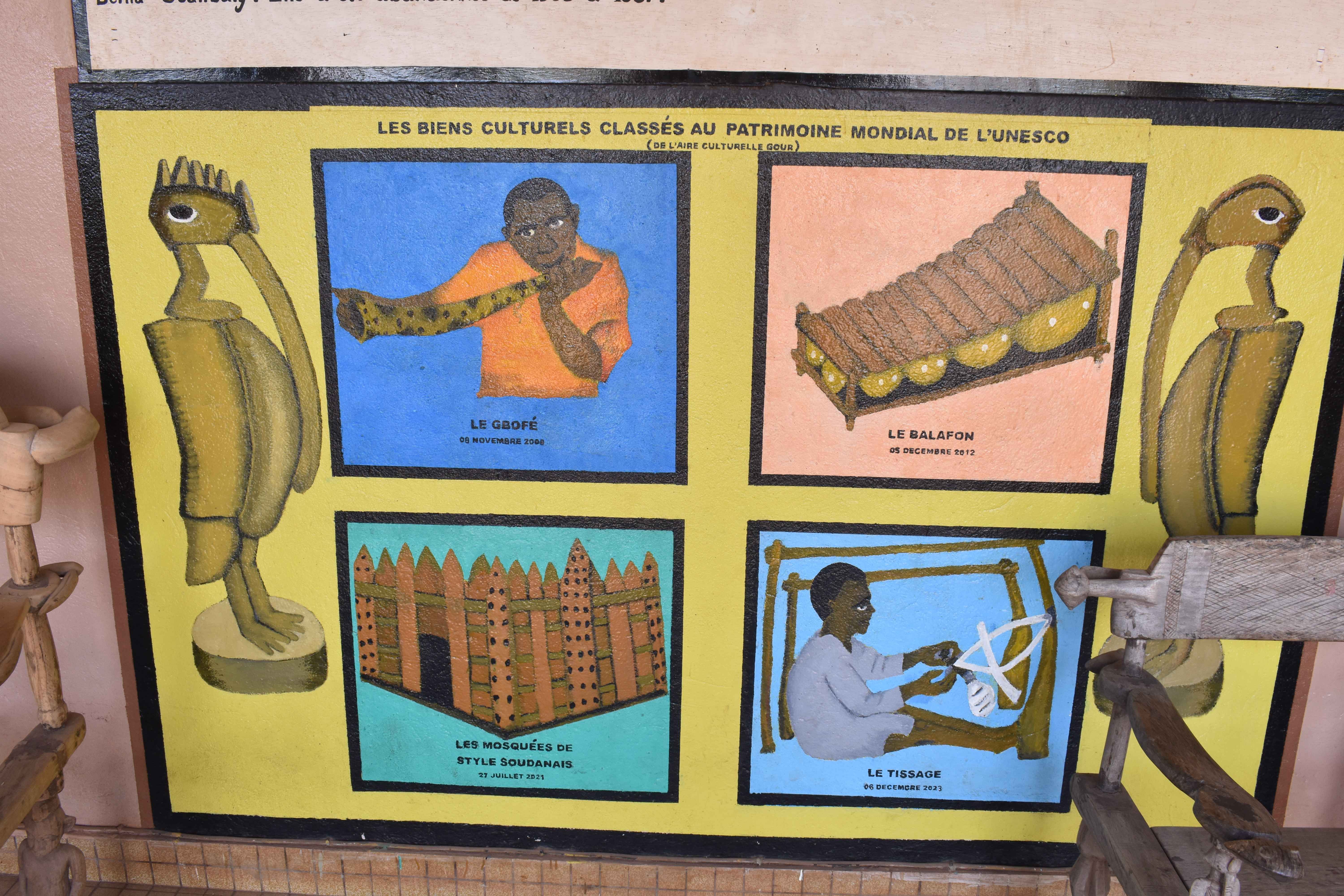
As we were nearing the end of a three-week trip, many of the exhibits were things we had already encountered. A section on musical instruments, for example, included a balafon, a traditional West African percussion instrument resembling a wooden xylophone. We had watched one being made earlier in our travels – and I had even had a go at playing one, albeit badly.
We had also come across numerous wooden carvings of the long-beaked bird known as the calao, resembling a hornbill, which is associated with creation myths and important spiritual concepts. Here, though, we learned something new: male and female carvings are distinguishable by their shape. The male has a cockscomb on his head and a slightly fatter body.
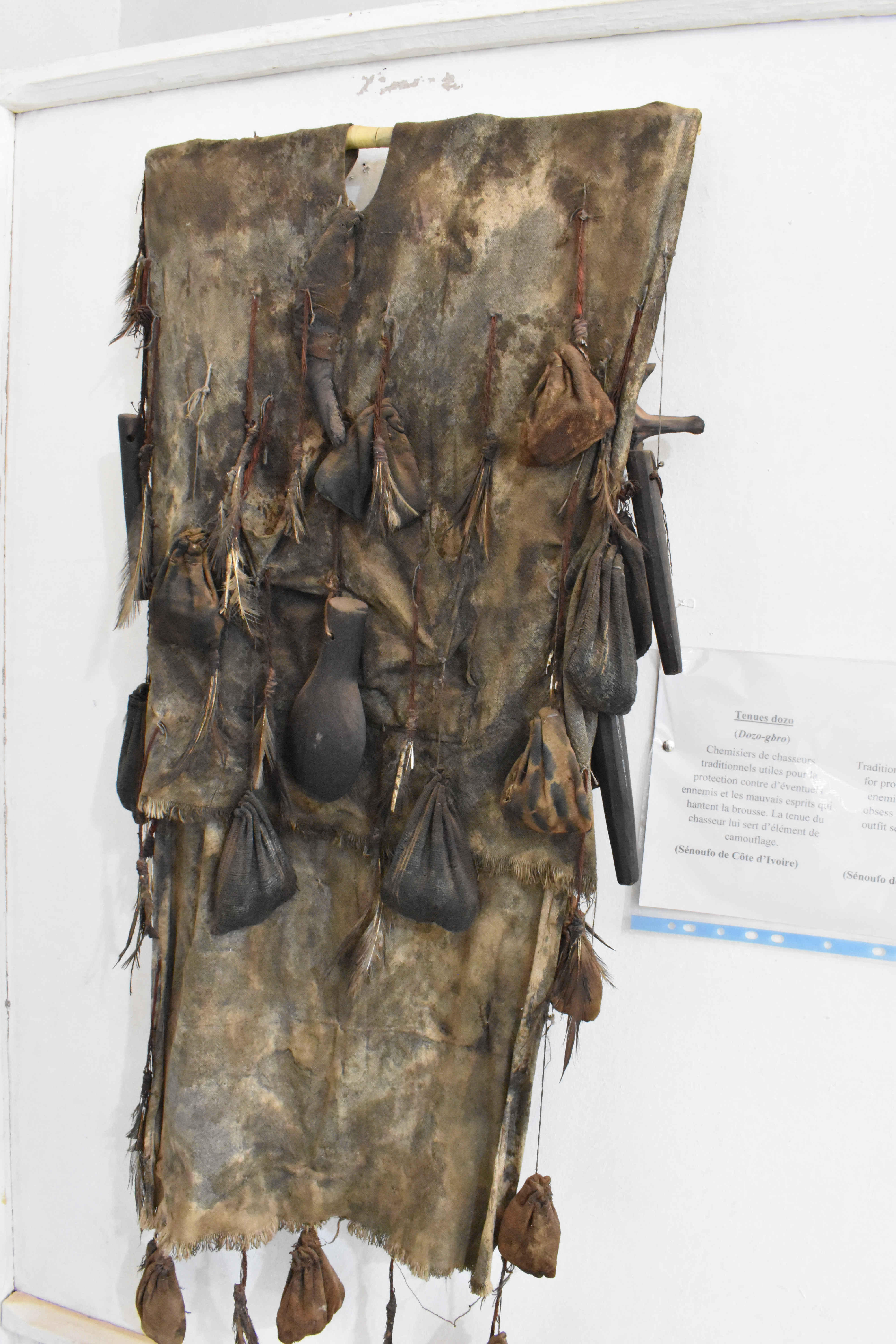
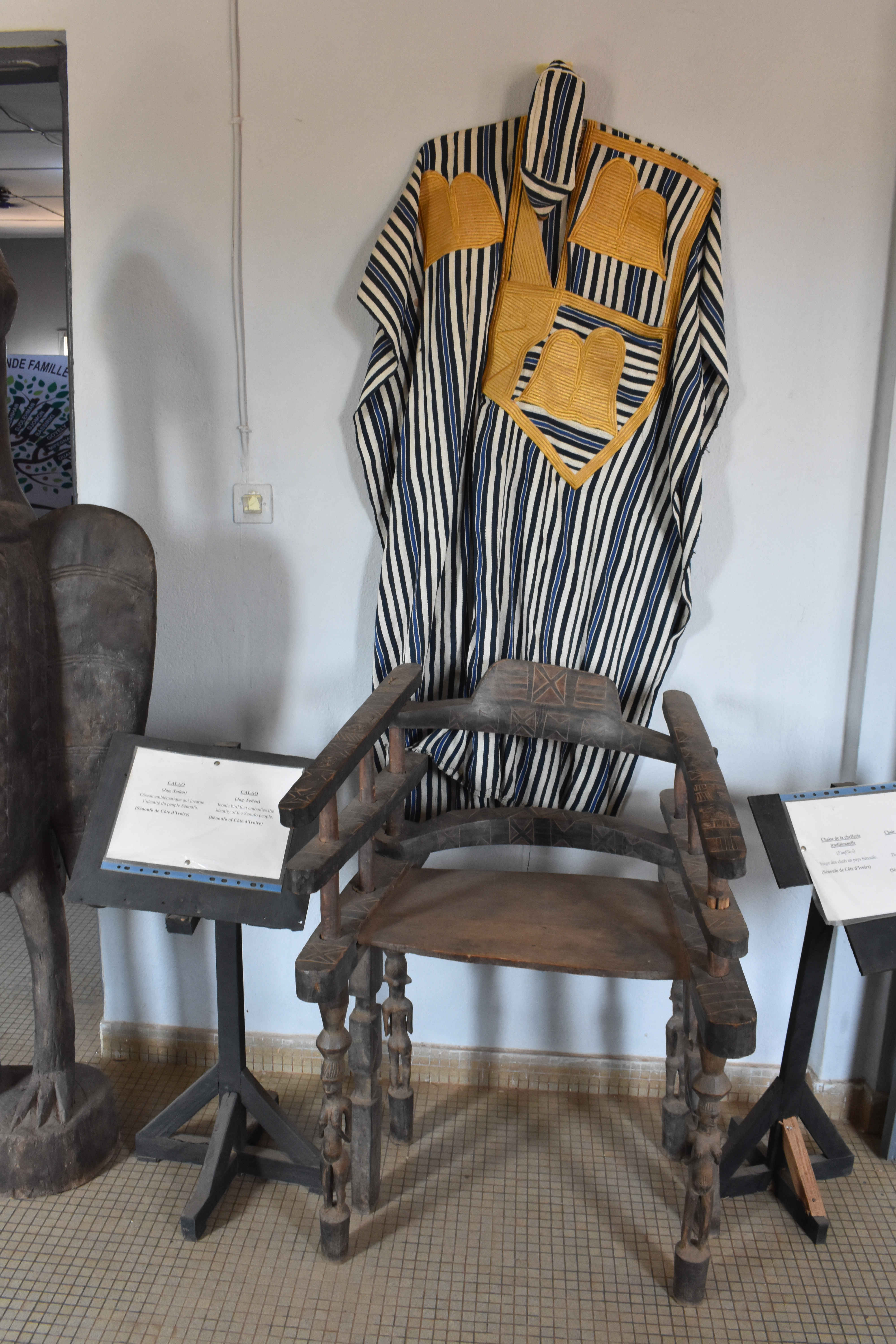
A wooden chair used by the Chief had legs surprisingly carved in the shape of naked girls. Nearby, we could examine the traditional blue-and-white striped outfits worn by chiefs, including the pockets where they would have kept their protective objects. A jacket worn by the Dozo hunters was also familiar to us, with its small leather pouches that would have contained medicinal plants, animal parts and sacred powders.
There were also handcrafted objects and everyday tools. One exhibit featured two birds mounted on a stick which, at first glance, I thought the accompanying sign said had been awarded to the ‘best husband’. In fact, it was for the ‘best husbandman’ – rather less romantic, but more plausible.
There were fetishes of the kind that would have been found in the huts we had seen during our travels, although we had not been allowed inside them, as well as clay beads that we would learn to make ourselves later in the trip.
Far from being simply another museum visit, it was a useful way of making sense of many of the things we had encountered during our three weeks in Côte d’Ivoire. And, perhaps most surprisingly of all, it was a visit that even my museum-averse husband enjoyed.