

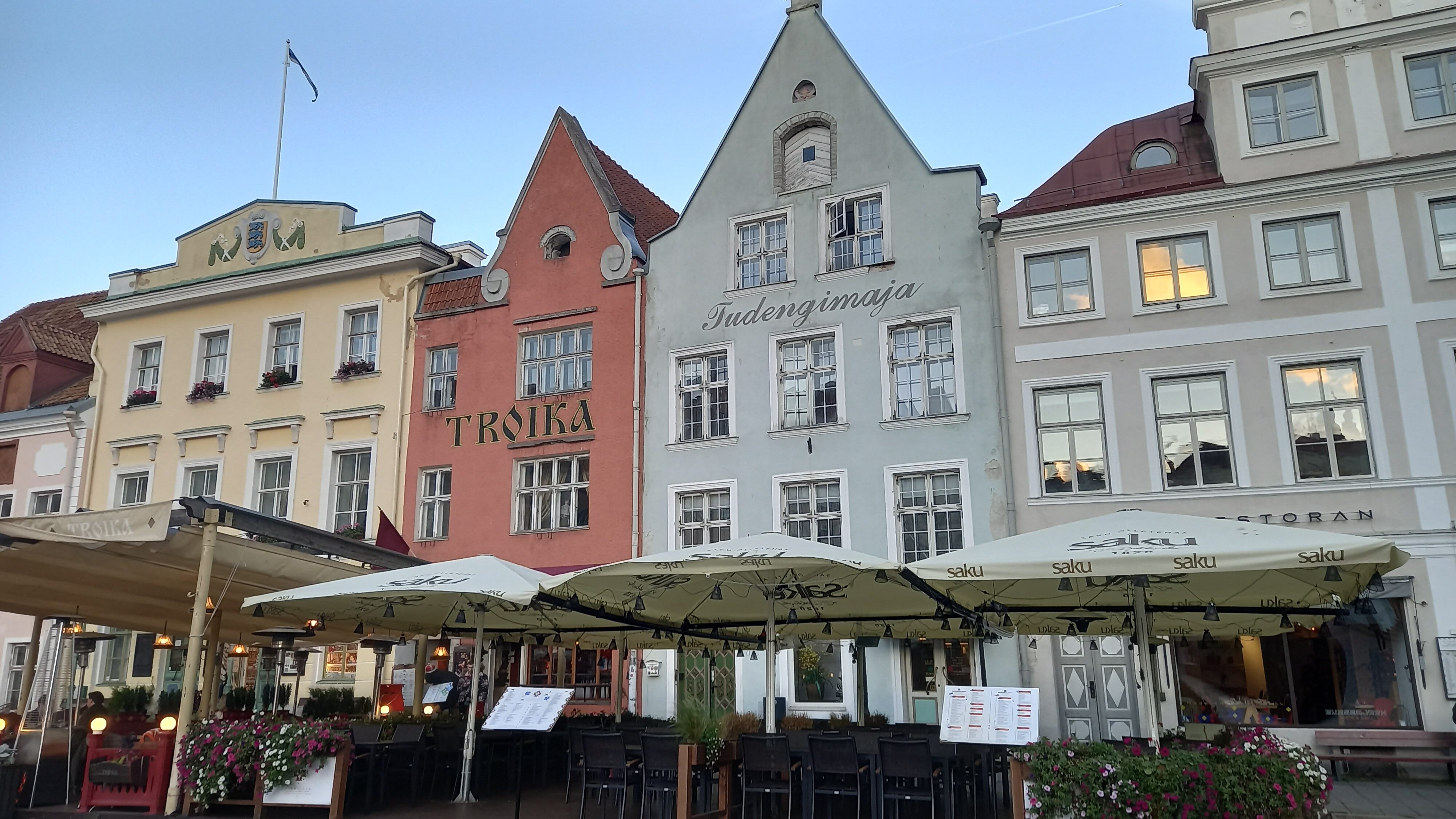
We stayed in the Estonian capital, Tallinn, for three nights but ate out only once. This was at Troika, a popular Russian-style restaurant on the historic Town Hall Square. Although there was a large outdoor terrace, in late September it was chilly and we were shown down a long narrow passage to a large empty room with simple wooden tables and benches. Wines were €45+ and although we were told there was 20% off, we opted for a house white at €35, a Jacob’s Creek Sauvignon Blanc. This was served with sushki: dried bread rings, a popular and common Russian snack. We ordered homemade cabbage rolls with ground meat accompanied by a dish of sour cream, and ‘Yasnaja Polyana’, which as well as being the country estate of author Leo Tolstoy, was the name given to the ‘traditional old-style Russian pot roast’. Both arrived quickly and I found my clay pot, full of pork, carrots and potatoes in a cream sauce, completely sealed with a golden-brown, puffed-dough top. Before I had the chance to take a photo, the rather brusque waitress took a knife, and cut a disc from the dough which resulted in the whole top falling off. We later saw that the disc should have been speared onto the outside with the knife. However, this didn’t detract from the fabulous flavours. It busied up a little and we watched in amusement as a solo male tourist was defeated by a ‘half metre of craft sausage’. The bill came to €68 and on leaving, we photographed the huge cuddly bears which lined the passage and admired the lampshades made from Russian dolls. Whilst it was not the most politically sensitive of restaurants, the food was great and the prices reasonable.
We probably spent too much time drinking at Mad Murphy’s, an Irish bar on Town Hall Square. As well as being reasonably priced, it was one of the few bars, that appeared to be constantly in the sun, and its large terrace was ideal for watching the cruise ship groups come and go.
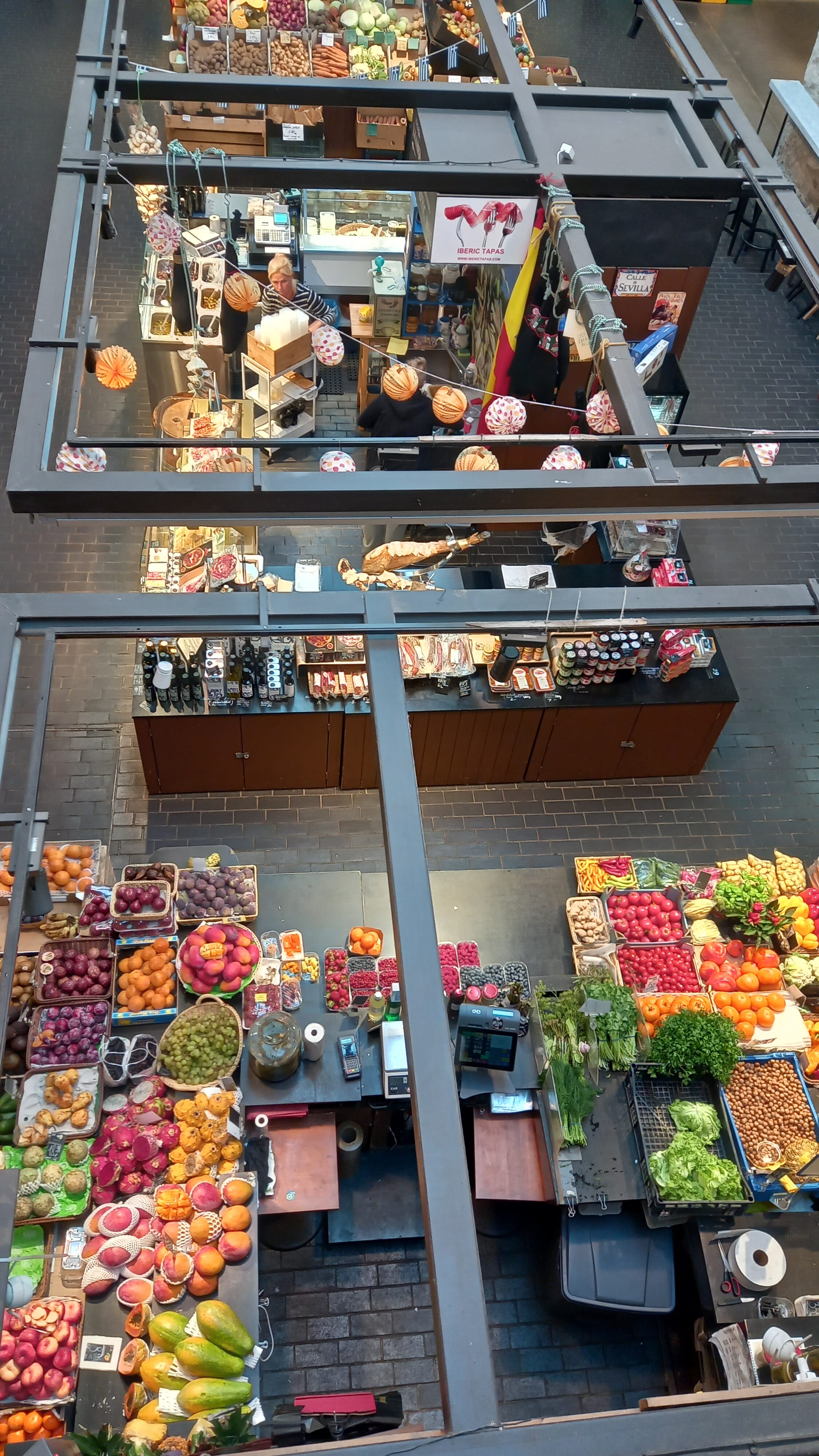
We also enjoyed what was billed as a ‘Market and Street Food Walking Tour’ in Balti Jaama Turg, a large, multi-level market. The were various sections and in fruit and vegetables, our guide Ivo pointed out the difference between lingonberries and cranberries, the former are smaller, and chantarelle mushrooms, which are plentiful, popular and reasonable.
In the meat area, the butchers clearly made use of all parts of the pig, with the trotters used for jelly to cover a terrine, and pigs’ ears turned into beer snacks. Here we enjoyed a small tasting platter of two types of smoked meat, sausage, cheese and gherkins.
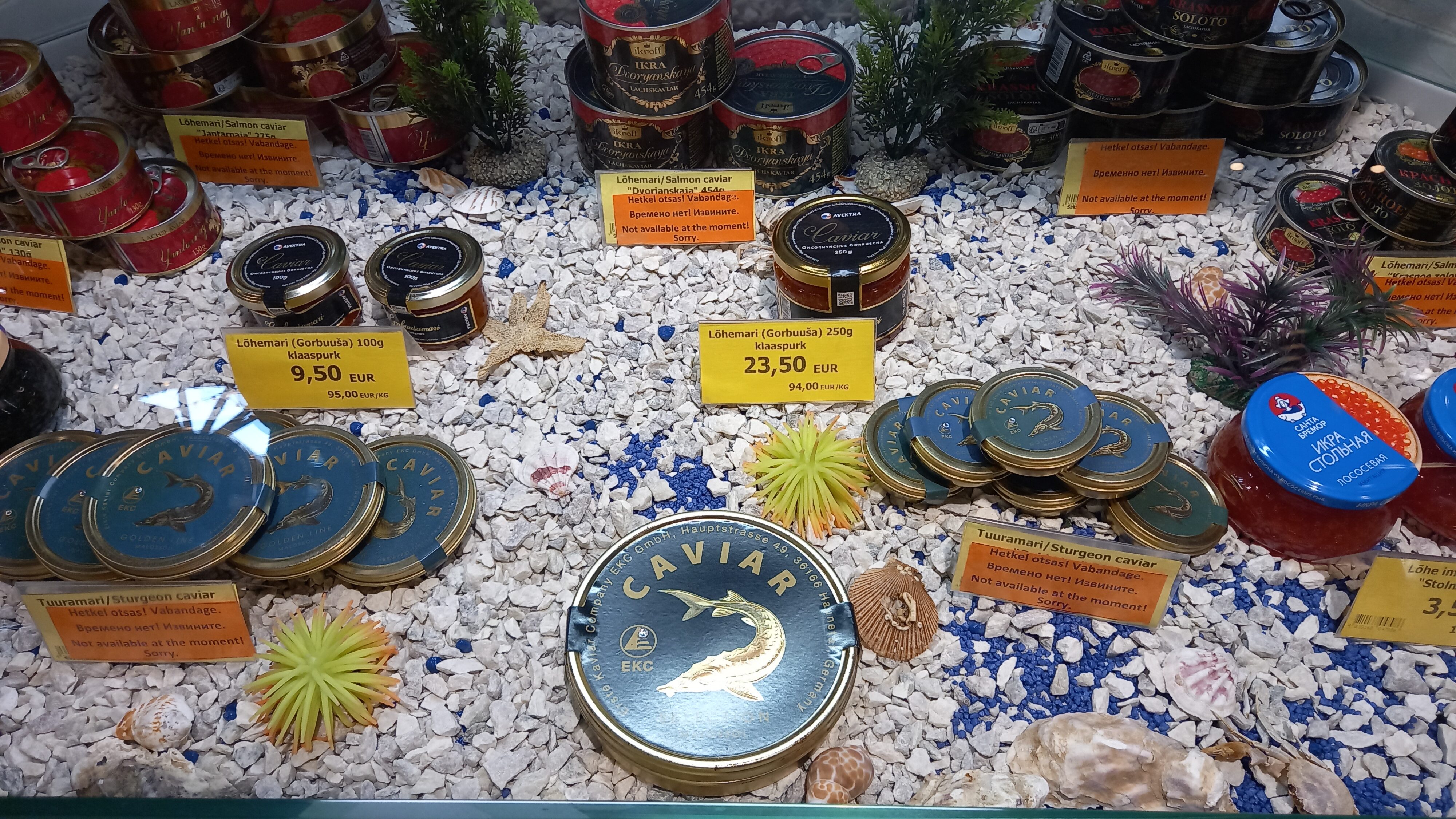
We saw angry looking sturgeon in the fish market as well as salmon, flounder (in season and fat after spending summer on the ocean floor), perch, trout, and eel. We also learned about Baltic herrings and sprats: a popular Estonian appetiser is a piece of rye bread topped with a flattened sprat and a slice of boiled egg. Whilst caviar was on sale, trade levels are said to have plummeted following the ban on Russians entering the country.
Kalev Šokolaadipood had a wide range of traditional chocolates made by Kalev, Estonia’s famous confectioner. Here we tried Kamatahvel, which included kama, a traditional Estonian grain mixture which was used to bulk out the chocolate in the Soviet period when cocoa was scarce. A nearby bakery had various types of rye bread, and we sampled a blueberry muffin made with rye flour.
My favourite taster was a roast pork ciabatta roll with traditional pickles. Although we were going to share one, the stall holder, who was obviously a good saleswoman, told us it would be impossible to halve it and so we had one each. Having tasted it, I was very happy.
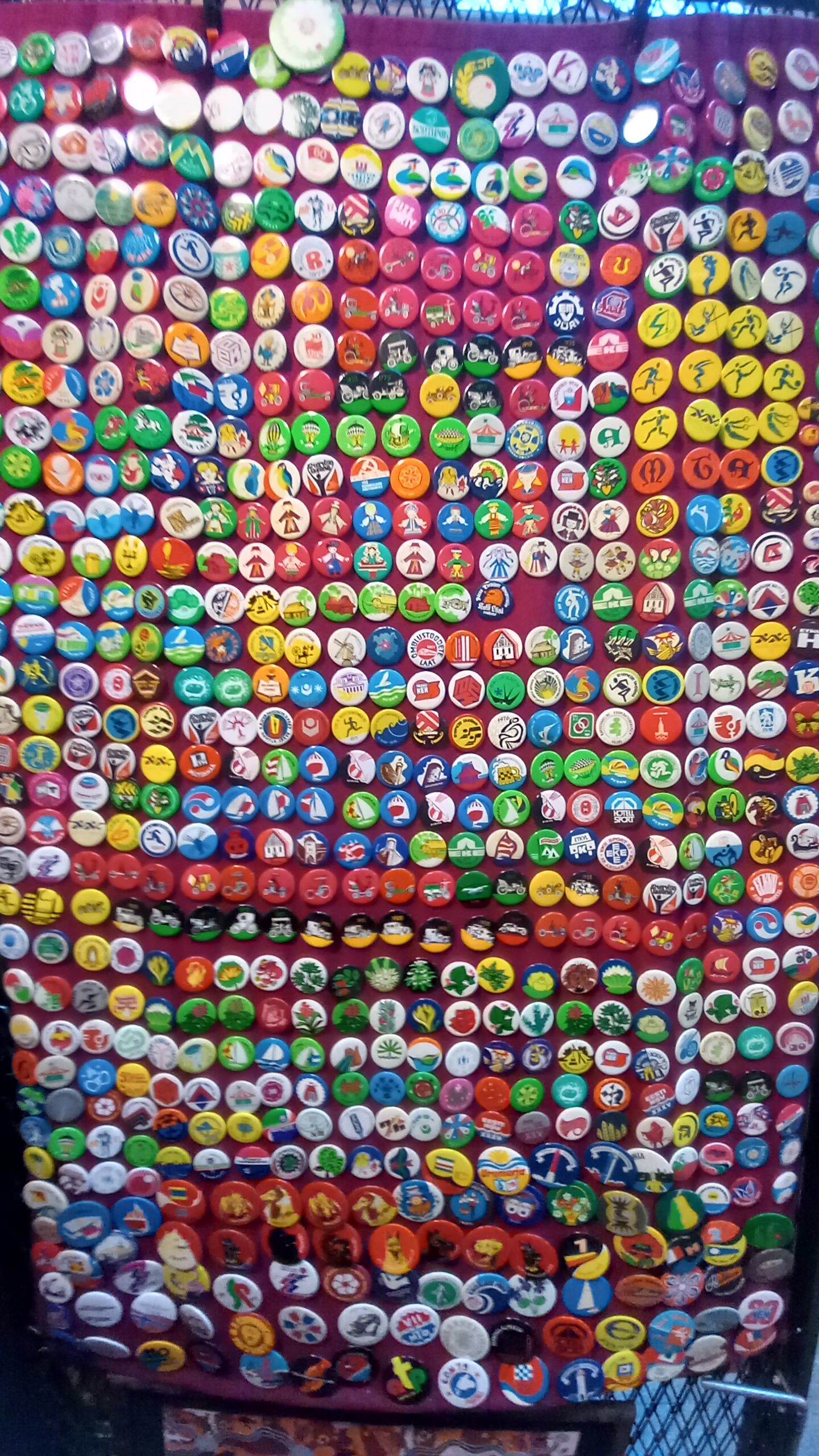
Feeling full, we ventured to the top floor where stalls sold handicrafts, Estonian designed goods, and vintage Soviet-era items which would have been found in every home.