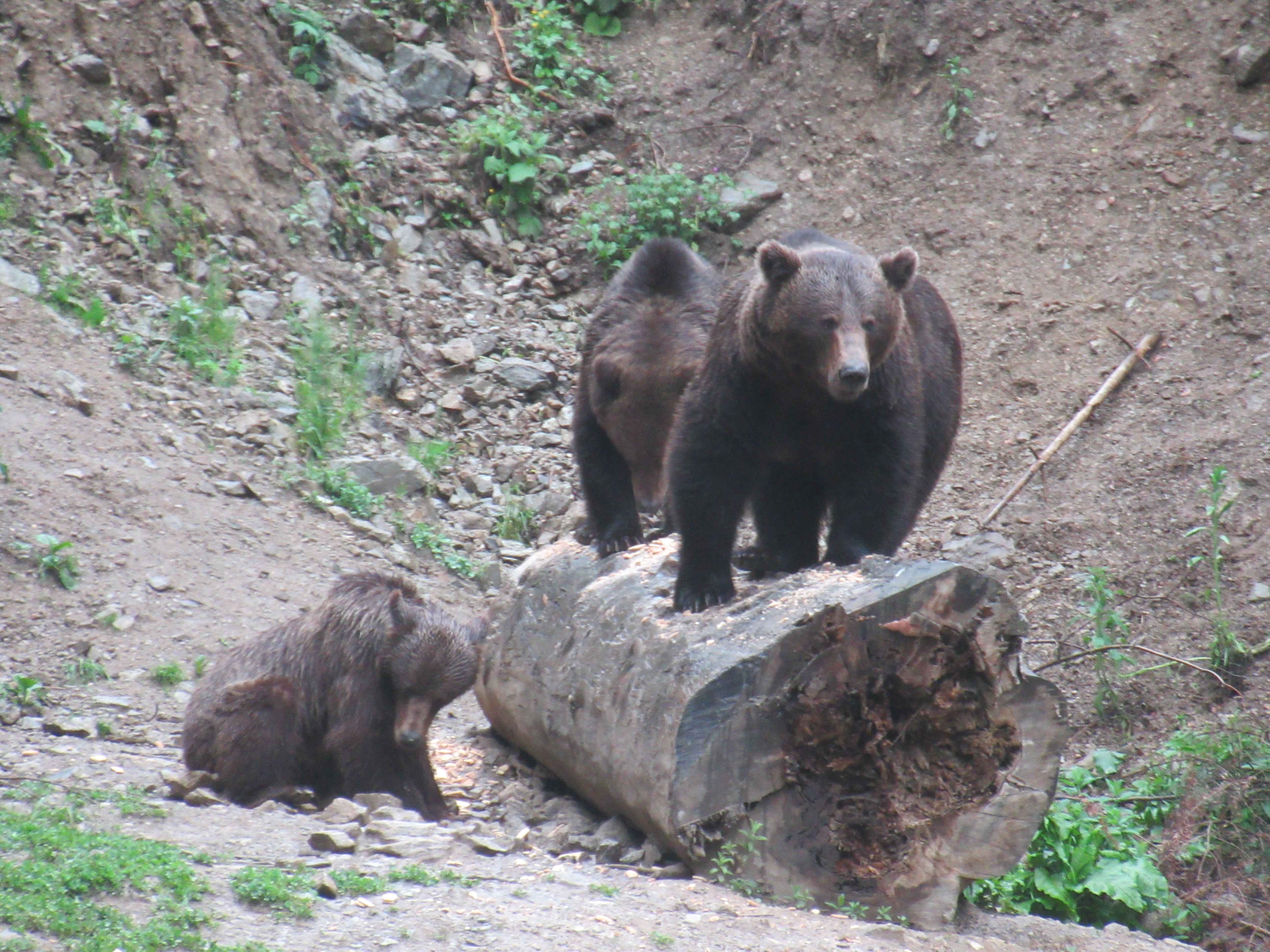
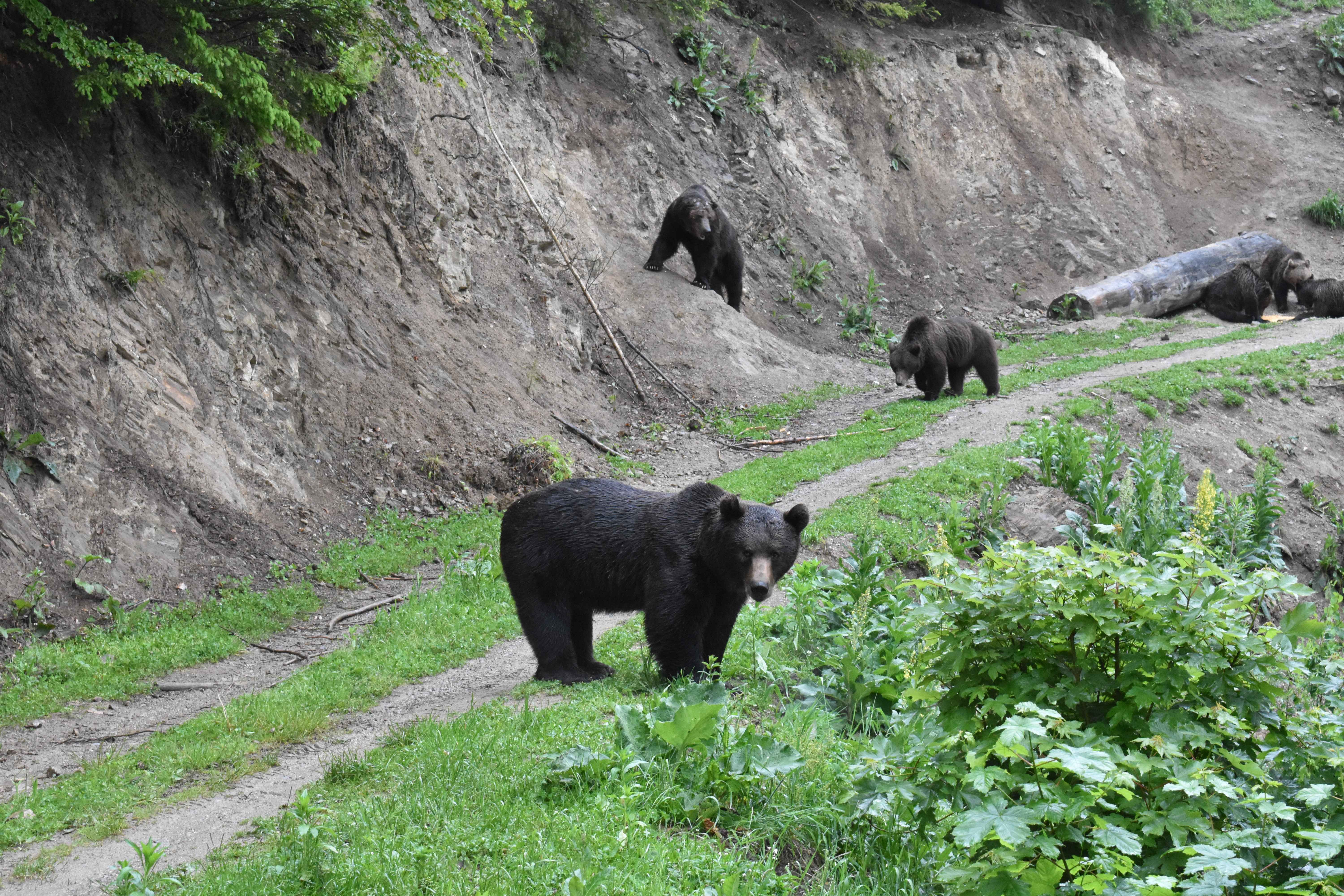
Whilst in Romania, I was keen to see brown bears, and rather than visit the cleverly named Libearty Bear Sanctuary, we booked a bear watching experience.
We arranged to meet our guide at 5pm in the car park of the Restaurant Padina Craiului near the town of Zărnești. We didn’t know what to expect but had been told not to wear perfume and to dress in dark colours. It felt excitingly clandestine.
At the allotted time, Simona arrived, along with several other vehicles bearing more guides and visitors. It was a little manic, as guests were grouped together and allocated a guide and vehicle. Simona, who appeared to be in charge, took us and four others. We were told there was a large group with around 25 to 30, and we feared the worst.
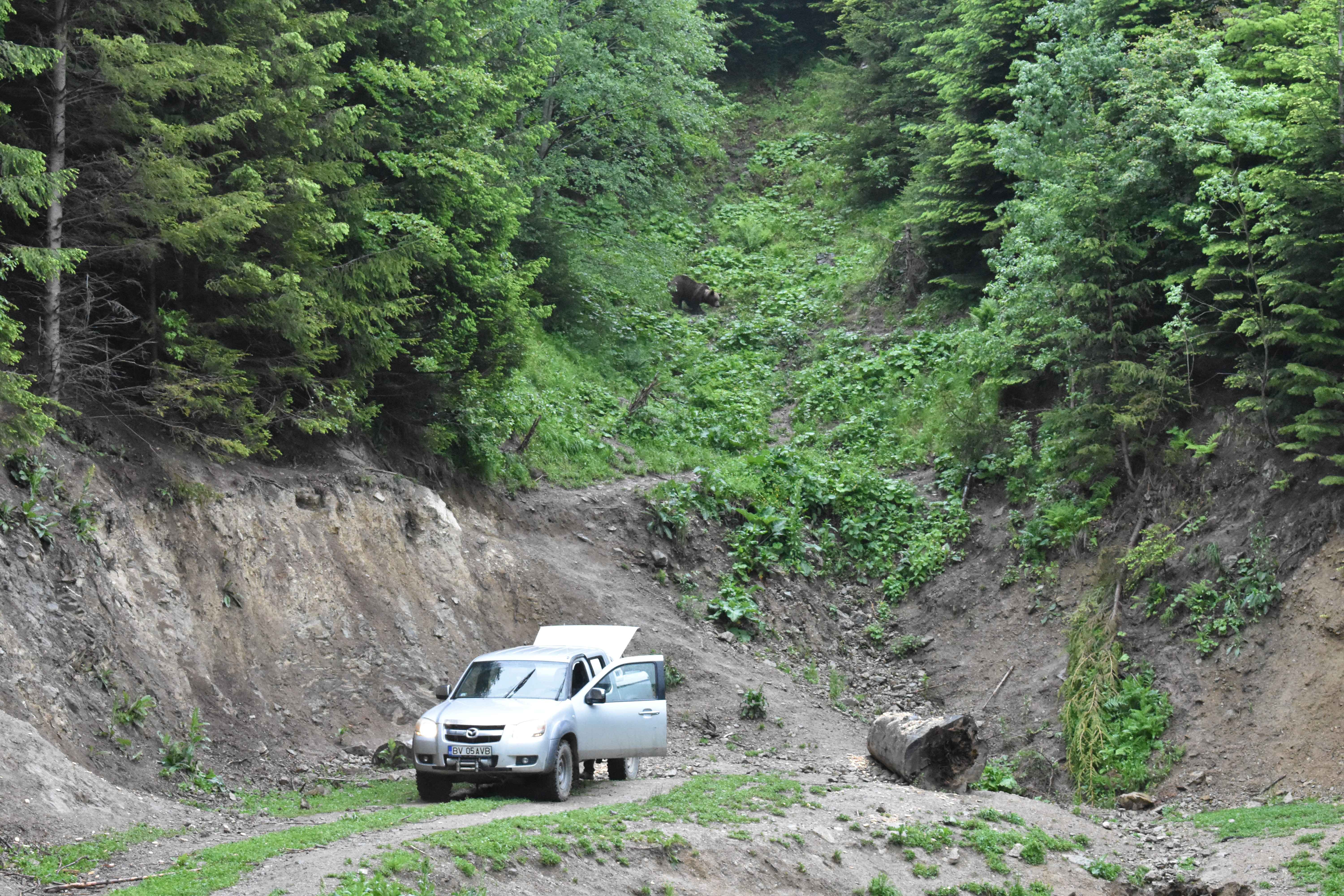
We boarded the 4WD, with me taking pole position in the front seat as the oldest lady in the group with the others squashing in the back. It was a five-minute drive to the forest track. Here was a farm with roaming cows, pigs, sheep and horses, with Simona describing it as a ‘bear buffet’. During the 7km drive along the track to the hide, Simona provided a non-stop, quick-fire commentary about the bears.
The optimum population of bears is around 4,000 but during the communist years when they were hunted, and Ceauşescu wanted awards for the most bears shot, they were fed on meat and more bizarrely chocolate, to increase the population. In 2016, trophy-hunting was made illegal, and numbers have risen to over 6,500.
To keep the bears in their natural forest habitat, feeding stations have been established to prevent them straying into towns and villages searching for food. At feeding stations which accommodate visitors, like the one we visited, the bears are fed at regular times, resulting in a 99% chance of seeing them.
The bears are fed on whatever is available. It does not need to be healthy as the aim, which was constantly reinforced, was to keep them in the forest. This can include biscuits and pastries near their sell by date which they buy at cost from local suppliers, so a win-win for everyone.
We eventually arrived at the hide, and as we were the lead vehicle, we turned around on the narrow track. Simona told us to exit on the right-hand side of the vehicle, and wait until the hide door was open, so that we were not standing around.
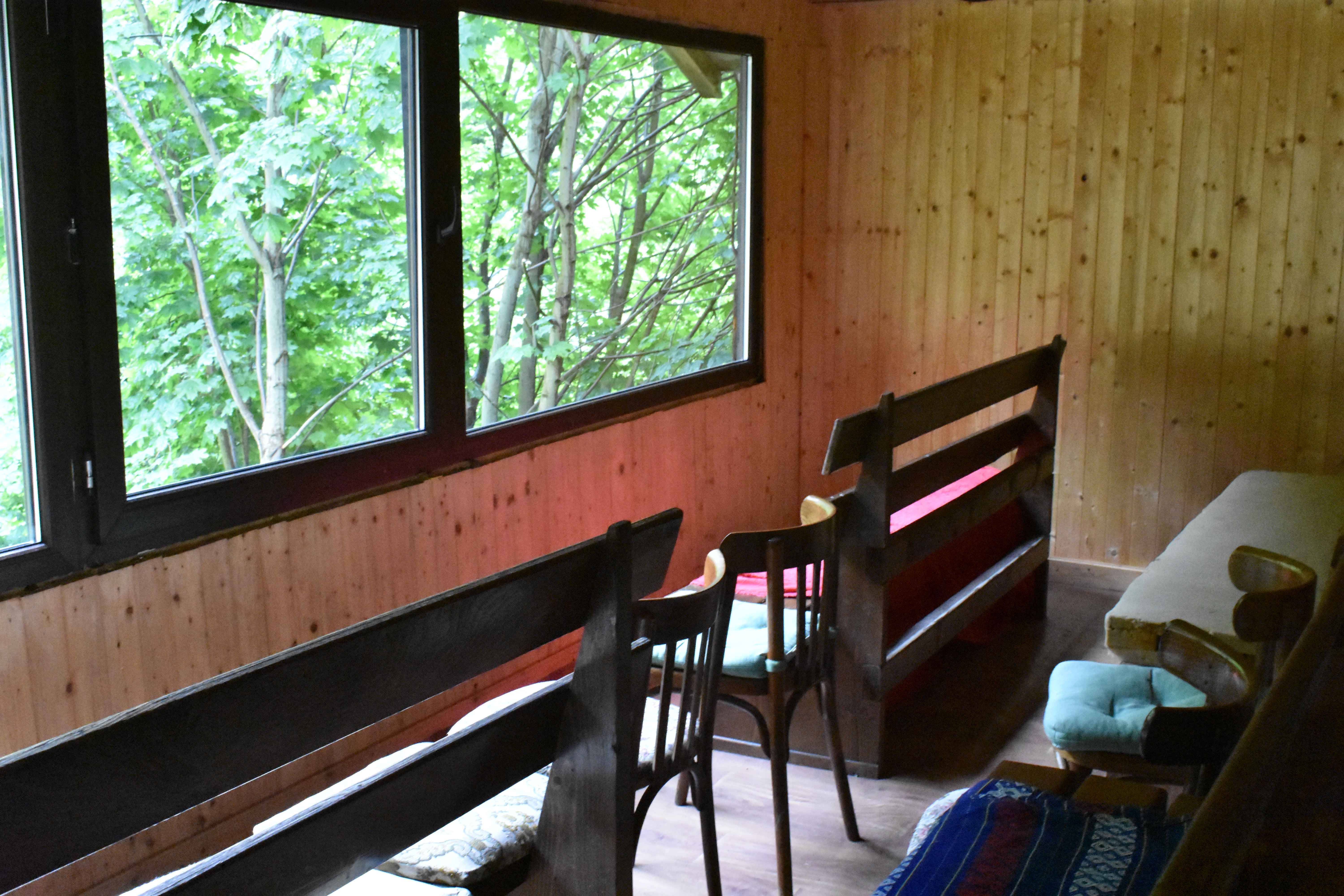
The wooden hide, with a glass window overlooking the forest, had three or four raked rows of benches and Simona advised us to sit at the front, and on the left-hand side for the best viewing angle. Each group sat with their driver-guide.
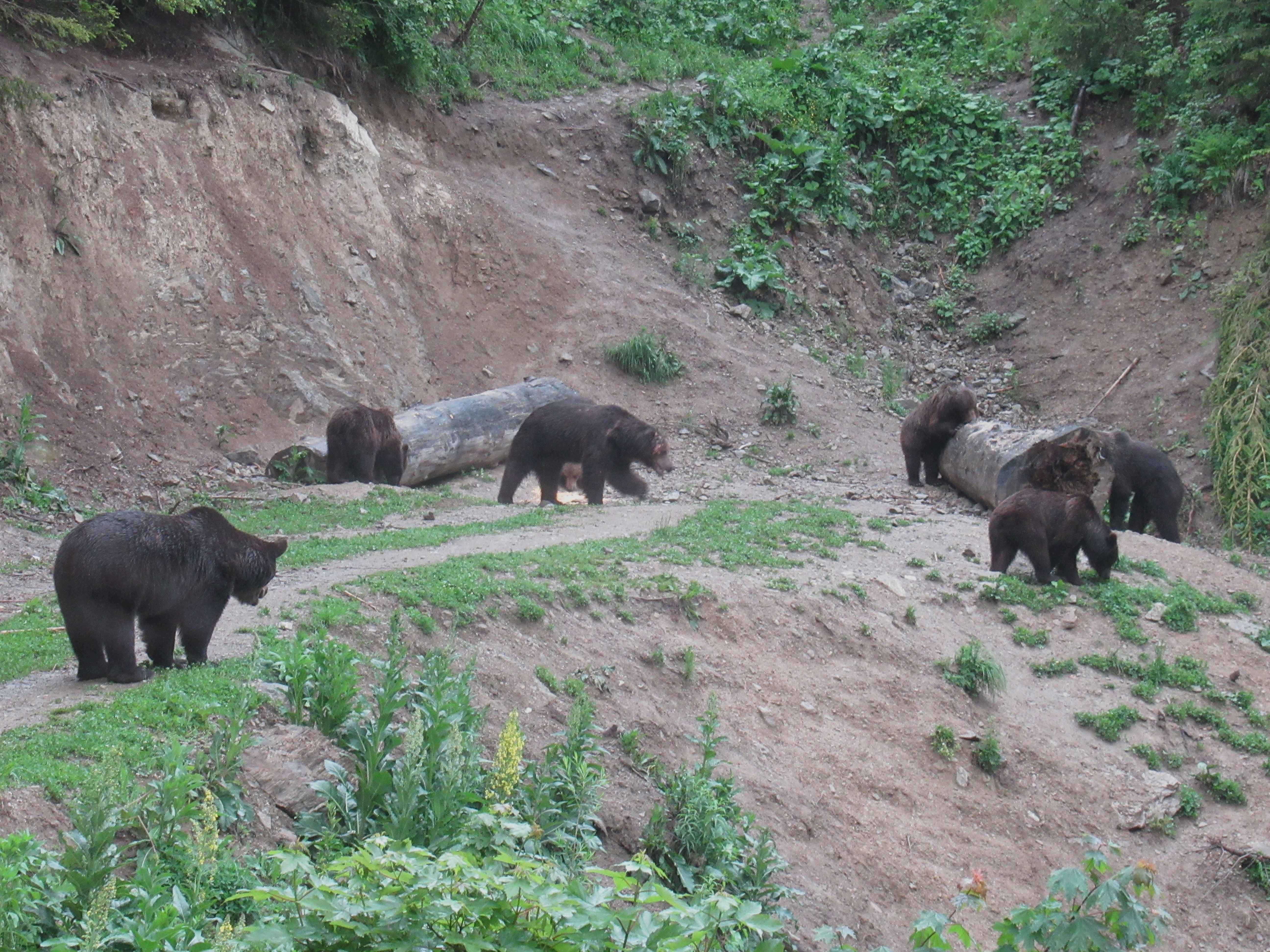
A truck arrived and dispensed sweetcorn from the tailgate. The bears began arriving, and Simona provided a whispered commentary about how the males were darker brown, which was the dominant male, and their ages and scars. We counted around 12 bears in total, but it was hard to be certain, as they came and went. Whilst photos were allowed, the use of flashes was strictly forbidden.
After an hour, the bears started to disappear and we became restless: we’d been told we’d have a minimum of an hour, but this could be extended if the bears were not cooperating.
On the return journey, Simona provided yet more information about the bear life cycle. Gestation appeared to be a complicated, lengthy two-part process with cubs being born in the winter whilst the mother is hibernating. They can have up to five cubs, with the number depending on the amount of fat put on during the winter, and we learned the difference between winter sleep and hibernation. One involves getting up every nine or so days, having a pee, taking in a little food if available and then sleeping again. Whilst bears can live up to 43 years, when in the wild they usually only make it to 25 years.
Despite my initial concerns, this was a well-run trip, and I’d achieved my desire to see bears in the wild. However, this was nothing compared to what was to come whilst driving along the Transfăgărășan Highway (see separate review).