


Our visit to the elegant Mansion Zamfir Arbore-Ralli at Dolna, gave us with a glimpse into the life of Moldova’s landed nobility and one of Russia’s greatest poets.
The estate was built in the early 19th century by the wealthy Greek-born nobleman Zamfir Ralli, whose family had settled in Bessarabia during the previous century. It was used as the family’s summer residence, and became a gathering place for writers, artists and intellectuals. Its most famous guest was Alexander Pushkin, who visited several times while exiled in Bessarabia between 1820 and 1823.
It was here, according to local tradition, that Pushkin encountered Roma families whose lives inspired his narrative poem The Gypsies (Țîganii). The story tells of Aleko, an outsider who falls in love with the beautiful Zemfira, although historians debate how closely the poem reflects Pushkin’s own experiences. Whatever the truth, Dolna remains closely associated with this period of his life.
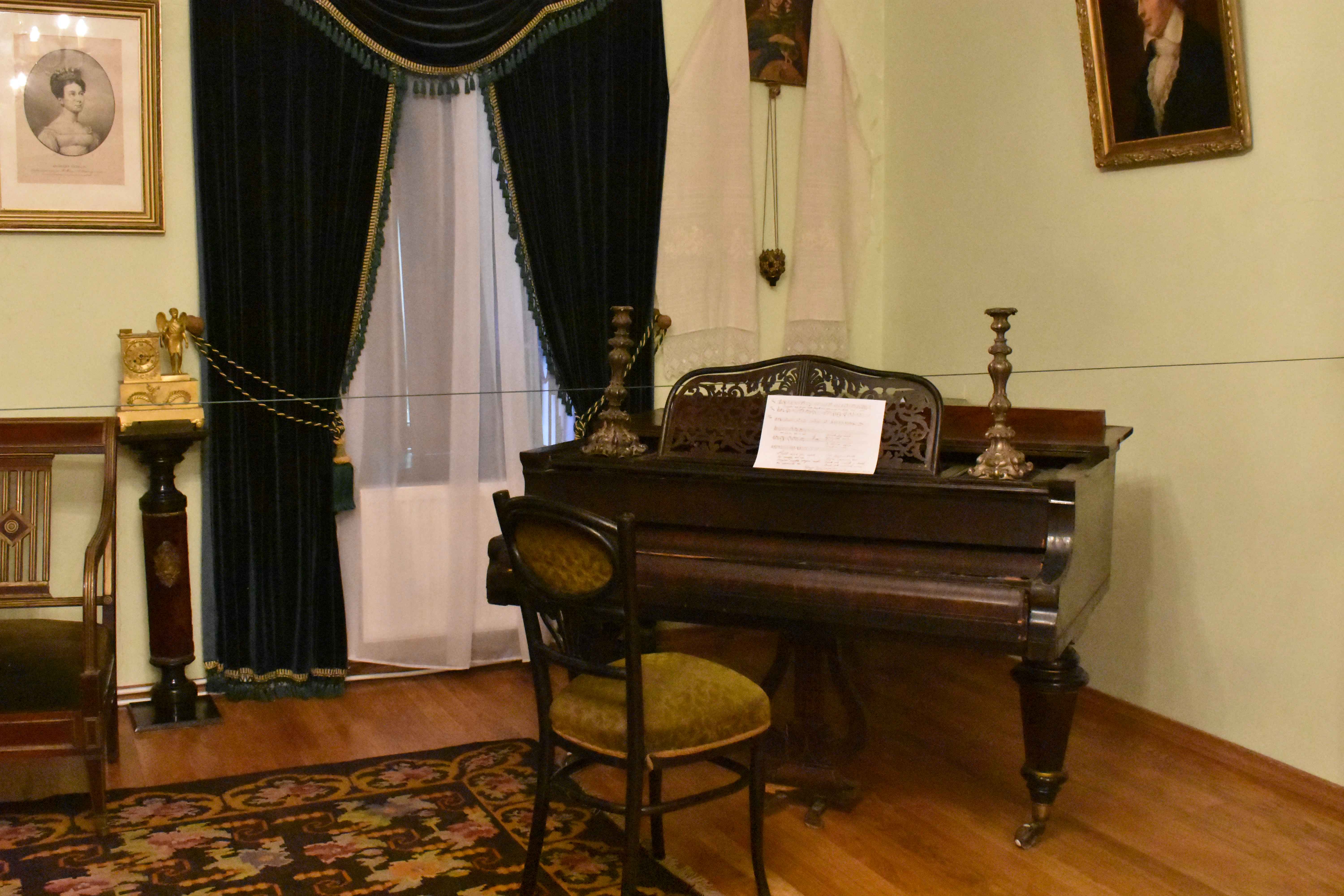
A knowledgeable guide took us through eight of the manor’s fifteen accessible rooms. We began in the Casa Mare, the grand reception room, complete with an impressive fireplace that saw little use, as the house was not usually occupied during winter. From there we moved on to the elegant ladies’ salon, the richly decorated Ottoman Room where the men would retire after dinner, and Pushkin’s study, complete with his pipe.
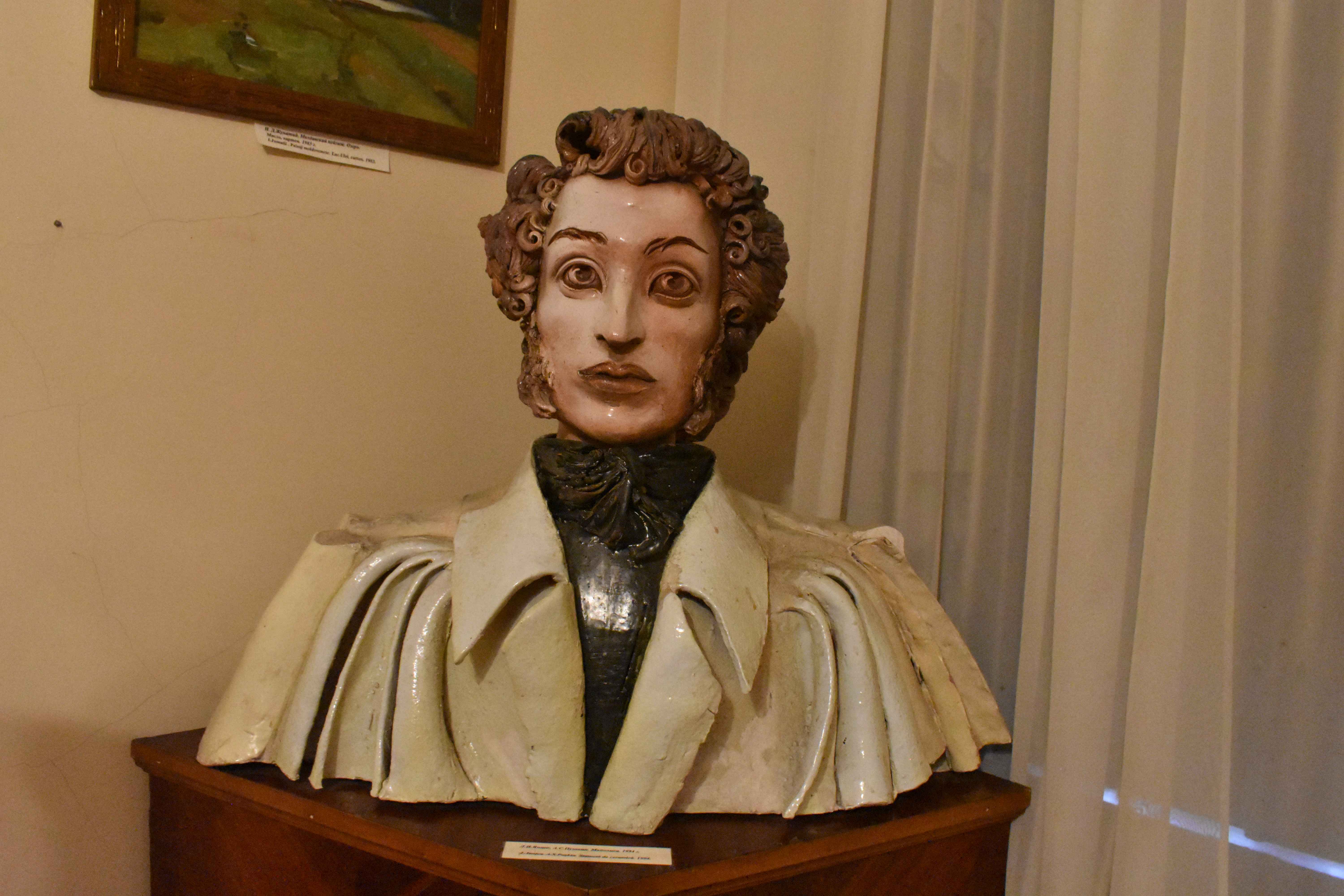
The rooms contained numerous first editions, portraits and sketches connected with Pushkin, including drawings he made in the margins of his manuscripts. One display highlighted his admiration for Lord Byron, whose romantic influence is evident in his early work. Another told of Pushkin’s remarkable ancestry: his great-grandfather was the African nobleman Abram Gannibal, who rose to become a distinguished military engineer in the service of Peter the Great. Interestingly we vaguely remembered a story about Gannibal whilst visiting the Tallin Gate in Parnu, Estonia.
Our guide explained that 6 June, Pushkin’s birthday, is celebrated annually as Pushkin Day, when literature lovers gather to commemorate his life and work.
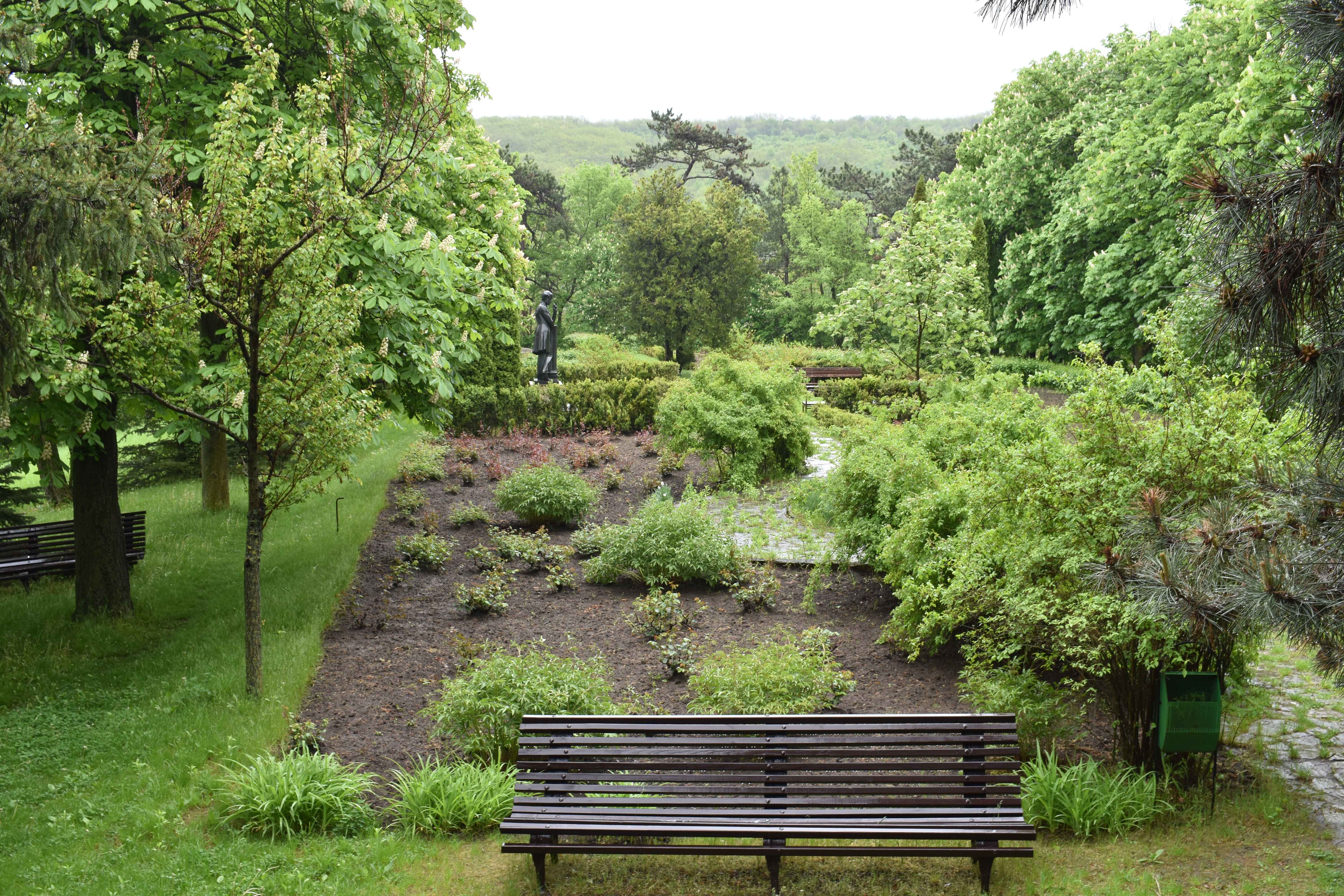
Outside, despite steady rain, we wandered through the peaceful grounds to the bronze statue and bust of Pushkin overlooking the gardens, and it was easy to imagine the poet finding inspiration in their peace and tranquillity.
A large group of schoolchildren arrived during our visit, but staff thoughtfully asked them to have their picnic lunch before exploring the house, which we had to ourselves: a gesture much appreciated.
Dolna is not a grand palace, but its appeal lies in its atmosphere. For anyone interested in literature, and Pushkin, it provides an intimate connection with the place where one of the world’s greatest poets found both inspiration and refuge.