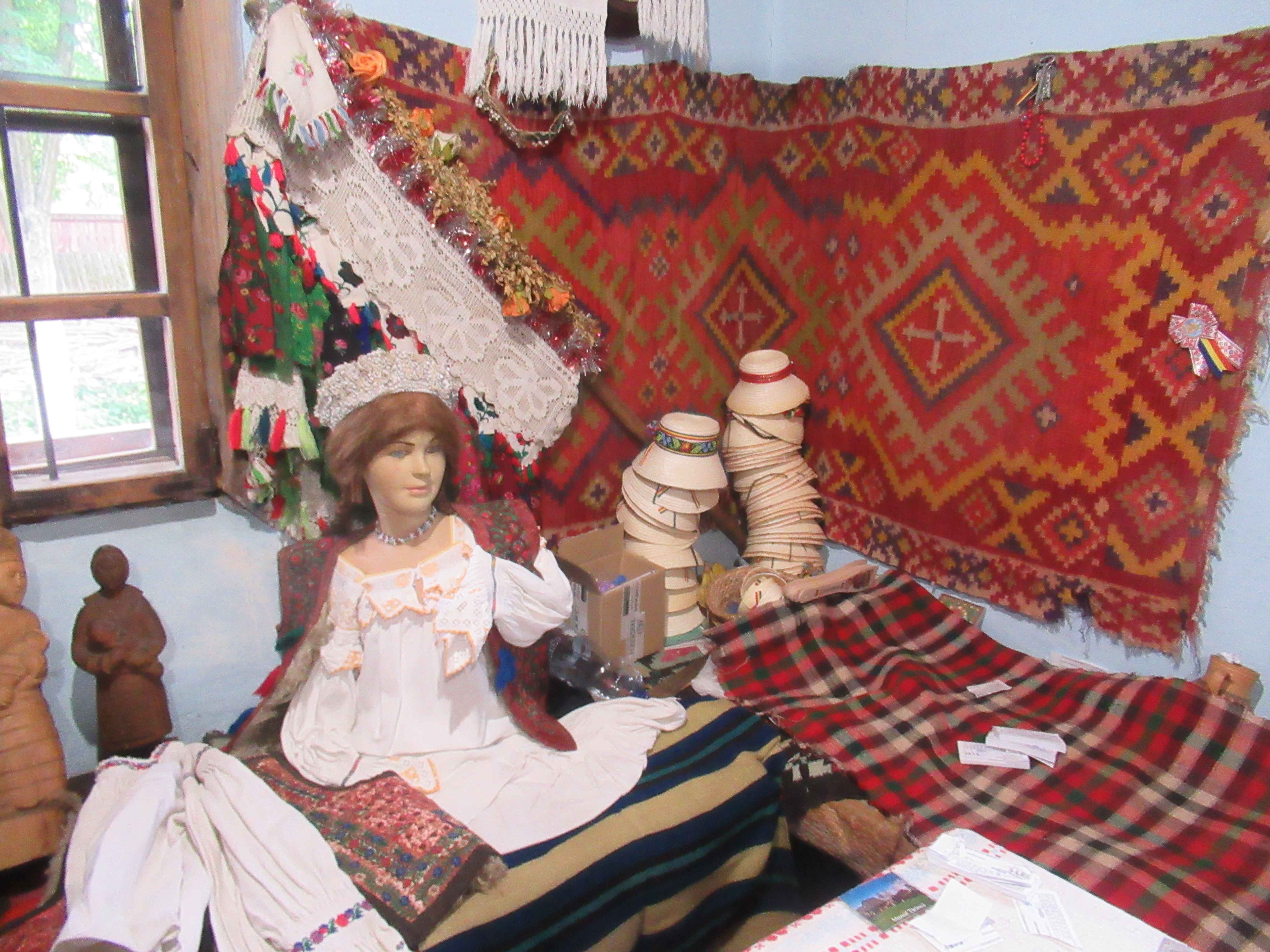
In the village of Dragomirești we visited Muzeul Țărăncii Române. This small museum was dedicated to the lives of Romanian peasant women and highlighted the various roles of mother, sister, wife, caregiver, and cultural guardian.
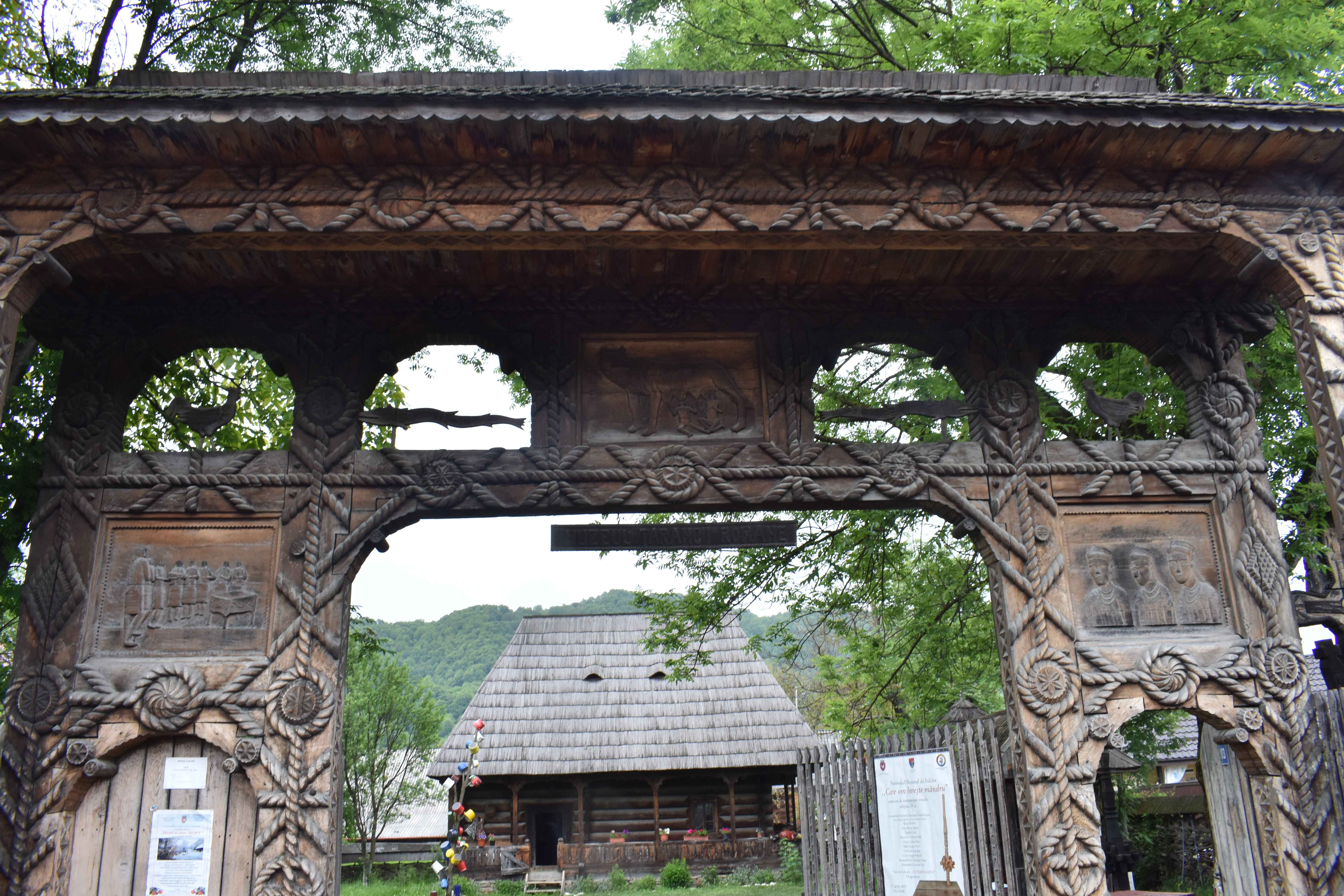
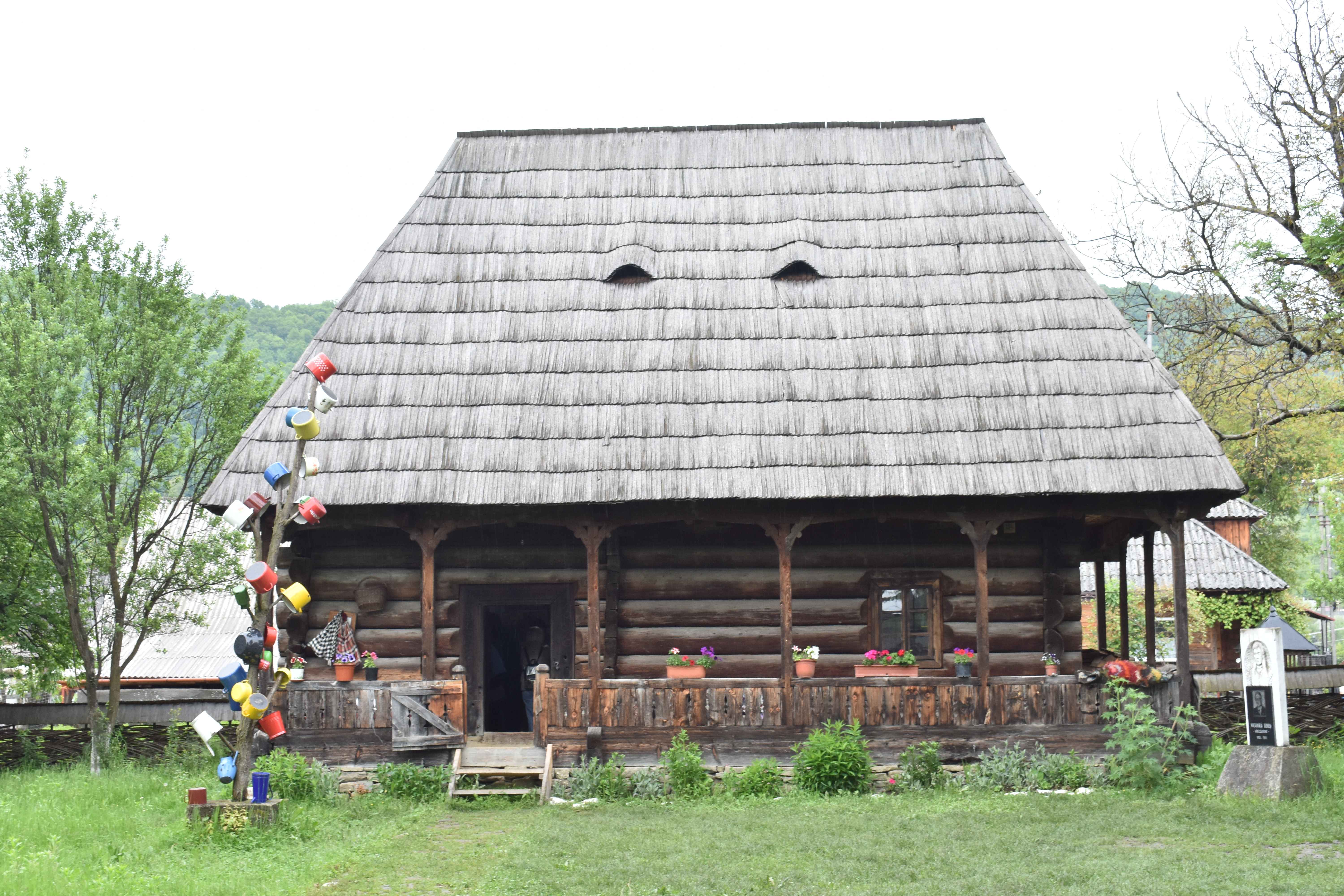
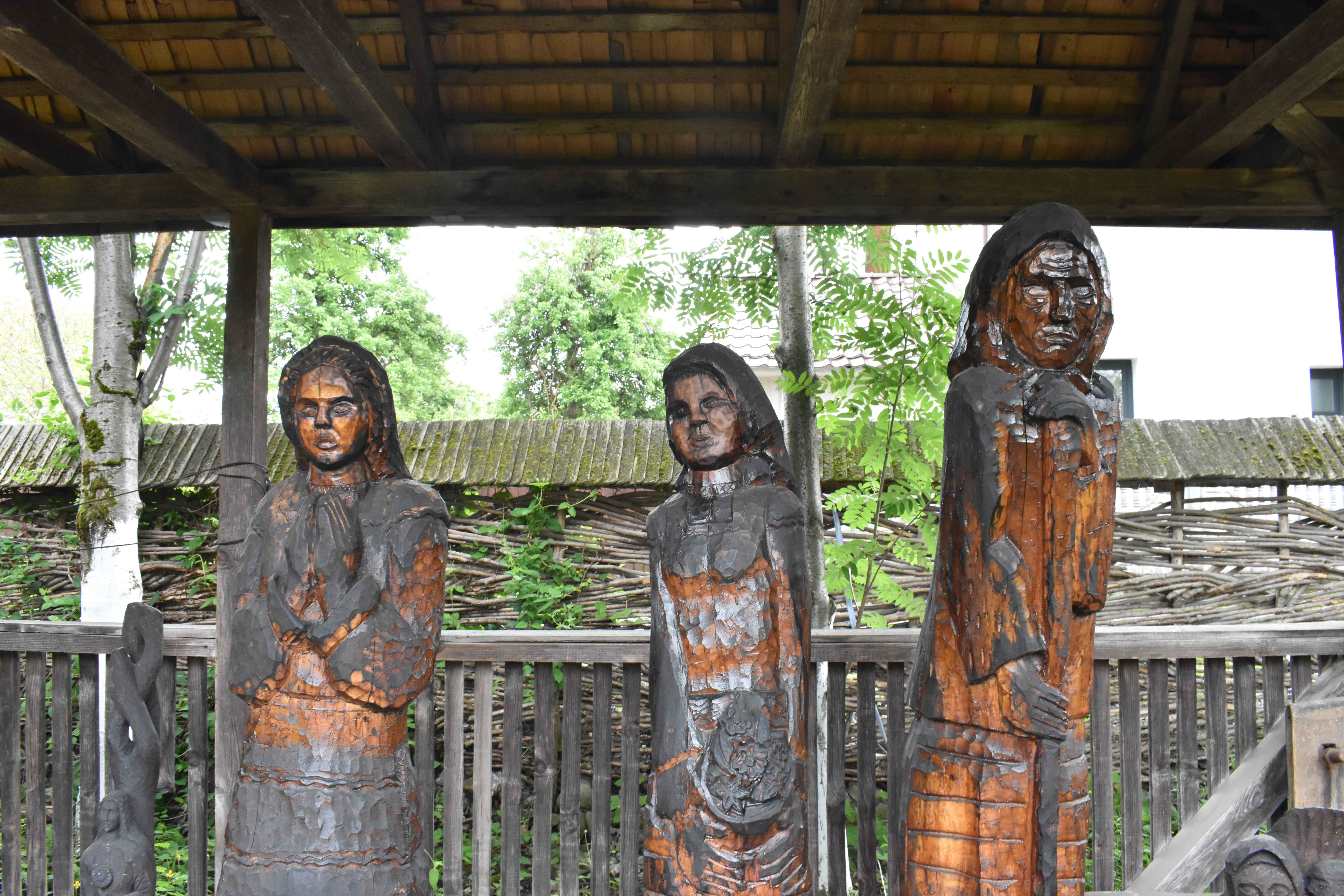
We entered through a wooden arch, carved in the traditional style of the Maramureş region we were in. A small garden in front of the house had a pot tree (sӑrciner): a tree shaped structure which had different coloured pots and pans hanging from the branches. According to an old Maramureş custom, a pot tree means that there is a girl to marry in the house, but only if a red pot is placed on the top. There was also a display of wooden statues of women at various stages of their life.
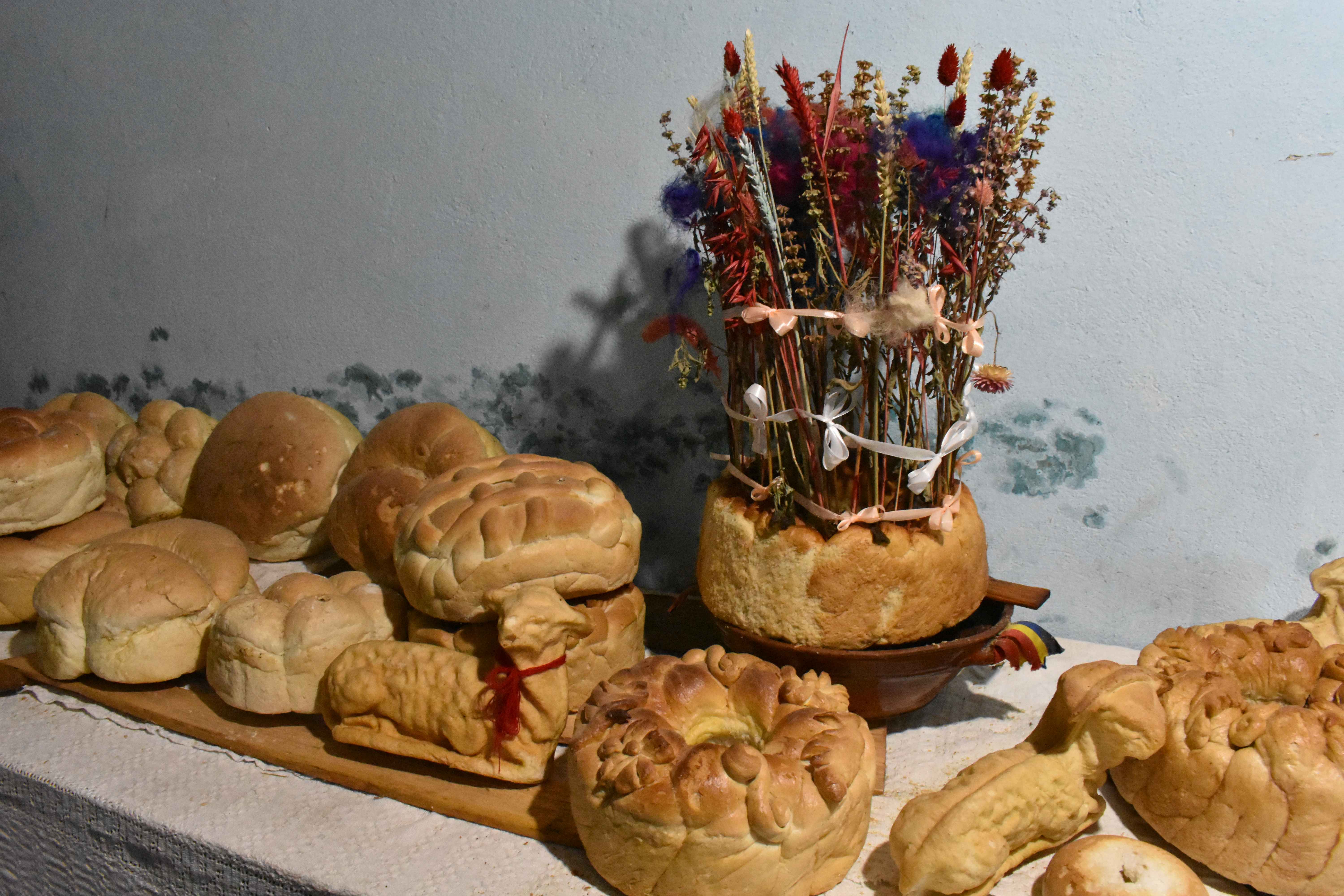
A Romanian group had arrived just before us, and the elderly lady was giving them a lengthy animated talk. Whilst we waited, we photographed the display of tools in another room and the baked breads in the shape of a lamb. We were later told that while meat from a real lamb is often served at Easter, if meat is scarce or saved for selling, the ladies will make sweet breads, sponge cakes, or festive loaves shaped like lambs to carry the symbolism without slaughtering an animal. Traditional masks were also displayed on the walls.
Eventually it was our turn and as the lady didn’t speak English, our guide translated, resulting in a slightly abridged version.
The museum is housed in an authentic Maramureș wooden house, built between 1720 and 1721. It belonged to Ileana Chiș who expressed the wish for her home to become a museum after her death. It was officially opened to visitors in 2001, thanks to the initiative of a folk collector and relative who prevented the house’s demolition
The room was full of various items: embroidered blouses whose design reflected the village they were from; and dowry textiles including embroidered and woven blankets, tablecloths and bed linen. There was also a wooden stroller and many other children’s items and decorative domestic objects and tools: all designed to indicate a woman’s work is never done.
On leaving, the lady walked us to the entrance gate and explained the symbolic elements carved into the gate: on the right were three faces of a bride and her two bridesmaids, on the top was Romulus and Remus with the she-wolf, and on the left, a cradle and baptism which we had been told earlier, was a ladies only event.