
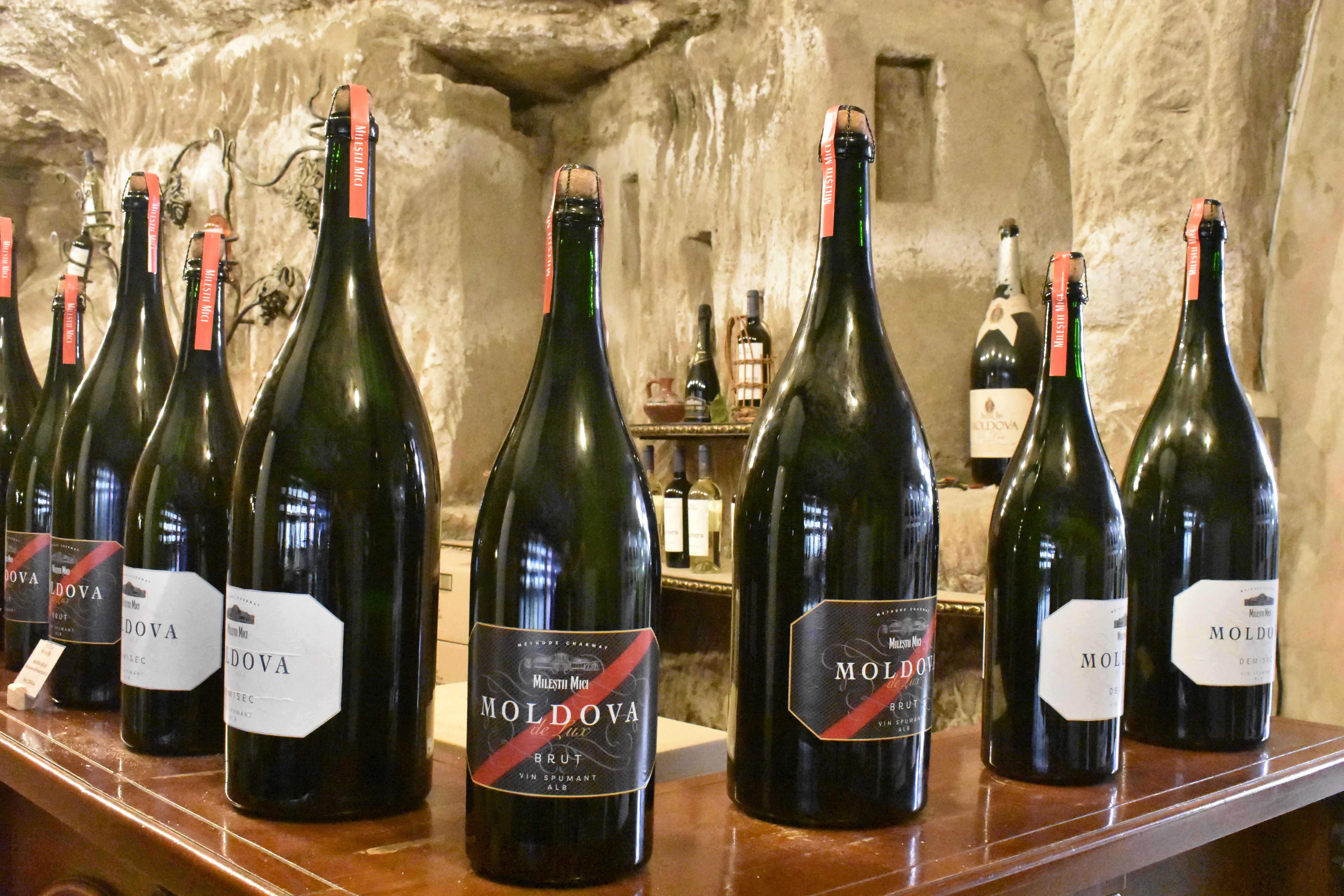
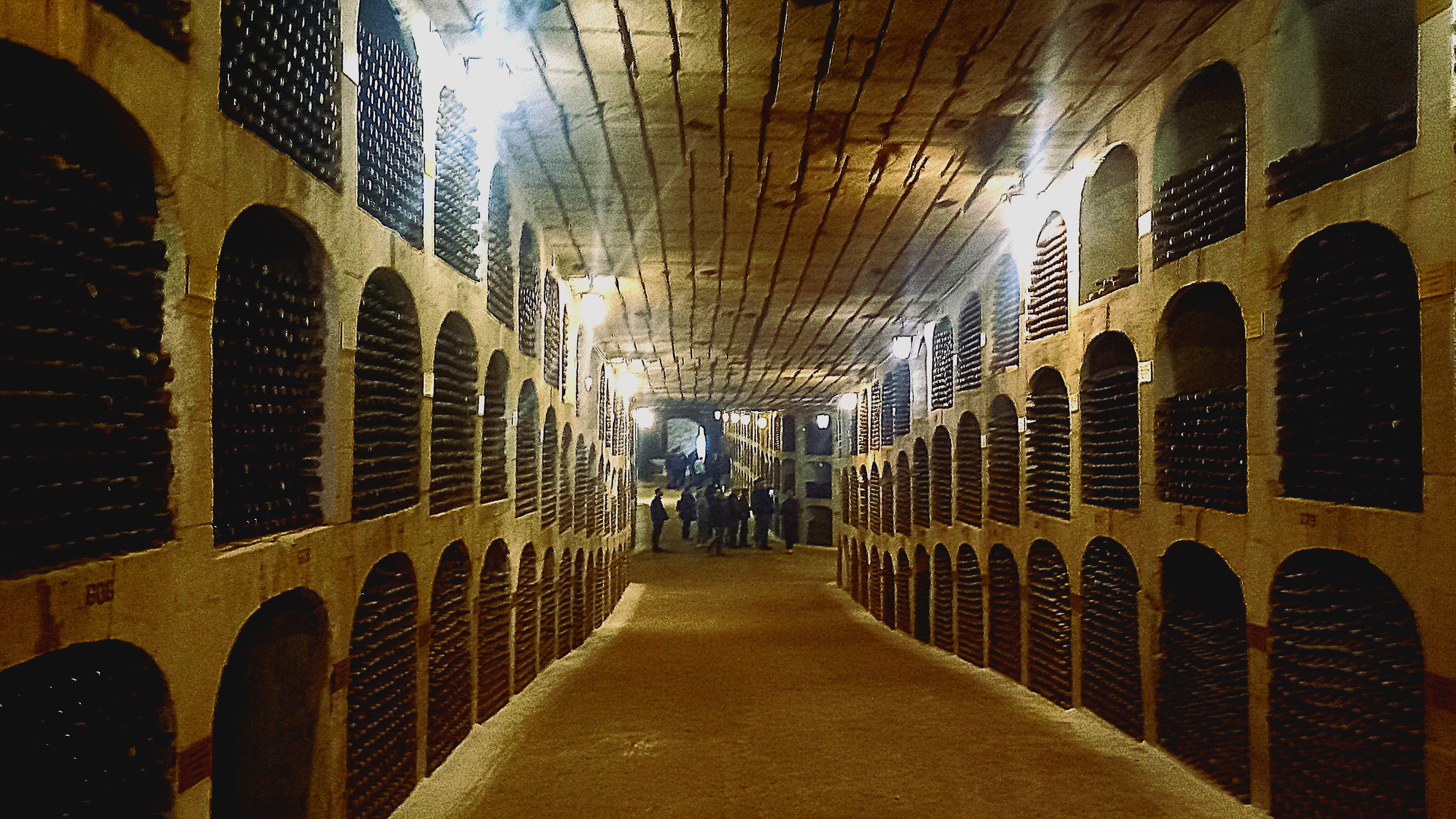
During our tour of Moldova, we visited several unique wineries, with the state-owned Mileștii Mici having two claims to fame. Not only does it hold the Guinness Record for the world’s largest wine collection, with more than 1.5 million bottles, it has a vast network of former limestone mines. Stretching for more than 200 kilometres, the tunnels form one of the largest underground wine complexes in the world.
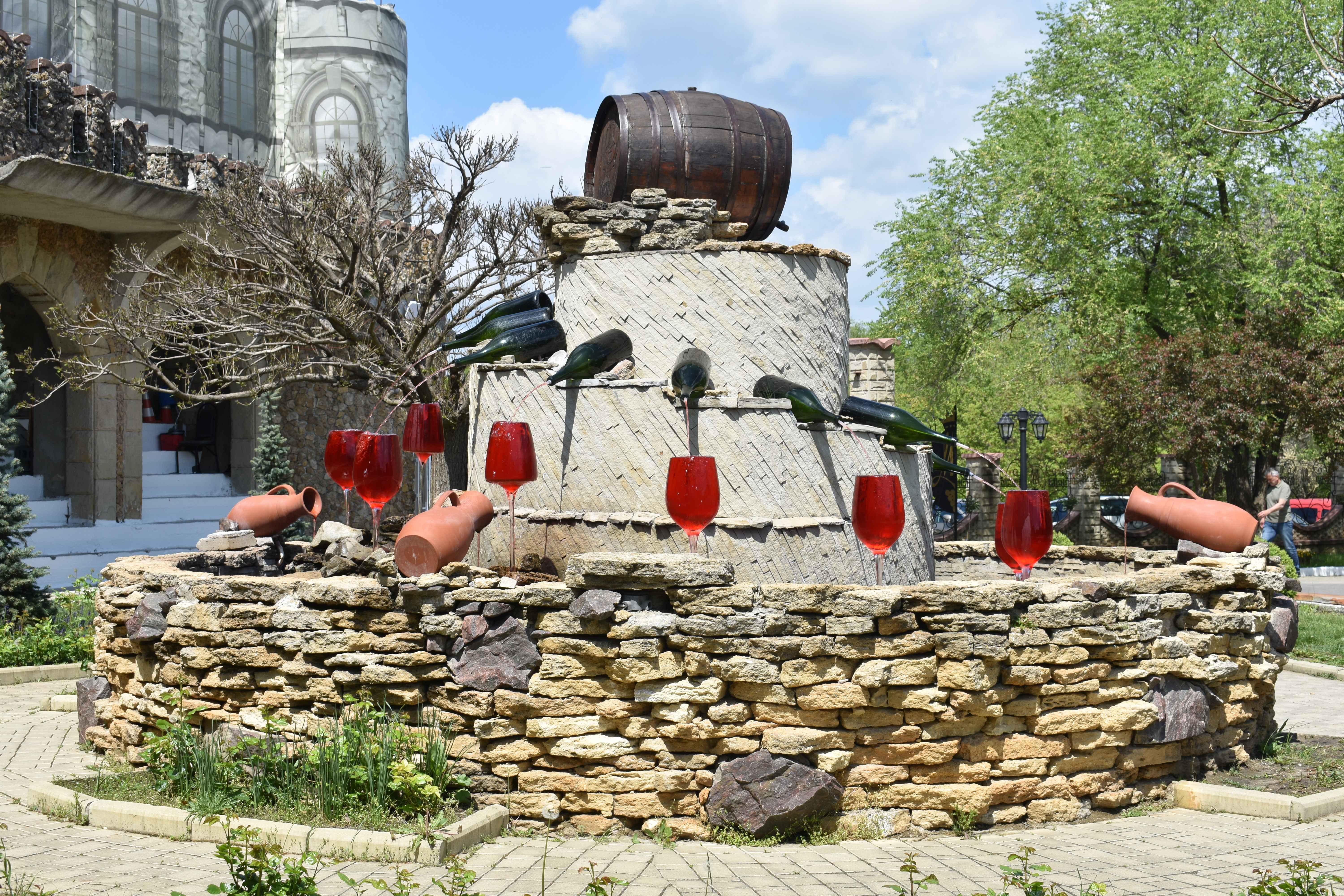
Arriving early for our tour, we had time to photograph a small collection of vintage cars displayed outside and the winery’s quirky red wine fountain although sadly, the white wine fountain was not operating.
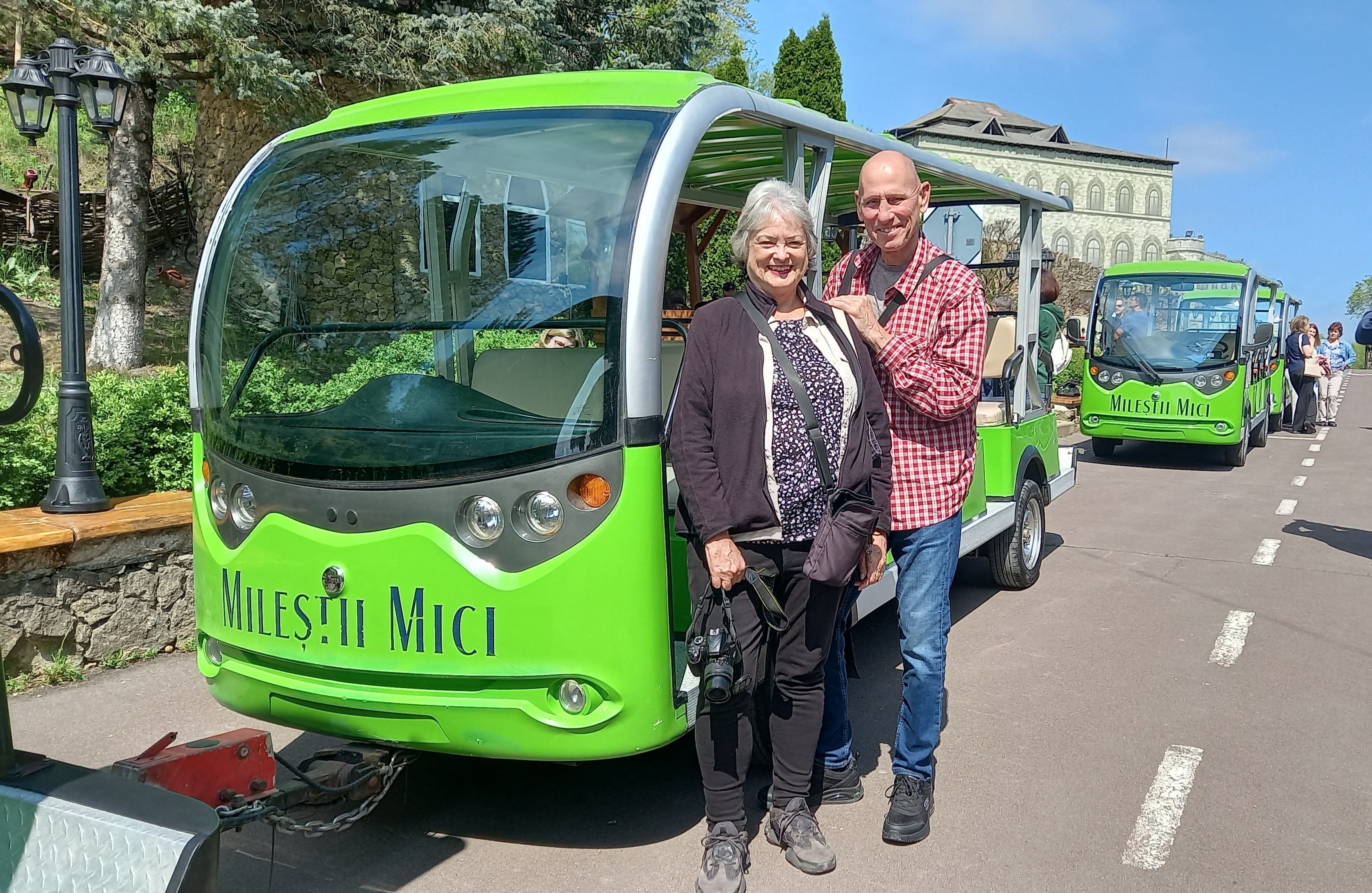
Because of the sheer scale of the underground tunnels, we travelled on an electric road train. Our guide, Dorina, explained that the constant temperature of 12-14°C provides ideal conditions for long-term wine maturation, making the warm jackets we’d been advised to wear, a necessity rather than a precaution.
As we descended into the labyrinth of tunnels, we followed roads named after wines, each marked by bottle-shaped signs. Our first stop was beside an artificial waterfall, where we learned that the limestone extracted from these mines was used extensively in the construction of Chișinău, helping to earn the Moldovan capital its nickname, “The White City”.
The second stop was the famous wine collection where bottles were stored in individual niches, known as casas, carved into the limestone walls. The different labels were explained, and we saw several locked casas bearing plaques identifying their owners with many belonging to Chinese and Russian investors. Judging by the thick layer of dust on some, they appeared to have been untouched for decades. In the centre of the collection stood a tasting table, where we heard that professional tasters may assess as many as 50 wines in a single day.
Nearby were rows of traditional wooden racks, or pupitres, used in the production of sparkling wine by the Méthode Champenoise. Here, skilled remueuses, or female riddlers, gradually rotate the bottles to encourage sediment to collect in the neck. An experienced riddler can turn up to 30,000 bottles in a day.
We were also shown a secret passage reportedly used during the anti-alcohol campaign introduced across the Soviet Union in 1985.
Our final stop was the tasting room. Three impressive oak doors opened into a grand, ornate chamber where we were seated at individual tables according to our chosen package. We had selected the Univers package, costing 1,200 Lei (£65) and including lunch.
At our table, Dorina provided a straightforward and unpretentious introduction to wine tasting. She explained the different glass shapes, advised us to hold white wine glasses by the stem to keep the wine cool, and suggested cupping red wine glasses to help release their aromas. We were encouraged to swirl, smell, and examine the colour before tasting.
Dorina described each with a single key aroma:
Univers Sauvignon Blanc – apples
Univers Rosé – strawberries
Univers Codru 2021 – a blend of Cabernet Sauvignon (cherries) and Merlot (plums)
Rare Mileștii Mici (vintage cellar dessert wine)
Moldova Dulce – a sweet sparkling wine which was opened at the end to accompany dessert.
After the tasting, lunch consisted of bruschetta Caprese with tomatoes and cottage cheese, followed by a creamy mushroom soup. The main course was eggplant stuffed with chicken breast, tomato sauce and cheese, while dessert featured a traditional Moldovan combination of prunes, walnuts and honey.
A violinist and accordion player visited each table, tailoring their repertoire to the guests’ nationalities which for us meant a rendition of Yesterday by The Beatles, followed by the Gay Gordons and, appropriately, a Moldovan waltz by Eugen Doga.
Before leaving, we chose a complimentary souvenir bottle of wine from the Univers range.
Dorina had repeatedly warned us not to wander off once the tasting was over, emphasising how easy it would be to become lost in the maze-like tunnels. Following her instructions, we returned to the tunnel and waited for the next train, which soon arrived to take us back to the surface via one final stop: the winery shop.
Other wineries visited and reviewed are:
ASCONI Winery – https://asconiwinery.com
Cricova – https://cricova.md/ro
Kari Garni – https://www.karagani.md/
Château Purcari – https://www.chateau-purcari.com
Et Cetera – https://etcetera.md/en/
Castel MIMI – https://castelmimi.md
We also visited the Barza Albă Distillery – https://barzaalba.md/en