

The Memorial of the Victims of Communism and of the Resistance is found in the Romanian town of Sighetu Marmaţiei. Whilst it would have been a 10-minute walk from our hotel (Casa Iurca de Calinesti), we had a 20-minute drive negotiating the one-way system, followed by 10-minutes spent trying to find a parking space.
On arrival we were told it was a ‘gate day’. This meant we saved the entrance and camera fees, but the downside was that some areas were off limits due to an event. However, we returned later to visit the remaining areas.
As the museum’s name suggests, it tells the story of what happened under communism not just in Romania but in other Central and Eastern Europe countries. In the aftermath of the Romanian Revolution of 1989, the poet Ana Blandiana suggested turning the former Sighetu Marmaţiei prison into a museum which eventually opened in 1997. It is dedicated to those who were imprisoned, persecuted or killed by the communist regime.
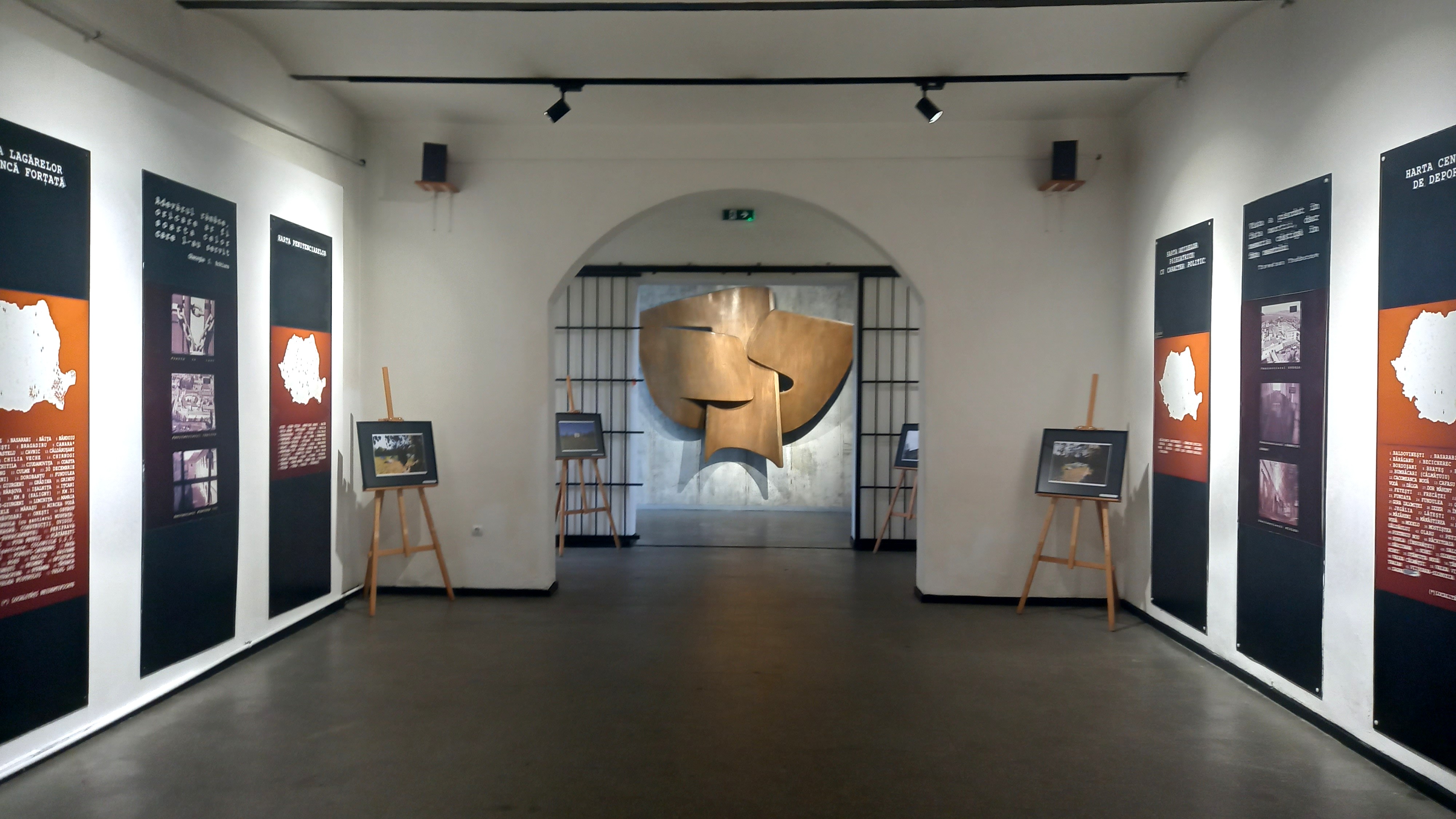
The exhibits began with maps showing the locations of the political prisons. Many were clustered around the Danube Delta where the forced labour was used on a canal building project, or in towns, like the one in Sighetu. Walls were filled with a calendar of events from 1945 to 1989, but unfortunately the information was in Romanian only and there was far too much detail for even the most proficient of guides to explain. Instead, we looked at a photo montage of international world leaders from Stalin to George Bush, with Margaret Thatcher being the only female.
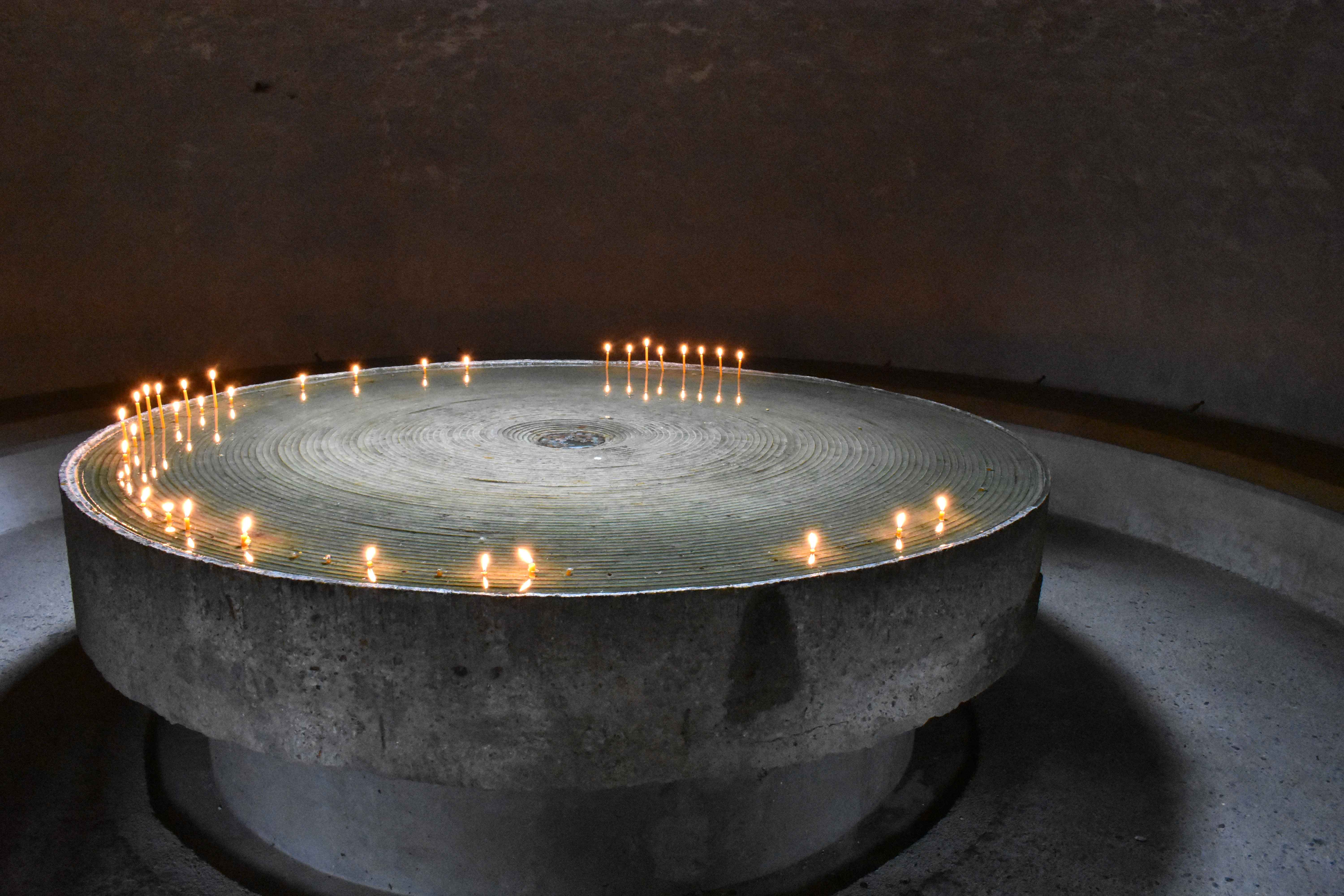
We headed outside following a path where a wall was inscribed with the names of 8,000 victims. In what was previously the small prison courtyard, we found an underground chapel, ‘Space for Recollection and Prayer’, financed by Misu Cârciog, a Romanian-born, London-based businessman and diplomat.
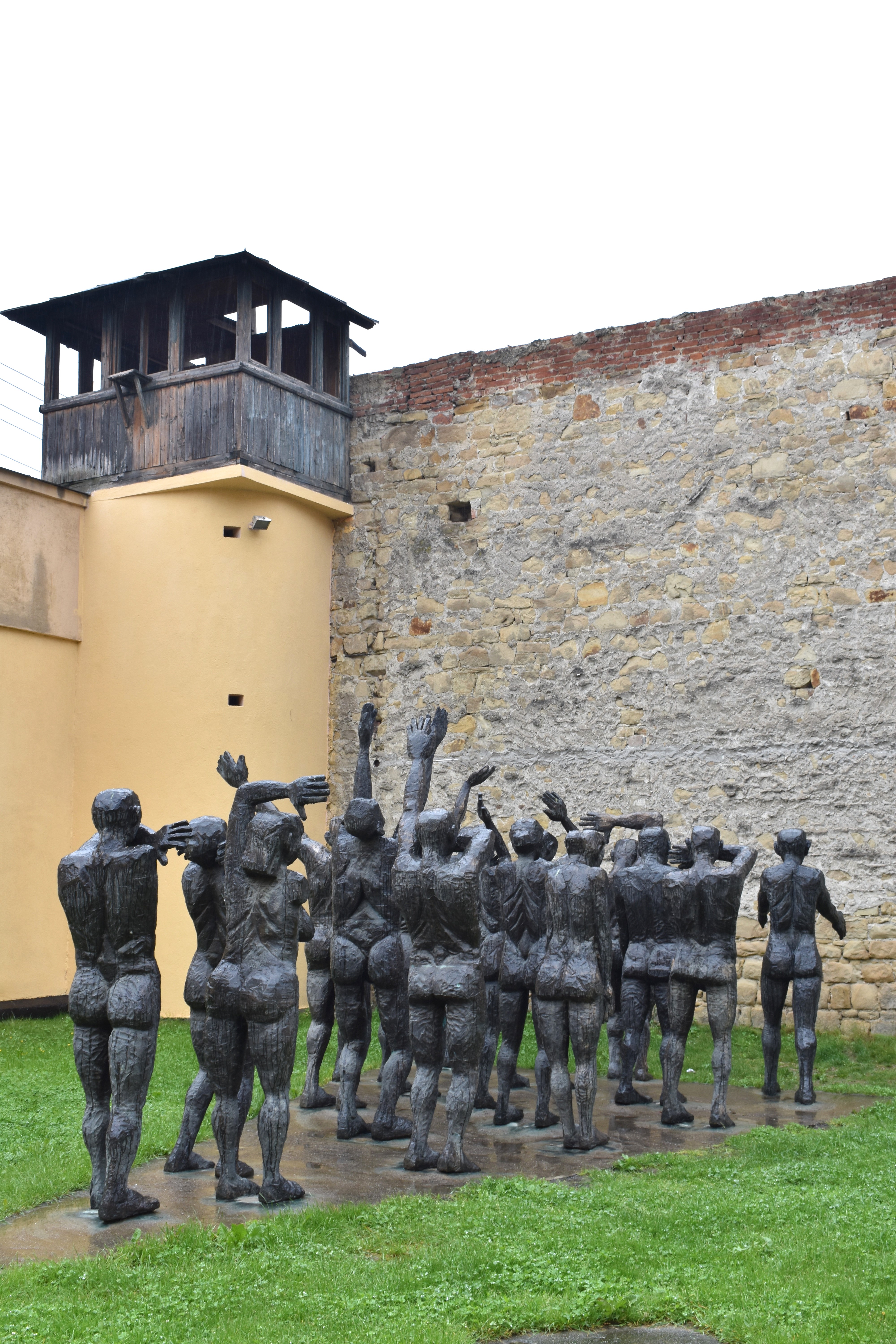
In the larger prison courtyard, was a moving sculpture called ‘The Cortege of the Sacrificial Victims’ by Aurel Vlad. Eighteen life-sized bronze figures, which had been intentionally dehumanised with no individual features, were arranged in a solemn procession, walking towards a blank wall. Slightly set apart from the group was a single headless figure overseeing the procession, symbolically guiding the silent individuals in their final journey.
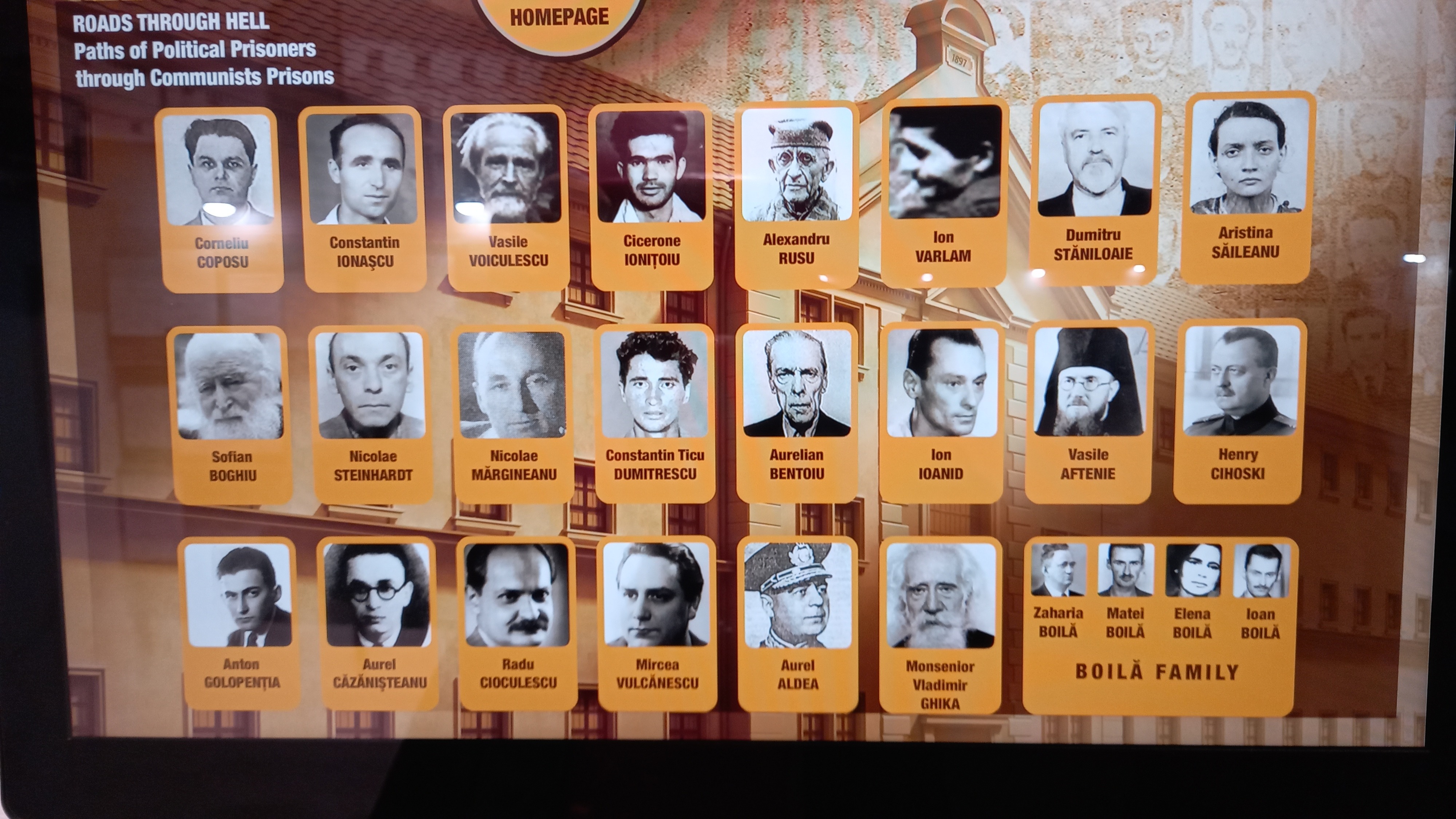
On our return, we visited the cells, which were over three floors. They had been transformed into mini museums which included how various groups, including poets, writers, actors, teachers and women were affected by communism. A sign at the entrance, with an English translation, provided an overview of the room, but the contents were in Romanian only. Cell number nine where Iuliu Maniu, a former Prime Minster of Romania, had died, was preserved as it had been found. In the former torture or dark cell, we were encouraged to turn off the light and close the door to see what it would have been like. It was certainly a thought-provoking visit.