
Château Purcari, in south-eastern Moldova close to the Ukrainian border, is often overlooked by visitors who tend to favour wineries nearer the capital, Chișinău. That relative remoteness proved to be an unexpected advantage during our visit.
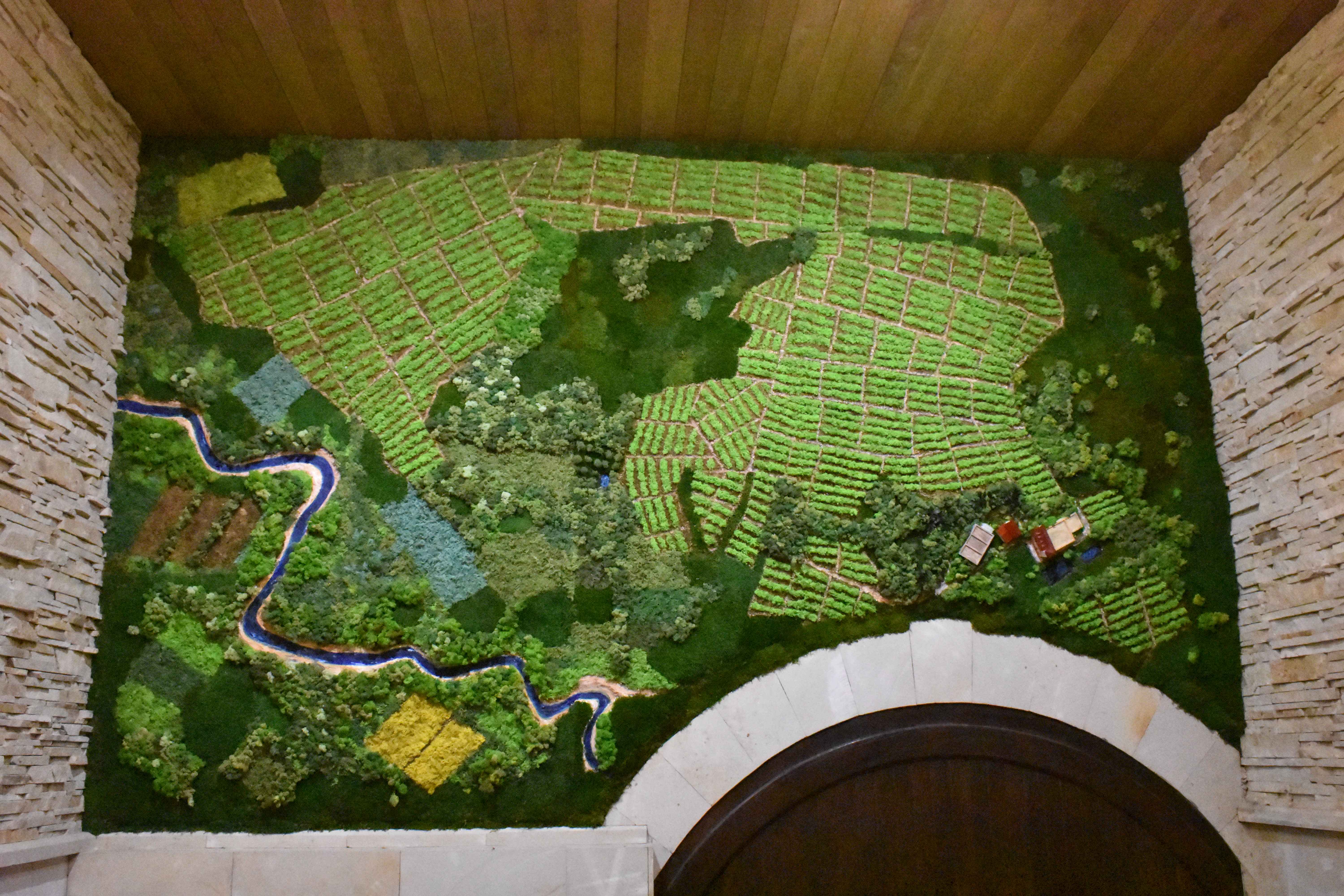
The only other person booked on the tour failed to arrive, leaving us with what amounted to a private tour of one of Eastern Europe’s oldest and most prestigious wineries. Our guide, Oxana, welcomed us at the cellar entrance and introduced a series of wall-mounted maps that explained both the geography and history behind Purcari’s success.
One map illustrated the winery’s enviable location between the Nistru River and the moderating climatic influence of the Black Sea. A forest at the heart of the estate encourages biodiversity, while the limestone-rich soils help vines develop deep root systems. Other maps highlighted Moldova’s prime wine-growing regions and placed the country’s wine industry within the wider world of Old and New World wine producers.
From there, we descended into Purcari’s historic cross-shaped cellar. The unusual design dates to a time before the winery existed, when the land belonged to the Căpriana Monastery. Amid rows of oak barrels, information panels charted the estate’s remarkable history, from its foundation in 1827 through its rise to international fame in the nineteenth century, when Purcari wines were served at the courts of Tsar Nicholas I, Queen Victoria and later King George V.
The displays also celebrated one of Moldova’s greatest wine achievements: in 1878, Purcari’s iconic Negru de Purcari won a gold medal at the Paris World Exhibition, becoming the first Moldovan wine to receive major international recognition. The story continued through the difficult post-Soviet years and the extensive restoration and modernisation programme that began in 2003.
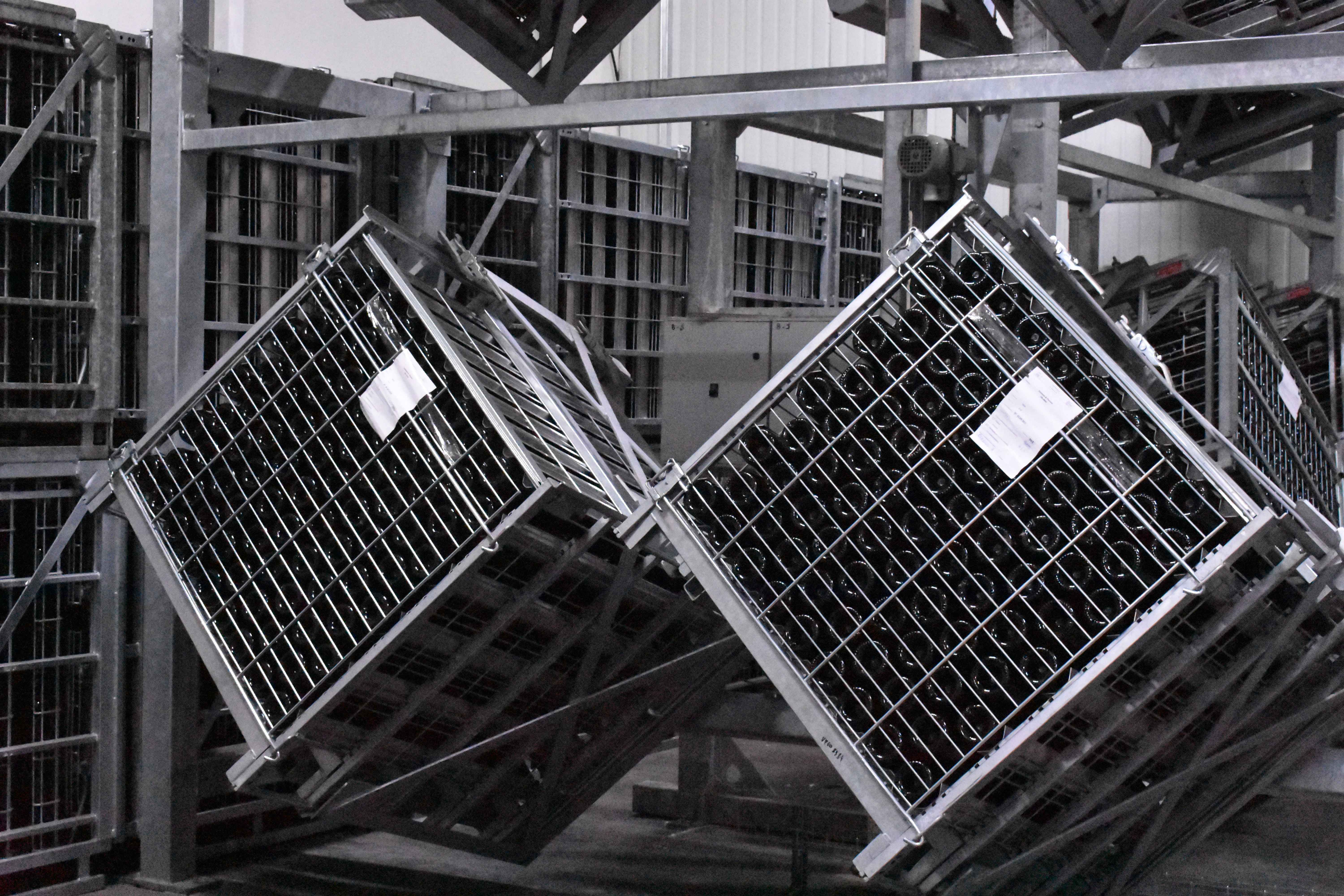
Next came the sparkling wine production area, where Purcari uses the traditional French Méthode Champenoise. At Cricova Winery we had seen bottles being turned manually, but here the process is largely automated. Giant gyropalettes, metal cages holding up to 500 bottles, slowly rotate according to a programmed sequence, replicating the riddling process once carried out entirely by hand. Oxana explained how, after secondary fermentation in the bottle, the sediment is removed before the wine is topped up, corked and labelled.
Outside, a vast new building was taking shape, evidence of Purcari’s continuing expansion. We learned that the winery is investing heavily in additional production capacity, particularly for its growing sparkling wine business, supported by recent international investment.
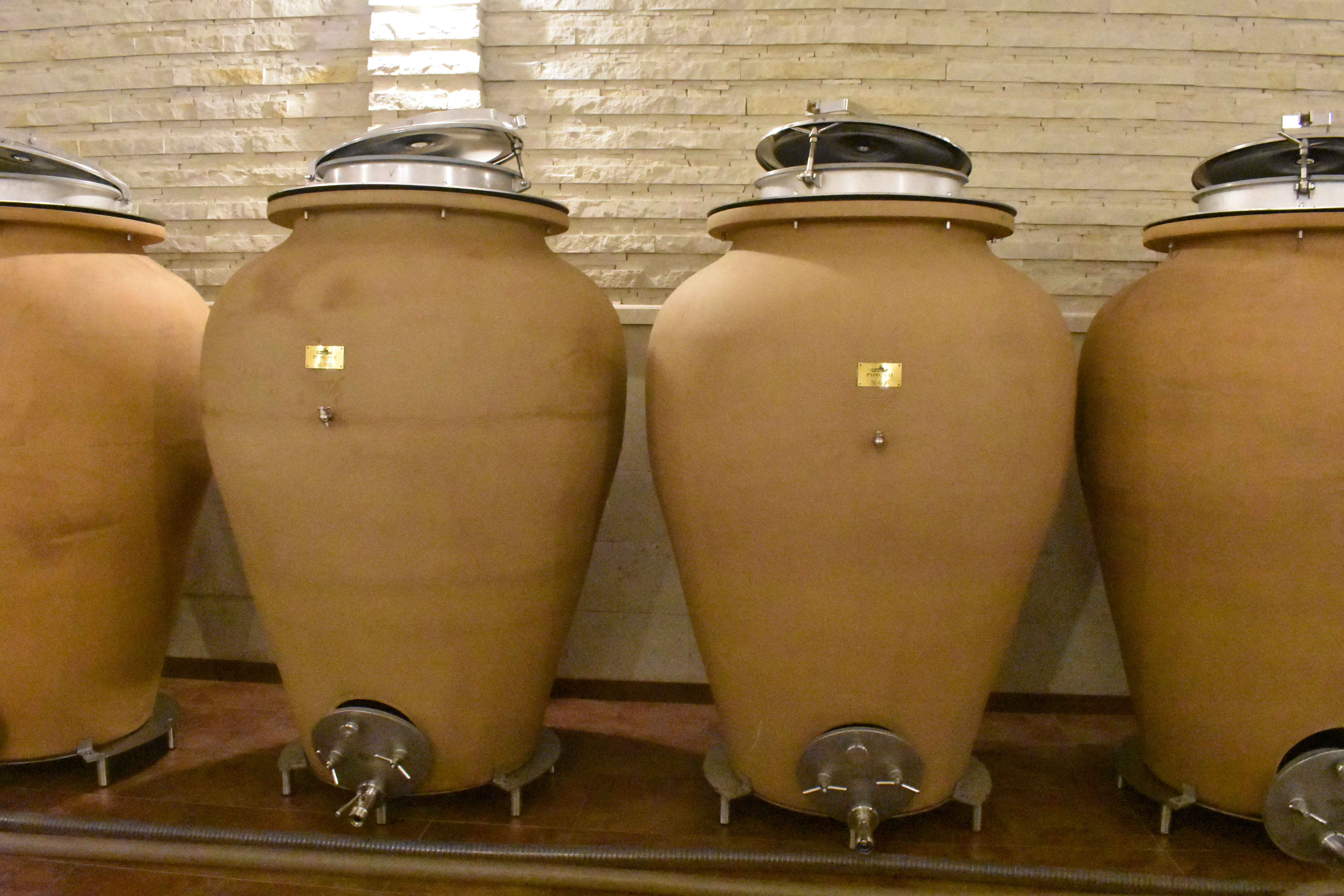
In another building, gleaming stainless-steel tanks stood alongside rows of traditional clay amphorae, a winemaking technology thousands of years older than either stainless steel or oak barrels. Indigenous Moldovan grape varieties such as Rară Neagră and Viorica are fermented and matured in these vessels before a short period of ageing in oak, creating distinctive wines for Purcari’s Academia range.
Before the tasting, we browsed the shop, which sells not only wine but also a range of Viorica cosmetics made using upcycled grape-derived ingredients from the wine making process.
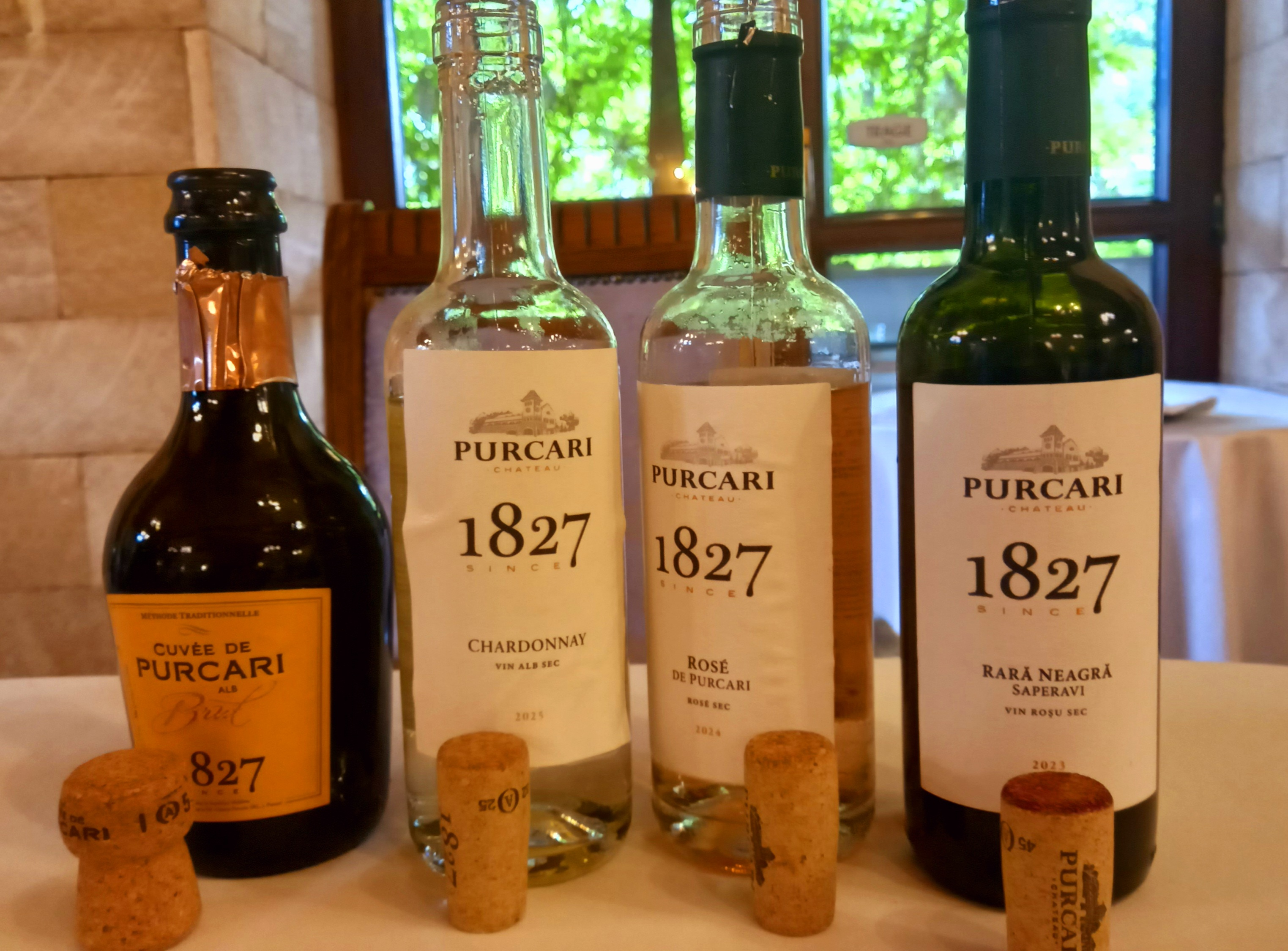
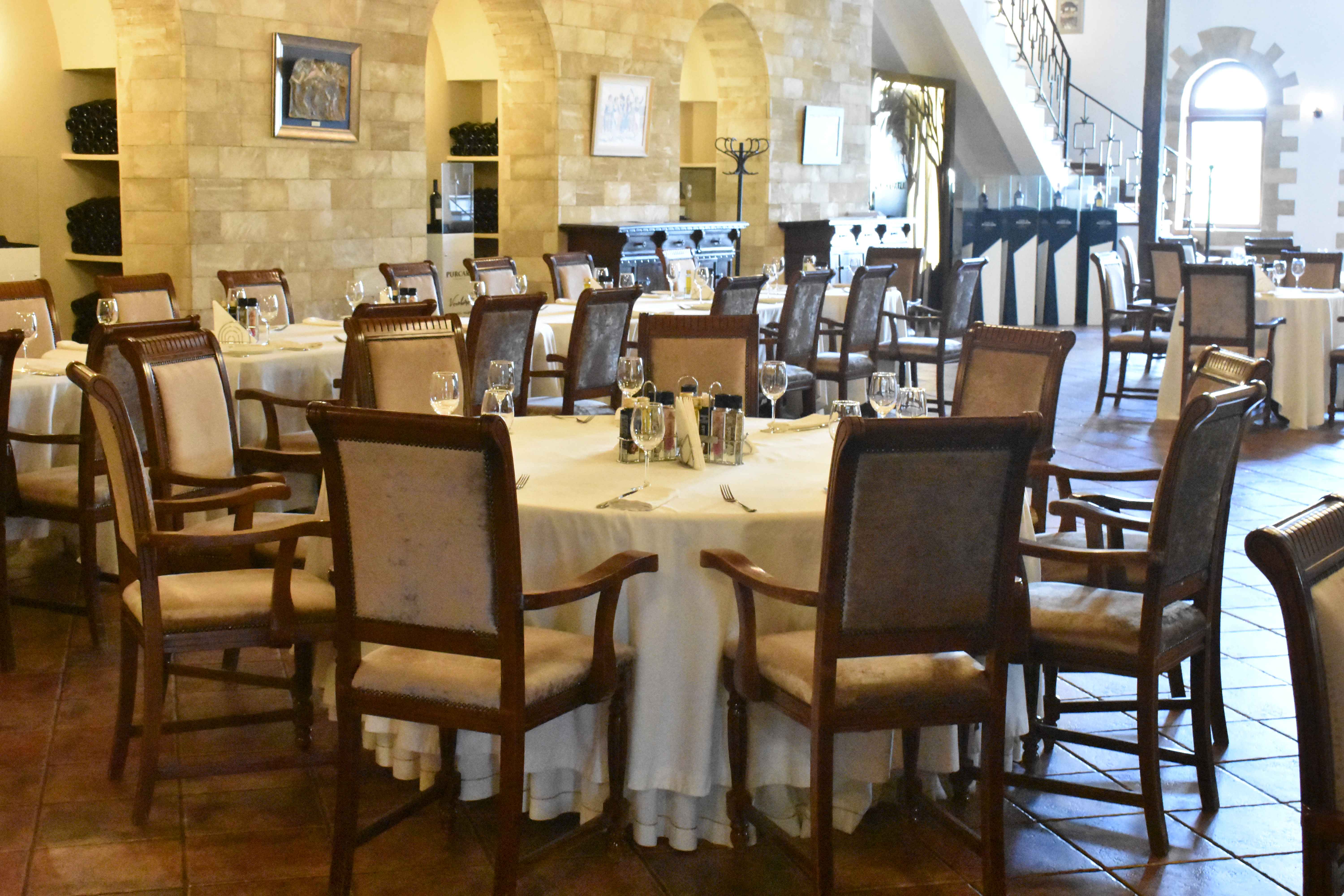
With only two guests, our tasting was held in the elegant restaurant rather than a dedicated tasting room. Waiting for us were four half-bottles lined up like soldiers: a sparkling Cuvée de Purcari, a Chardonnay, a Rosé de Purcari and a Rară Neagră. The tasting was conducted with professionalism and enthusiasm, Oxana pouring modest samples while explaining the aromas, flavours and characteristics of each wine.
It was interesting to hear how Rară Neagră, one of Moldova’s oldest indigenous grape varieties, came close to disappearing from commercial vineyards during the Soviet era when growers switched to higher-yielding international varieties such as Cabernet Sauvignon and Merlot. Fortunately, the grape survived in family gardens and small private plots, allowing wineries such as Purcari to propagate new vines and restore it to prominence.
After the tasting came lunch. A generous salad of fresh vegetables, olives and feta was followed by tender veal served with sautéed green vegetables, potatoes and a rich truffle sauce. Dessert consisted of two beautifully presented creations combining fruit and chocolate. Since lunch included a complimentary glass of Rară Neagră, we were surprised, and delighted, to discover that we could either finish the remaining wine from the tasting bottles or take them away with us.
As we left carrying two half-bottles, a coach arrived and deposited a large group of Romanian visitors. Having enjoyed an exclusive tour, tasting and lunch with virtually no one else around, we felt rather fortunate to have had one of Moldova’s most celebrated wineries almost entirely to ourselves.
Our Classic Package, which included the tour and tasting of four wines, cost 450 Moldovan Lei (around £20), although more premium tasting packages are available for up to 950 Lei depending on the wines selected.
Other wineries visited and reviewed are:
ASCONI Winery – https://asconiwinery.com
Mileștii Mici Winery – https://www.milestii-mici.md/ro
Cricova – https://cricova.md/ro
Kari Garni – https://www.karagani.md/
Et Cetera Family Winery – https://etcetera.md/en/
Castel MIMI – https://castelmimi.md
We also visited the Barza Albă Distillery – https://barzaalba.md/en