

Whilst staying in the Estonian town of Pärnu, a three-hour private walking tour allowed us to discover its food scene as well as more general sights. Although only the fourth-largest city in Estonia, it’s officially recognized as the ‘Summer Capital’ from late June to early September, due to its beaches, spas, and festivals.
Beach Park stretches along the coast and connects the city centre to the beach. Here we found the three-grass covered ‘green elephants’ who continue an old tradition. Historically, the animal was a symbol of Pärnu, as from the 1950s, wooden elephant shaped slides were on the beach. We found a bench and Veronika, our guide, provided linden tree tea from her flask which we sweetened with honey from a handy sachet. The herbal infusion, made from the dried flowers and accompanying leaf-like bracts of the linden tree, has many medicinal properties.
Supeluse tänav, a street linking the town and beach, was recently modernised, and as well as being lined with silver birch trees to suck up moisture from the marshy land, numerous bench seats all provided the opportunity to charge your phone without the need for leads. The street is pedestrianised in the summer months, and we found more elephants, this time smaller and made from stone, which are used to block the road. On both sides were old wooden villas, many with information boards detailing their history.
In Supelsaksad, a café located in a 150-year-old log house, Veronika bought chocolate tart whilst we admired the nostalgic, antique furniture, and lace tablecloths, which provided a distinctive cosy vibe. After a quick Google, I was able to tell Veronika about the ‘Pimpernel’ wallpaper designed by William Morris who has connections with the London borough where I live.
Heading towards the Old Town, we stopped at Sõõrikubaar, or Doughnut Bar, which has been making and selling classic fried doughnuts since the 1950s, which we naturally had to sample.
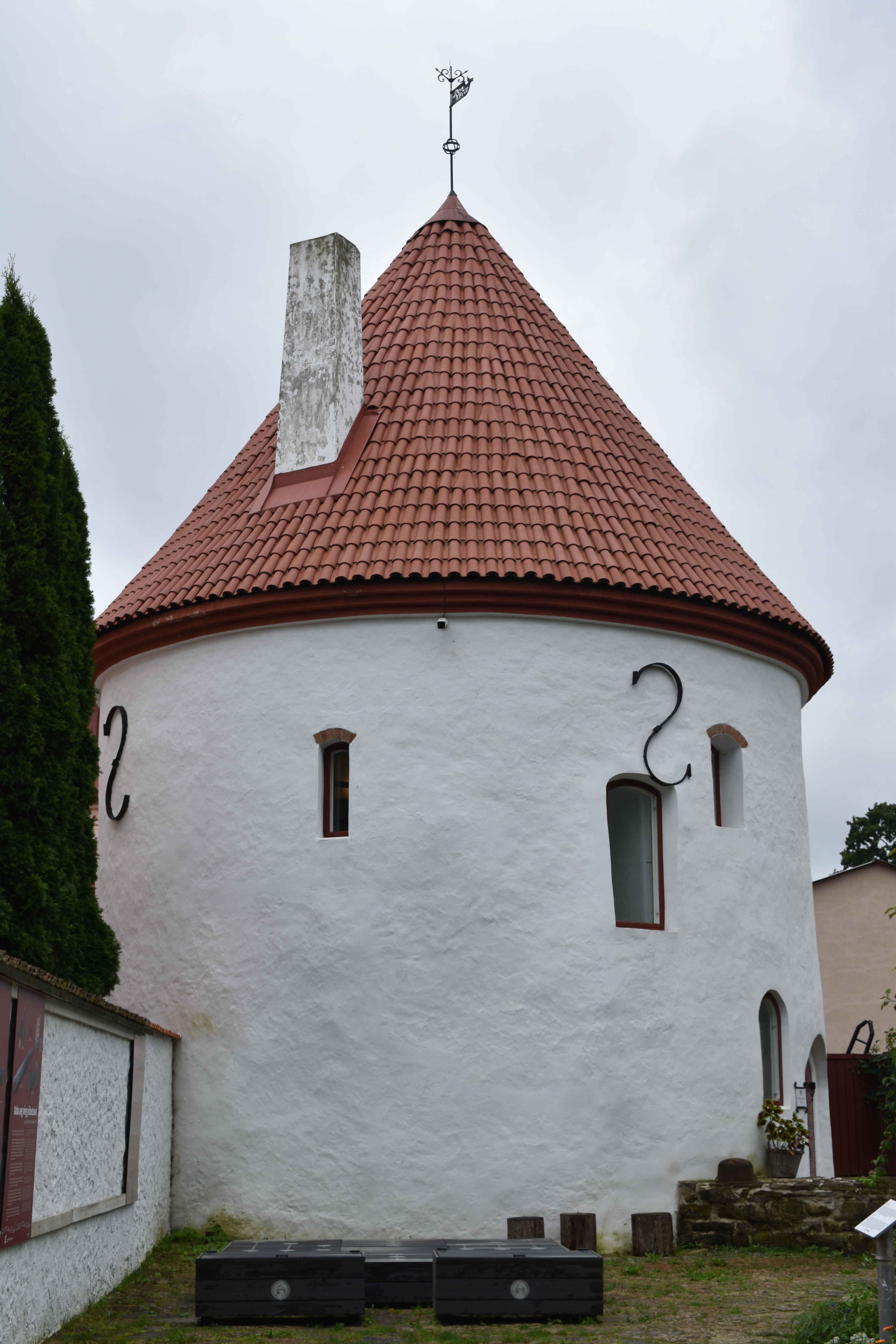
Our next stop was the Red Tower, the oldest surviving building in Pärnu and the only remaining tower from the medieval city fortifications. It was originally built in the 15th century as a defensive tower using red brick lining on its interior and exterior. Today it is white with a red tiled roof and inside, a model opened to show what each of the four floors, and the deep prison cell, would have looked like. We found a model of the medieval city on the first floor, and on the top floor, a 360-degree panorama cinema projected a 10 minute animated film which skipped through 15,000 years of history from the Ice Age through to modern times.
On Independence Square, we found the Monument to Declaring the Independence of the Republic of Estonia. This was a granite reconstruction of the balcony of Endla Theatre, with the declaration text inscribed in both old and modern Estonian, and even in Braille, to remember the historical event.
Overlooking the Pärnu River, in what used to be industrial buildings, we found the bakery café Leivakas and here we bought bread and heard about the different types of rye bread.
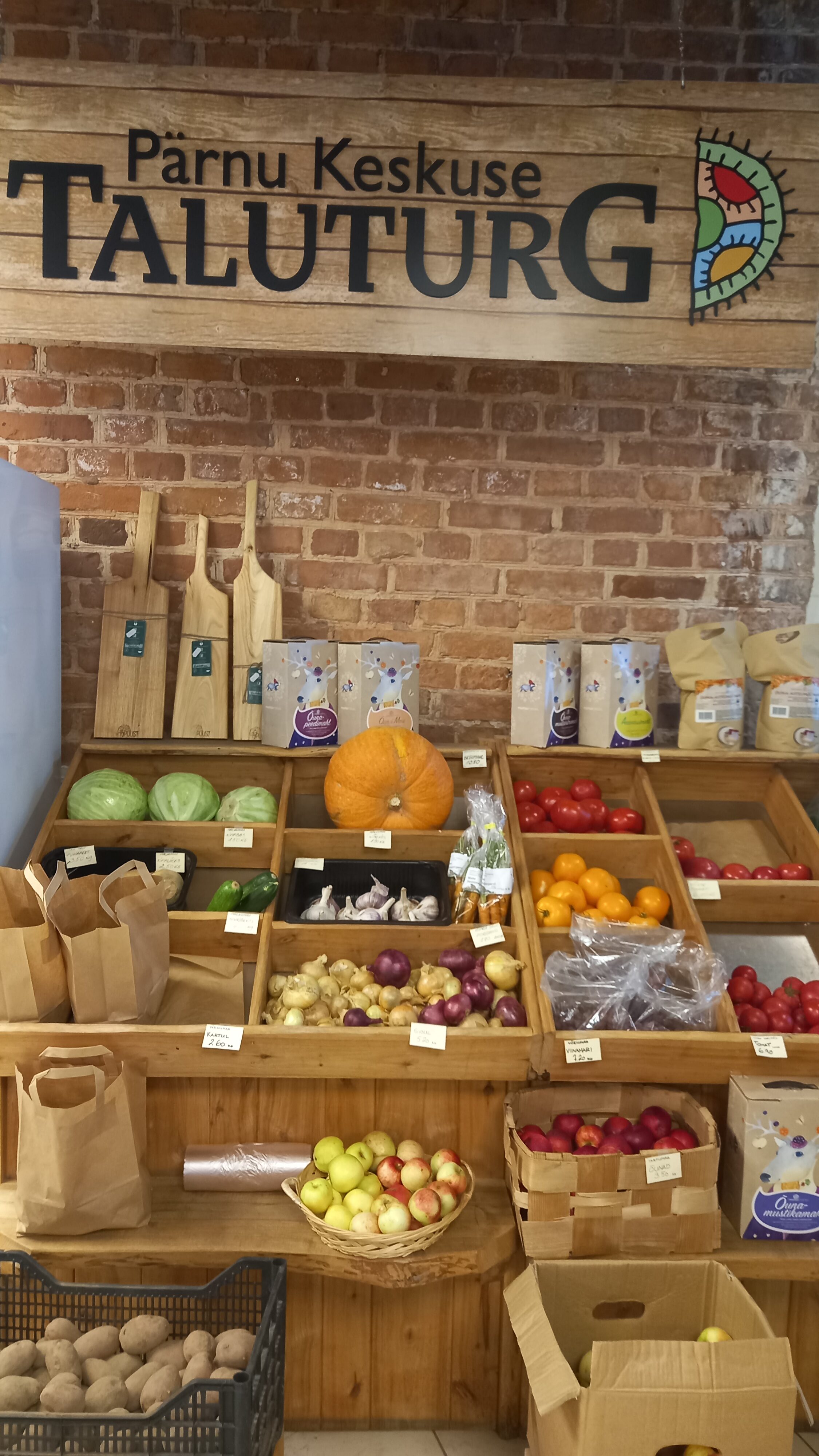
Passing Port Artur, a large shopping centre in the heart of the city, we stopped at the smaller Pärnu Kesku, where at Taluturg, a farm shop, we bought reindeer pate – sorry Rudolph.
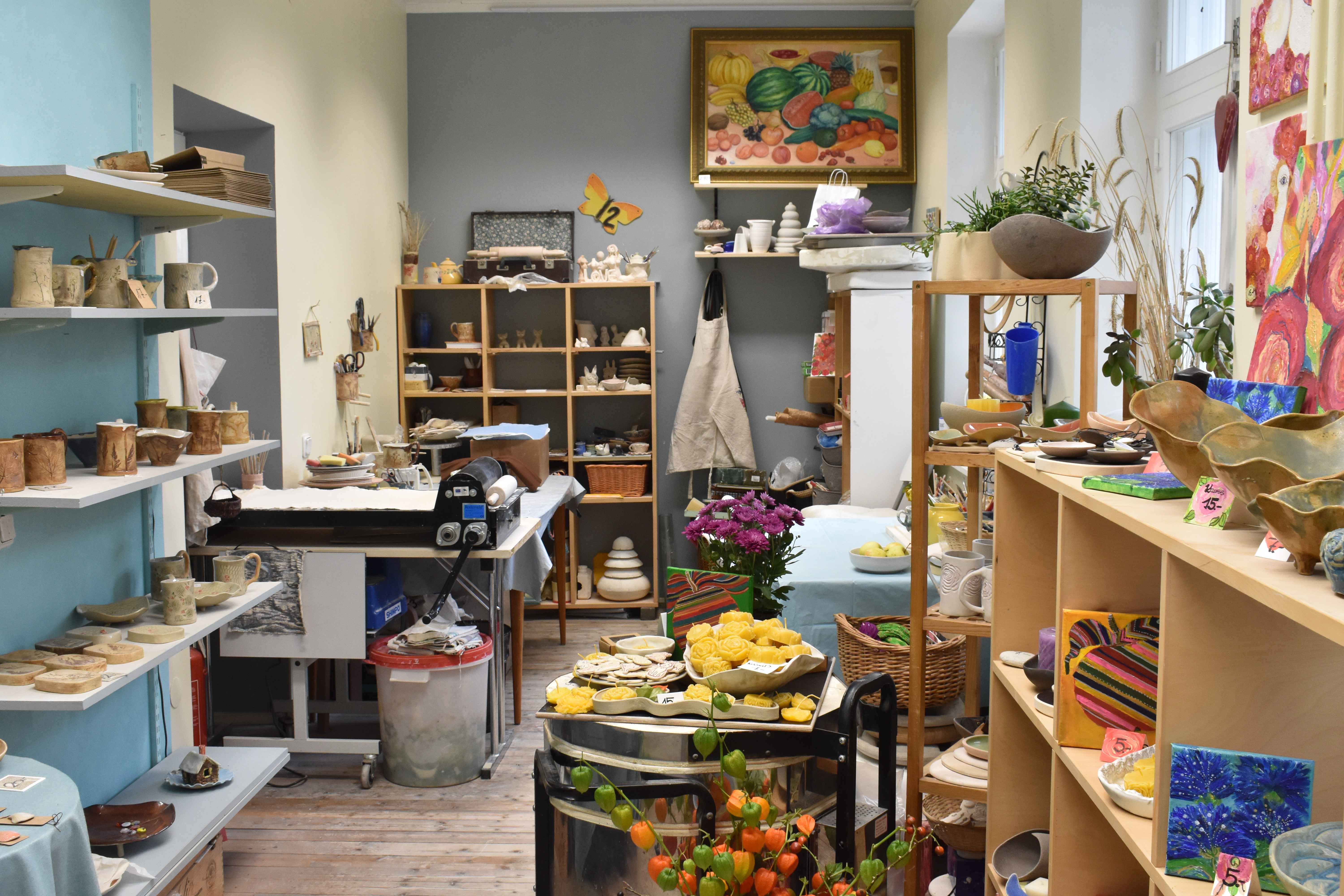
Having now acquired a veritable feast, we sampled our purchases in the Steiner Garden, before visiting the adjacent Mary Magdalene Guild with studios belonging to 20+ local artisans who create and sell their wares.
Back on the sightseeing trail, we came across three statues of people connected with the city. The first was a life-size statue of Johann Voldemar Jannsen, an Estonian journalist, who held a newspaper aloft and faced the offices of the local newspaper. The second was a large stone and bronze sculpture, featuring a carved likeness to August Jakobson, a prominent Estonian writer and politician.
Having passed through Tallinn Gate, part of the old fortifications dating back to the 17th century and now linking the old town and the modern riverside, another life-sized metal sculpture was of Olev Siinmaa, seated casually on a long concrete bench with his coat beside him. He was one of Estonia’s most important architects and the chief architect of Pärnu in the 1930s.
After walking past the full glass façade of Pärnu Central Library, completed in 2008, our official tour ended at the new Endla Theatre with a light lunch in the café. Here we enjoyed Tori cider from a family-run organic cider and wine farm only 30-minutes from Parnu and ‘Next Level Fish Soup with Pike Perch’.
After so much food, we walked back via a coastal path running alongside the beach. Although we’d heard how the sea is warm as it is shallow and warms up quickly, in late September, it was chilly and the only people around were hardy dog walkers. At the Pärnu Beach House, built in 1938 to mark the 100th anniversary of Pärnu as a resort town, the modern architecture resembled a ship on its side. Its most distinctive feature was a mushroom shaped balcony on the sea side of the building.
Our day was rounded off by watching the ‘Estonian Motorcycle Season Ending Ride’ set off for a final lap of the town. It featured a variety of bikes including three wheelers, some with three people, some with sidecars, whilst others looked so comfortable I might have been tempted to get on.
Although we’d never heard of Pärnu before we embarked on our itinerary of the Baltics, it was one of our favourite places, and it would have been easy to spend longer, particularly if the weather had been better and the beach hadn’t just been for walking on.