Kpatawee Waterfalls are probably Liberia’s best-known natural attraction, and the Kpatawee Waterfalls Ecolodge made an ideal base for an overnight stay.
After turning off the main road, it was another 20 km along a rough and extremely bumpy track to the falls and resort. Having skipped lunch en route, we arrived at 4pm absolutely famished. Fortunately, our pre-ordered sandwiches were served immediately, accompanied by two enormous salads. As it was already late in the day, we suggested keeping the second salad for dinner.
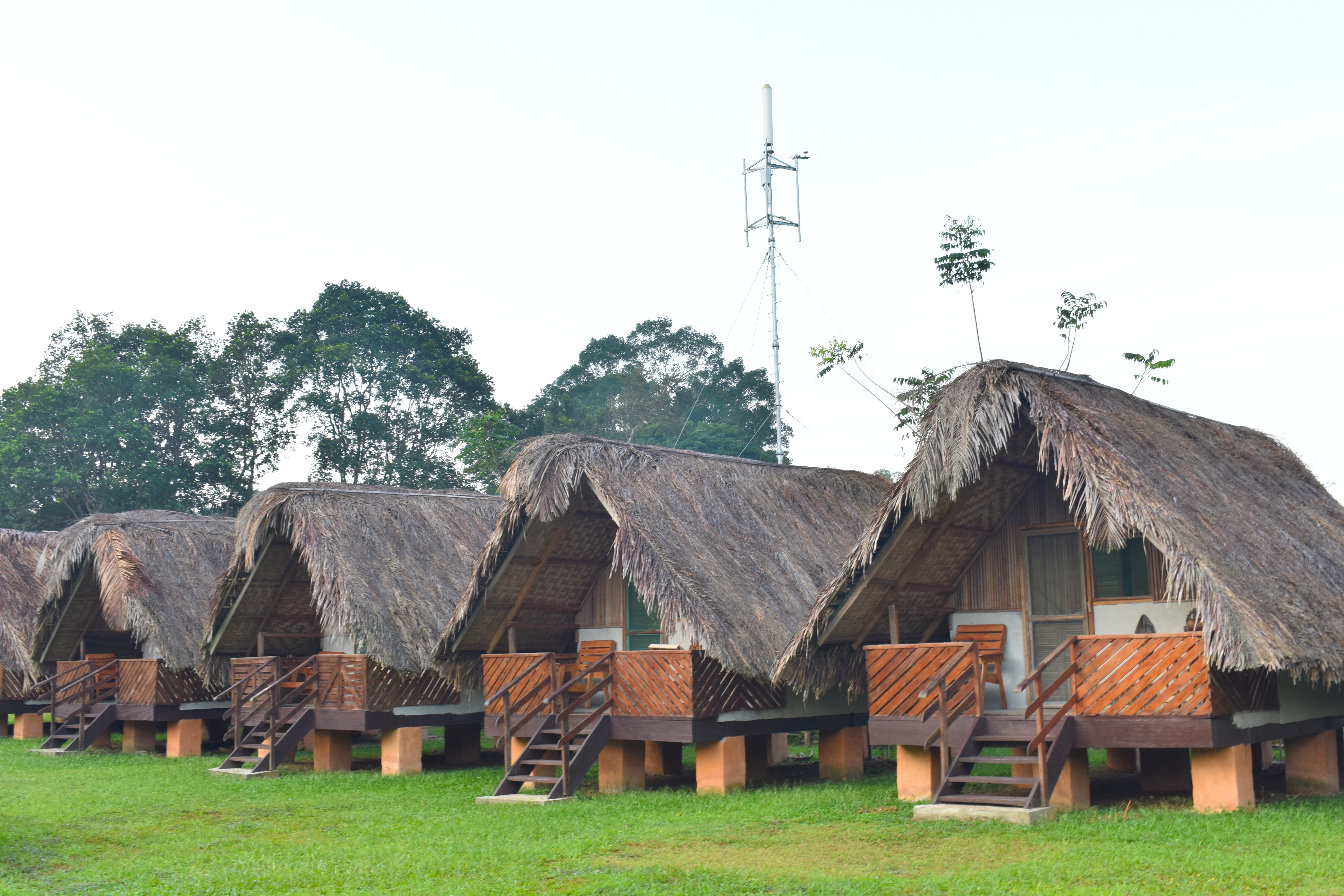
Set within beautifully manicured grounds were a collection of regular and premium thatched ‘Baffa’ huts, designed to evoke rural Liberian homes but with modern comforts. There were also several more basic canvas safari tents for those wanting a simpler experience.
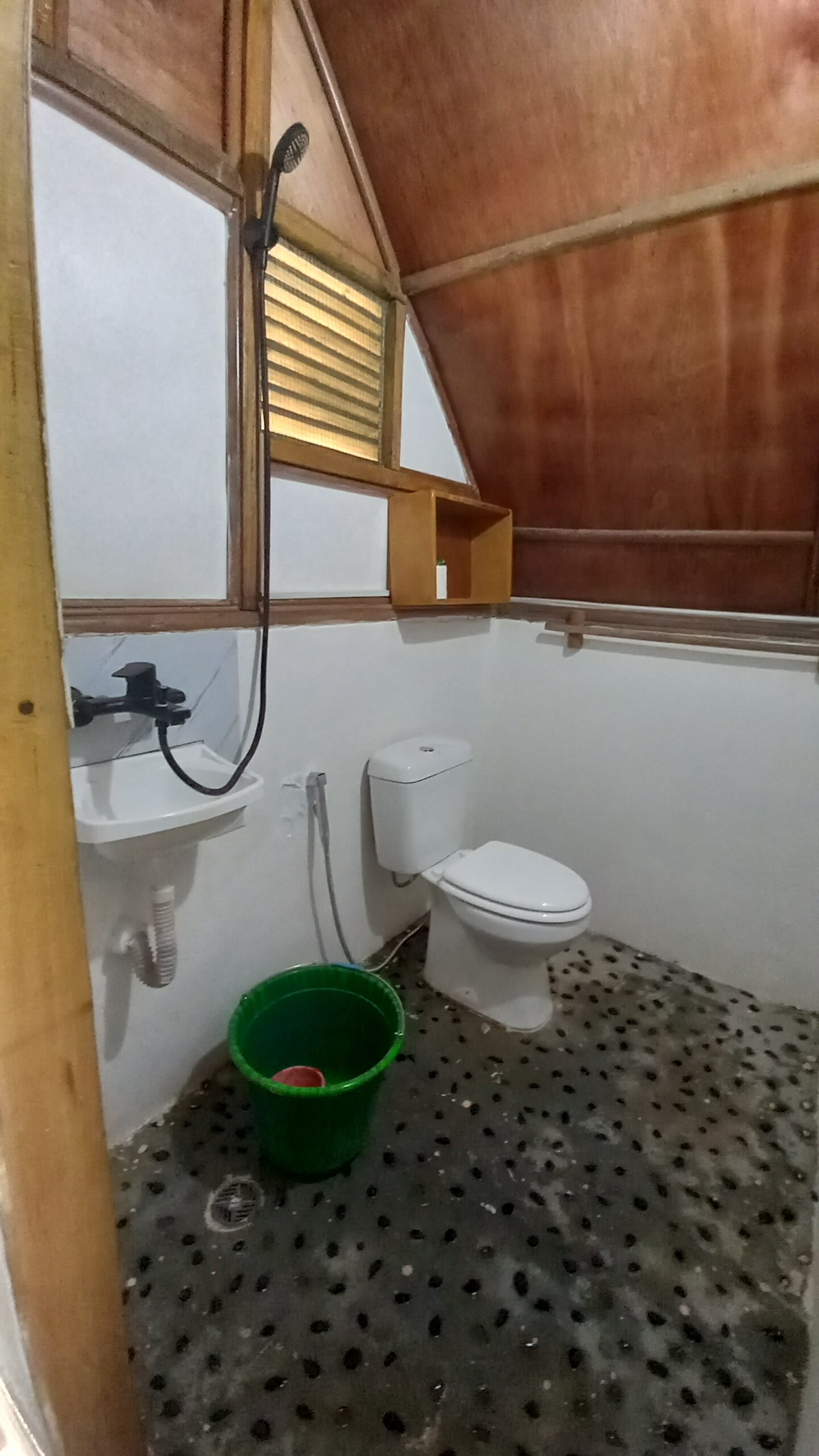
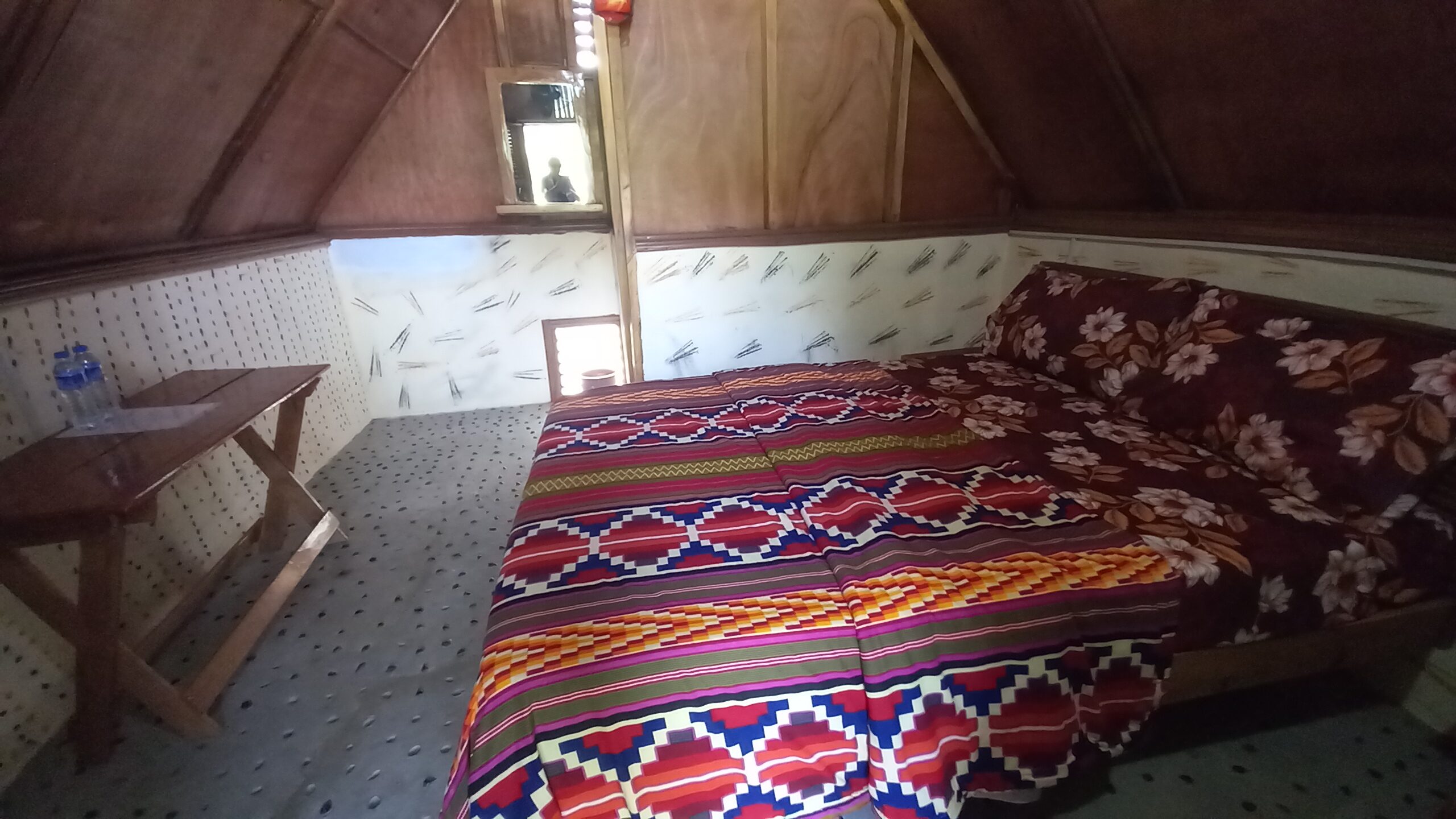
Our premium hut was spacious but simply furnished, with a hard double bed, bedside tables, a long table, an open hanging rail with two hangers and UK-style plug sockets. Unfortunately, the concrete floor, both in the bedroom and bathroom, was studded with protruding stones, making it particularly uncomfortable to walk around barefoot.
The compact bathroom was partially screened rather than enclosed, with no door. It contained a small washbasin fitted with a shower attachment that produced only a trickle of cold water. A bar of soap was provided, and there was nowhere to put our own toiletries.
Although there was a small veranda with a wooden table and chairs, our stay was too brief for it to be used.
Dinner was served in the large open-plan dining area, which incorporated both the bar and a semi-open kitchen. Our meal consisted of the salad from lunch, together with a generous portion of surprisingly good spaghetti bolognese that was more than enough for us to share. Just as we had finished eating, mosquitoes discovered my ankles. We quickly gathered our exceptionally cheap bottles of beer, complete with oversized glass tankards, and retreated to the sanctuary of our hut and a generous slather of insect repellent.
We were the resort’s only guests that night. From our hut we could hear the constant roar of the waterfall, accompanied by a chorus of crickets after dark, and cockerels greeting the dawn. We set the alarm to catch the 6.57am sunrise, but it was rather underwhelming. The only activity came from passing cattle egrets and helmeted guineafowl wandering around the grounds.
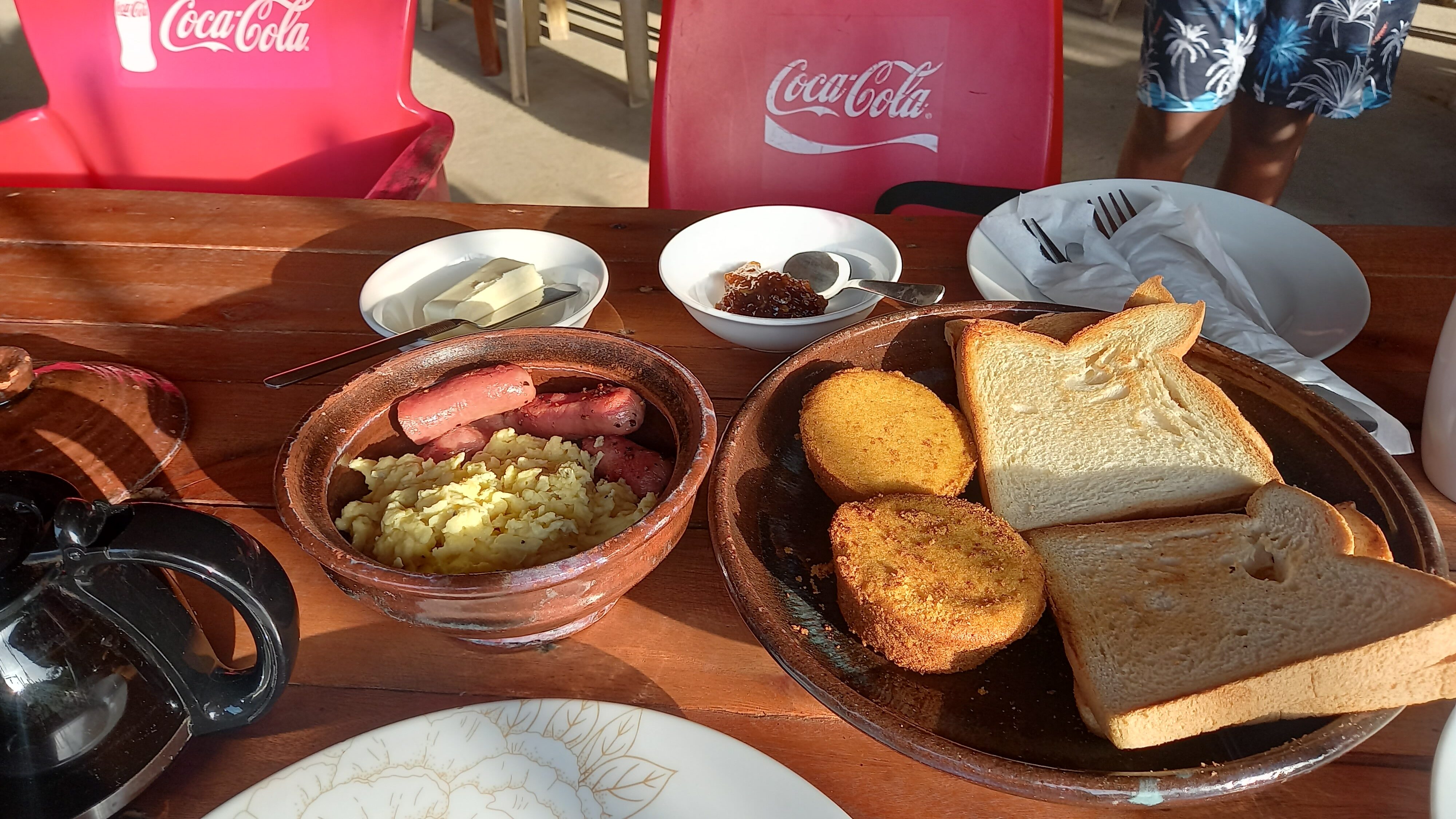
Breakfast was served at the pre-arranged time and was an excellent spread. Food arrived in tureens and included sausages, well-cooked scrambled eggs, toast, cornbread muffins, jam, butter, delicious fresh pineapple and coffee served without milk.
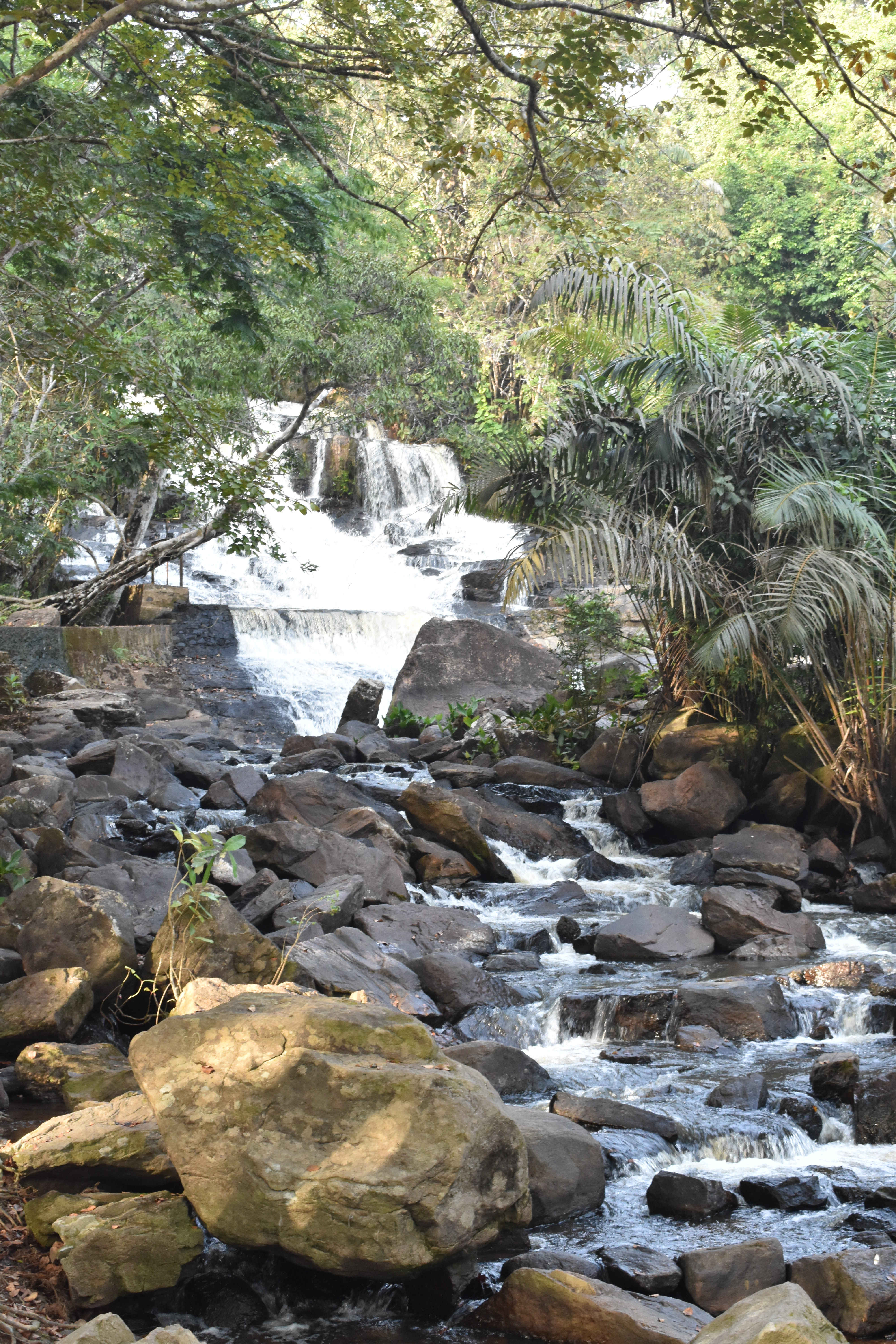
The attraction itself consists of two waterfalls. The more spectacular Upper Falls require around an hour’s hike through the rainforest and is recommended for reasonably fit visitors. We confined ourselves to exploring the Lower Falls, which lie within the ecolodge grounds. As it was the dry season, the waterfall was well below its full force, but it was still an attractive spot, and we enjoyed clambering over the exposed dark granite rocks with crystal-clear pools. Although swimming is said to be popular, we were hot and exhausted after the journey and preferred to relax beneath the shade of a magnificent 150-year-old cotton tree with a well-earned chilled beer.
During our entire visit we didn’t encounter another tourist. However, as Kpatawee is only around three hours from Monrovia, the atmosphere is probably rather different at weekends, and our only disappointment was that we weren’t staying longer.