
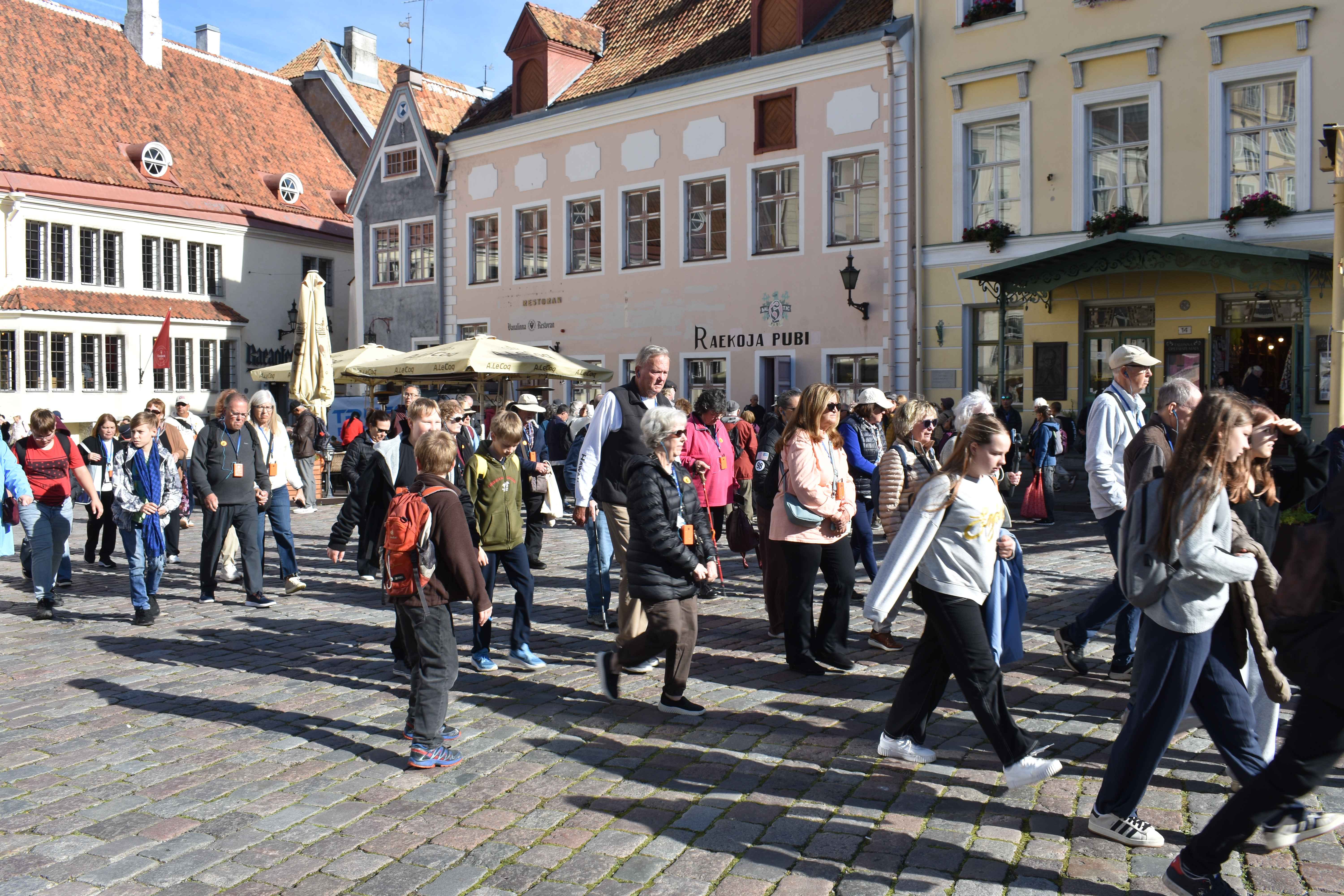
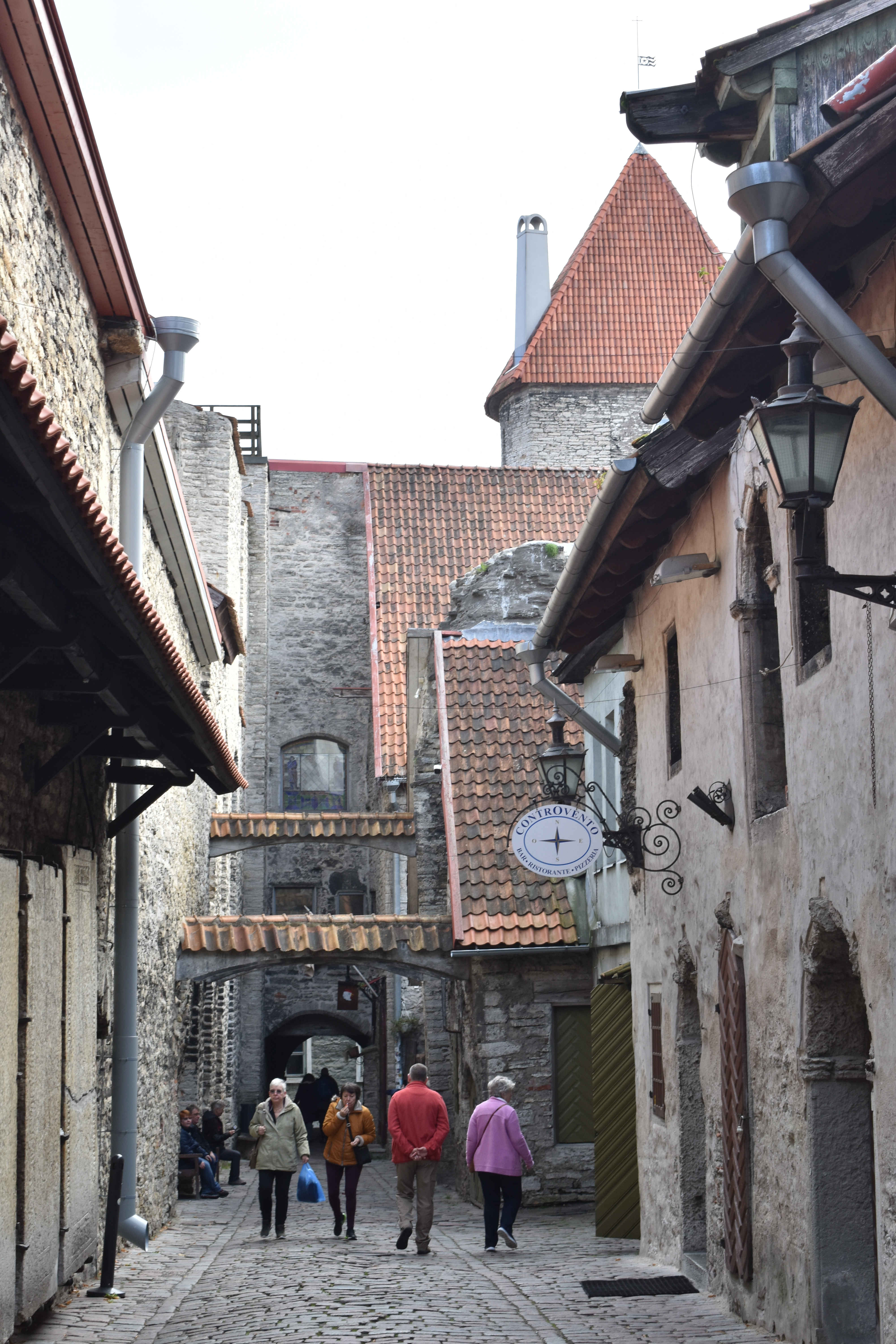
We stayed in Estonia’s capital, Tallinn, for three nights and have two abiding memories: cobbled streets, and cruise ships. On our first full day, P&Os Britannia docked with 3,600 passengers but the following day, two ships with over 5,000 people dominated the city’s main attractions. We were told that prior to Covid and the war in Ukraine, around 300 ships a year were common, but as St Petersburg is now off limits, numbers have fallen to one third.
However, on a more positive note, it is no longer the stag-party destination it was around ten to fifteen years ago, as Estonian prices are now similar to many Nordic countries, and there is increased policing and stricter bar rules.
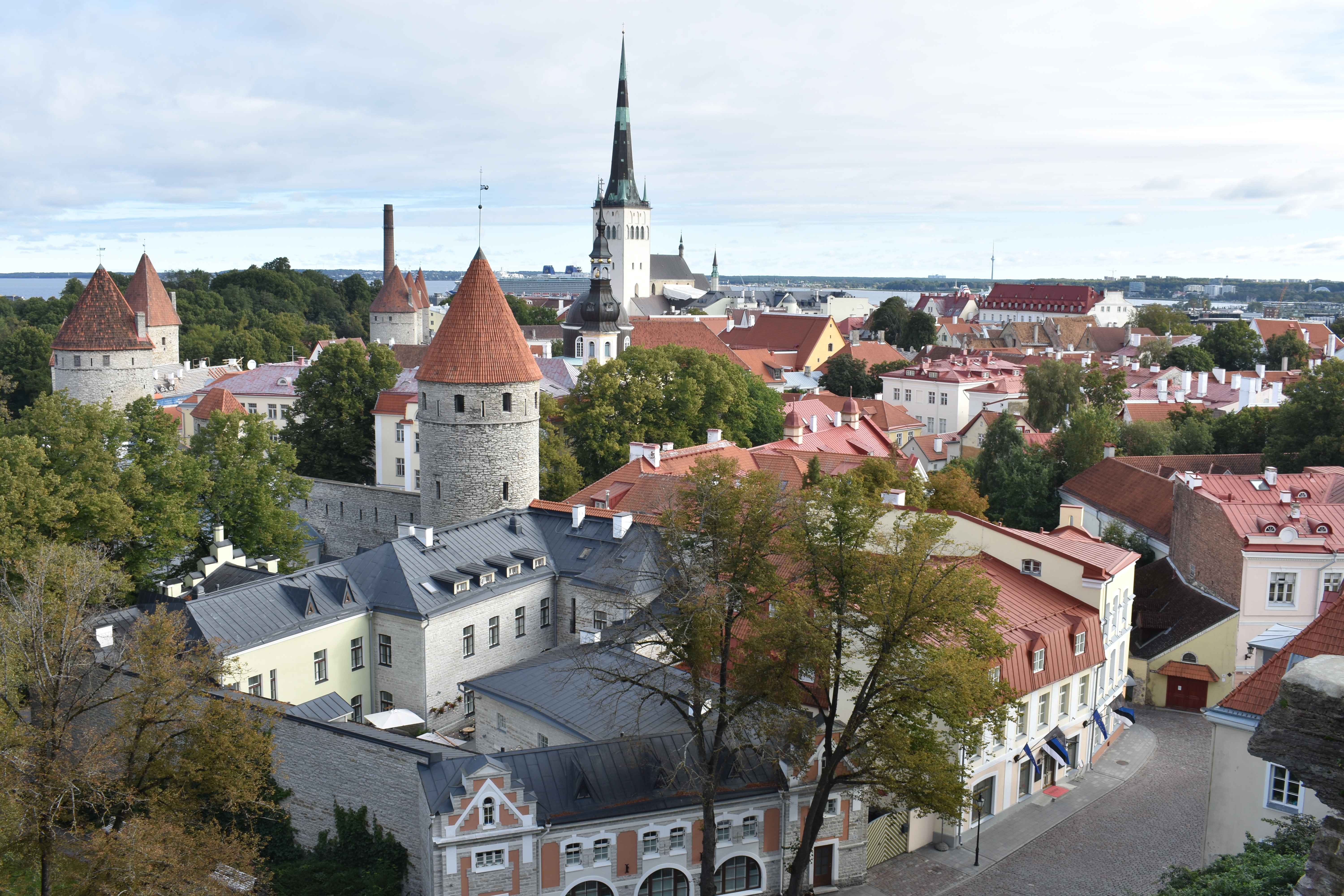
As well as exploring on our own, we were grateful we had a private two-hour guided tour, as we found it the most difficult of the three Baltic capitals to navigate. There were no gridded streets, and the two distinct parts of the UNESCO listed Old Town, had complicated links between them. The Upper Town or Toompea was historically the seat of power, whilst the Lower Town was the merchant and trading quarter.
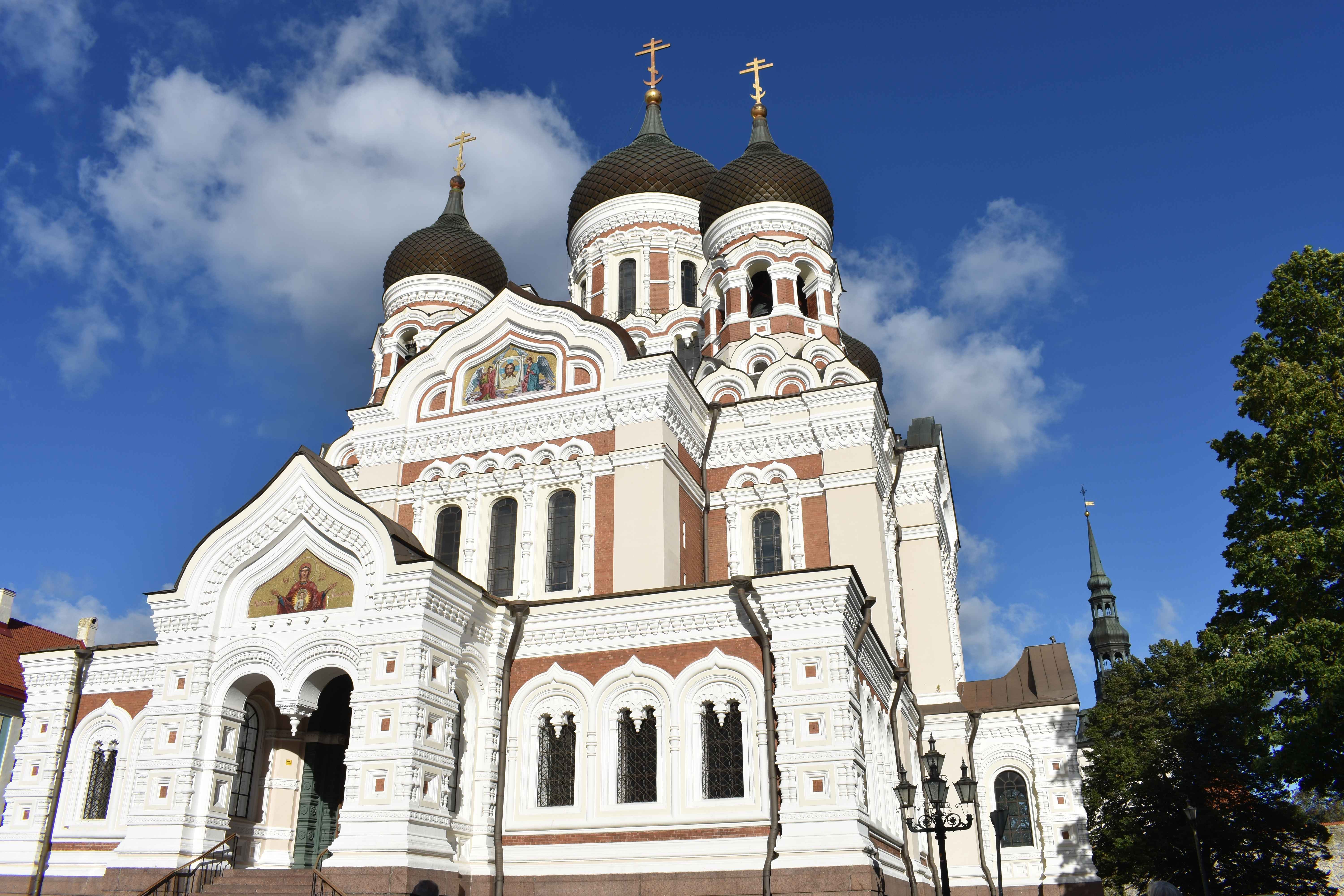
In the Upper Town we explored Toompea Castle (today’s Estonian Parliament), Alexander Nevsky Cathedral and St. Mary’s Cathedral, whilst viewing platforms overlooked the Lower Town and Gulf of Finland.
The Lower Town had the constantly crowded Town Hall Square (Raekoja plats), St. Olaf’s Church, Viru Gate and Medieval city walls and towers. It also had most of the restaurants, cafés, shops, and museums.
On our second day, we wanted to escape the Old Town crowds, and although the ethnographic museum and botanical gardens were both some distance out of town, Kadriorg Park was a 40-minute walk. It was established in 1718 on the orders of Russian Tsar Peter the Great, who wanted a grand Baroque summer palace for his wife, Catherine I. The house and gardens were particularly photogenic and although there were several museums and galleries within the grounds, we simply wandered. Swan Pond, was a central focal point surrounded by flowerbeds whilst the newer Japanese Garden, completed in 2011, had tranquil bridges, stones and trees.
Whilst we enjoyed some of Estonia’s other cities, in particular Tartu and Pärnu, we would avoid Tallinn if we returned.

