


Our original Côte d’Ivoire itinerary included just a single night at N’Zi River Lodge, but after researching it online it looked by far the most luxurious and intriguing property on the tour. We therefore extended our stay to two nights and timed it so that my husband’s 70th birthday would begin here.
After leaving the main road, it was another 11km along a rough, dusty track before we reached the lodge. The property sits beside a man-made lake overlooking the N’Zi River, whose murky brown colour is reportedly the result of sediment stirred up by illegal gold-mining activities upstream.
There was some confusion over the lodge’s history. Our guide believed it had only opened a couple of years ago, which would explain why it was absent from our Bradt guidebook, but the manager told us the reserve had originally been established as a hunting concession before “guns were replaced by cameras”, and that the lodge itself had been built in 2012 as part of a wildlife conservation and eco-tourism project.
We were welcomed with a refreshing fruit juice and, while checking in, noticed the whiteboard behind reception listed just one occupied room. It turned out that the 12-room lodge was entirely ours for the next two nights – a wonderfully surreal feeling.
ACCOMMODATION
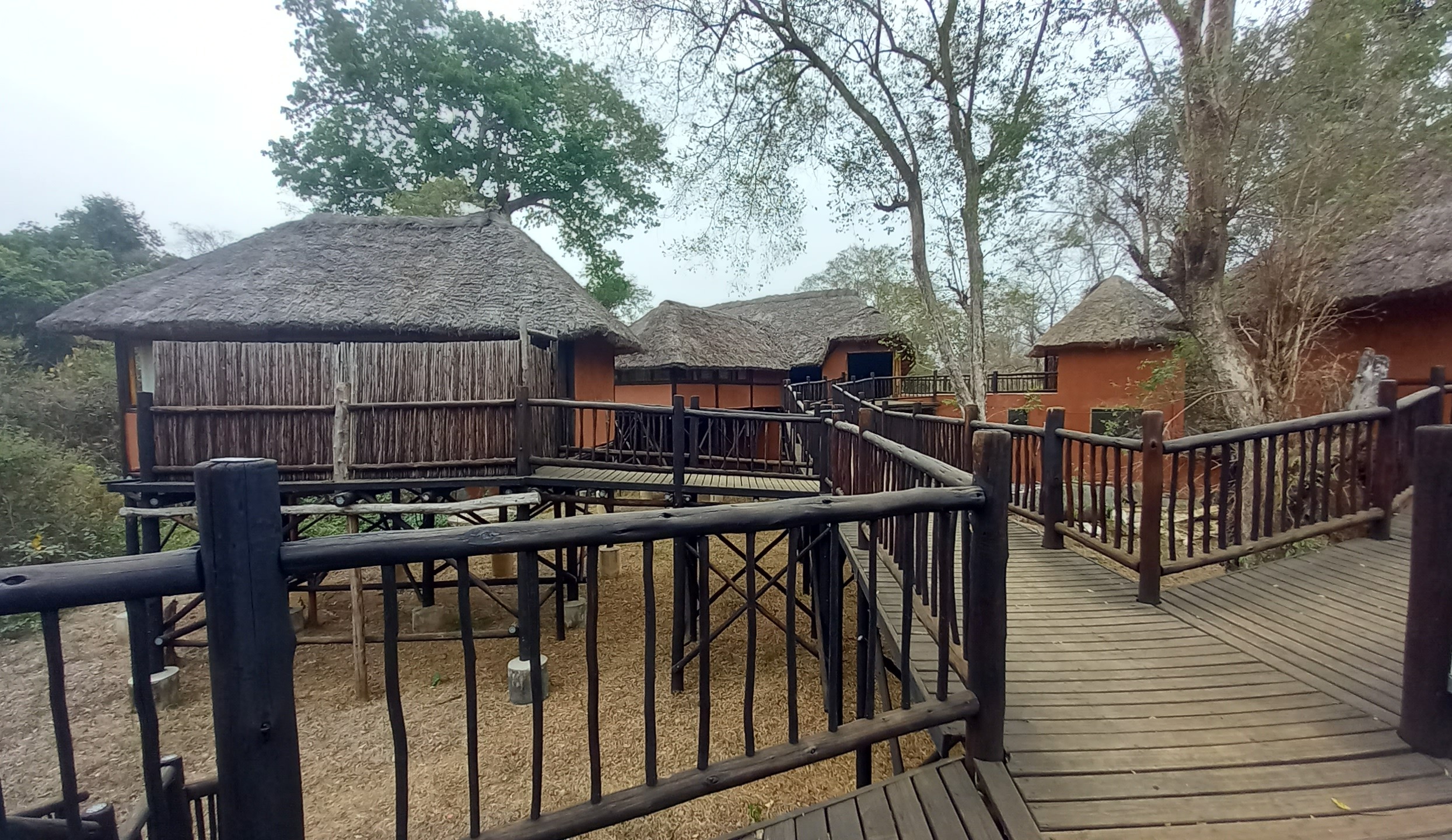
The guest rooms were located above and beyond the attractive thatched reception building, accessed via a well-constructed wooden walkway.
Our room, number 2, was spacious and comfortable. The large double bed was draped with a mosquito net, although as we were told that mosquitoes are relatively scarce during the dry season, we kept it tied back. There were bedside tables, reading lights and charging points.
The lighting design was slightly unusual. The main wall light was positioned behind the bed, leaving the desk and wardrobe area at the opposite end of the room rather dim after dark. A long wooden bench at the foot of the bed was ideal for our suitcases.
The air conditioning worked extremely well, which was fortunate given the heat, although we never managed to locate the switch for the ceiling fan above the bed. The bedding was rather heavy for the climate, consisting of a thick duvet and a single pillow each. With no top sheet provided, we ended up sleeping on top of the duvet.
The bathroom was equally spacious, with plenty of storage space, a useful towel rail, two towels each and, more importantly, a proper enclosed shower cubicle rather than the wet-room arrangements we encountered elsewhere on the trip.
THE FOOD AND DRINK
All meals were served on a pleasant, covered terrace overlooking the grounds.
Dinner – A chalkboard menu offered a fixed starter and dessert, together with a choice of main courses. Our first dinner proved disappointing. The starter was egg paysanne, followed by a choice of mutton served with alloco (fried plantain) or a whole fish presented in a broth. Unfortunately, both main courses were extremely poor, with the mutton being particularly fatty and bony. It was the weakest meal of our entire trip but thankfully redeemed by an excellent pineapple flan served with cream.
The second evening’s meal was considerably better. A Caesar salad was followed by a well-cooked fish fillet topped with garlic, herbs and tomato, accompanied by diced potatoes. A fresh fruit salad provided a light and refreshing finale.
Despite the heat and the fact that we were the only guests, staff lit a campfire beside the terrace, creating a surprisingly atmospheric setting.
Breakfast – Morning game drives departed at 7am, meaning a 6am wake-up call, while it was still dark and breakfast at 6.30am. The spread for the two of us was impressive. Large flasks of coffee, hot milk and hot water were accompanied by a selection of tea bags, freshly squeezed pineapple juice, platters of pineapple, watermelon and papaya, a long crusty baguette, pastries and crêpes.
Having been on safaris in several other African countries, it was interesting that the full breakfast was served before, rather than after the game drive. When I mentioned this to the manager, he explained with more guests, they would generally leave out the buffet and offer eggs on return.
Lunch – The chalkboard menu again offered three courses, but we opted only for the starter and dessert. The quiche Lorraine arrived with a small side salad and was followed by a creamy chilled mousse that was rich without being overly sweet.
THE FACILITIES
The bar was looked after by two delightful ladies whose English was limited but whose friendliness more than compensated. One evening, much to their amusement, we coached them in the art of serving a gin-and-tonic alternative, made with the local equivalent of Sprite, fresh lime and plenty of ice.
On the second evening we ordered a bottle of Chardonnay. Given some of our previous experiences elsewhere on the tour, I wondered if (a) they would have a corkscrew and (b) would know how to use it. To my pleasant surprise, it was handled with aplomb from opening and tasting, through to presentation in an ice bucket.
The lodge had a small swimming pool. While there were several chairs around it, only two high-quality sun loungers were available, ideal for the only two guests. Pool towels were provided and the bar ladies offered cold beers.
There were also numerous quiet corners with sofas and chairs overlooking the water which were ideal for relaxing with a book during the hottest part of the day.
ACTIVITIES
Each overnight stay includes one activity, with options ranging from game drives and horse riding to cycling, fishing and guided walks.
Given the temperatures, we chose the easiest option: a morning game drive.
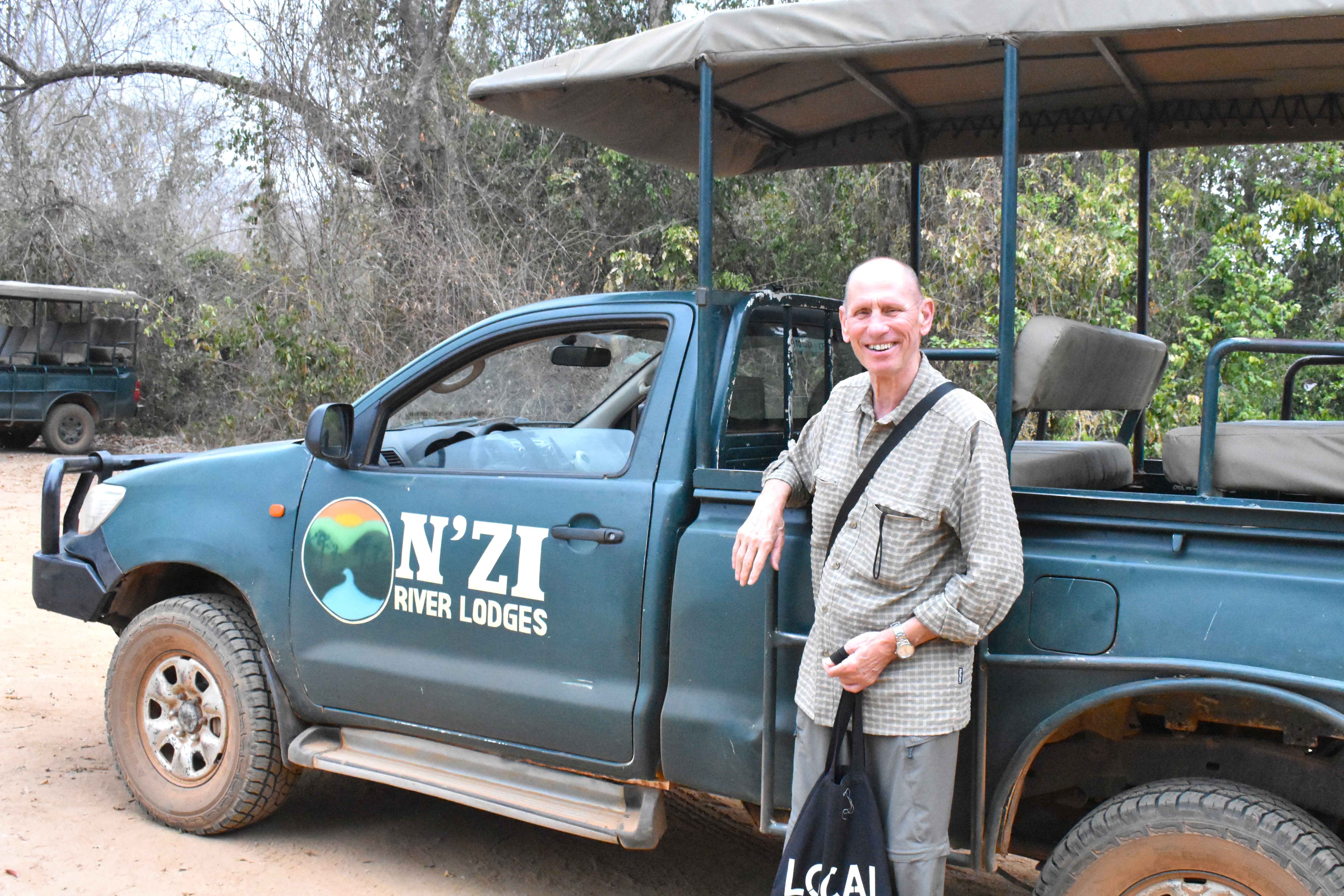
Departing at 7am in an open-sided safari vehicle with a roof, we entered the reserve along narrow tracks bordered by dense vegetation. As it was the dry season, our expectations were not high, but nevertheless, we recorded a respectable list of sightings including Buffon’s Kob, Defassa Waterbuck, African buffalo, a lone vervet monkey and three warthogs.
One challenge was that our safari guide spoke only French, requiring constant translation by our tour guide and on several occasions the explanation arrived just after the animal had disappeared into the bush.
The highlight was undoubtedly meeting the reserve’s rhinoceros and giving him his breakfast of large fruits collected on route. He is something of a conservation celebrity and known locally as the Rhinoceros of Fétèkro and is often described as Côte d’Ivoire’s last rhino, having spent decades in Bouaké Zoo. After his species disappeared from the country’s wild landscapes, in 2017 conservationists undertook a major translocation project, moving him to the protected environment of a large, fenced sector of the reserve.
Although at two-hours, the drive was significantly shorter than most we’d experienced in other countries, but bearing in mind the volume of animals, it was long enough.
As the lodge’s only guests, we were generously offered a complimentary second activity and chose an afternoon drive, this time focusing on the reserve’s flora and fauna.
Among the species identified were silk floss trees, whose green trunks are covered in large conical spines that gradually disappear as the tree matures; and Baobabs, with their massive trunks and distinctive branches that appeared like roots reaching skywards.
Many of the plants we encountered had medicinal uses, whether brewed into teas, used in bathing preparations or applied directly to the skin. Others provided valuable timber or construction materials.
OVERALL
According to the manager, the best wildlife viewing occurs between March and April when birdlife is at its peak, while elephants are most frequently seen during July. However, despite the lack of game, N’Zi River Lodge was one of the most memorable properties of our Côte d’Ivoire tour and not just because of the extraordinary experience of having an entire eco-lodge to ourselves. It was the perfect place to kick off a 70th birthday.