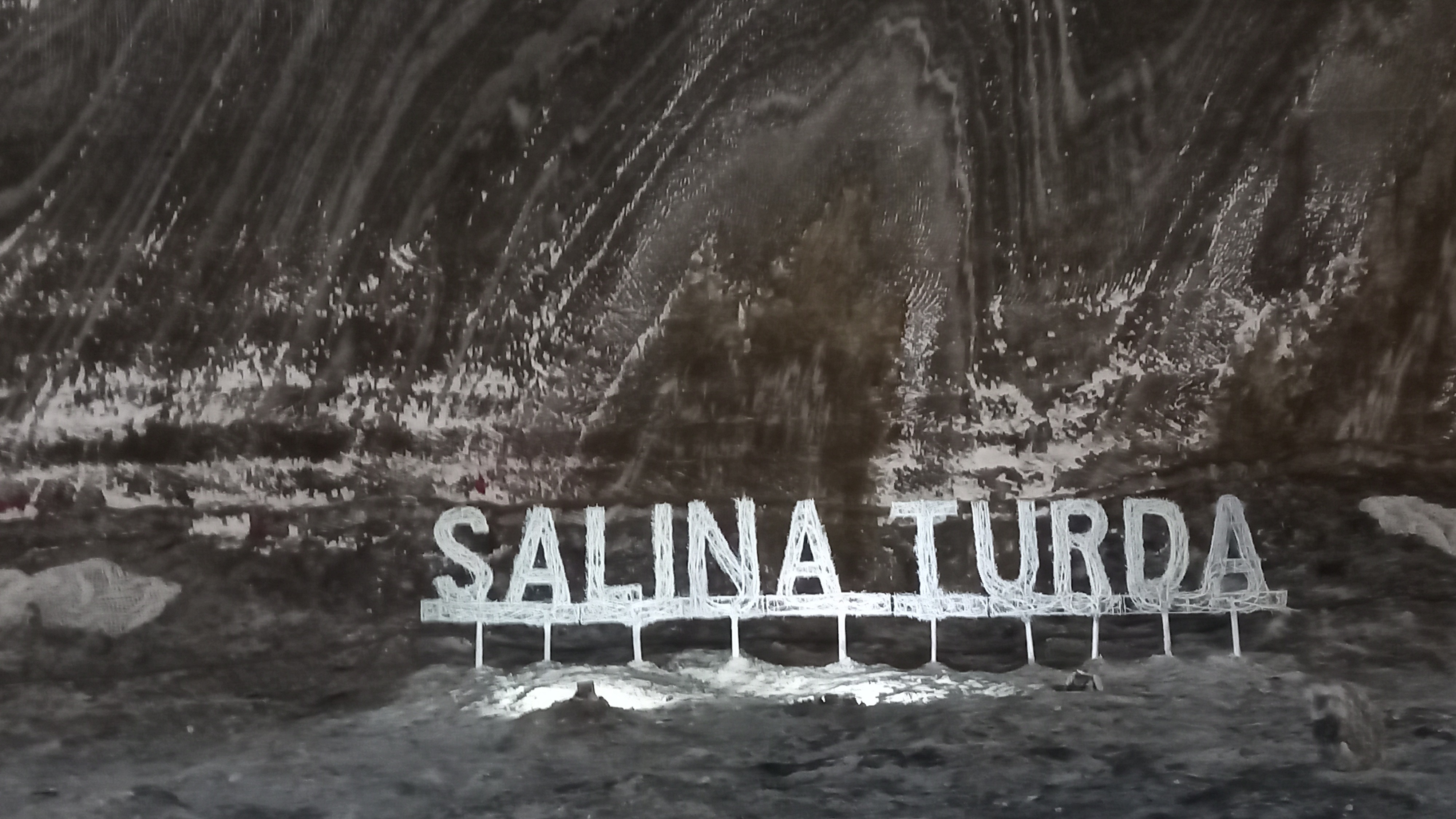
The website of the Turda Salt Mine, or Salina Turda, describes it as ‘the world’s most spectacular natural underground formation, shaped by people’. Having previously enjoyed visits to the Wieliczka Salt Mine in Poland and Zipaquirá mine in Colombia, we expected this to be one of the highlights of our trip to Romania.
It was a 40-minute drive from our hotel in Cluj-Napoca and as it was a Saturday, we set off early. Arriving at 9.30am, we were pleased to find a relatively quiet car park.
The entrance fee was 85 Lei each, but after producing evidence of our age, we paid a discounted pensioner rate of 55 Lei (£9.15). A leaflet with a map was accompanied by a verbal explanation of our route, which sounded very complicated. Having spotted my Canon SLR, I was told that professional cameras were not allowed and that for some inexplicable reason, only phone cameras could be used. We were also told that food and drinks were not allowed, although bags were not searched.
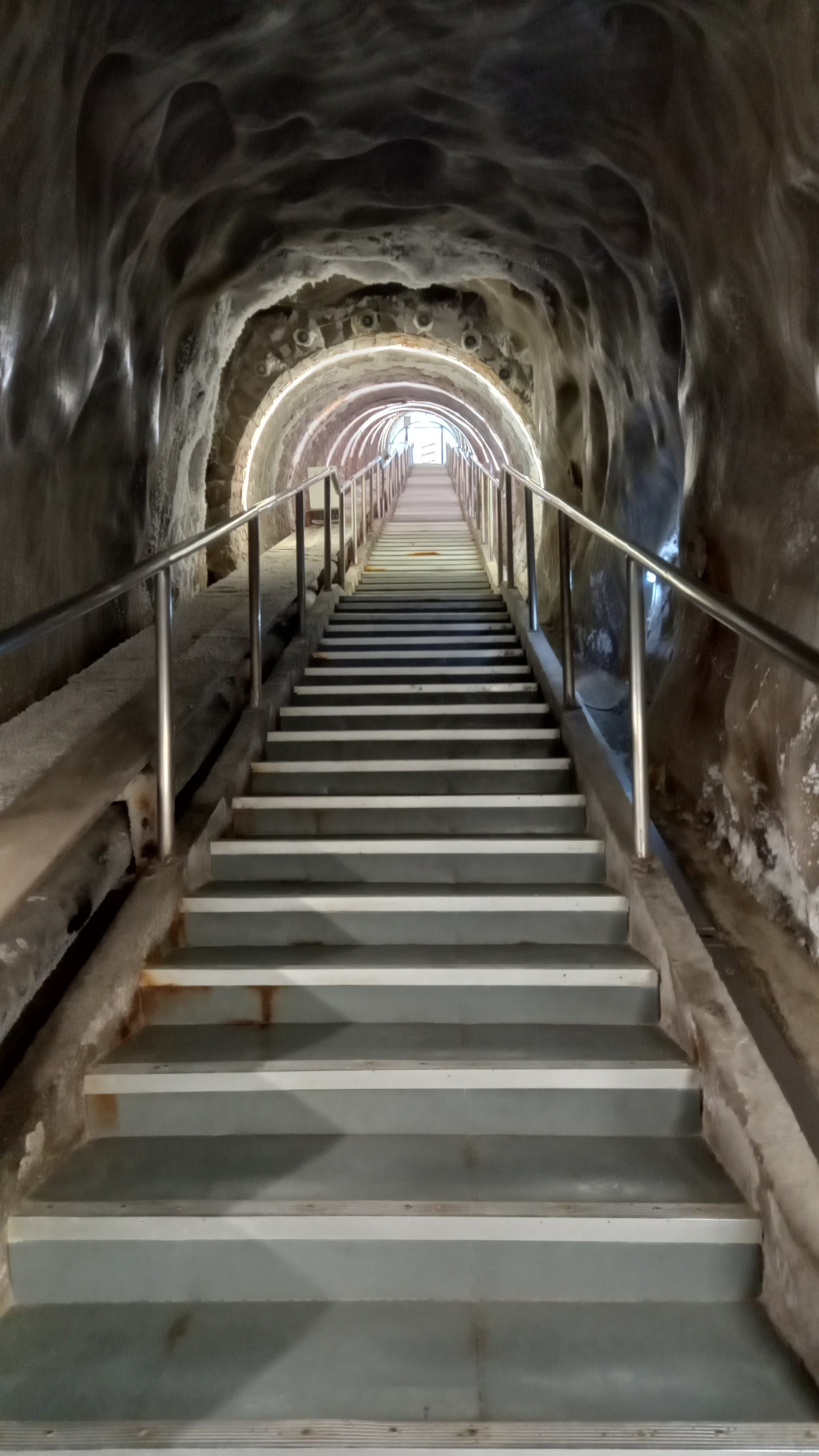
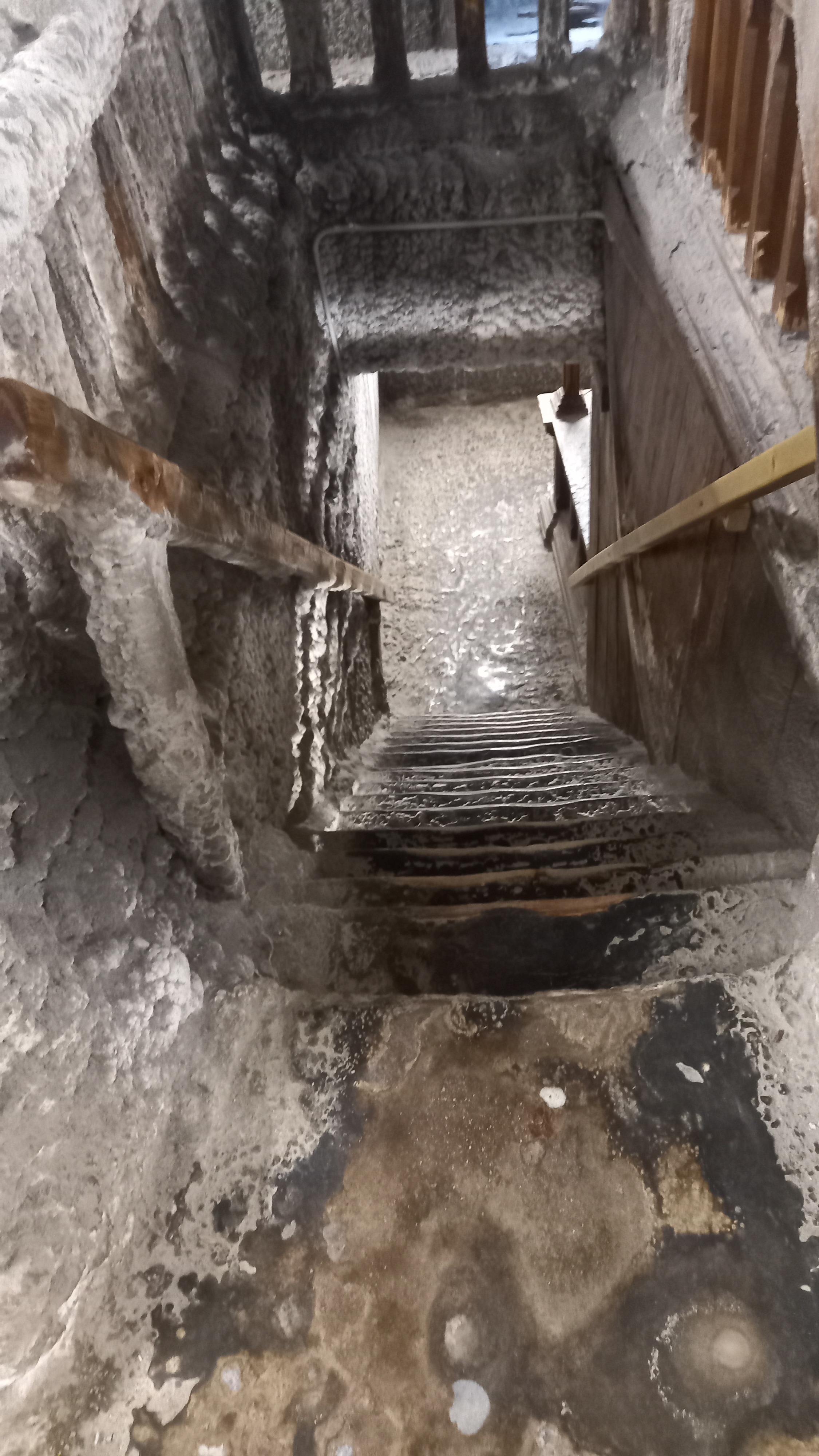
We descended 117 even, shallow steps. This was followed by two flights of 10 steps which were a little more difficult as they were old, wooden and salt encrusted.
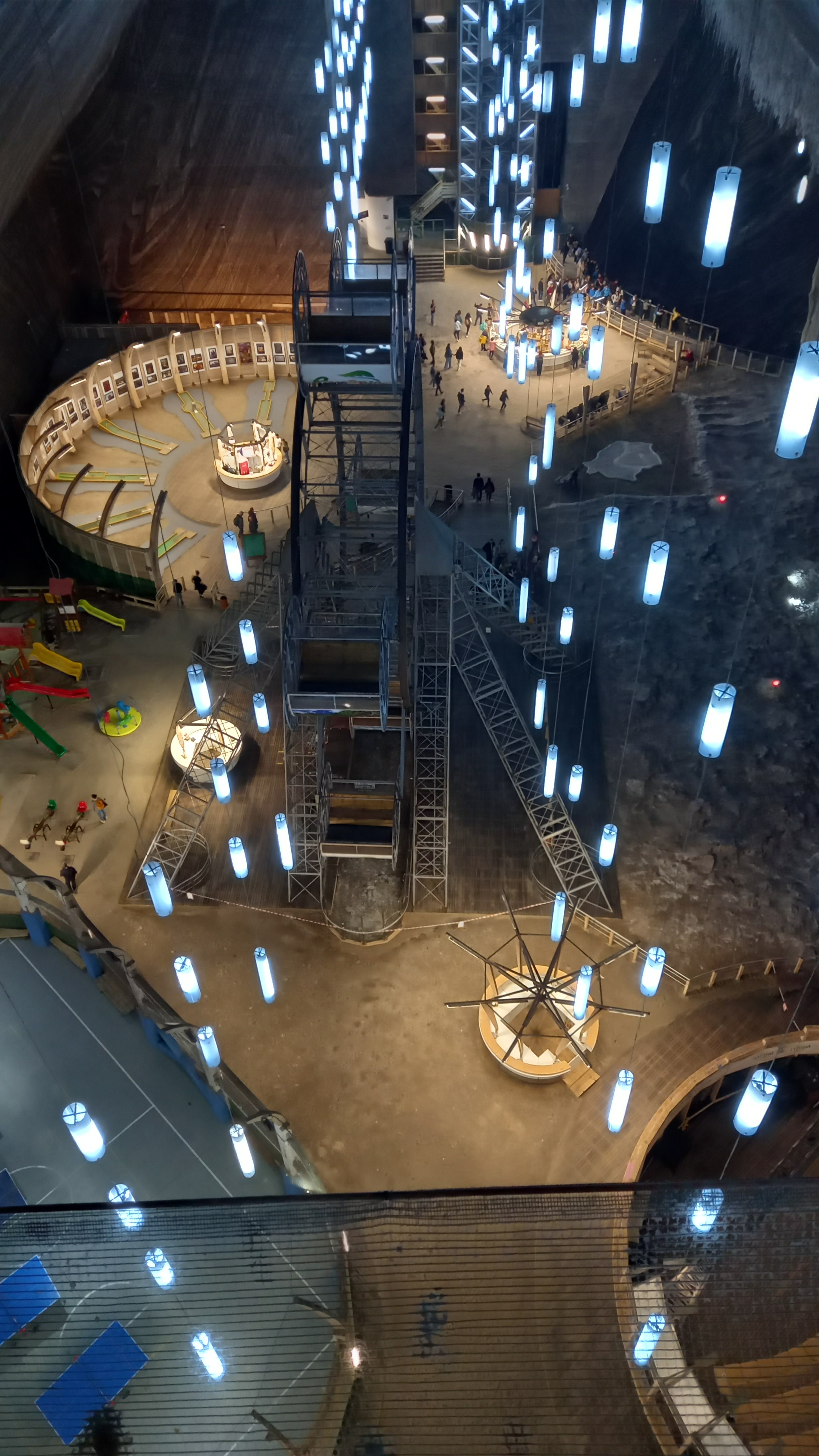
A gallery took us around the rim of the Rudolph Mine, before a lift, taking seven people at a time, whizzed us down to the next level. Here we were greeted by what was basically an underground amusement park which included additional extras like table tennis, bowling, billiards and mini golf. A panoramic wheel, said to be the only underground one in the world, wasn’t working.
We then took a second lift which could accommodate only four people, so it was constantly up and down. Fortunately, because we were early, we only had to wait a couple of turns, but it was easy to imagine the queues forming when it got busier. Whilst stairs are an alternative, each lift covered 13 floors.
At the very bottom was a lake in the former Theresa Mine, with rowing boats. A covered area with benches, all made from wood, had signs saying, ‘writing on the wood is forbidden.’ Needless to say, it was covered in graffiti. Here you could sit and breathe in the salty air, said to be good for asthma. Our guide told us people would stay for a few hours, and we saw a family with the children playing board games with dad, whilst mum knitted.
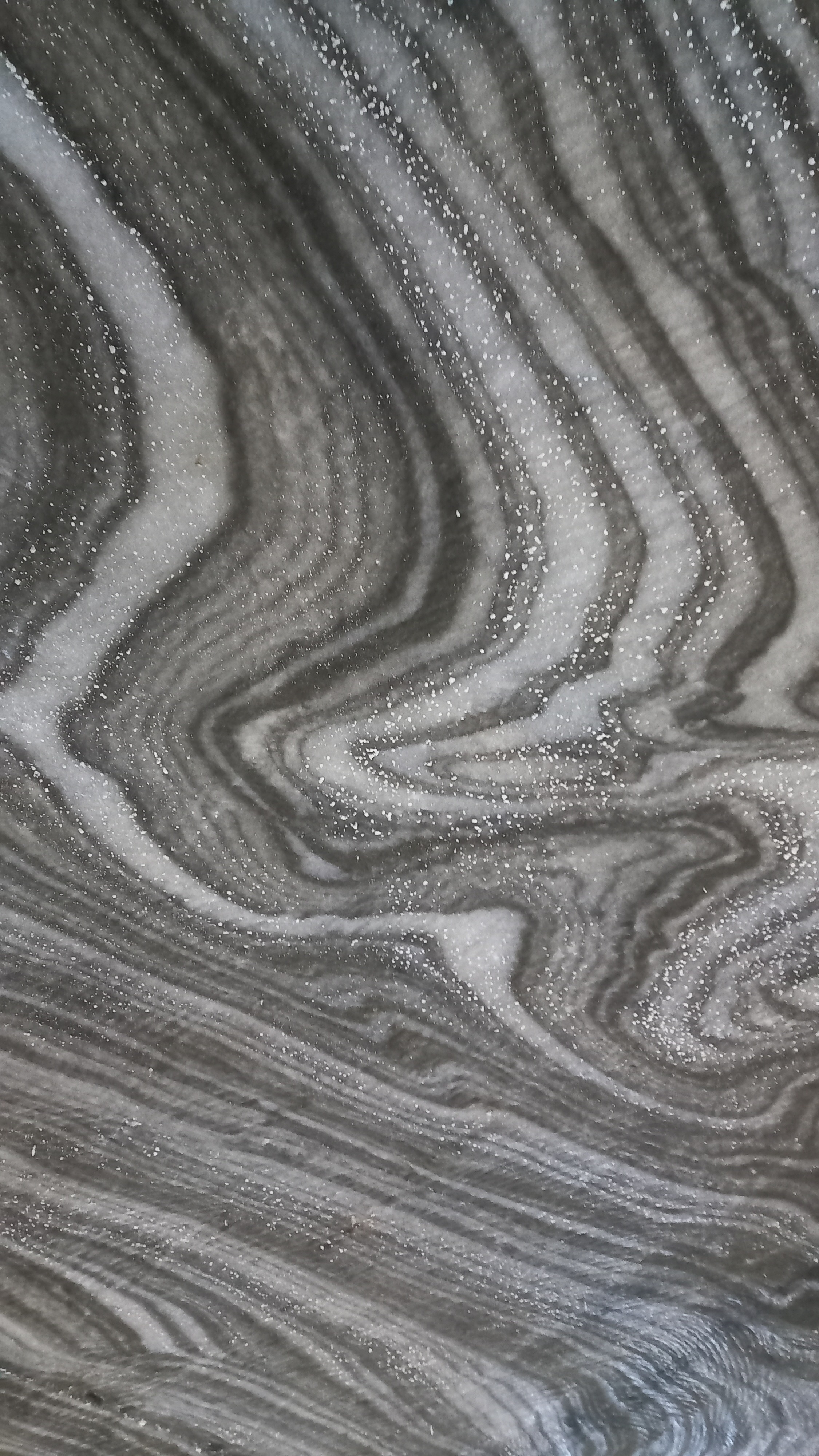
There is no doubt that the scale of the place is vast, and I loved the stalagmites, stalactites and the patterns the salt created on the walls. Although there were signs in Romanian and English about the history of the mine, which operated from 1854 to 1932, I found them difficult to follow. As a result, I left not really knowing much about the place, and for some reason we missed the salt altar where prayers would have been said before the start of each shift.
Although the temperature in the mine is said to be 10 to 12 degrees, we didn’t feel that cold. As we left an hour later, it was getting busy, and my advice would be to visit on a weekday or early at the weekends – or perhaps even skip it entirely. Whilst this was certainly a memorable trip, it was not necessarily for the reasons we anticipated.