
After six wonderful nights in San Sebastián, we spent four nights of our two-centre holiday in Bilbao, rounding off our trip to northern Spain and the Basque country.
Getting There
We flew into and out of Bilbao with Vueling Airlines, flying from London Gatwick and returning to Heathrow. With a flight time of around two hours, it was an easy journey. From Bilbao Airport, we took a coach to San Sebastián, which took approximately 90 minutes. At the end of our stay, a taxi from Bilbao city centre to the airport cost around €30, although there are undoubtedly cheaper public transport options.
Where to Stay
For a short city break, location is everything, and the Barceló Bilbao Nervión proved an excellent choice. Situated on the banks of the River Nervión, it was perfectly positioned between Bilbao’s atmospheric Old Town and the iconic Guggenheim Museum, making it easy to explore the city on foot.
Things to Do
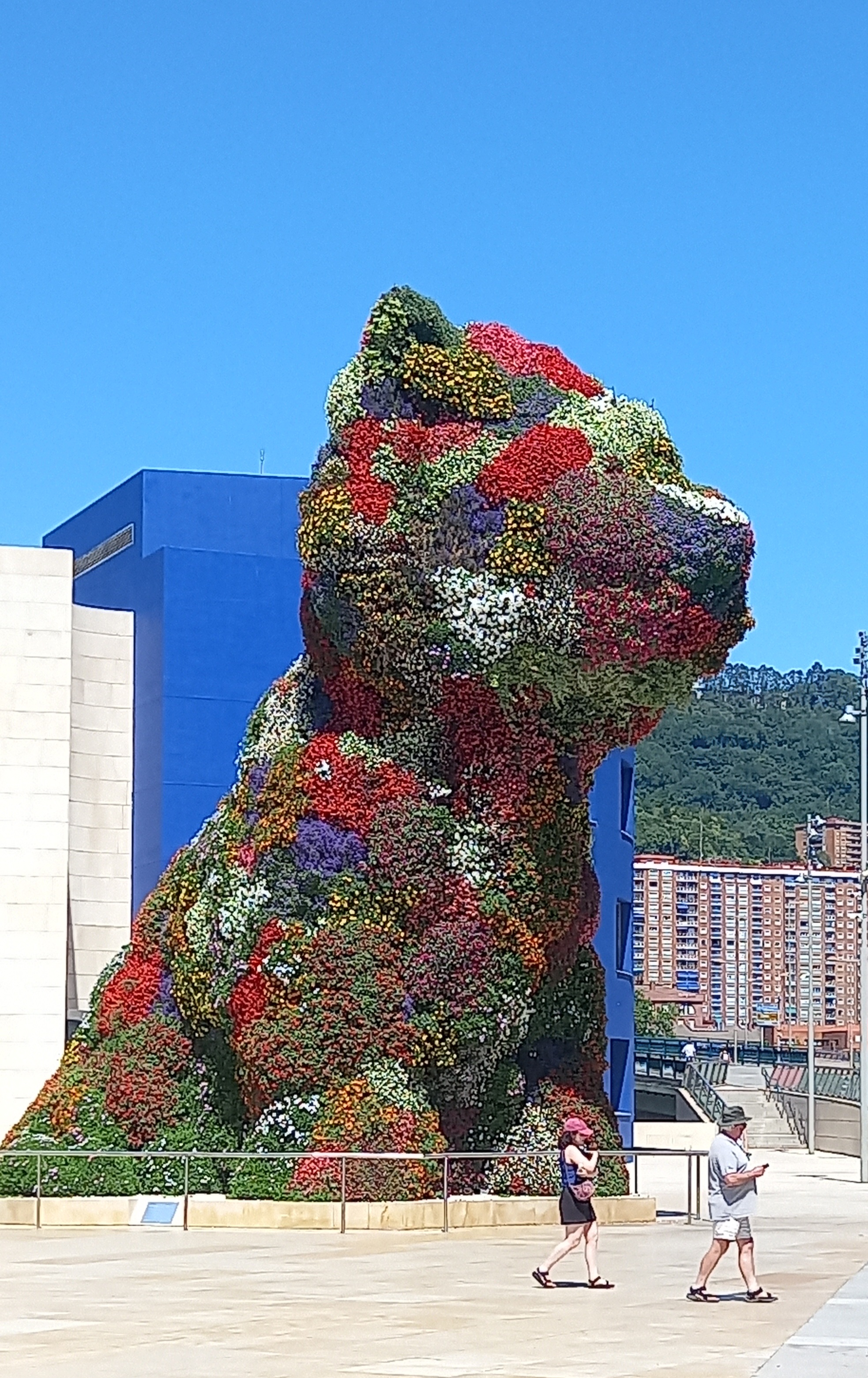
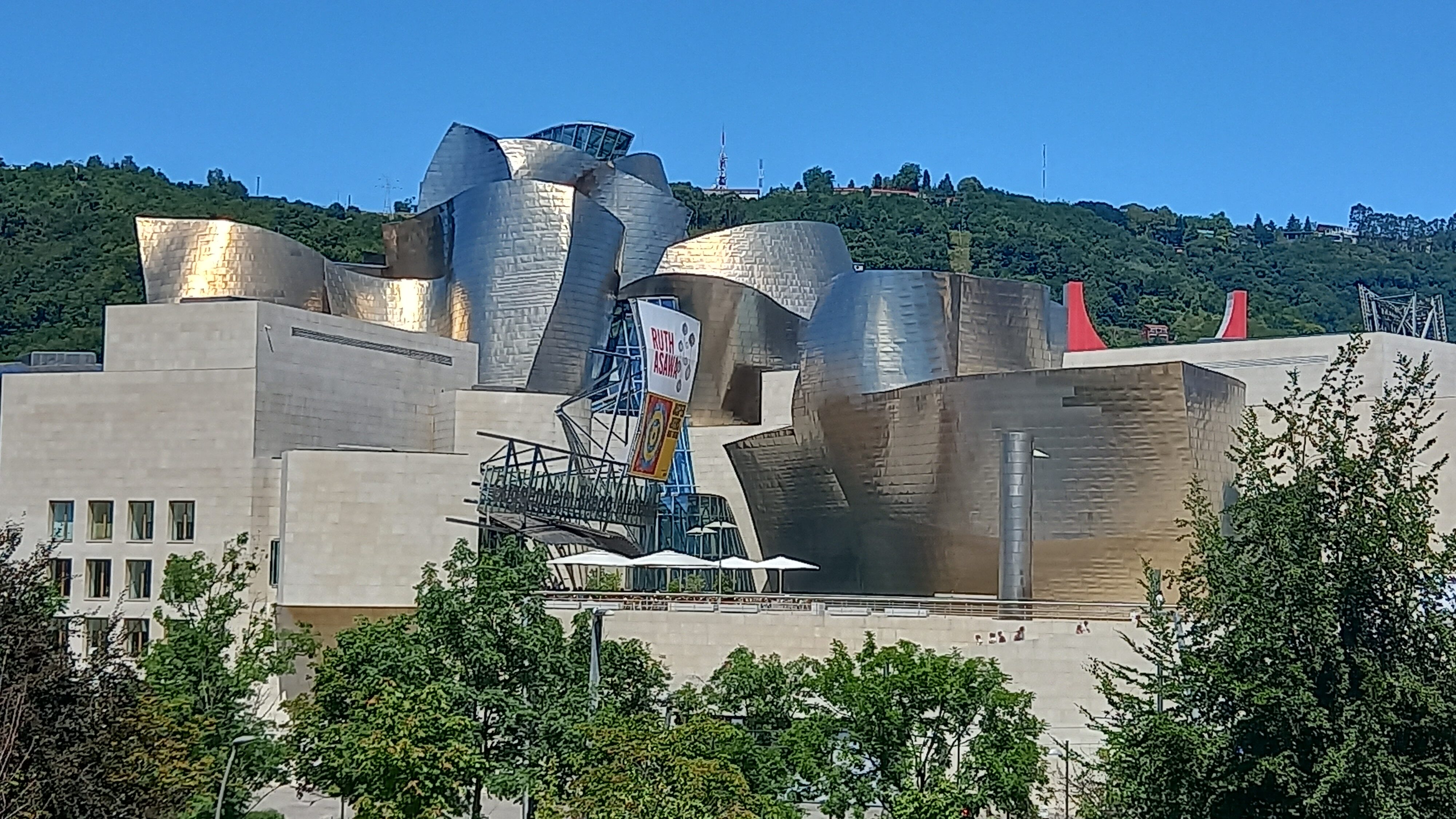
The undisputed highlight of Bilbao is Frank Gehry’s spectacular Guggenheim Museum. Its sweeping curves of titanium and glass have become the symbol of the city’s transformation from industrial port to modern cultural destination. Even if you don’t go inside, it’s worth visiting simply to admire the architecture and the outdoor sculptures, including Louise Bourgeois’ giant spider.
However, with temperatures soaring above 40°C during our visit, the museum’s air-conditioned interior was irresistible. During July and August, the museum opens on Mondays, unlike the rest of the year. Admission is €18, with over-65s paying half price without needing to show identification. I had considered booking tickets in advance, but when we visited there were no queues.
There were three main exhibitions. We started on the top floor with paintings by Jasper Johns, whose work wasn’t particularly to my taste. In contrast, I loved the large-scale tapestries by South African artist Igshaan Adams, and the beautifully intricate looped-wire sculptures by Ruth Asawa. The museum was spacious, well laid out and easy to navigate, with lifts connecting each floor. Afterwards, we enjoyed a welcome glass of sangria on the museum’s shaded terrace while readjusting from the cool air conditioning to the intense summer heat.
Bilbao’s Casco Viejo (Old Town) is the city’s other main attraction. At its heart are the Siete Calles, seven parallel streets that formed medieval Bilbao. Perhaps we had been spoiled by the vibrant atmosphere of San Sebastián, but we found Bilbao’s Old Town slightly disappointing during the daytime. Many shops and bars were closed, either permanently or for the afternoon, and some shuttered buildings covered in graffiti gave parts of the area a rather tired appearance.
It felt livelier in the evening when we enjoyed dinner there, although it still lacked the energy and buzz, we had experienced in San Sebastián. There are several attractive historic churches to admire, but unfortunately Santiago Cathedral was surrounded by scaffolding during our visit, making it difficult to appreciate its impressive Gothic exterior.
We also rode the historic Artxanda Funicular to Mount Artxanda (€12 return). At the summit, there was a broad viewing terrace with magnificent panoramic views across the city. One unusual feature was the 150-metre safety barrier made up of one-metre-high red letters repeatedly spelling “Bilbo-Bilbao”. Beyond the views, however, there was surprisingly little else to see. Despite being told that the Hermitage of the Holy Christ of Artxanda was only a short walk away, we couldn’t find it, and the once-famous Antón Restaurant has reportedly been closed for several years.
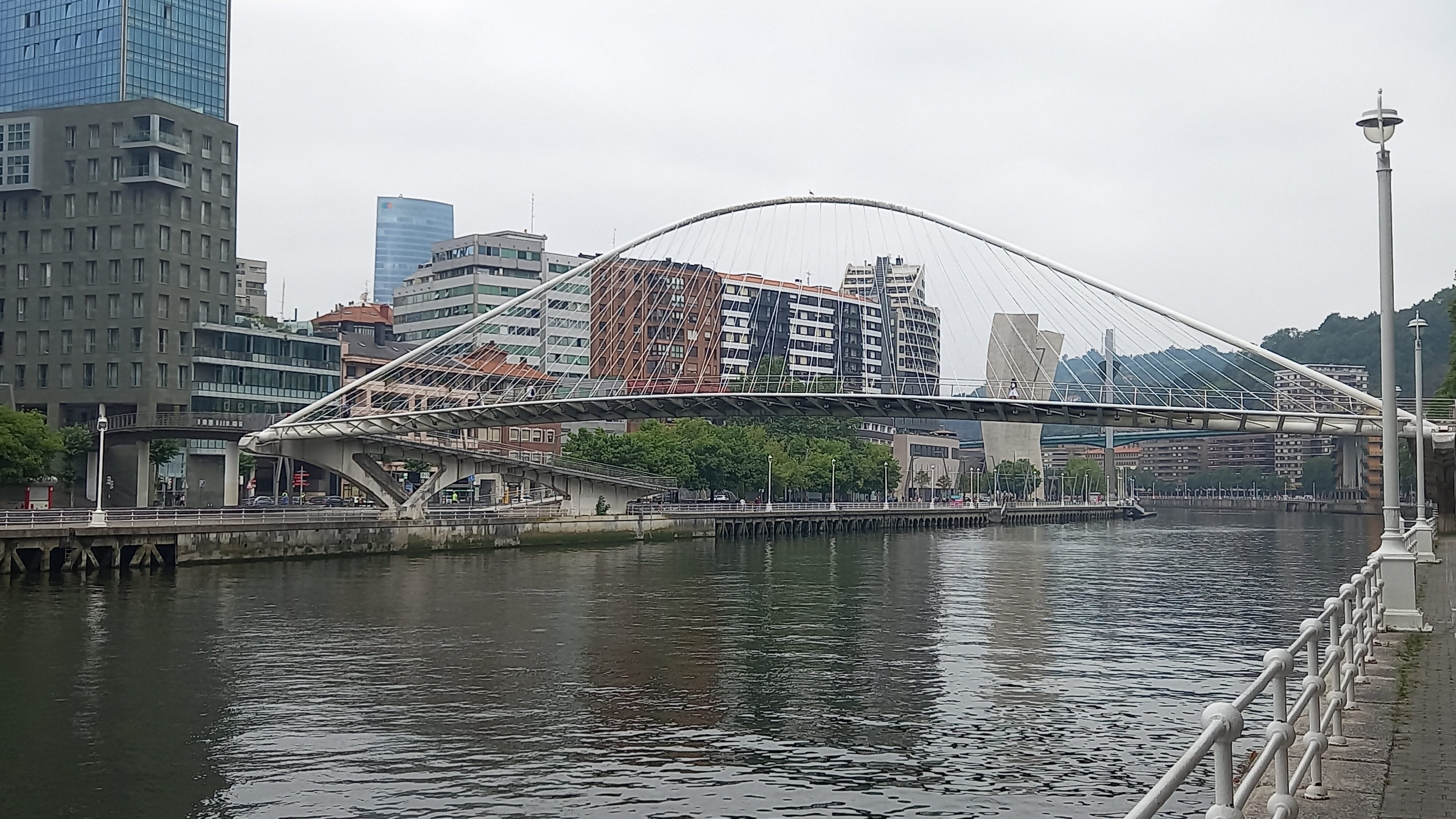
One of our favourite ways to spend time in Bilbao was simply strolling along the River Nervión and crossing its many bridges, each offering a different perspective of the city.
Eating Out
Once again, San Sebastián had set the bar extremely high. We’d become accustomed to bars and cafés serving pintxos throughout the day, whereas in Bilbao many of the pintxos bars in the Old Town appeared to close during the afternoon.
Many restaurants offered a Menú del Día, typically available from around midday until 4pm. Prices started at around €20 for three courses, wine and coffee, representing excellent value. Unfortunately, after the generous breakfasts at our hotel, we rarely felt hungry enough to take advantage of them. By the evening, many restaurants didn’t open until 8pm, so we often ended up having a snack in the hotel bar instead.
Overall
Bilbao was an attractive city with an impressive riverside setting and, of course, one of Europe’s finest modern art museums. The Guggenheim alone makes it well worth visiting. However, after experiencing the charm, atmosphere and outstanding food scene of San Sebastián, Bilbao inevitably felt a little underwhelming.
If I were planning the trip again, I’d probably spend just two nights in Bilbao, enough time to explore the Guggenheim and enjoy the riverside, before heading on to San Sebastián, which, for me, was the clear winner.