After Lithuania regained independence in 1990, businessman Viliumas Malinauskas, secured permission to collect unwanted Soviet statues and founded Grūtas Park, often nicknamed Stalin’s World.
It was understandably quiet on a September Monday morning and remained so for our two-hour visit. The reduced admission fee for pensioners was €10, rather than €15, and although our guide was with us, the rental of a hand-held, wand-like audio guide, which we could all listen to, was mandatory and an extra €10. Having heard one lengthy, overly detailed explanation, it was not used again. We were told that listening to every description takes five hours.
At the entrance a short freight train carriage served as a memorial to those transported to gulags and other forced relocation camps under the Soviet regime: our guide told us his grandparents and father, aged three, had been transported to Siberia in a similar carriage. This was followed by a wall of newspaper cuttings about the park from its inception in 2001.
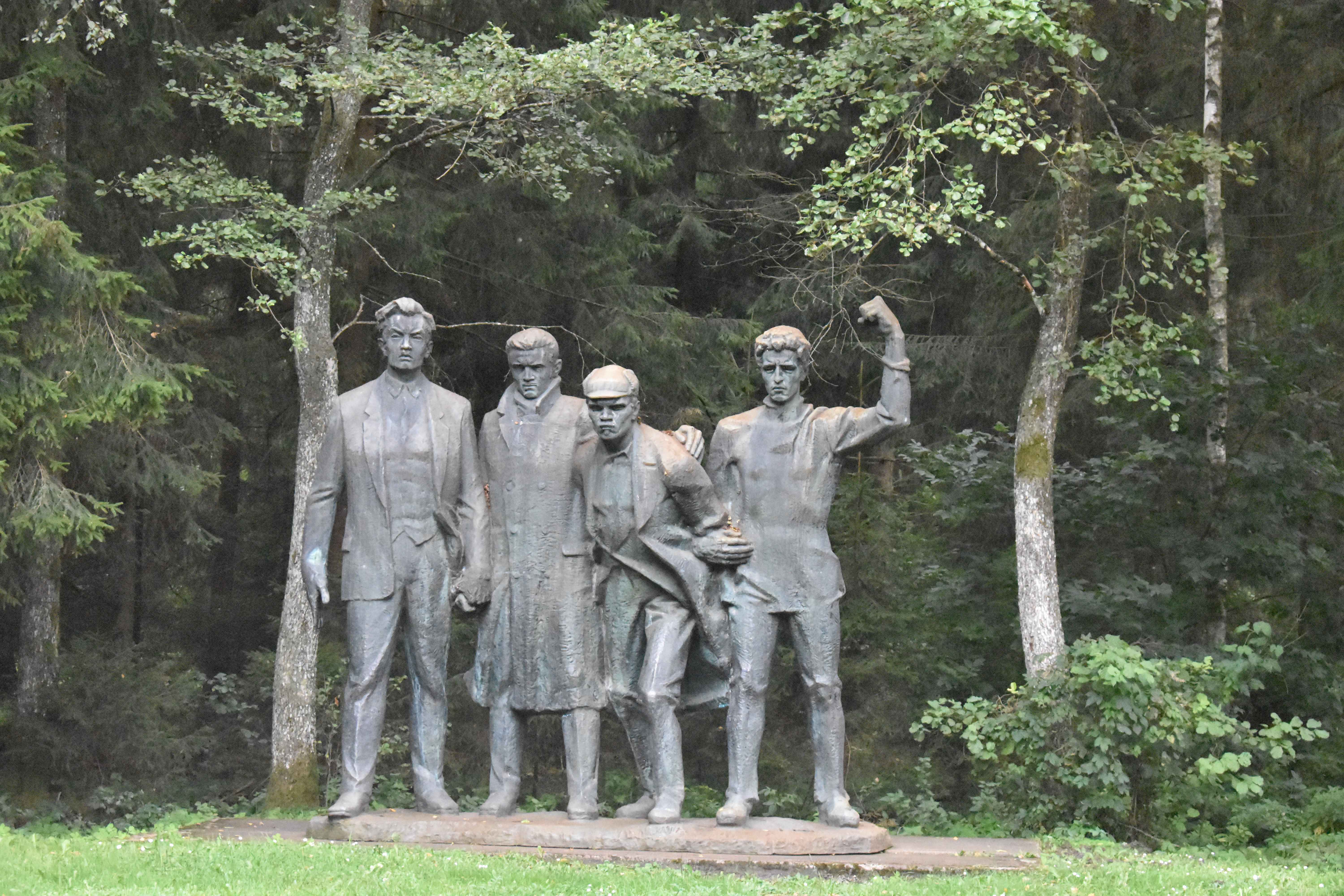
Concrete paths led us around forest trails dotted with around 90 statues of prominent Soviets during the communist regime.
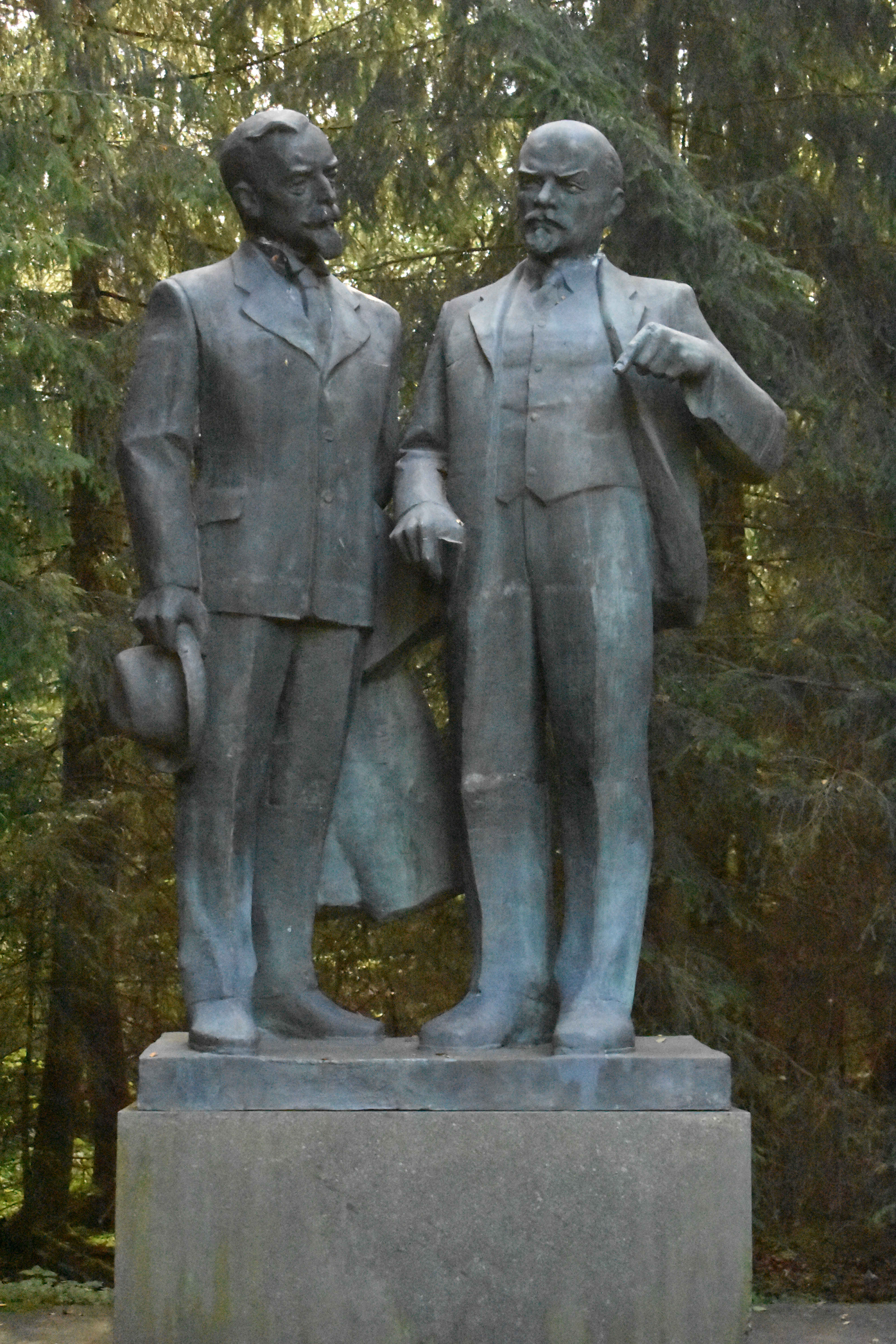
One statue was of Lenin and Vincas Mickevičius-Kapsukas, one of the early Lithuanian Communist leaders, who was naturally taller than Lenin. However, the Moscow Sculpture Council felt that as leader of the Soviet Union, Lenin had to be ideologically superior and taller. But rather than remaking the entire figure to scale, Lenin’s legs were lengthened making him appear out of proportion.
Most were of well-known male communists, but there was one of Marytė Melnikaitė, a young Lithuanian who became a Soviet partisan during WWII. She died aged 20 after being captured and executed by the Germans and was turned into a propaganda ‘hero’ with films, operas, and streets named after her.
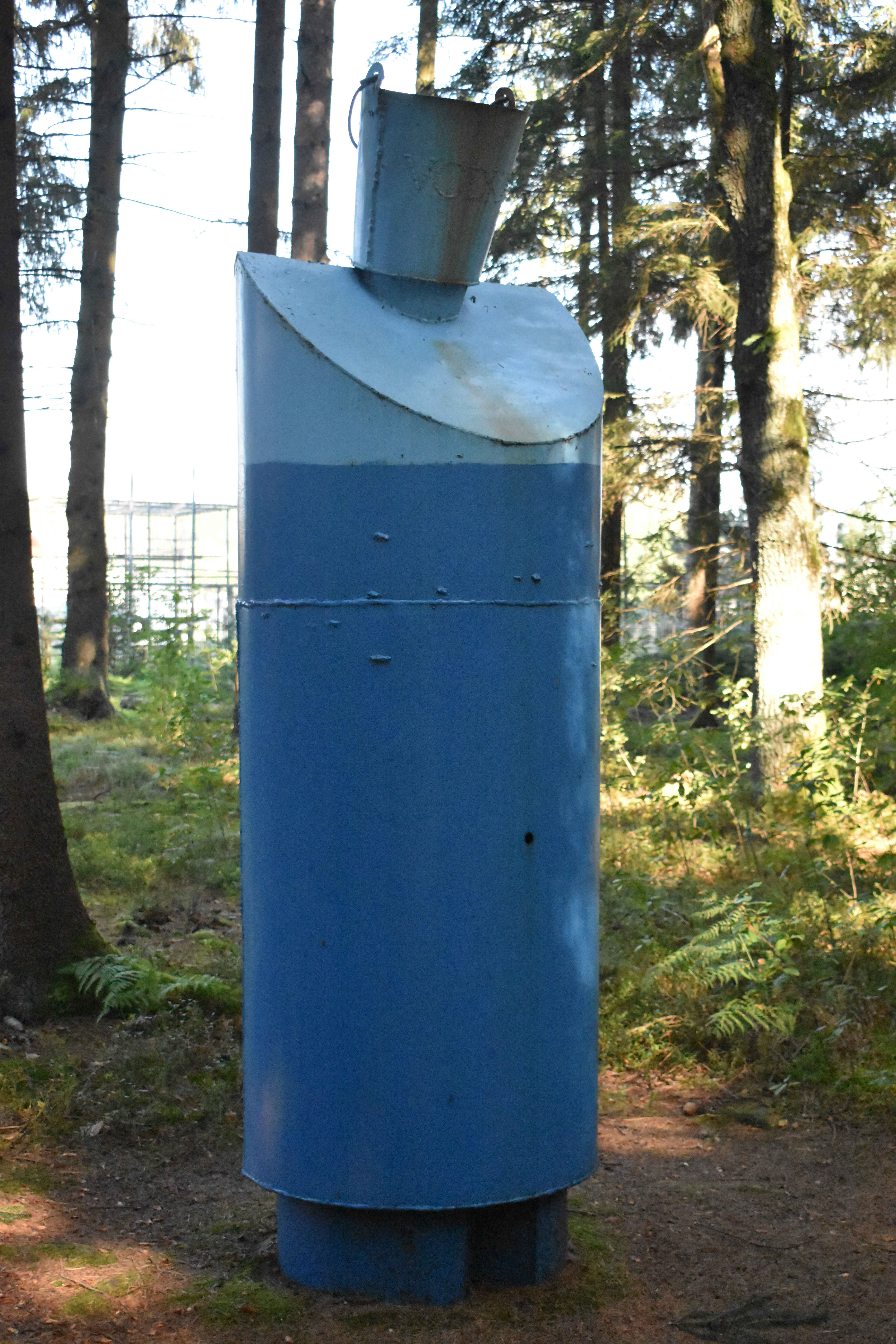
A slightly quirky feature was a tall blue cylinder with a blue bucket on top which was titled ‘Monument to a bucket of vodka’ and reflected the soviets love of the spirit.
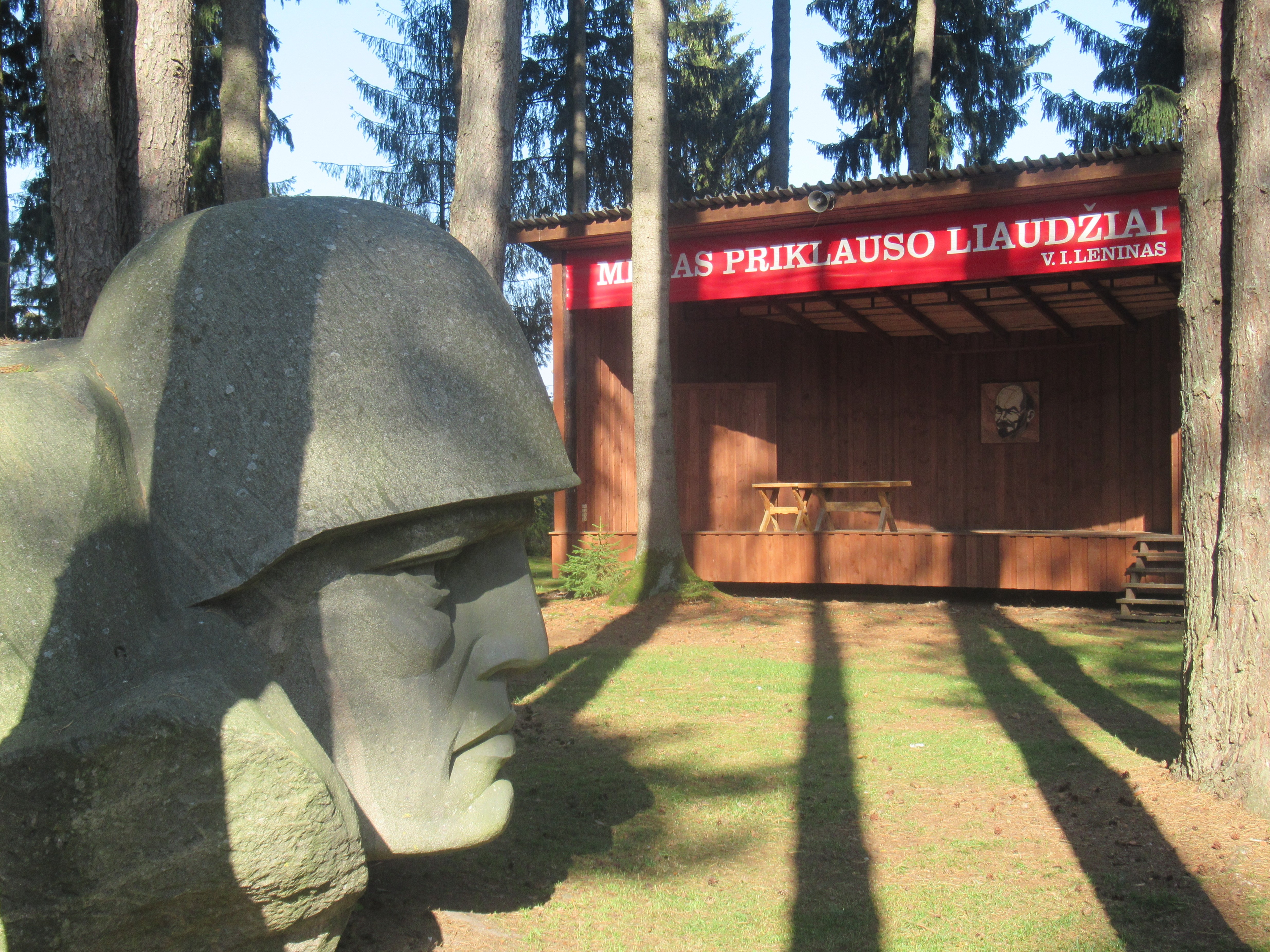
As well as statues, a replica of a Soviet style ‘cultural house’ or community centre bore the classic Soviet slogan ‘Menas priklauso liaudžiai’ or ‘Art belongs to the people’. Inside were artefacts from the 1950s and 60s, including medals, flags, portraits, newspapers, and propaganda materials. A rug bearing Lenin’s face could only be hung on the wall, to avoid people treading on him.
A recreation of a Club Reading Room from a secluded village reflected the forced elections to Soviet councils of various levels. As well as a plethora of Soviet books, the obligatory interiors included portraits of Stalin and Lenin, communist slogans and literature.
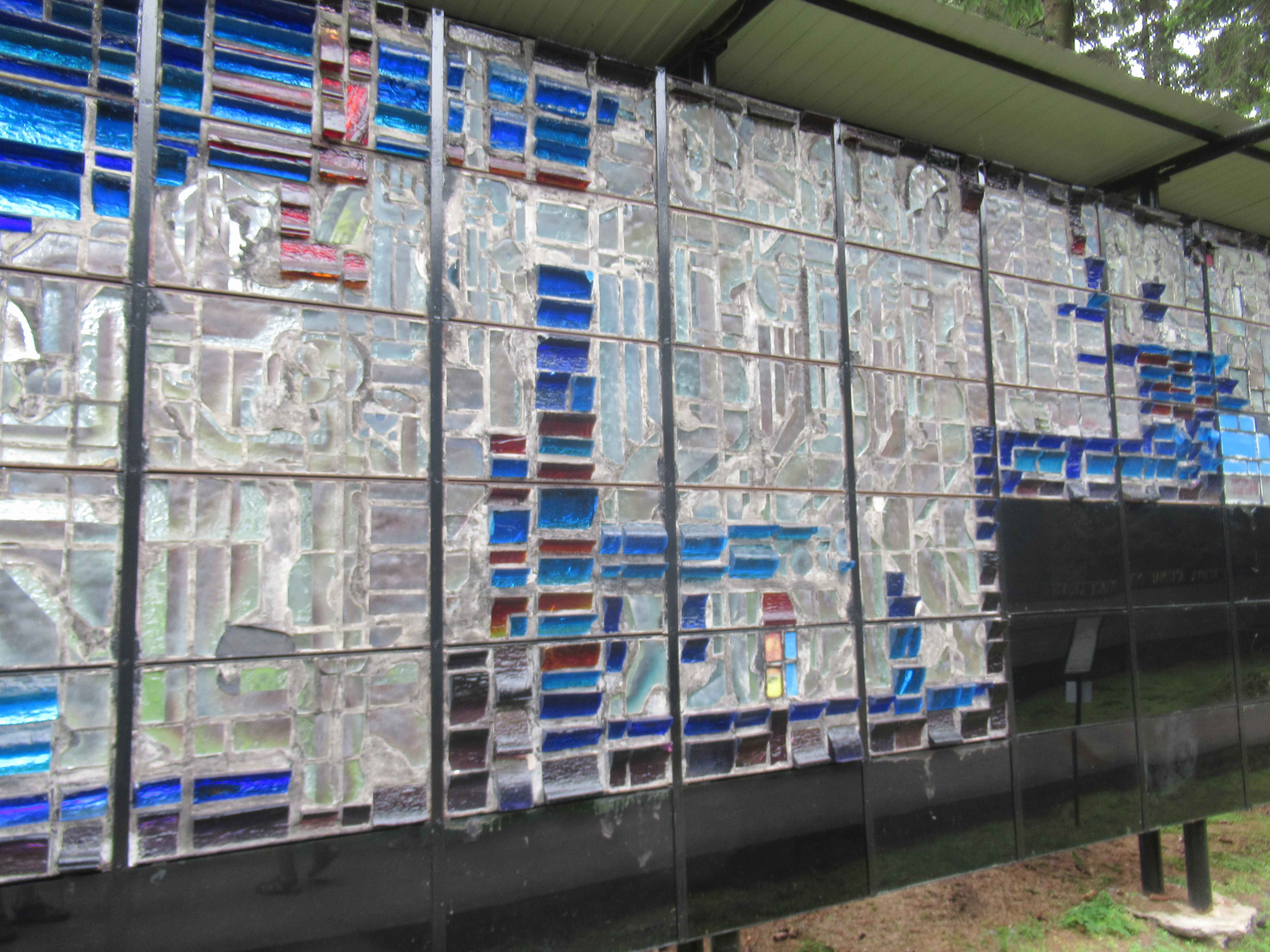
Original salvaged wall panels made from mosaics depicted heroic workers, farmers, scientists, and mothers in bright geometric styles. These were standard interior decoration in public buildings and designed to convey optimism and collective pride. Ironically two of the slogans often displayed alongside them, were ‘Peace to the World’ and ‘Labour is Honour’.
Near the closed café at the exit were two Soviet-era ‘vending machines’. The first was a bright yellow mobile kvass barrel: a type of trailer with a large tank used to sell kvass, a fermented beverage made from rye bread. The second which resembled a petrol pump, was known as a ‘saturator’ and dispensed plain or flavoured soda water and our guide told how he remembers buying water for either one or three kopeks.
The park also has a small zoo for children with amongst other animals, rabbits, goats, ostrich and kangaroo.