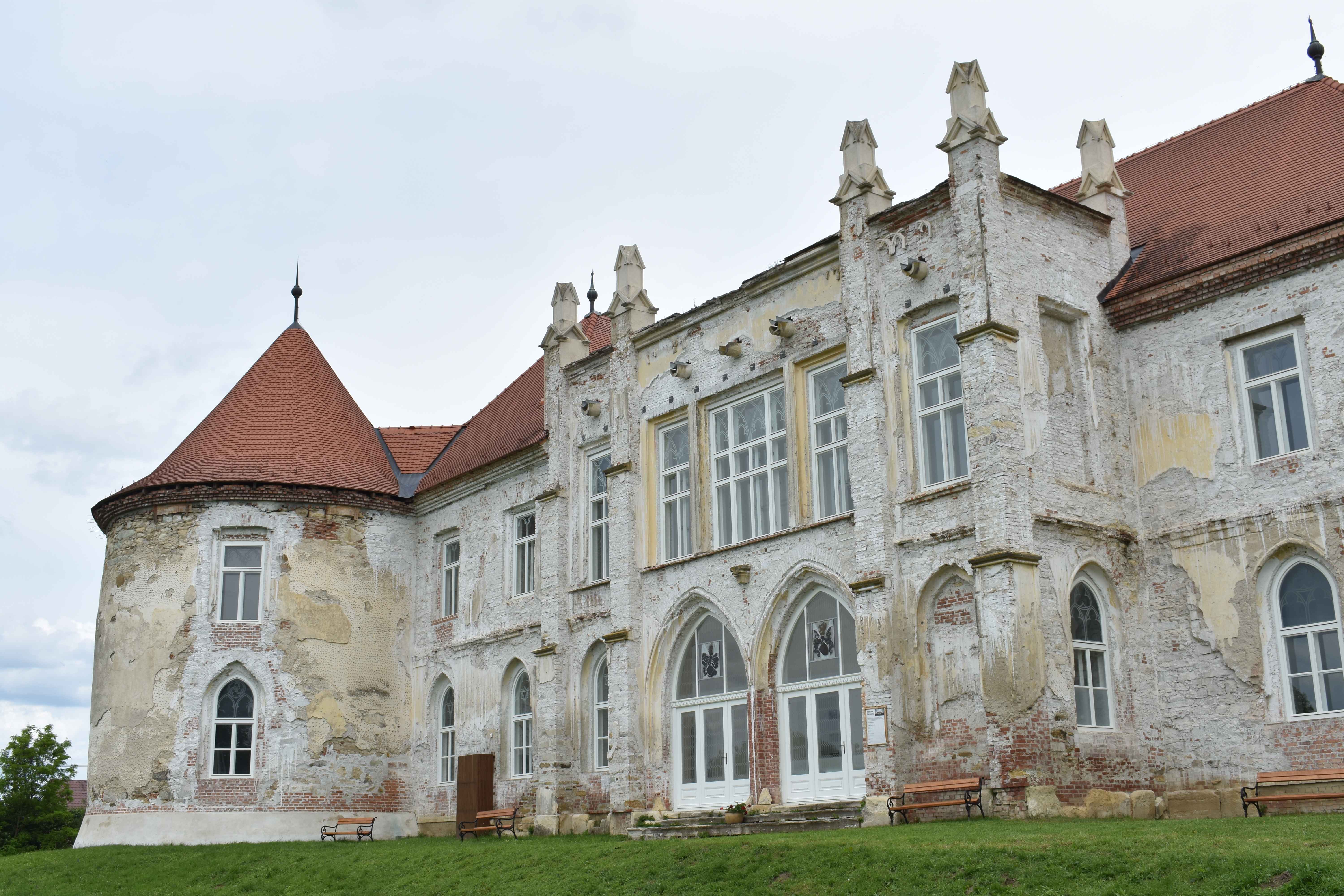

Bánffy Castle in the village of Bonțida is often referred to as the ‘Versailles of Transylvania’, and we visited on a day trip from Cluj-Napoca.
We paid 15 Lei each (£2.50) and were given both a map and information booklet in English. The castle has been owned by the Hungarian Bánffy family since 1387, and due to its successive renovations over the centuries, has a variety of architectural styles including Renaissance, Baroque, Neoclassical, and Neogothic.
During World War II, retreating German forces turned the castle into a field hospital, then looted, burned, and ravaged it, reportedly as retaliation against Count Miklós Bánffy’s anti-German stance. Then during the communist era, the castle was repurposed as a driving school, agricultural cooperative, and children’s hospital.
It was declared a historic monument in 1990 and included in the 1999 World Monuments Watch list of ‘100 Most Endangered Sites’. Since then, it has been undergoing extensive restoration.
What I particularly liked was that each building had a display board outside with a brief explanation in Romanian, Hungarian and English. This included photos taken between the 1890s to the present day, particularly focussing on the state of the building when communism ended in 1989.
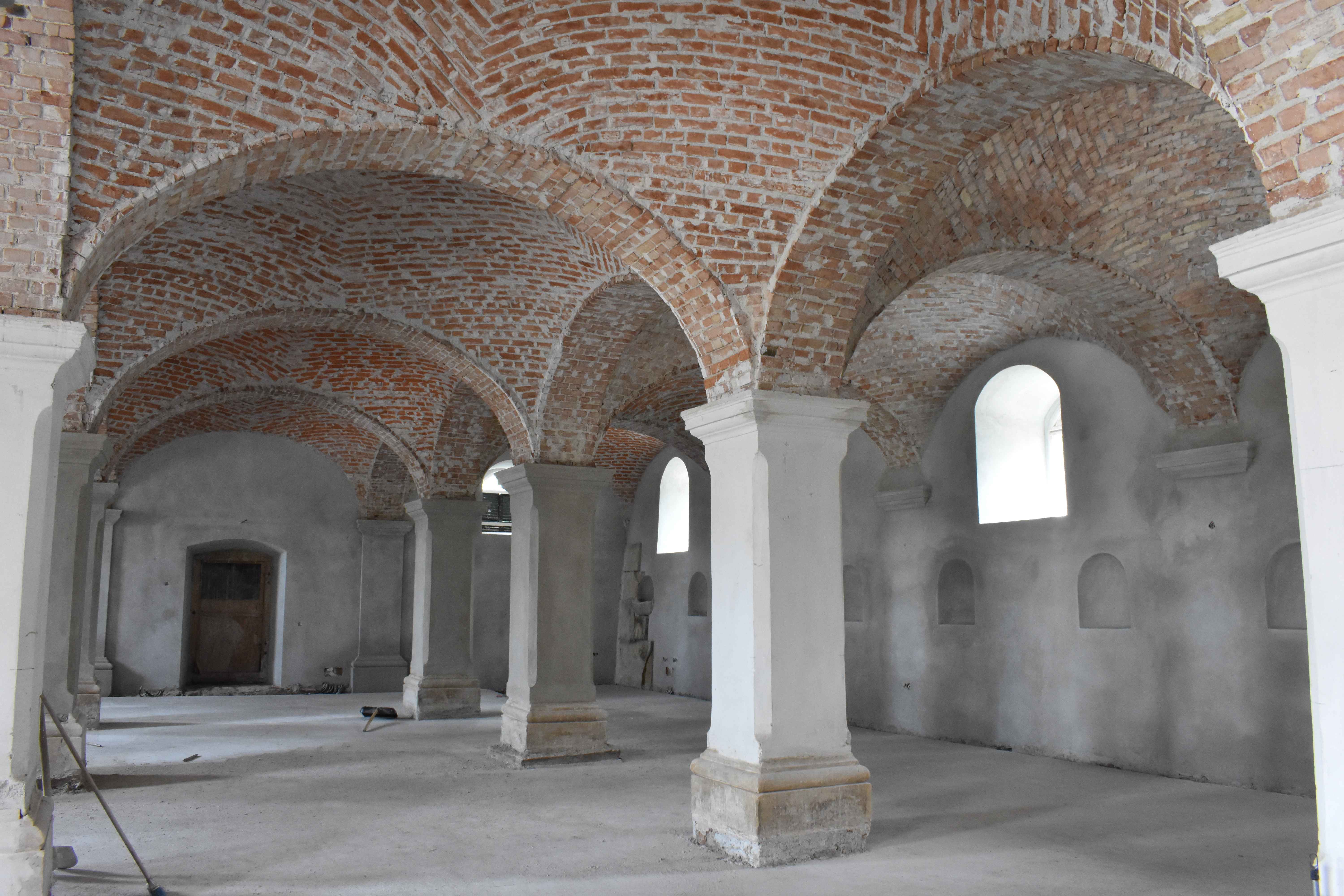
We began in the stables, constructed in the mid-1700s and built to accommodate 32 horses. During communism, they served as a workers’ club and even a mushroom farm which caused dreadful devastation. Whilst work was still ongoing, we could see former vaulted archers and stone pillars, and mangers adorned with shell motifs emerging.
The original kitchen, incorporated into the fortified outer wall, included a tower which served as storage for less perishable food and vegetables. By 2000, only the walls survived, but only four years later, 90% had been restored, and the Art Café opened on the ground floor. A Clock Tower was attached to the building with viewpoints, which it said, was already leaning shortly after it was built, and was now being supported by temporary scaffolding.
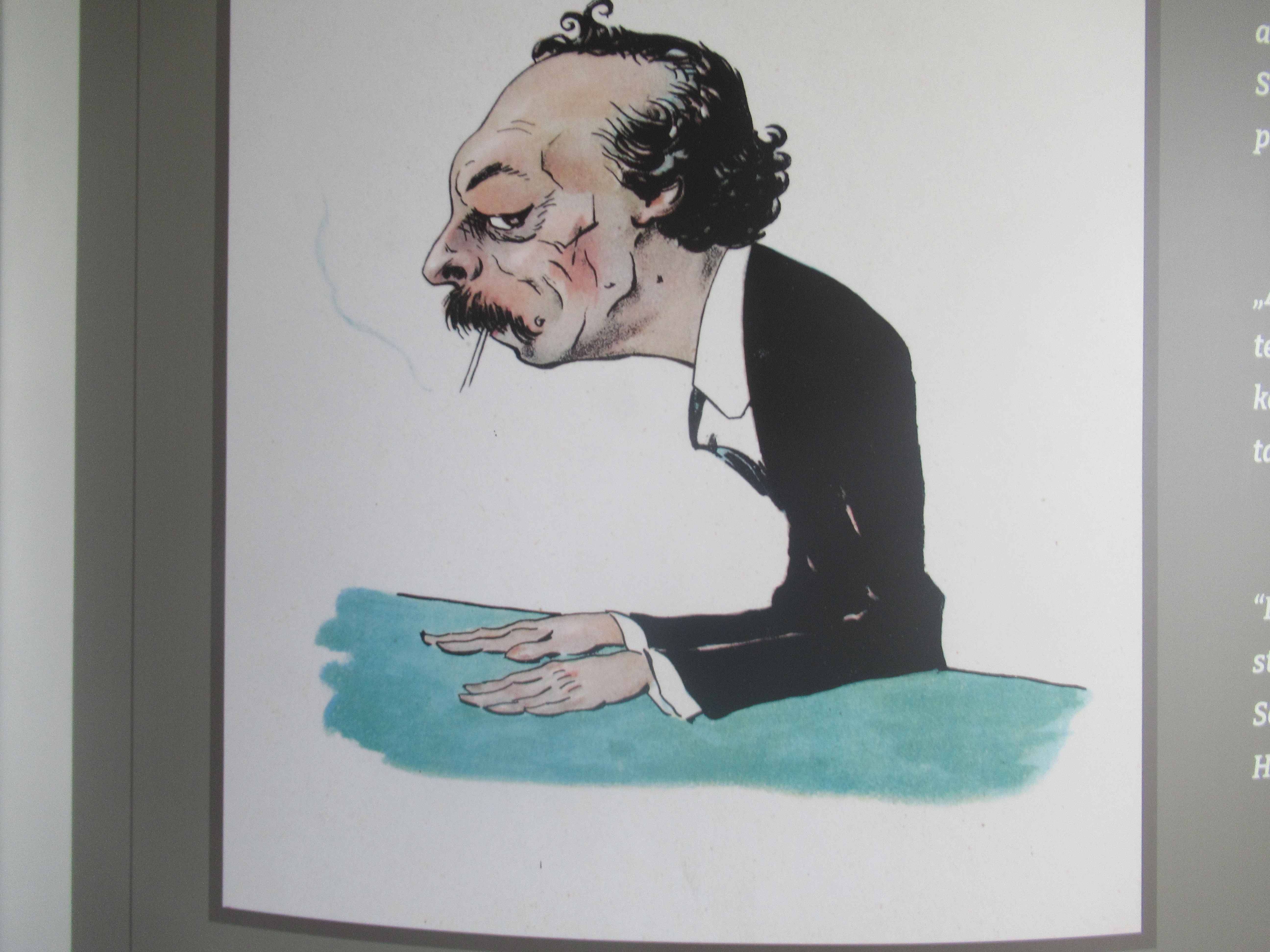
In the south wing of the main building, we found the Miklós Bánffy Museum, opened in 2023, and dedicated to the castle’s last private owner, Count Miklós Bánffy. It told of his multifaceted life, as a writer, artist, and diplomat.
The Park had trees and a lake with families and children playing and picnicing. We also heard about Electric Castle, a major annual music and arts festival blending electronic, rock, hip-hop, and indie, which has helped, along with grants, to support the restoration.