

Although we stayed three nights in the Romanian city of Cluj-Napoca, we spent most of our time sight-seeing in the surrounding district. However, at the end of our days out, we had some time to explore the city.
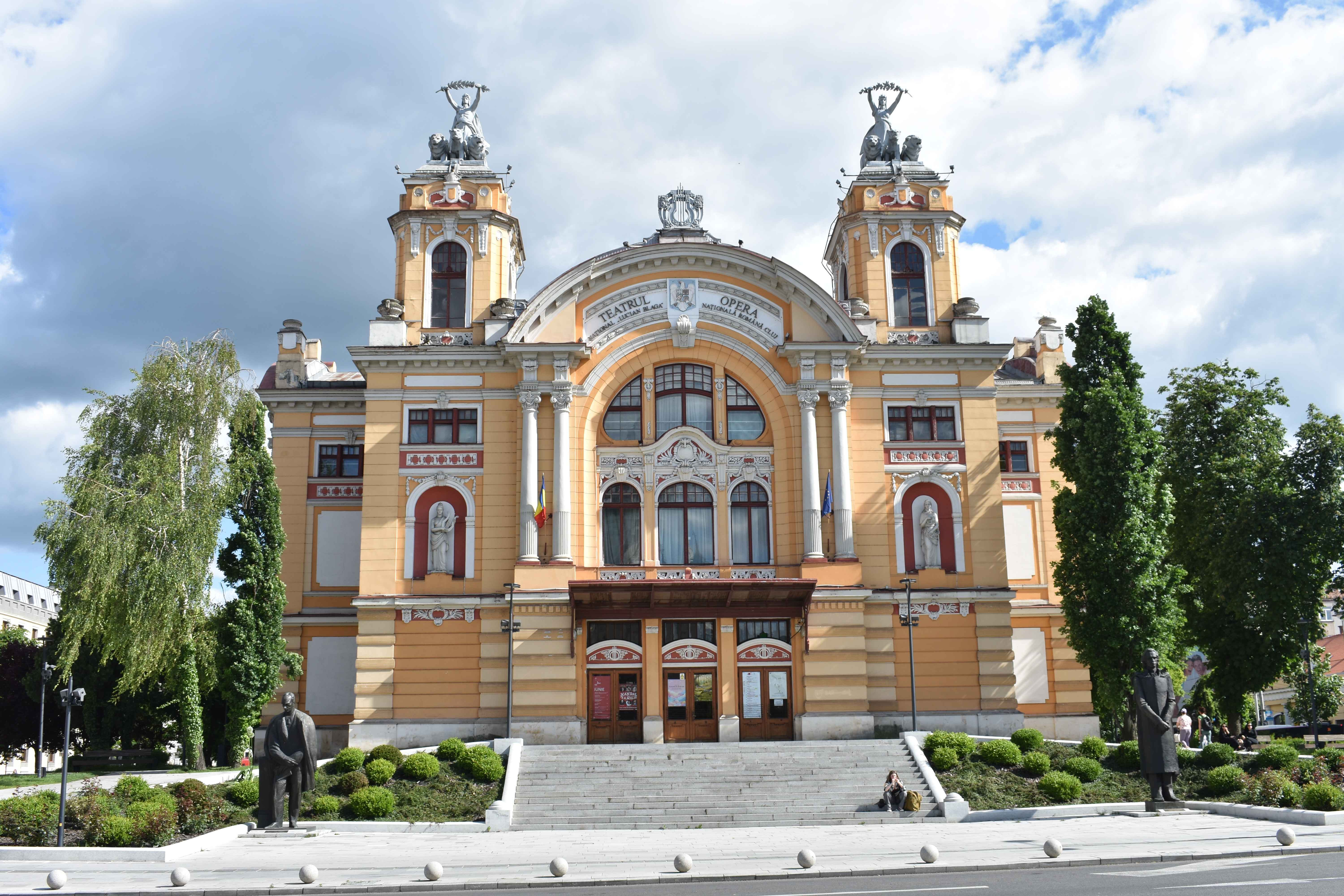
Piața Avram Iancu, one of the city’s largest and most important central squares, was originally a military training ground, pasture, and later a cattle and timber market before being transformed, in the late 19th century. We stayed at the Hotel Beyfin and as our balcony overlooked the square, we had a bird’s-eye view of the spectacular Orthodox Dormition of the Theotokos Cathedral, consecrated in 1933, and inspired in part by Hagia Sophia in Istanbul. A statue of Avram Iancu, the Romanian national hero, lawyer, and revolutionary leader, stood on a tall pedestal surrounded by bronze angels, with an ornate fountain at the base, which performed a brief light show at dark. Somewhat controversially, he had his back to the Cathedral and faced the Lucian Blaga National Theatre and the Romanian National Opera which were in the next square, Piața Ștefan cel Mare.
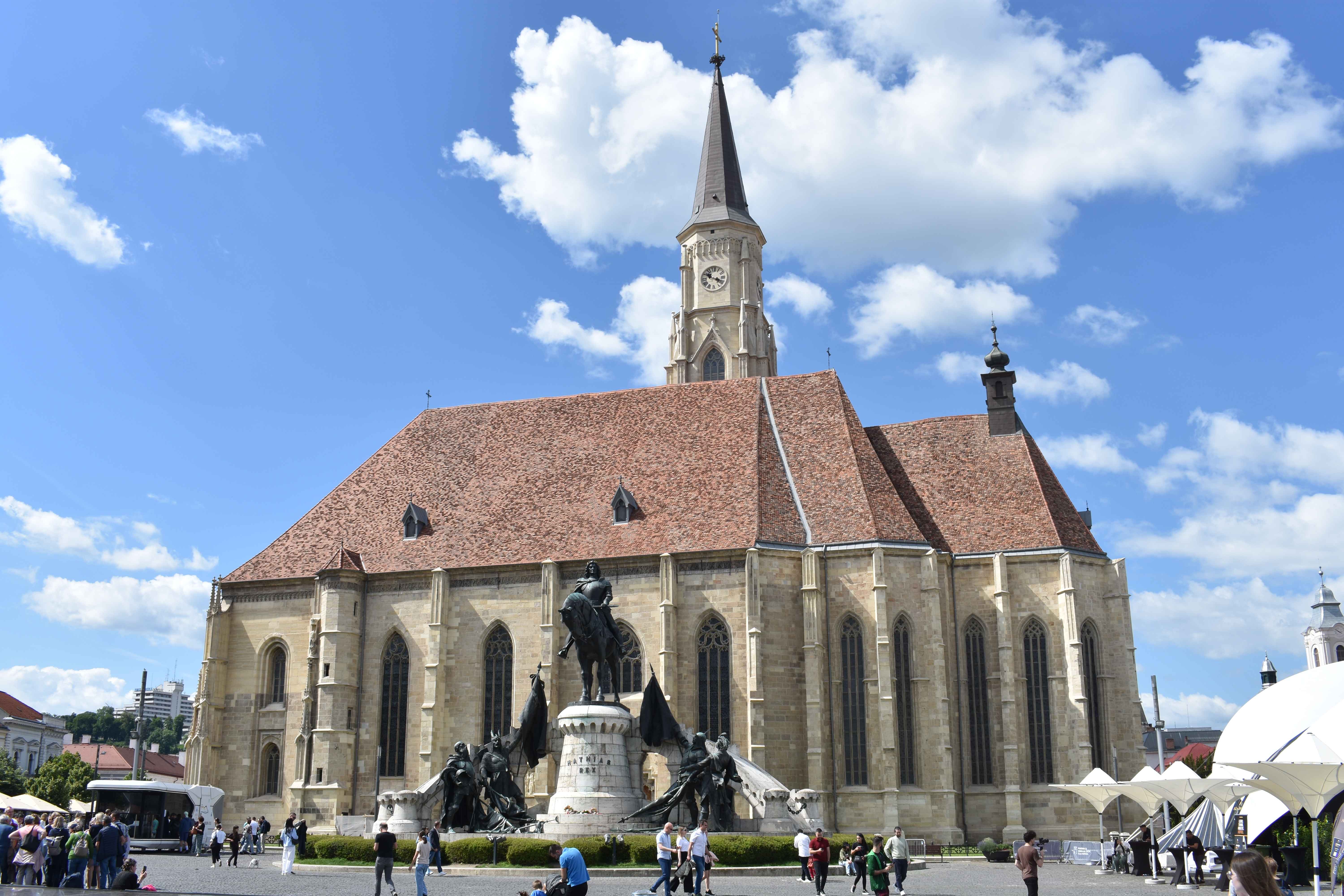
A short walk down Bulevardul Eroiler, past the bell-shaped Memorial of the Victims of Communism, took us to Piața Unirii or Union Square, with the Roman Catholic St. Michael’s Church. Unlike the newer Cathedral, this was built in the Gothic style in the 14th century, with an 80-meter tower built later in the 19th century. In front of this church, was an imposing equestrian statue of King Matthias Corvinus, one of Hungary’s greatest kings, who was born in Cluj in 1443.
The Fireman’s Tower, or Turnul Pompierilor, was our favourite sight and was stumbled on by accident. We were ambling down the side of the rather dried up Canalul Someşul Mic, a man-made channel running through the city, and spotted people at the top of a tall tower, which we tracked down. On arrival, I was amazed there was no charge and, even more surprised to find a modern lift in addition to the circular metal staircase. As well as providing great views, the platform had a fabulous bronze map of the city so we could identify the surrounding landmarks. We walked down the 146 steps, which had walls adorned with art and fireman’s memorabilia. We later discovered that the 30m cylindrical tower was one of the defensive towers of the medieval fortress and had been built in the 15th century by the weaver’s guild as each guild was responsible for a section of the city walls. However, it was repurposed in the 19th century as a watchtower for the local fire brigade, as before modern technology, the firefighters would climb the tower to spot fires, and coordinate firefighting efforts.
There were other areas where we could see parts of the original medieval fortifications. This included Tailors’ Bastion, now a museum and cultural venue, whilst other fragments and foundations had been cleverly integrated into new buildings.
The city was full of interesting buildings with styles from all the centuries: Gothic, Renaissance, Baroque, Renaissance and Neoclassical, and we enjoyed just wandering and admiring the range of architecture.