
I have two vivid memories of our visit to Trinidad’s Pointe-à-Pierre Wild Fowl Trust: eating buss up shut in the rain, and a tour with a fabulous, knowledgeable young guide.
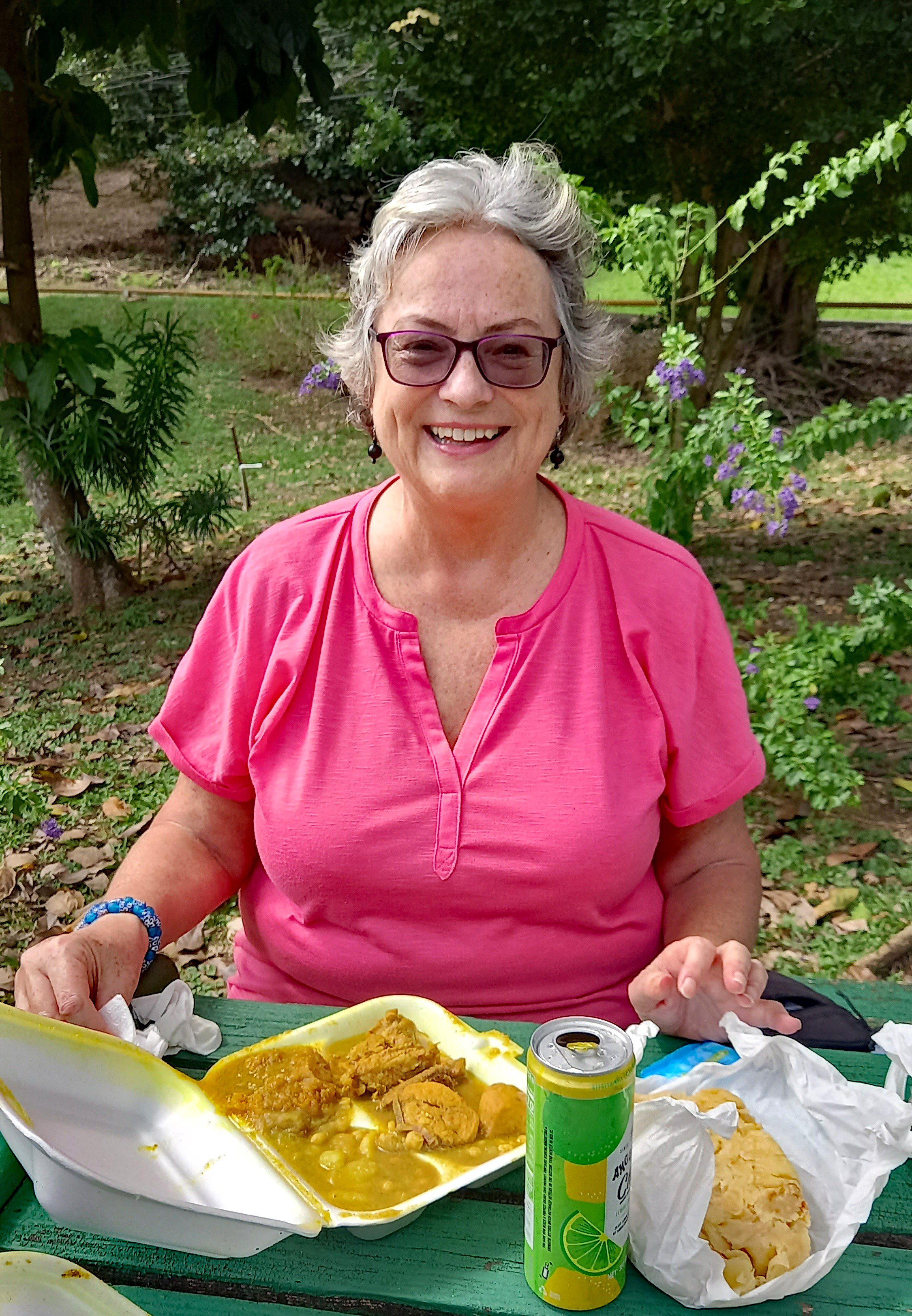
Having visited the Pitch Lake in the morning, we stopped in the nearby town of Marabella at Mona’s Roti Shop to collect our takeaway lunch. On arrival at the trust, we found a bench in the grounds and had opened our Styrofoam boxes containing a rather runny goat curry, Trini channa and aloo, or chickpea and potato, and choka, roasted, mashed up pumpkin. We were shown how to scoop up the dishes with the buss up shut, which literally means tattered shirt because the flaking paratha-style roti, is squished up and crunched together, almost like a torn shirt. Halfway through this very messy but delicious lunch, the heavens opened, and we quickly dashed for cover in the visitors’ centre.
Having got cleaned up, we met our guide for our tour of what is the only wildfowl trust surrounded by an industrial plant, the Petroleum Company of Trinidad and Tobago. Founded in 1966, the trust aims to conserve wetlands and waterfowl, and contains two lakes and over 30 hectares.
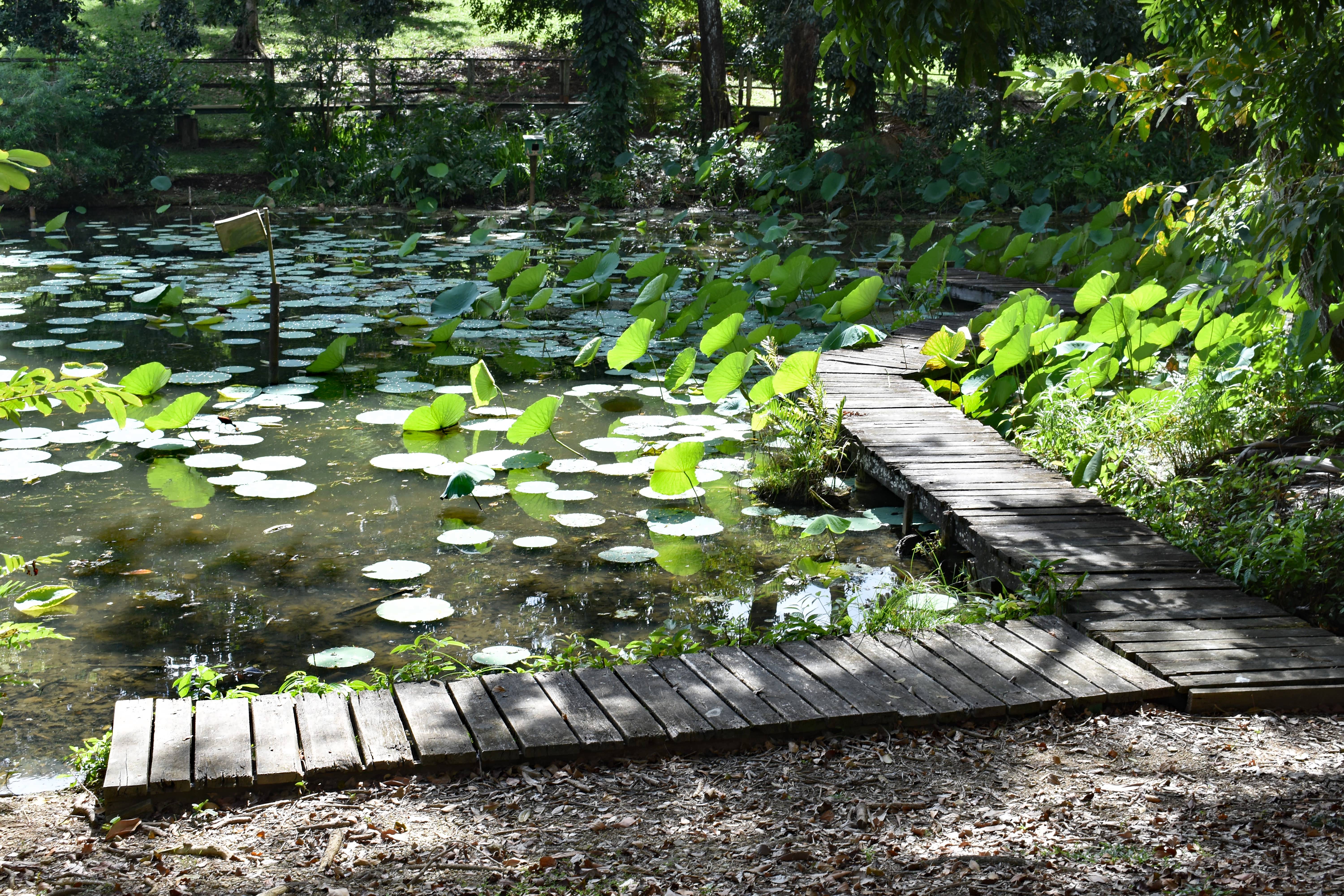
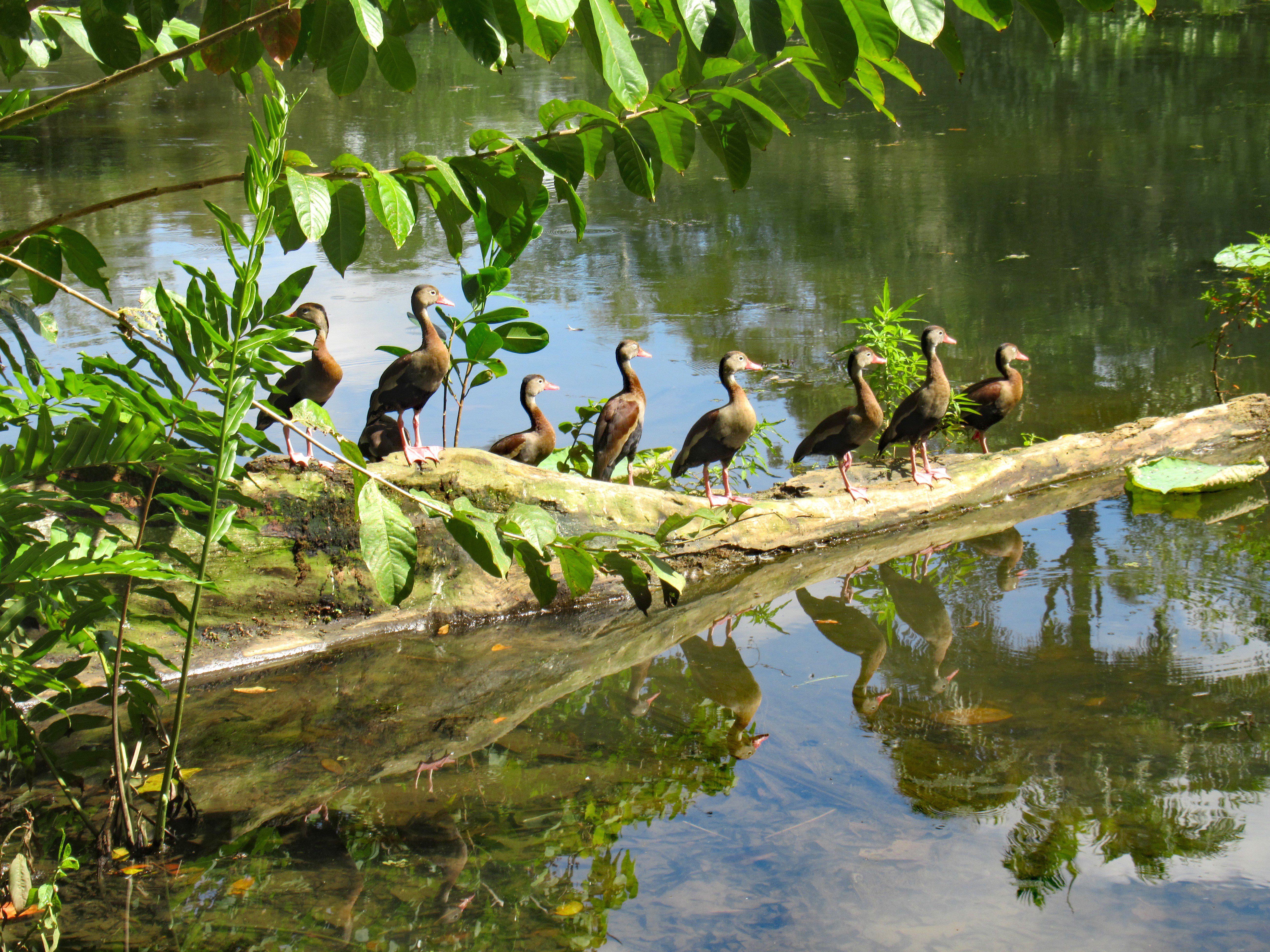
We followed a wooden walkway around a lake, firstly detouring onto a jetty surrounded by lotus flowers. We saw the wattled jacana, known as a Jesus bird, as it appears to walk on water, and a line of black-bellied whistling ducks where the phrase ‘getting your ducks in a row’ came to mind, as we were told that their call, colour or markings often provides a clue to their species. We met Gill the caiman who got into a fight over a female and unfortunately lost the fight, his girl and a good section of his tale. As this means he cannot swim he is living out the rest of his life at the trust. An aviary contained incredibly loud, vibrantly coloured macaws and we learned that the difference between a parrot and a macaw is the latter has longer tail feathers, and that the only way to determine whether a bird is male or female is through a DNA test. Having come across Muscovy ducks, the chat turned to how Trini’s love a duck curry and how the male with the red wattle, can push up a Mohican hairstyle if threatened.
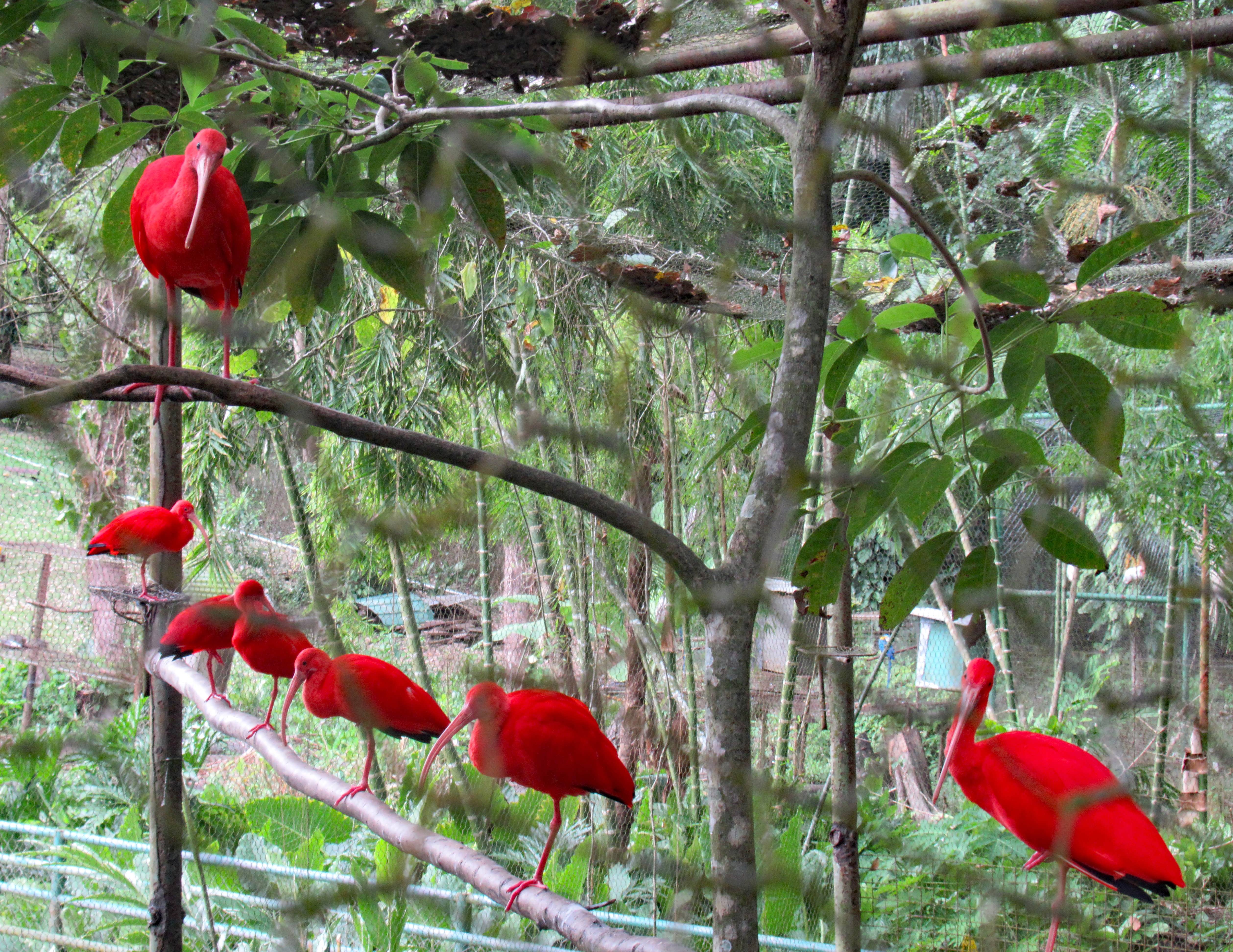
Having visited the Caroni Swamp and seen Trinidad’s national bird, the scarlet ibis, at a distance, we were delighted to see them close up as they operate a breed and release scheme in order to prevent them from becoming endangered.
On leaving, wheelbarrows full of stale bread were being delivered and we heard how additional nutrients have to be provided in order to provide a balanced diet.
It was a lovely walk, taking around ninety minutes, and we were very impressed not just with our young guide’s knowledge, but the way in which she imparted facts in an interesting and amusing way.