
We visited the Žemaitija National Park on a day trip from Klaipėda. The protected area in western Lithuania, was established in 1991 and covers over 20,000 hectares.
Our first stop was the town of Kretinga, one of the oldest in the park, and founded by Jan Karol Chodkiewicz in 1609. Though a nobleman and magnate, his fame came from his military genius and unorthodox tactics, often winning against much larger enemy forces. He built a manor house and invited the Franciscan monks to settle. The Church to the Annunciation had a tall tower, incorporating a monk, and a carved wooden door with both the face of Chodkiewicz and his wife on one side, and his children on the other. The church, and the adjoining Franciscan Monastery, were circled by 14 small white chapels each representing one of the Stations of the Cross. As the church served both parishioners and monks, the former faced the very grand altar, whilst the monks were restricted to a side view from their monastic stalls. The family crypt was underneath the altar, allowing them to remain eternally close to the church’s heart. At the back of the church, we found a Marian Shrine, or sacred place dedicated to the Virgin Mary, which was modelled on Lourdes, reflecting the town’s Catholic devotion. We also saw what was known as the ‘Lithuanian American House’. This was built during the interwar period, by Lithuanians living in the United States who pooled resources to buy the property intending it as a home for themselves when they returned to Lithuania. However, during the Soviet Occupation it was used by the KGB as an interrogation site.
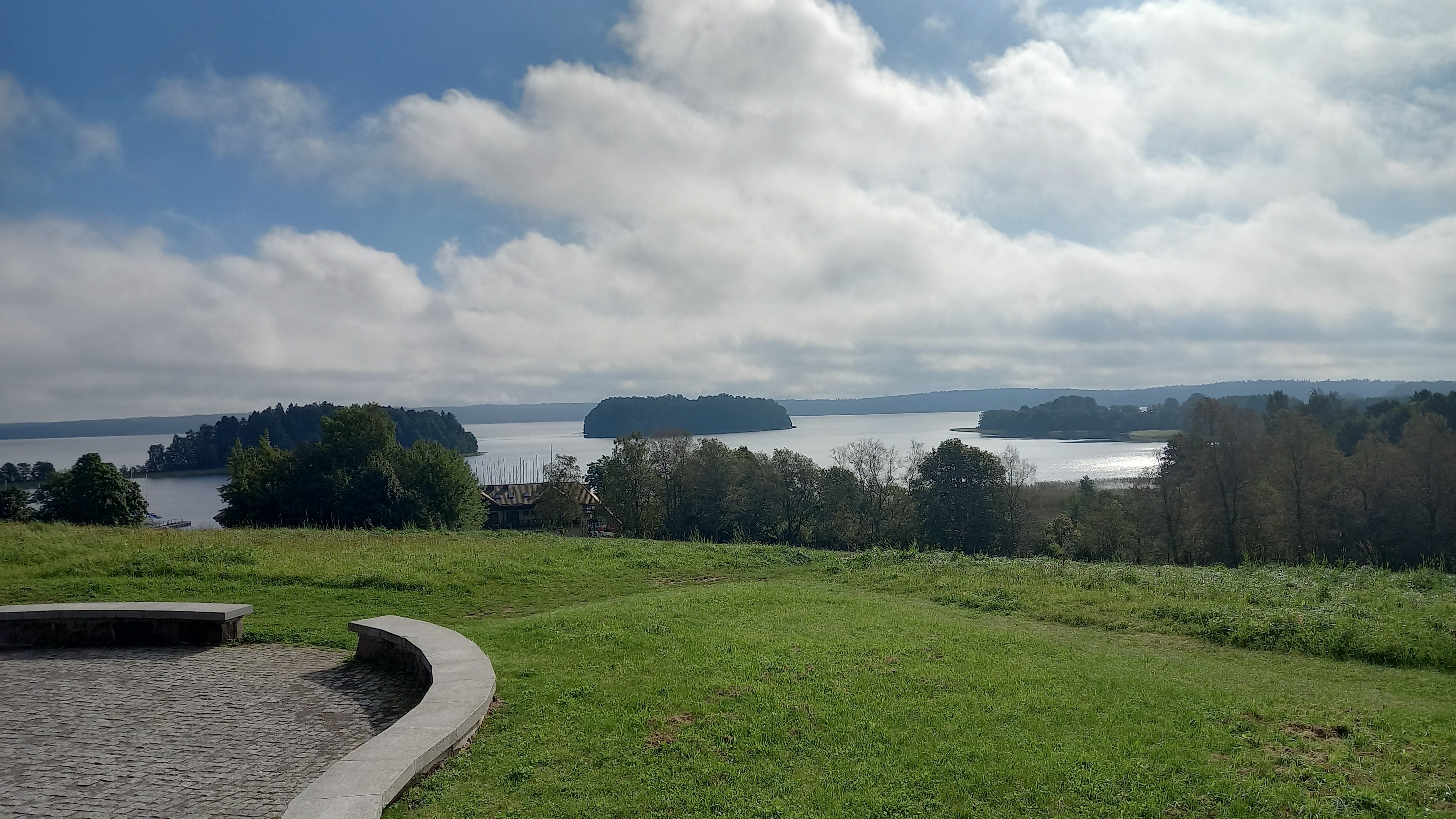
The park’s centrepiece is Lake Plateliai, the largest and at 47m, the deepest lake in the region. On the short walk to the shore, we passed a ‘nest box tree’ where several nest boxes for various birds had been mounted on a dead tree trunk. At the lake, we found a large viewing area with seats and a map highlighting a part of the lake where a manor house once stood, as part of the lake was originally separate from the mainland. Later, a bridge was constructed, connecting the area of the former manor to the mainland, which eventually became the site for the town of Plateliai, the largest in the park.
In the centre of Plateliai was a shrine with a sculpture of St Florian, the Patron Saint of Firefighters who was a protective talisman in a town full of wooden houses. The Church of Saints Peter and Paul is one of the oldest surviving wooden religious buildings in Lithuania and was constructed using squared logs (logs which have been sawn to create flat uniform surfaces). A separate wooden bell tower was of a much later date. The main and side altars were also made of wood but painted to look like marble.
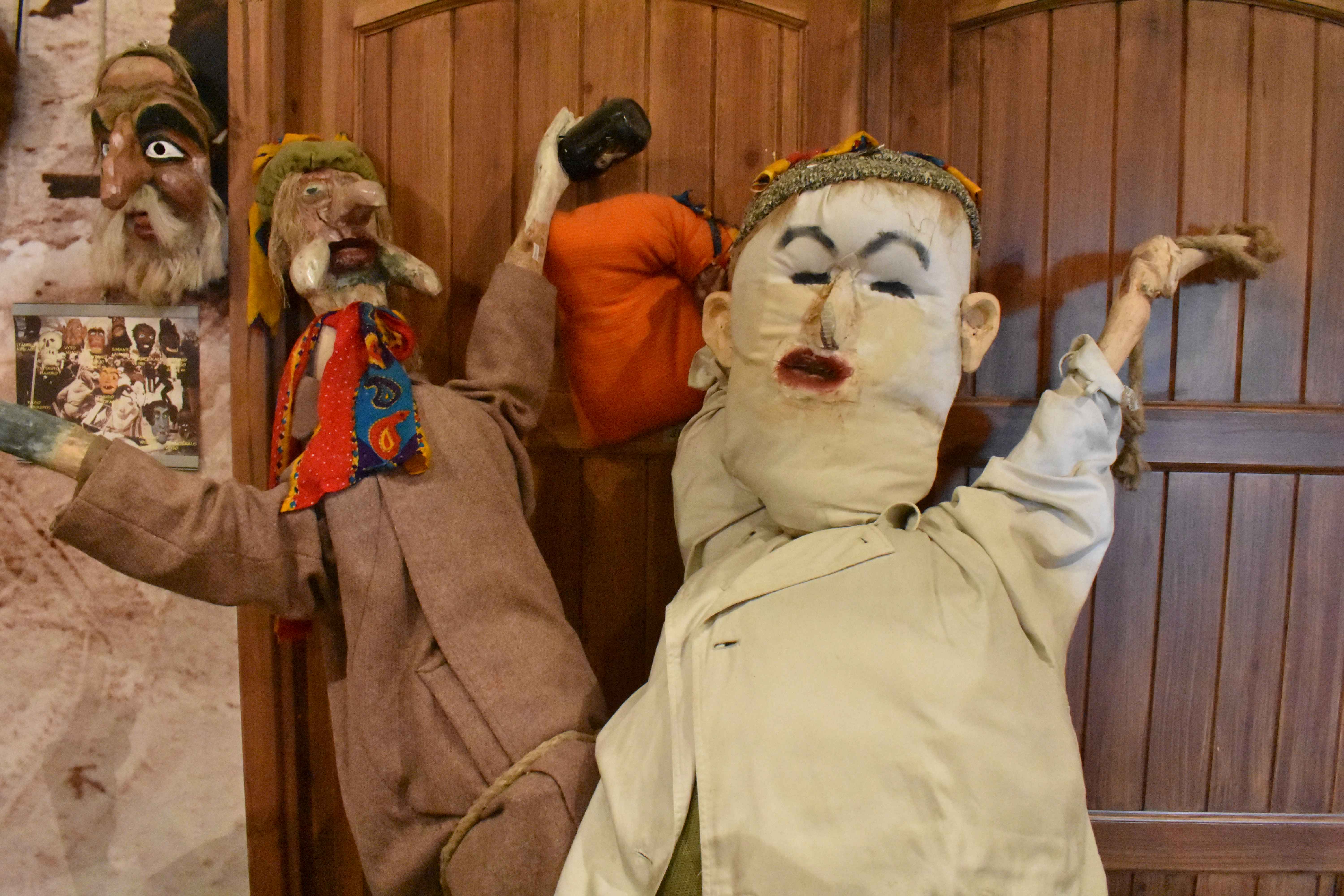
In the former stables of the Plateliai Manor we visited an exposition with 300 traditional Shrove Tuesday masks, said to be the only one in Lithuania. The handmade masks would be used at a festival which drives out winter and evil spirits and welcomes the coming of spring. Two common characters featured in the masks were Lašininis or Fat Man, who symbolized winter by wearing fat, heavy clothing, and Kanapinis, or Hemp man who dressed in hemp or lighter clothes to symbolise Spring. A separate historical ethnographic exhibition covered the life, customs, crafts, and entertainments of the local people.
In Beržoras, we visited the Chapel of St. John of Nepomuk, considered a protector from flooding and drowning as it as located near a lake. As well as a separate bell tower, there was a mortuary chapel or karstinė in the grounds. This is where the deceased were kept prior to burial as the local clergy or community considered it inappropriate to store bodies inside the church for long periods.
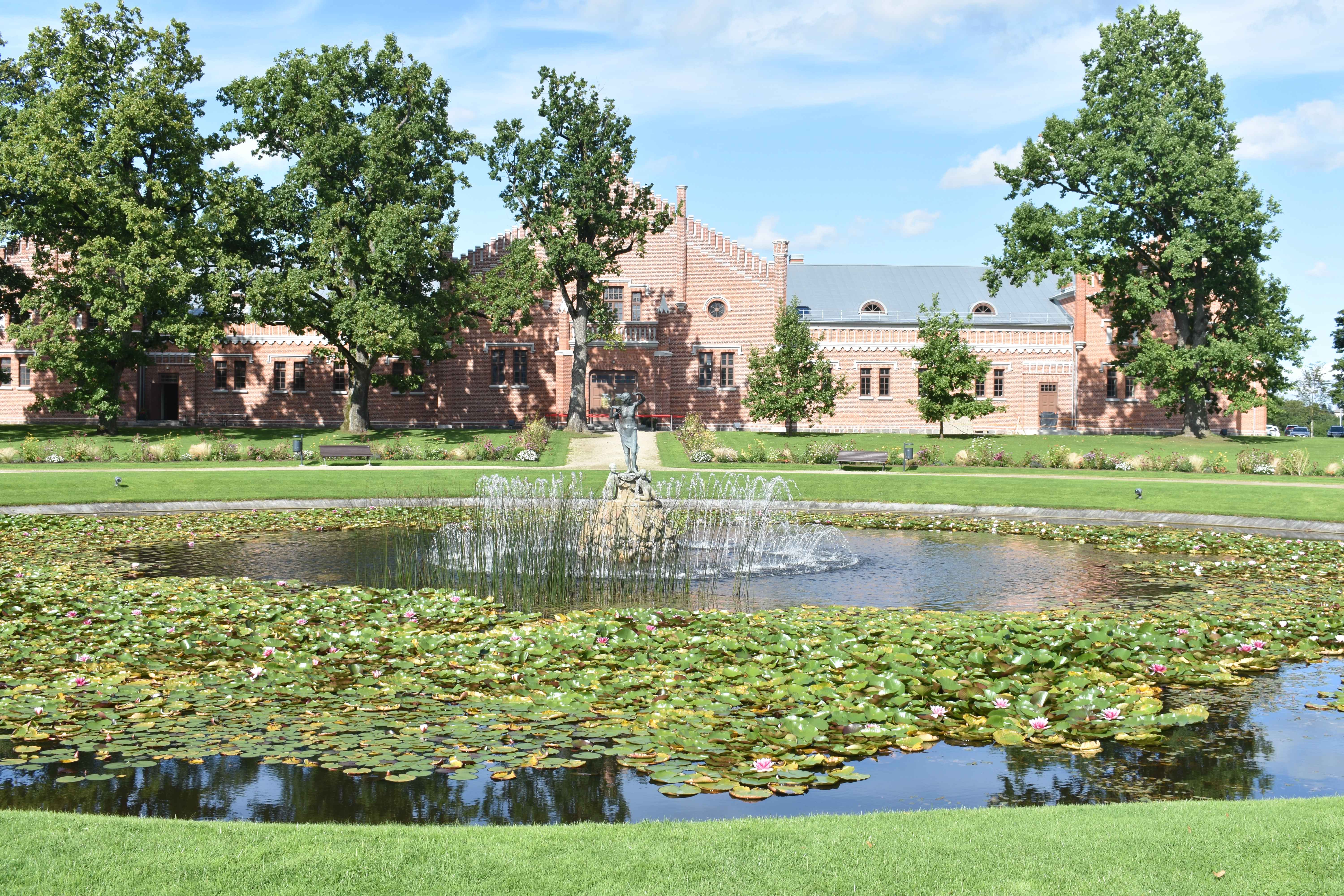
Our penultimate stop was at Plungė Manor in the town of the same name. Due to its ambitious scale and formal setting, it was often known as the ‘Versailles of Samogitia’. In contrast to the white house, the 12m clock tower was constructed of red brick and was designed to be seen from all angles in the surrounding parkland. In front of the manor house were ornate gardens and a large fountain in the middle of a pond, featuring sculptures of Aphrodite and three cupids.
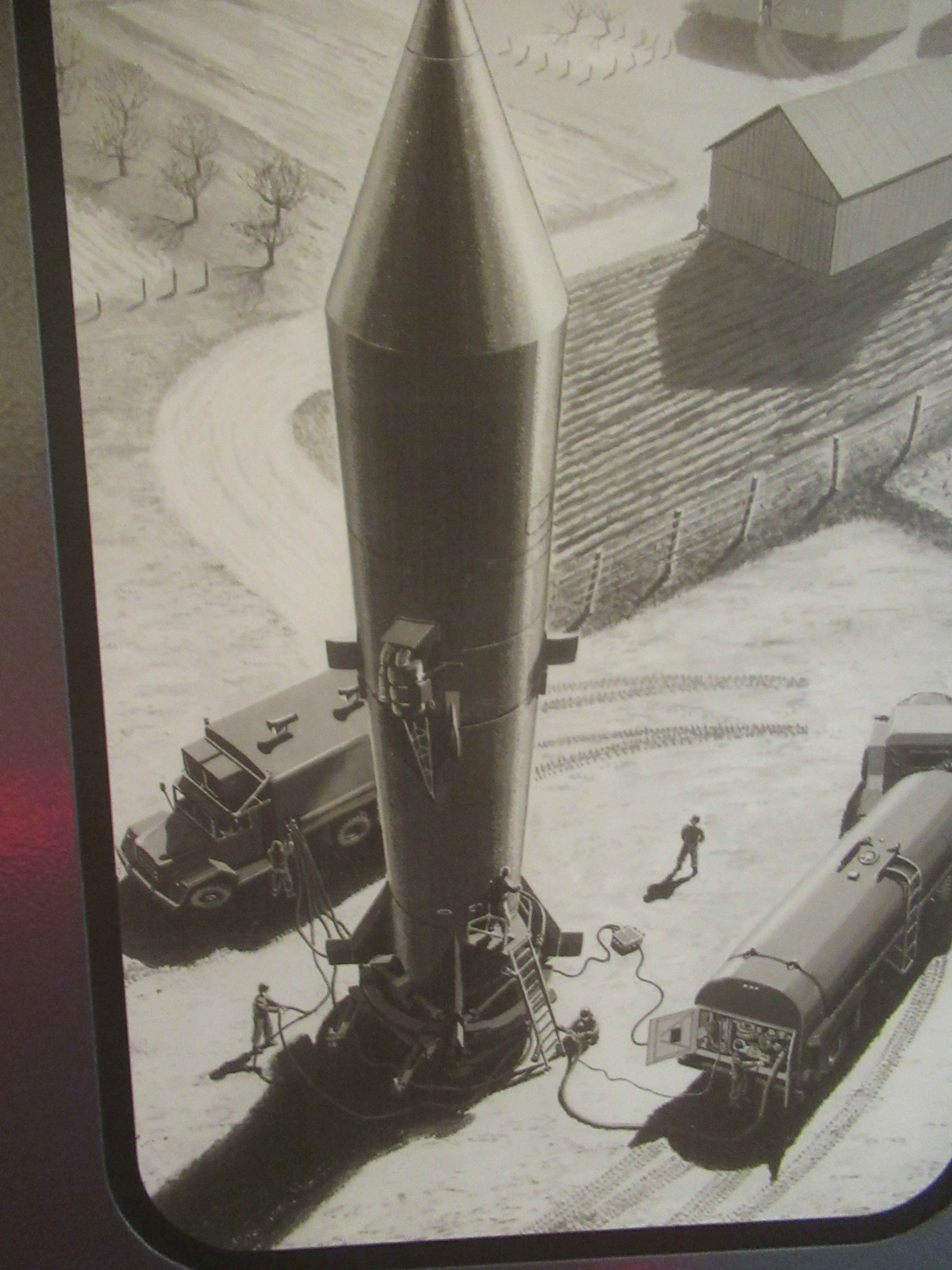
Our day in the national park ended with something completely different: a Cold War Museum, on the former Plokštinė missile base. This was a secret Soviet facility constructed between 1960 and 1962, which until 1978, housed four SS-4 medium-range ballistic missiles. Each was armed with 2-megaton thermonuclear warheads aimed at Western Europe. Now a museum, we had the place to ourselves as we explored exhibits detailing Cold War-era military technology, propaganda, and daily life under Soviet control. As we looked down into the net-covered huge missile silo, we reflected on how the world could have changed.