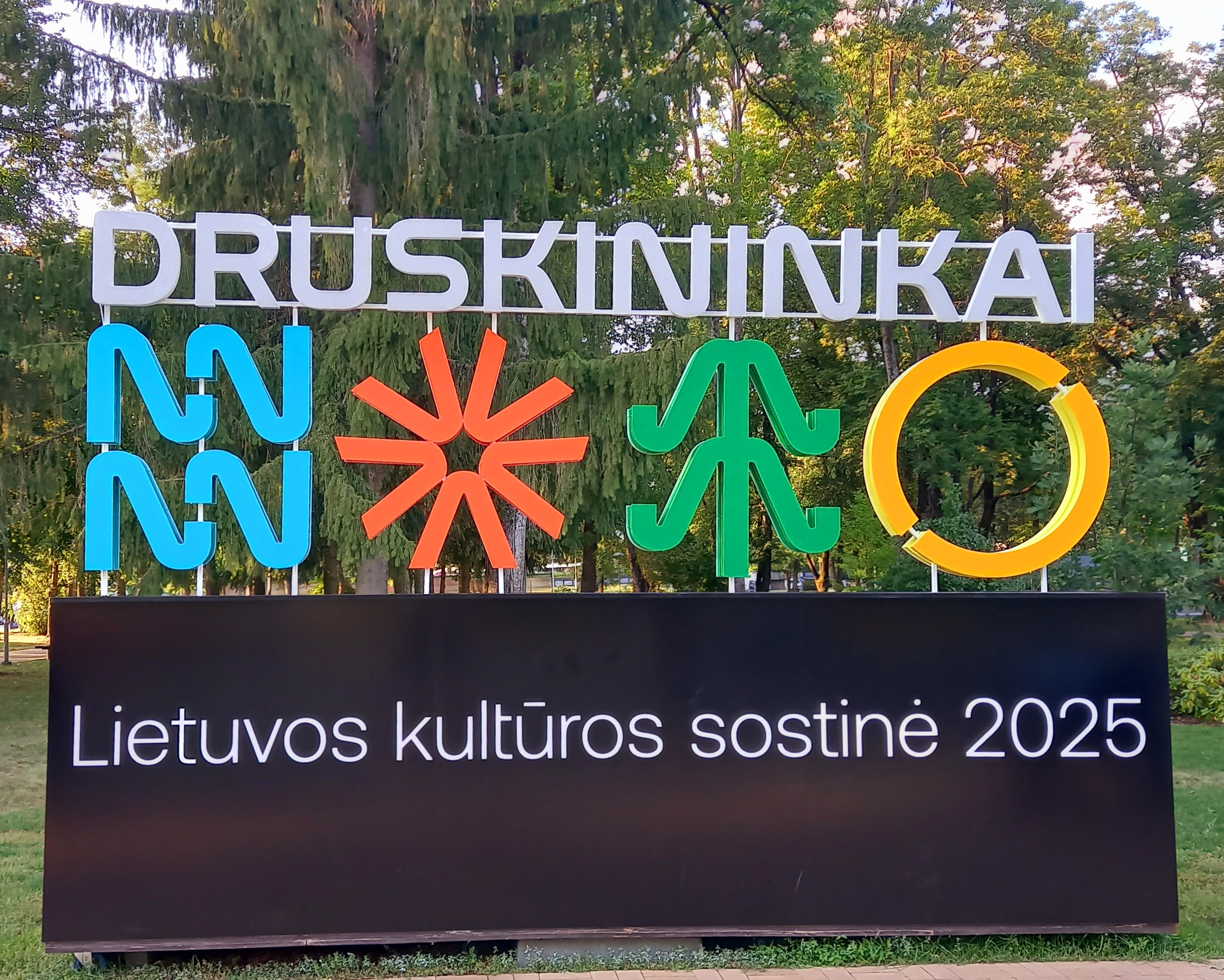



The small city of Druskininkai in southern Lithuania, is only 8km from the border with Belarus. Having been a Lithuanian Capital of Culture in 2015, the official logo, featuring colourful shapes inspired by the water, nature, and harmony it is known for, was still in evidence.
Druska means salt, and the city is famous for its mineral springs. During the communist regime, workers from across the Soviet Union would be sent to sanatoriums in places like Druskininkai. The state-subsidized rest and treatment was part of the Soviet system of promoting workers’ health and productivity. I suspect they were a far cry from the luxury spas that are prevalent today in the city.
Although not staying in a spa resort, we sampled the waters. At Beauty Spring, next to the Nemunas River, water flowed from a borehole over 300 metres deep, with a sculpture depicting two nymphs holding hands and forming an arch over it. The very salty water was not recommended for drinking, and we were advised to simply wet our lips. Mineralinio Vandens Biuvetė was a small pavilion with stained-glass windows depicting abstract patterns of water, sunlight, and plants, said to ‘transform the act of drinking mineral water into a small, ritualistic experience of beauty and wellbeing’. Here water flowed from a mushroom-shaped fountain with taps which allowed us to taste three waters ranging in levels of saltiness, and all designed to cure a different ailment.
As well as spas, the city, often known as Lithuania’s greenest, has parks and forests with cycling and hiking routes, many of which are paved and accessible for all levels. A trail took us past the quiet, tree-shaded Russian Orthodox Cemetery and an Aero-ionotherapy Pavilion. Here were areas for sunbathing and various pools, where the concept is that clean forest air, enhanced with negative ions, in combination with water and air exposure, supports wellness.
As well as spa resorts and natural beauty, the city is noted for its unique open-air art. This included a series of six ‘Artistic Memorial Benches’ honouring cultural and historical figures connected to the city. Unfortunately, the only one we found was near the memorial museum dedicated to Jacques Lipchitz, a Lithuanian sculpture of Jewish origin who was born in Druskininkai. Whilst many of the former Jewish residents emigrated to Israel, they visit regularly and at the site of a former synagogue, a monument was draped in an Israeli flag.
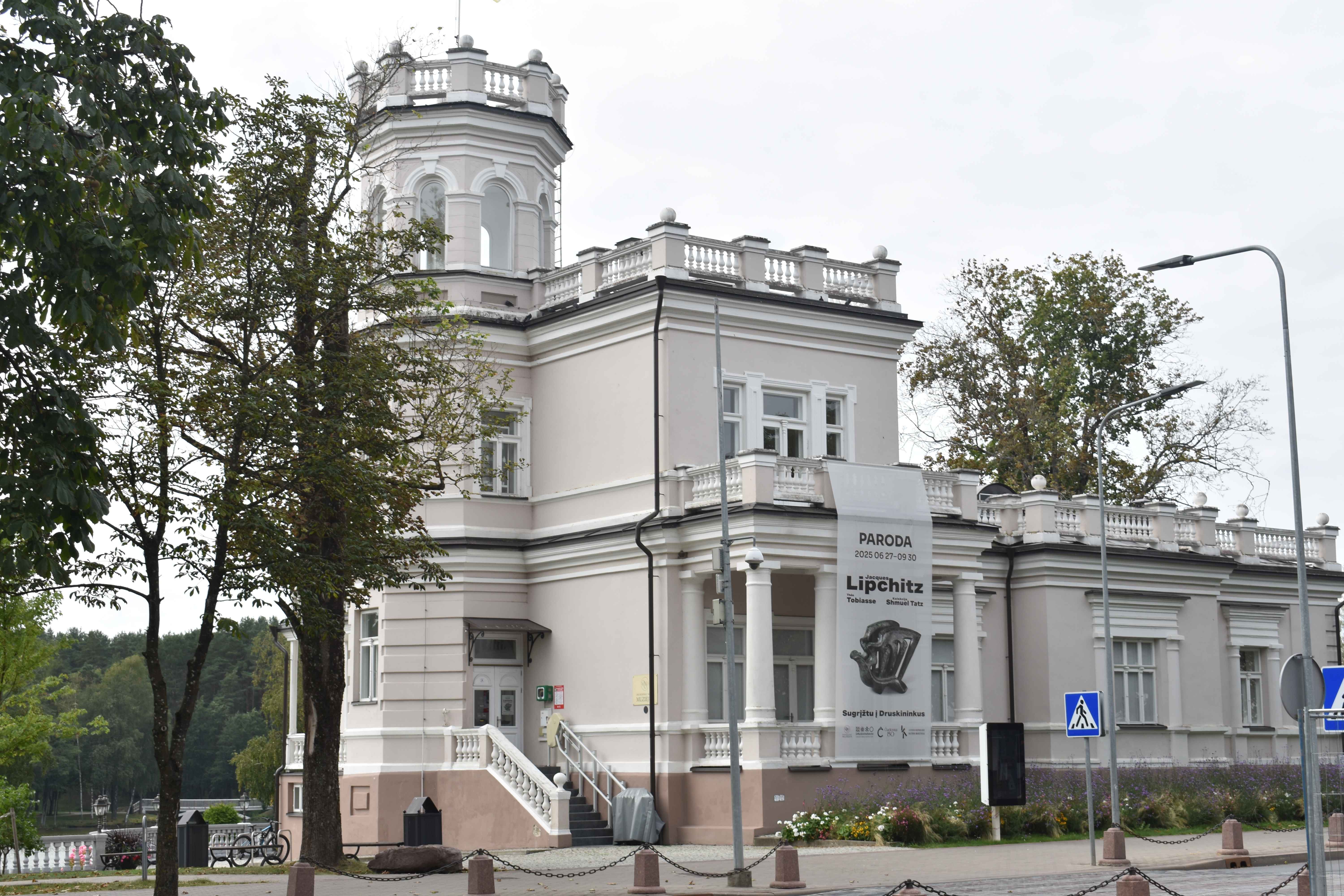
The City Museum was a grand white building on the lake shore and as well as old photographs and artefacts, bronze sculptures by Lipchitz were exhibited. A video was playing on a TV and as we were the only visitors, a helpful guide provided two chairs, so we felt obliged to spend longer than we wanted as Lipchitz chiselled out pieces with a huge knife and then stuck other pieces on. A staircase lined with Russian satirical sketches led to two rooms: one with salt and pepper cellars, brigaded together under various themes, and a second with vessels used for drinking the mineral waters.
Another famous son of the city is Lithuania’s most celebrated composer and painter Čiurlionis, and an outdoor gallery around Lake Druskonia featured several of his paintings. Unfortunately, the M K Čiurlionis Memorial Museum was closed on Mondays, but a small gallery next door had an exhibition called Two Trees with textile trees by Jurate Kozakeviclute.
The city has many wooden houses, dating from the late 19th century, with the architecture influenced by a mix of styles: Swiss-style resort villas, and the ‘Zakopane’ style, a mountain resort wooden architecture from Poland. Information boards told of the history of the places, in both English and Lithuanian, which were often used as holiday retreats.
One of the most photographed landmarks in the city is the church of the Icon of the Mother of God, with its bright sky-blue paint, featuring onion domes and ornate wooden details. It was built in 1865, when Lithuania was part of the Russian Empire, to serve the growing Russian Orthodox community and visiting officials.
Finally, and something we didn’t explore was the indoor Snow Arena, the only winter sports complex in the Baltic States which is open all year round.
We only had a limited amount of time in the city, but it would have been easy to spend a few more days.