
Whilst in Romania, we visited many, many monasteries, and Moisei’s was one of them. Its location was beautiful and surrounded by the Rodna mountains, whose peaks in May were still snowcapped.
The monastery’s feast day is the Assumption of Mary on 15 August, which can attract a religious procession of up to 50,000 worshippers, making it one of the country’s largest. It was therefore no surprise that this was a large, grand affair, with a blend of old and the new buildings.
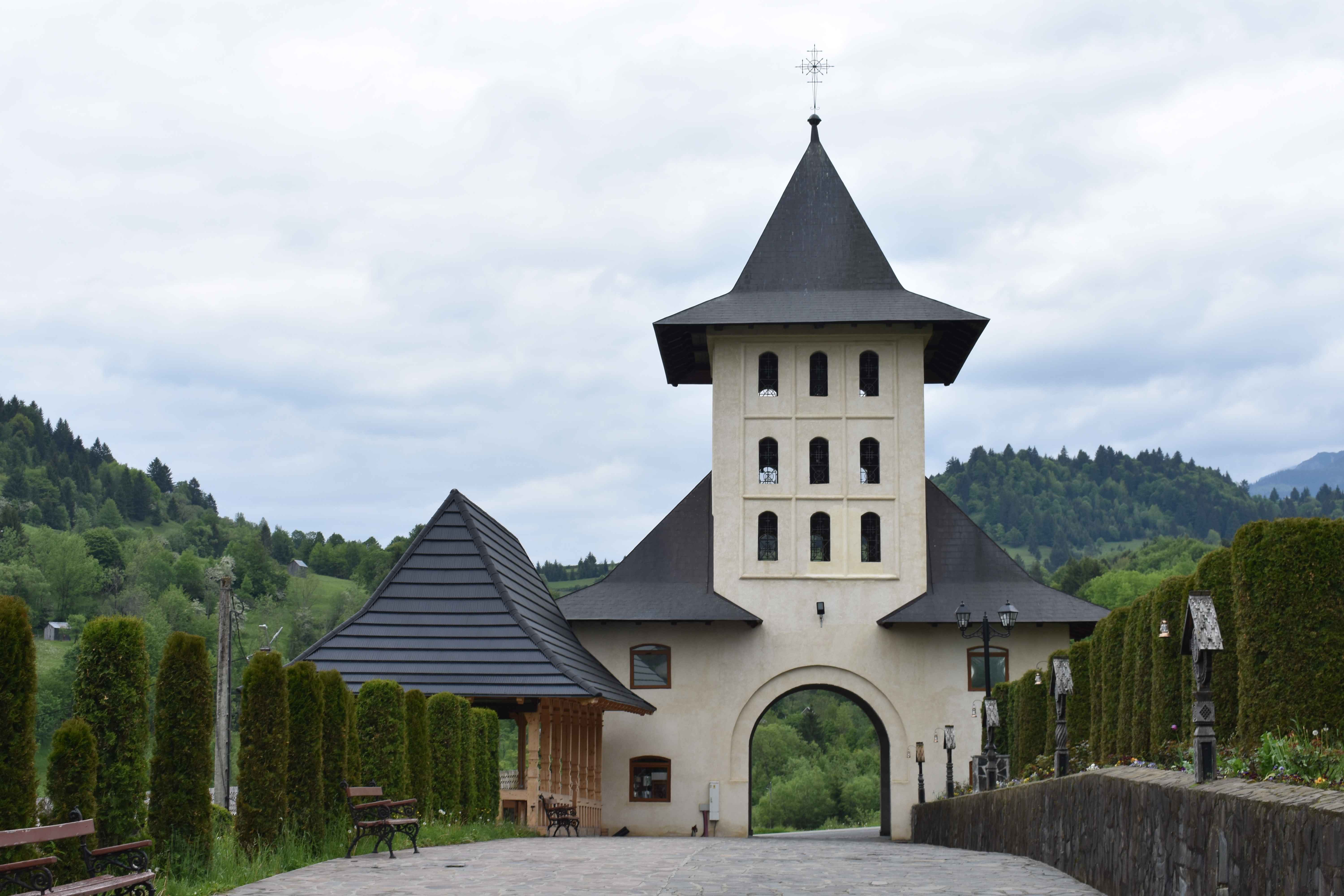
The entrance was through a modern, huge stone arch with the subsequent cobbled path being lined with elaborately carved wooden crosses, typical of the local Maramureş region.
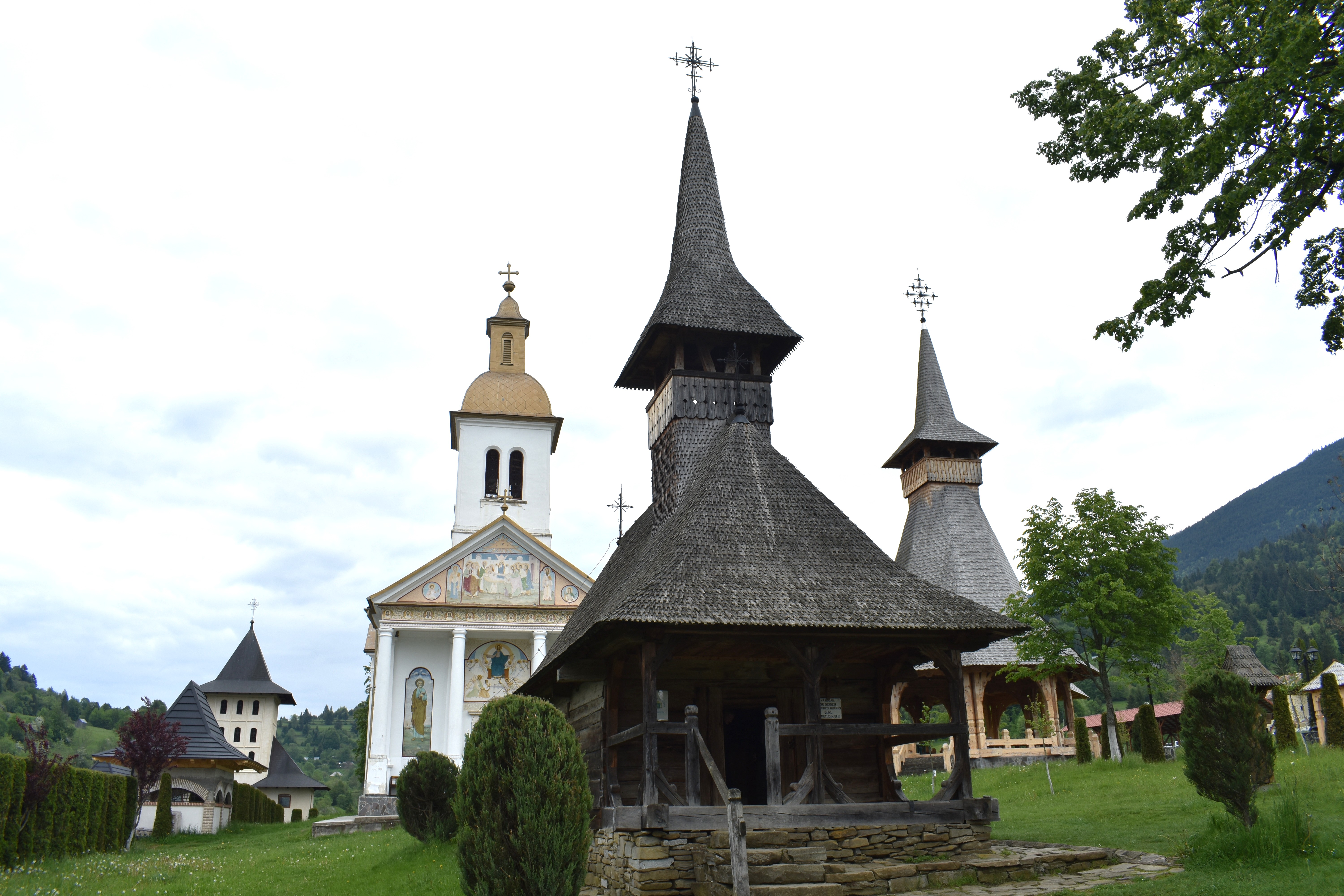
In the large complex, we found several buildings including the old wooden church built in 1672, which once again, reflected the traditional construction of the region. Inside we could see the religious frescoes, painted directly on to the wood.
In stark contrast, the new white brick church was built in the neoclassical style in 1910, to accommodate growing crowds. Inside, many of the icons were adorned with traditional and colourful embroidered pieces.
A wooden summer altar had been built, again in the traditional style using wooden nails, to host large pilgrim services. This displayed the toaca or semantron, the wooden instrument which is beaten to summon the monks to prayer.
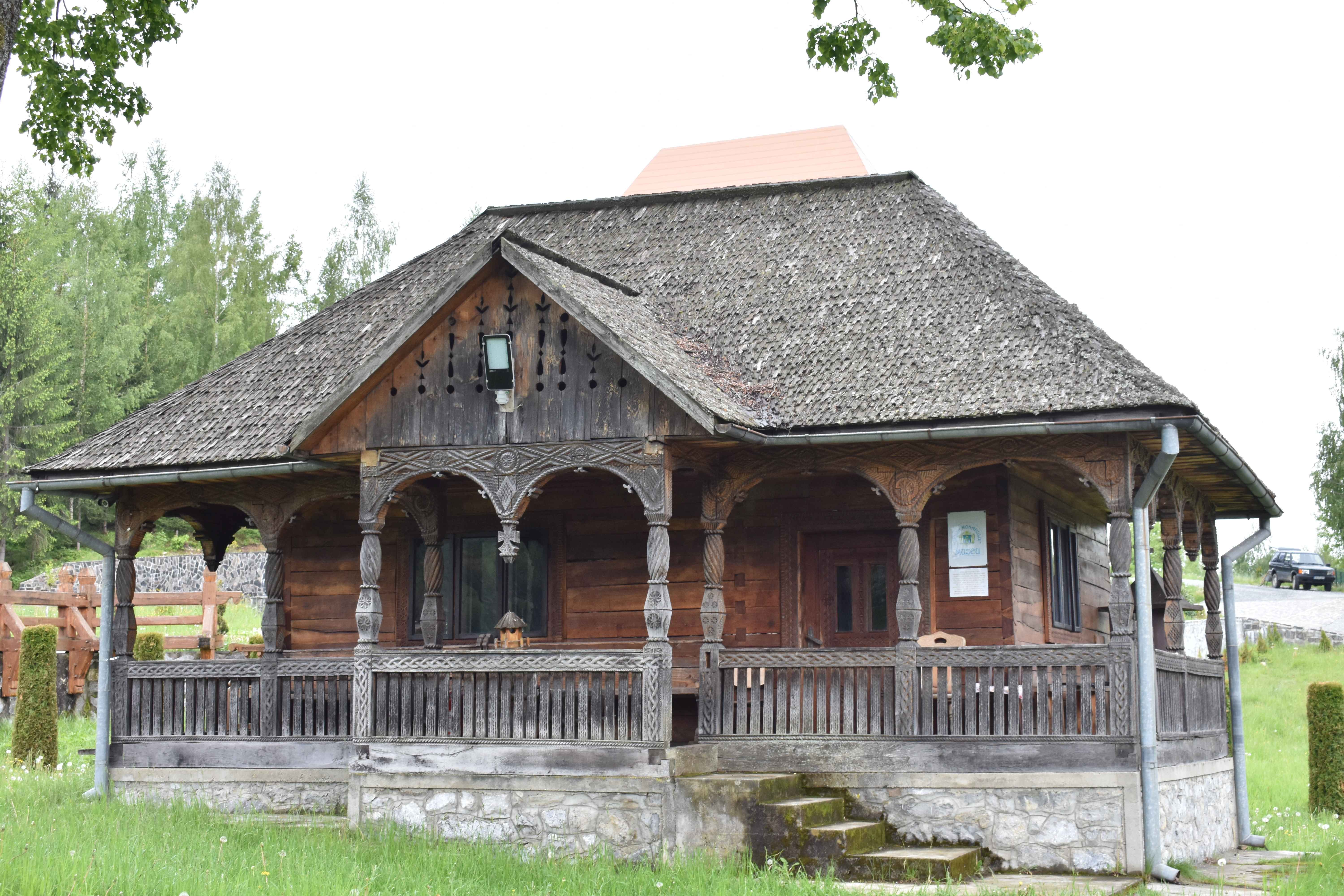
The small museum in a wooden building was closed but on peering through the window, it appeared to reflect a monk’s room.
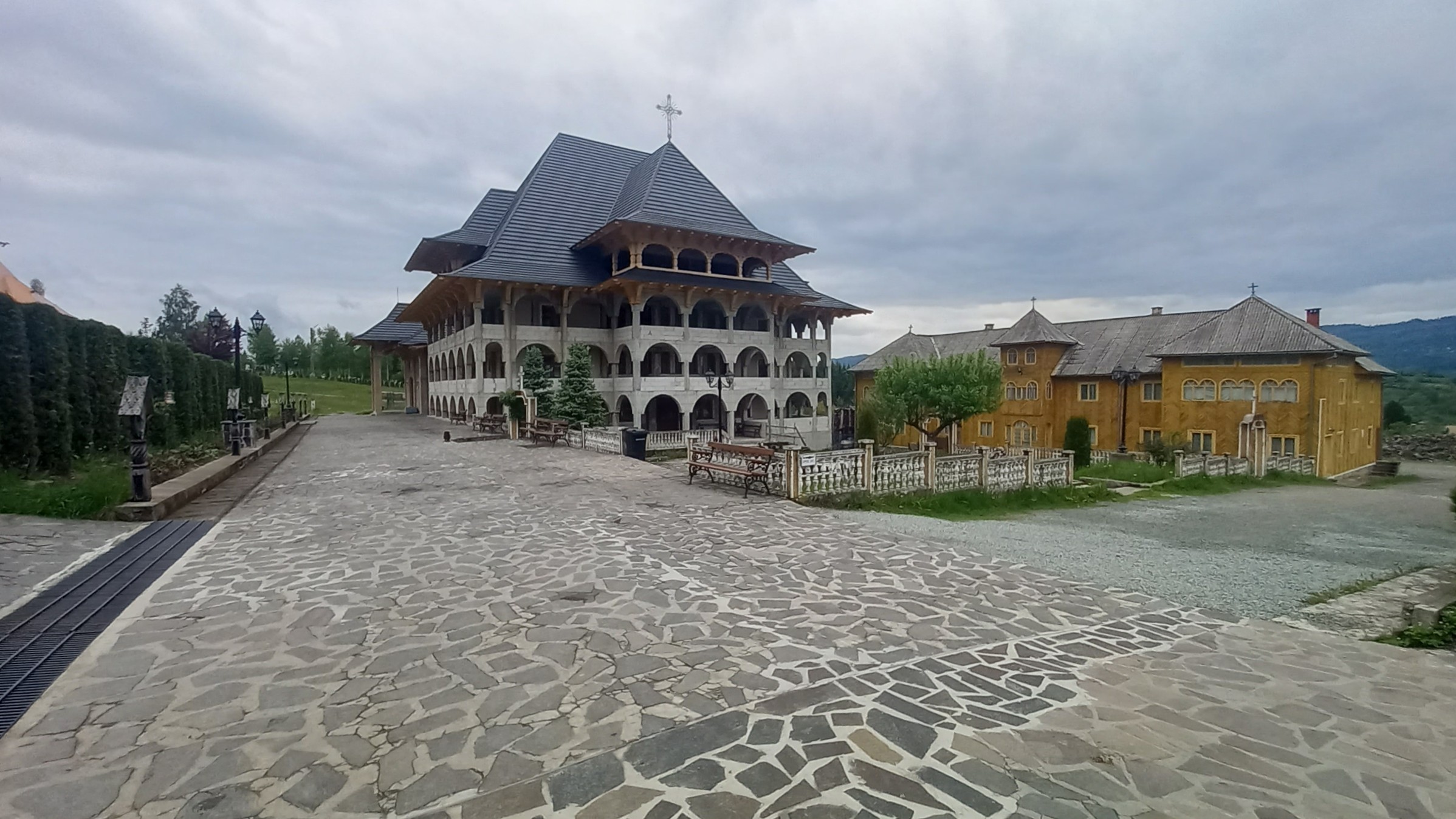
Despite its size, there was lots of building work taking place, which included the erection of another huge church with a poster showing how the finished structure would look.
Bearing in mind the size and volume of worshippers it is said to attract, it was somewhat ironic that during our visit, we didn’t encounter a single person or monk.