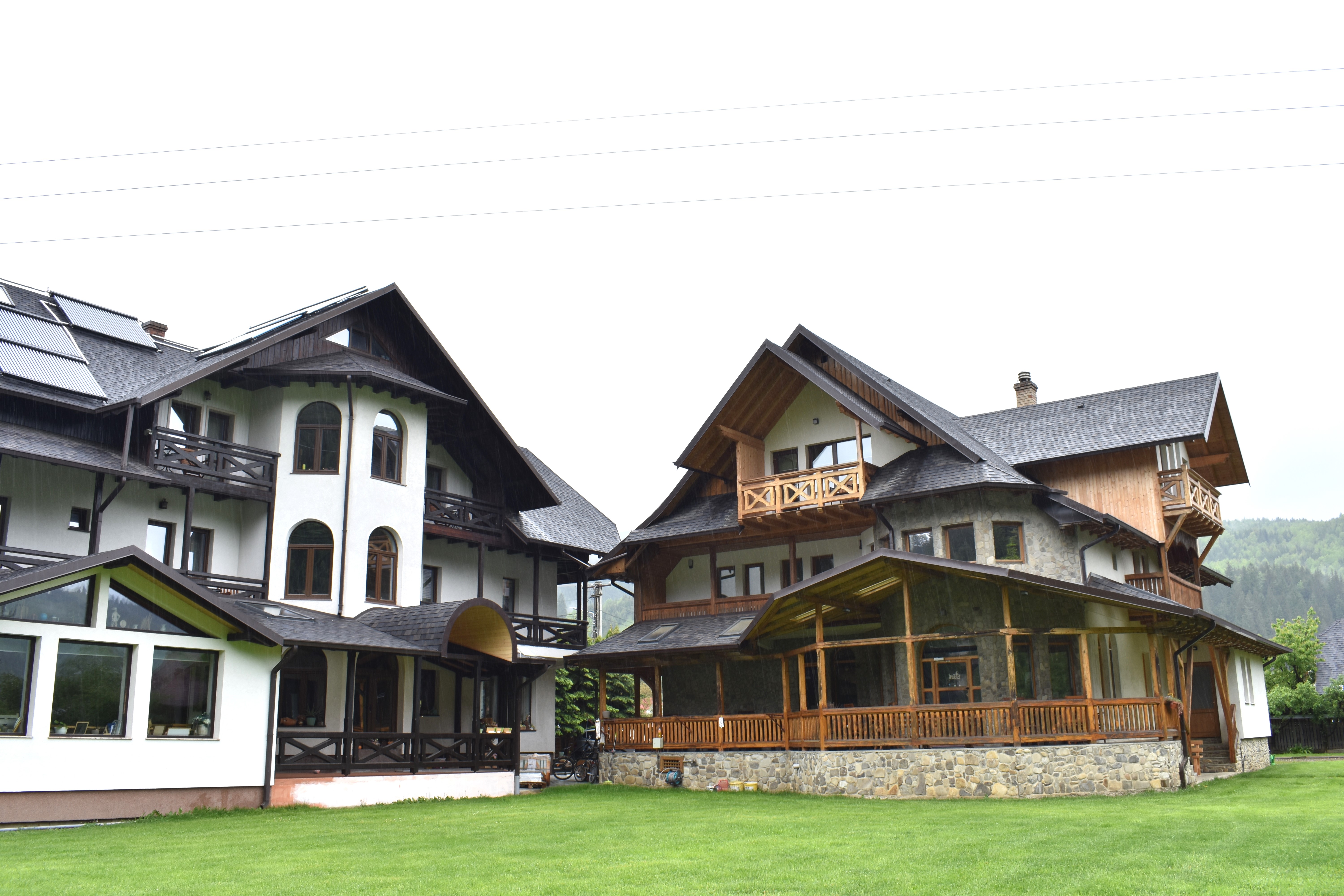
Whilst visiting Romania’s famous painted monasteries in Bucovina, we stayed for three nights at Casa Elvira in the small village of Vama.
On arrival at the large guest house, we had a choice of two rooms, both up two flights of stairs and with no lift: fortunately, our obliging guide was on hand. We plumped for room five which appeared to be the larger of the two.
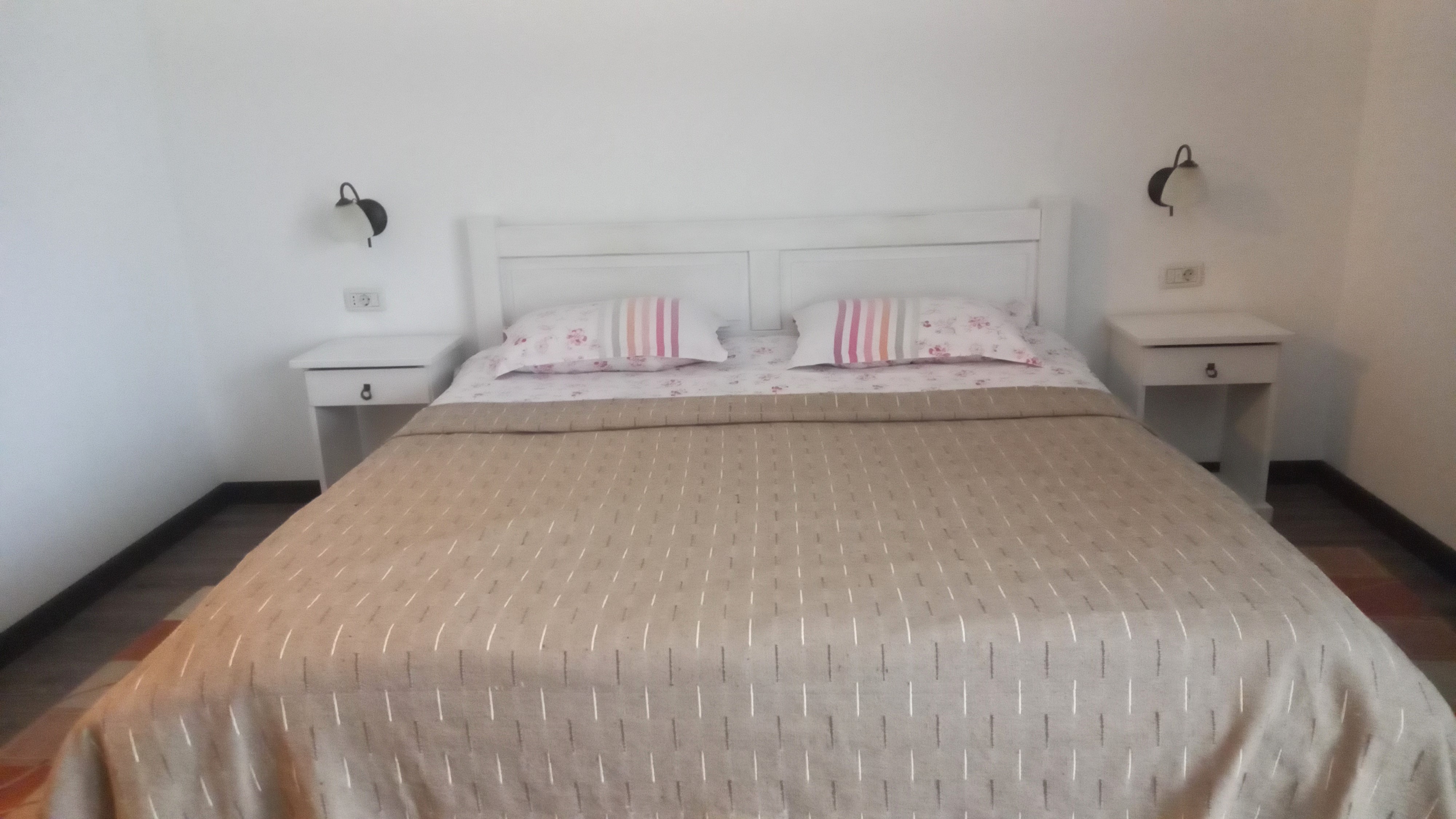
There was a large double bed with only one pillow each, but there were two bedside tables, with lights and charging points. Bedside mats on a laminate floor were judged a trip and slip hazard and were immediately pushed under the bed. There was also a sofa, which could be made into a bed, a huge walk-in wardrobe with plenty of shelving and hanging space, a coffee table and TV, and a small desk with chair.
The bathroom had a bidet, and a shower cubicle which had trickly, but hot water. There wasn’t enough space for toiletries in the bathroom, and insufficient towel hooks. However, on the positive side, the hair dryer was good, and complimentary liquid soap, shower gel and shampoo were available in large bottles.
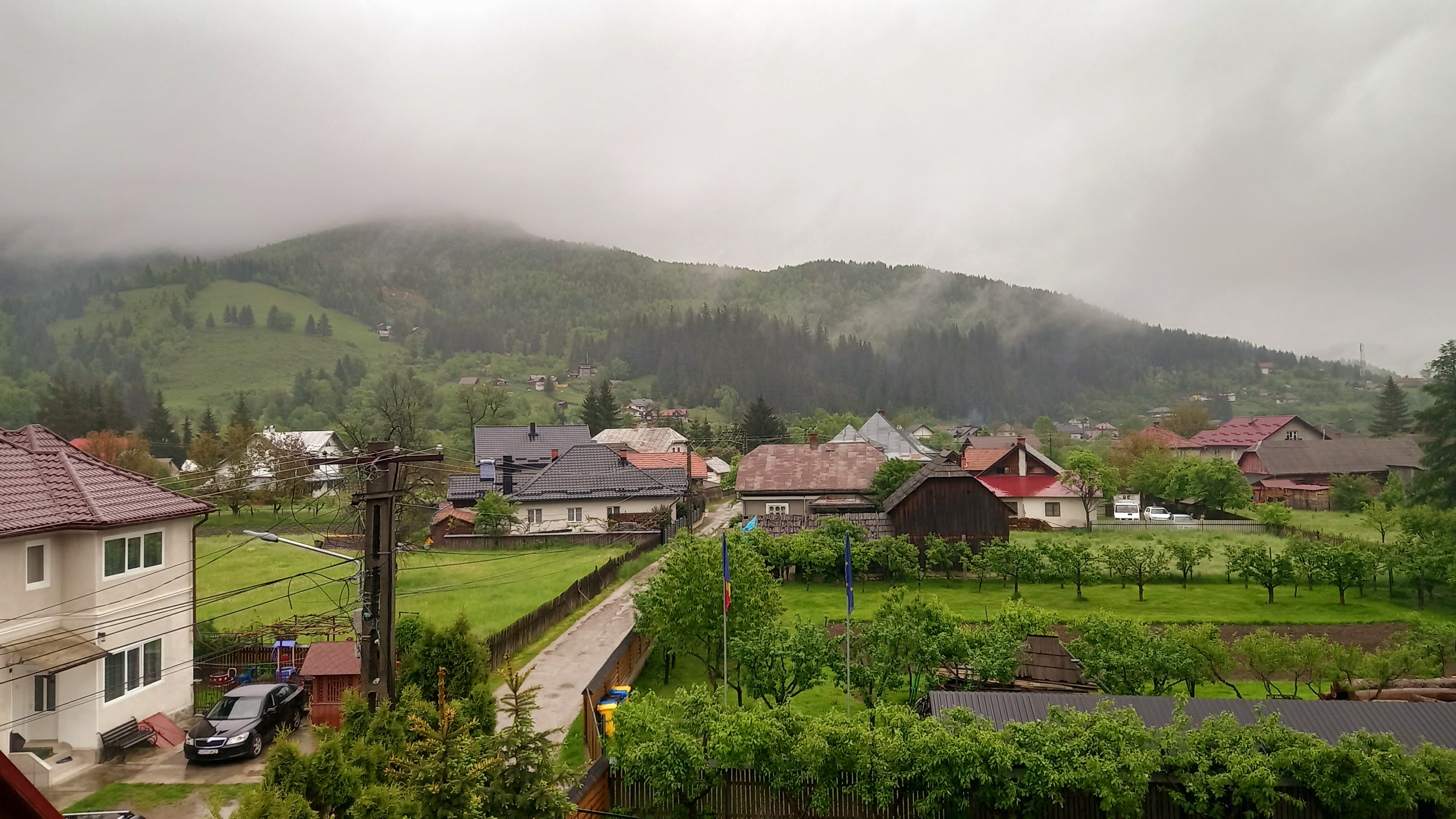
Whilst we had a balcony with great views, unfortunately it rained during our stay and so along with the garden with lots of seating, it remained unused.
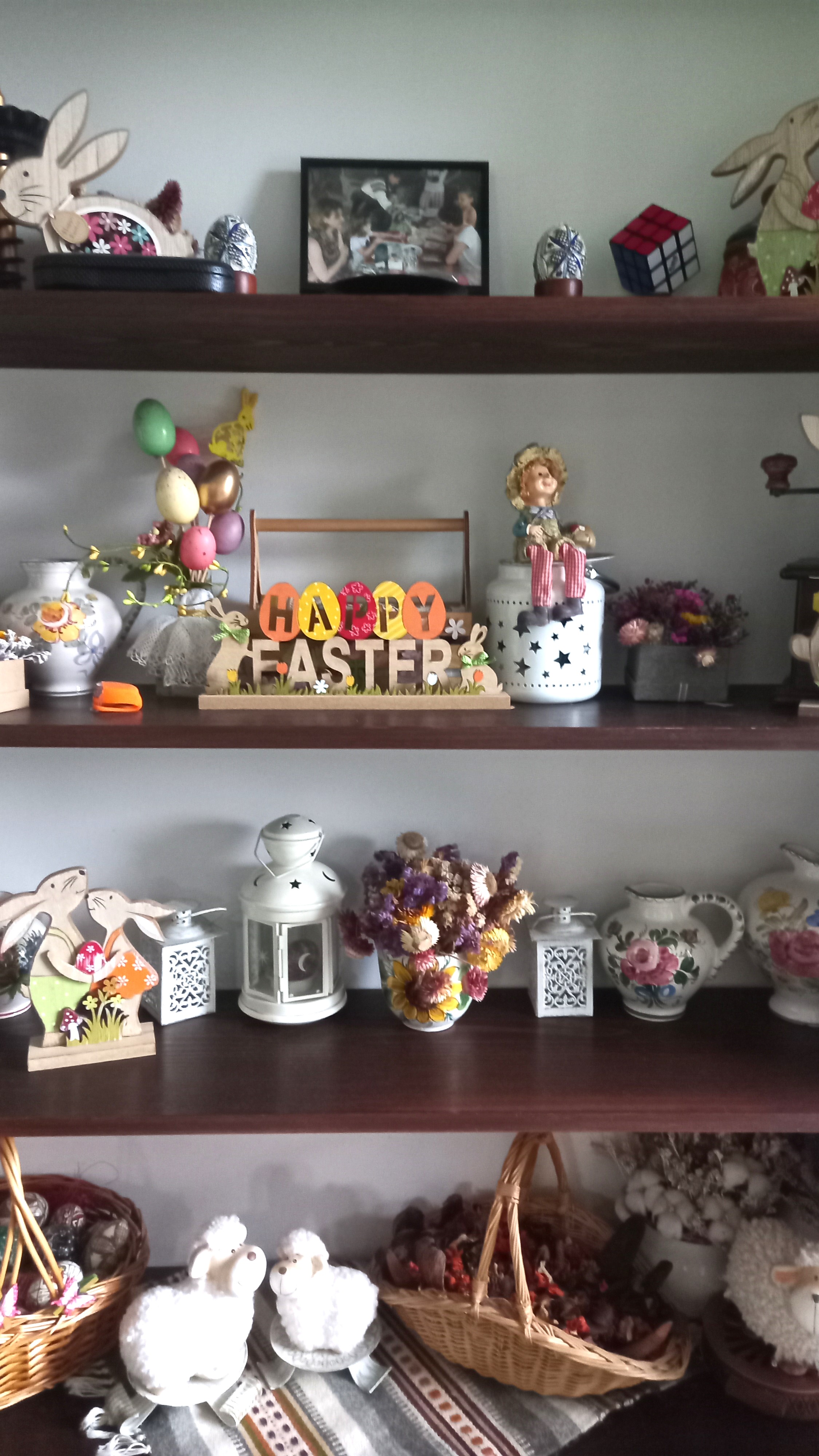
The place was full of Easter related decorations including lots of bunnies and traditionally painted eggs which are left until 40 days after Easter. I suspect they give up on trying to dust during this period.
Our package included dinner, served in an adjacent house. On our first night, there was just the two of us and our guide, on the second we shared a table with four other Brits who were on a self-drive, and for our final night, we were all joined by a group of Turkish tourists.
We were offered shots of tuicâ, a fiery plum brandy, and huckleberry (wild blueberry) wine which was gentler and a little like a port. Each dinner began with soup and bread served with pickled chillies and sour cream for stirring in. The main course was either a meat or fish dish: my favourite being tender pork chunks served with mashed potato, and the least favourite, whole trout accompanied by polenta. Pickled vegetables, which included cucumbers, red peppers and cauliflower, were a staple, as due to the remoteness of the place, they are preserved for the winter months. Puddings included slices of cozonac (sweetened bread with chocolate and nuts traditionally eaten at Christmas and Easter), and plâcintâ (a Moldovan traditional pastry filled with apples). Home-made white wine was pretty good and a bargain at 30 Lei or £5 a bottle.
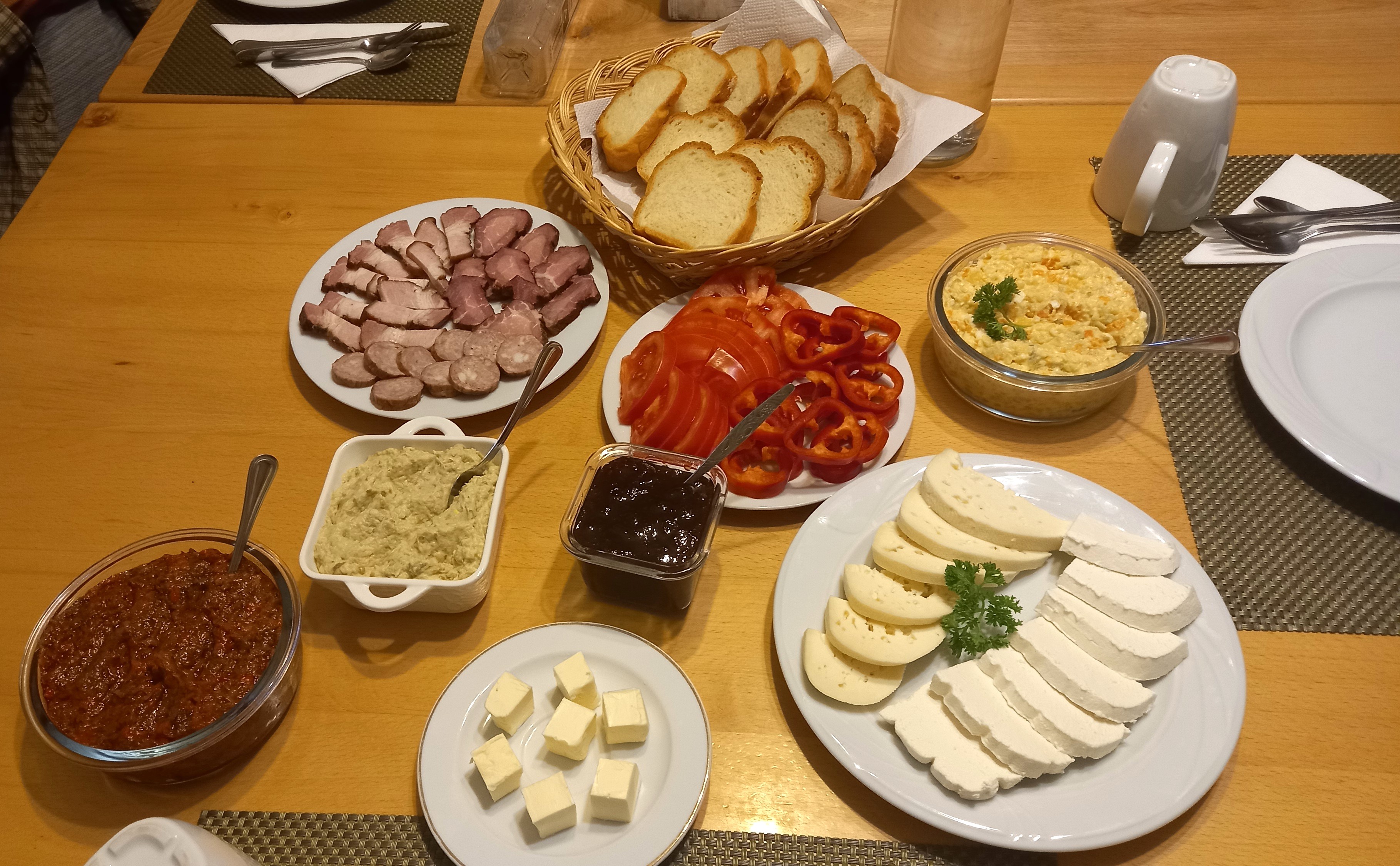
A breakfast buffet was available at a prearranged time and included lots of salads: salata de vinete (an aubergine spread), salata de bouef (a type of Russian salad), zacuscâ (a dip made from roasted peppers), salty and sweet cheeses, a plate of rustic charcuterie, sliced tomatoes, red peppers, and bread with huckleberry jam. Eggs or omelettes could be cooked to order. Excellent coffee was served, but a jug of clear tea was placed on the table. This turned out to be a rather delicious, refreshing herbal tea with mint, St John’s Wort and other herbs all good for various ailments.
Whilst the traditional food was good, what made our meals really enjoyable was the delightfully friendly, jolly lady who served, and probably cooked the dishes. Maybe she was Elvira.