
The Village Museum in Bucharest is a must see. It was founded in 1936 by Dimitrie Gusti, a renowned Romanian sociologist, ethnologist, and philosopher, whose vision was to preserve and present the authentic rural life of Romania through a living museum. It initially featured 33 authentic peasant complexes transferred from villages around the country.
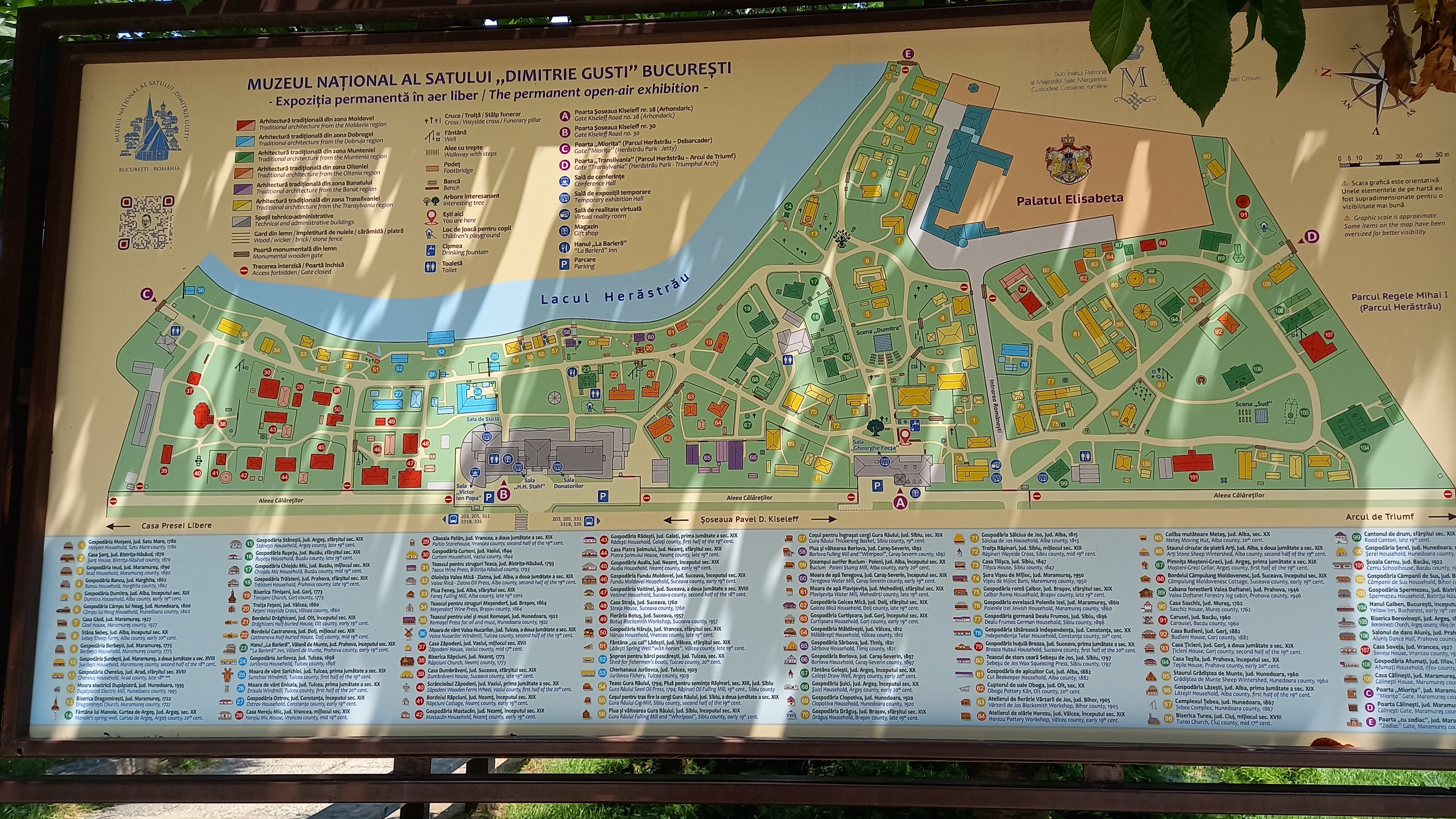
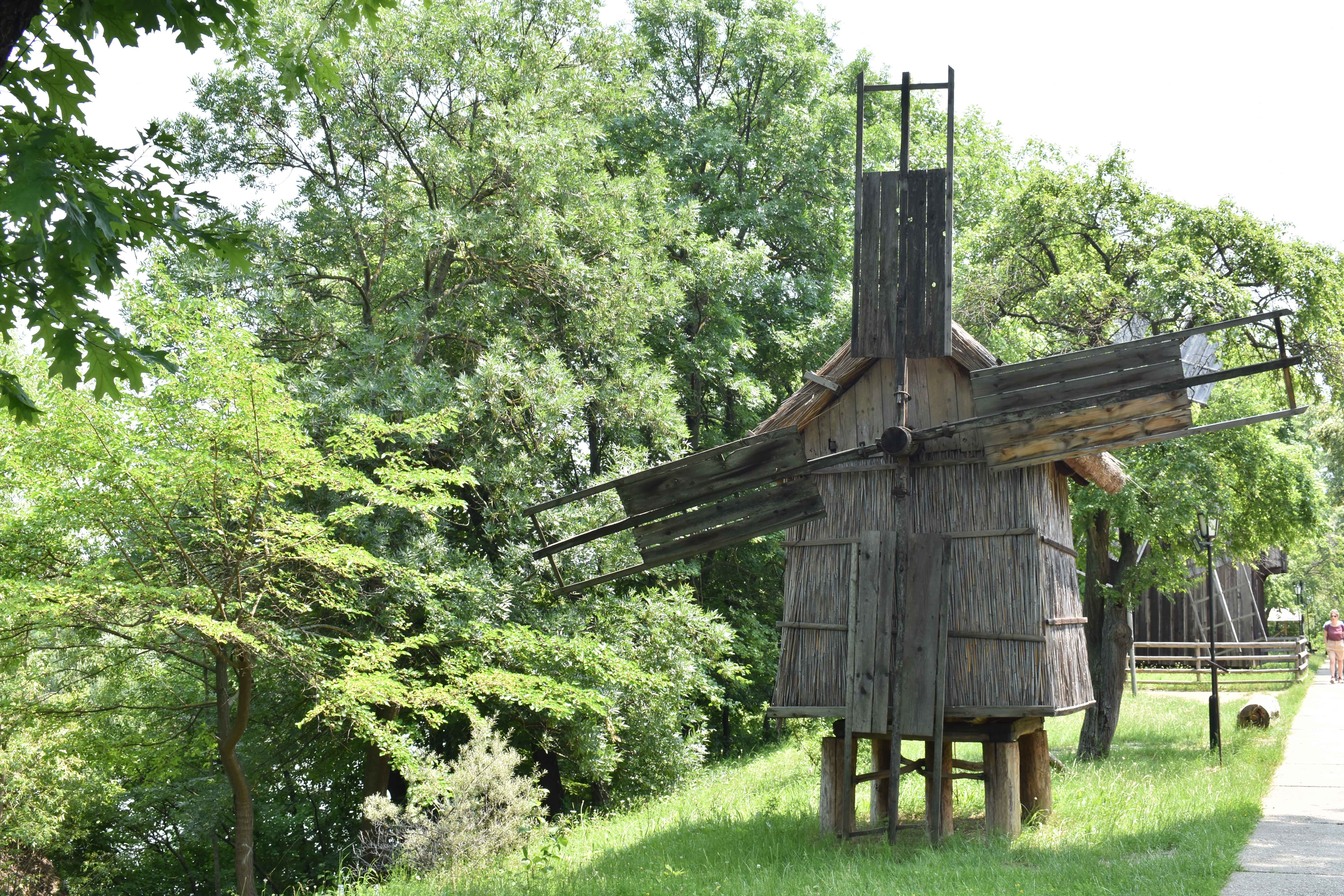
There was a map at the entrance of the open-air museum, which now has 123 houses, and 363 monuments including churches, windmills, blacksmiths, and schools. They were from the various ethnographic regions, including Transylvania, Moldavia, and Dobrogea which we had already visited, and it was a lovely reminder of the many styles we had seen.
Some of our favourites were:
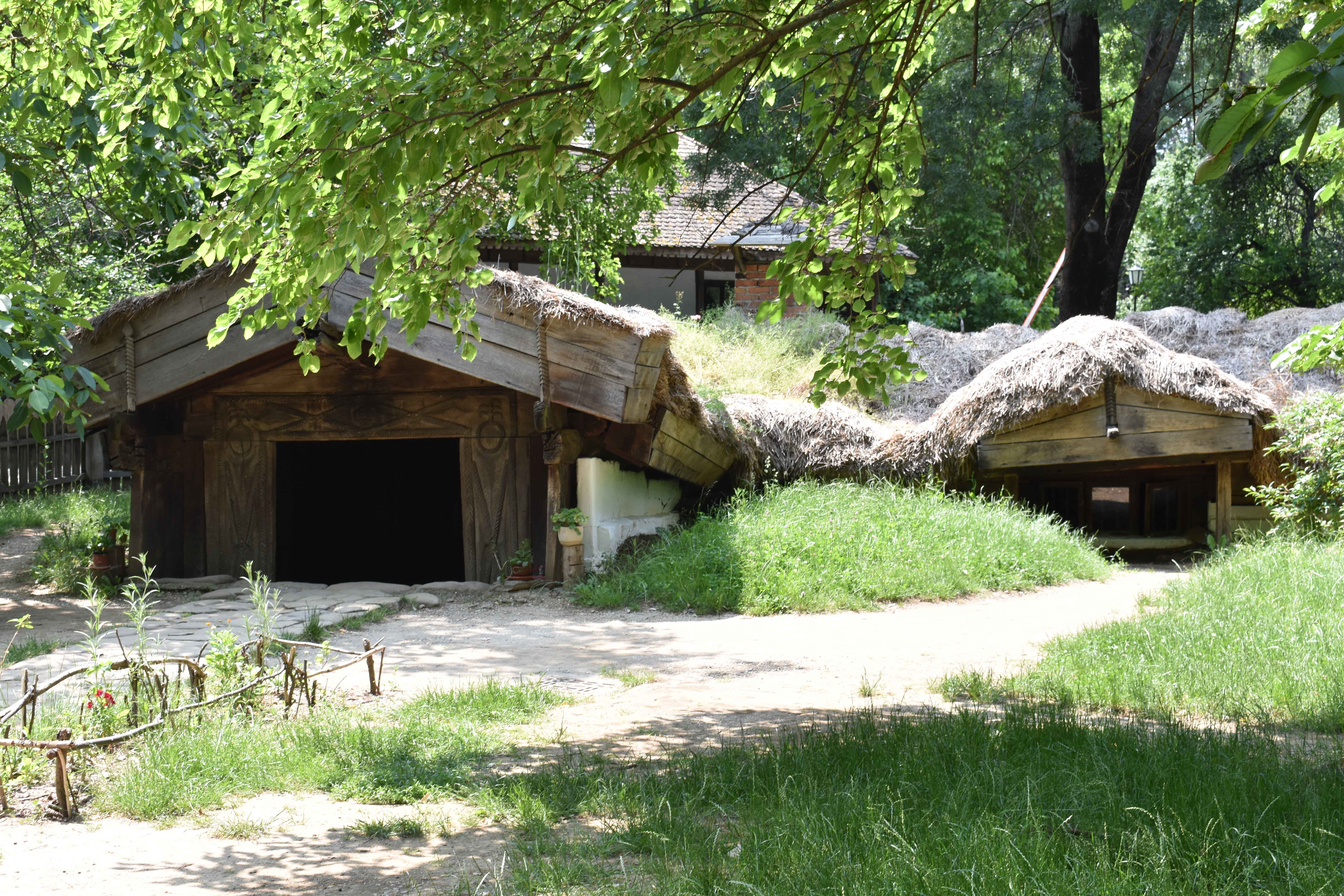
Thatched dwellings from Alba where the dug-out homes had thatch virtually reaching down to the ground.
The painted white and blue houses belonging to the Lipovans or Old Believers, Russian Orthodox Christians who fled to Romania to avoid persecution.
The yellow and green painted Traditional Dance Hall from the region of Oltenia in southwest Romania. Here the villagers would gather for folk dances, weddings, and community celebrations and during special days, the museum revives the hall’s original purpose.
Each building had good signage in English and Romanian. As well as information about the house, including where it was from, and when it was relocated to the museum, there were drawings of the household structure and house plan, and photos of how the house would have been furnished inside.
We stopped for a drink at the La Barierâ inn, where a rather surly young man told us there was no Romanian beer and we ended up drinking Becks.
Tickets cost 36 Lei (£6) for pensioners and there was an excellent gift shop. We spent a couple of hours at the museum, but it would be easy to spend the whole day there.